A thousand years ago people built a monumental stone city in a desert that could barely feed them, then walked away, and we still get the ending wrong
In a dry New Mexico canyon stand the ruins of buildings so large that nothing in what is now the United States would match them for another seven hundred years. They were raised by hand in a place with too little water and almost no timber, and the popular story of what happened to their builders is almost entirely backwards.
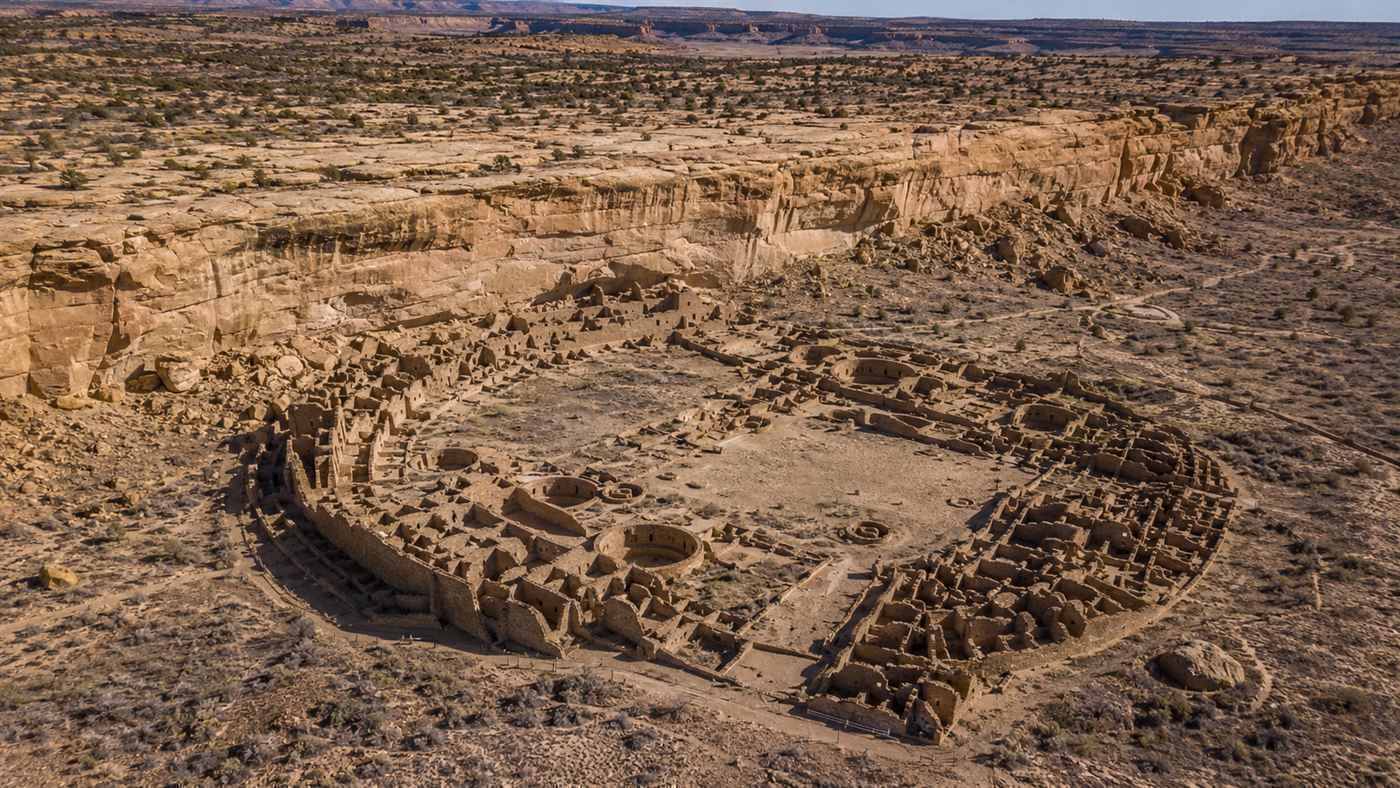
The great house of Pueblo Bonito anchors Chaco Canyon in the New Mexico desert. Illustration: Watts & Wild.
Roughly a thousand years ago, Chaco Canyon in the high desert of northwestern New Mexico was the beating heart of a whole world. The Ancestral Puebloans who lived across the region looked to it as a centre of trade, ceremony and power, and they poured astonishing effort into building there, in one of the least forgiving landscapes on the continent.
What they left behind still stops visitors in their tracks. Huge multi-storey stone buildings, dead-straight roads running for miles across empty country, and structures carefully lined up with the movements of the sun and moon, all sitting in a canyon that looks, at first glance, like the last place anyone would choose to build a city.
The short version is that Chaco Canyon is one of the great achievements of early North America, and also the subject of one of its most stubborn misunderstandings. The truth about the people who made it is far more interesting than the myth.
The great houses of Chaco Canyon
The largest of the buildings are known as great houses, and the grandest, Pueblo Bonito, is staggering. It rose several storeys high and held hundreds of rooms in a vast D-shaped sweep of stone, built up over generations into what was, for its time and place, an enormous structure.
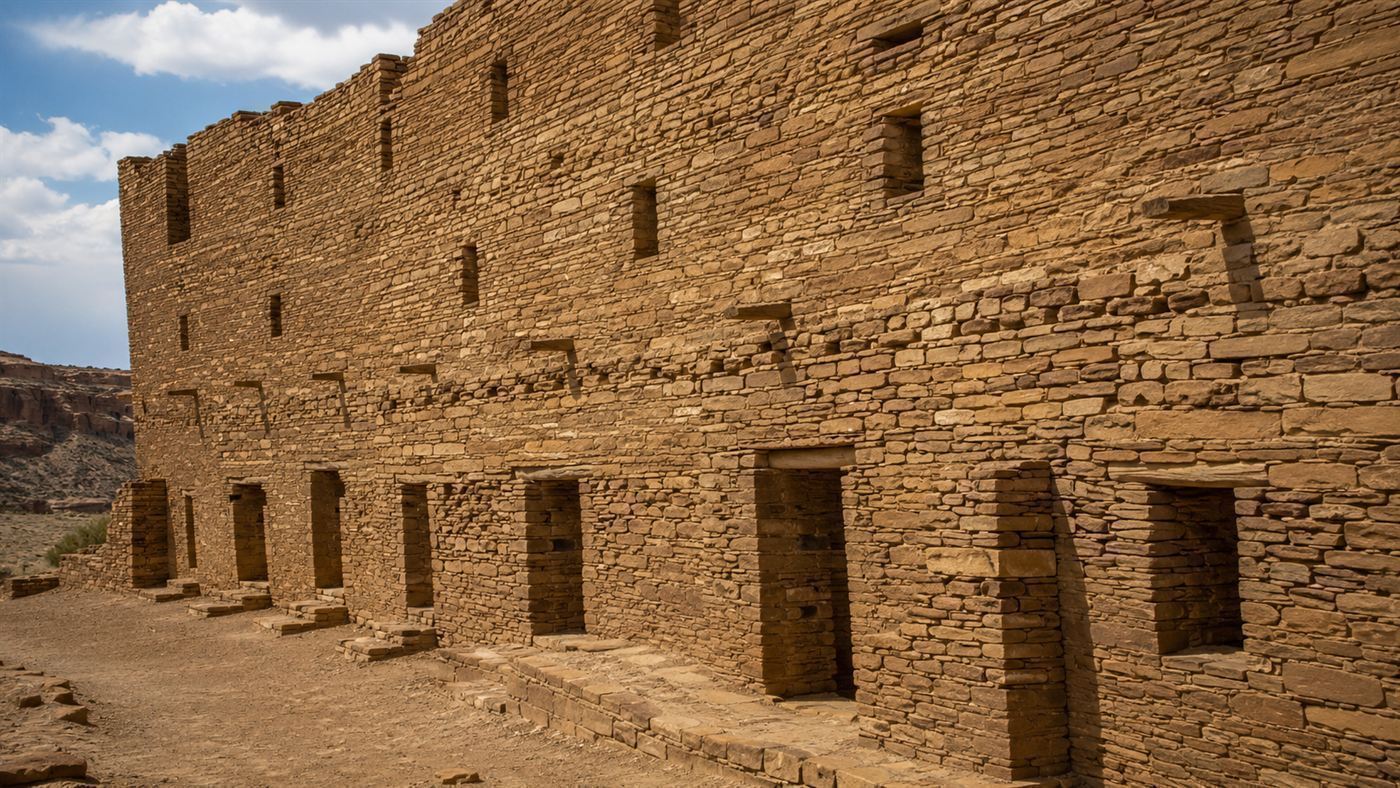
The masonry is beautiful and precise, walls of carefully fitted stone that have stood for a millennium in the desert sun. Building these great houses meant hauling hundreds of thousands of heavy timber beams from mountains far away, a colossal effort in a land with no draft animals and no wheels, purely on human muscle and organisation.
Roads and a calendar written in stone
Just as striking as the buildings are the roads. Chaco was tied to dozens of distant communities by wide, remarkably straight routes carved across the landscape, running for tens of miles and often ignoring the easier path in favour of a stubborn straight line, as if the geometry itself carried meaning.
The people were also careful sky-watchers. Buildings and openings at Chaco Canyon line up with the sun at the solstices and with the long cycles of the moon, turning the whole site into a kind of vast calendar in stone. This was a society doing sophisticated astronomy centuries before any European set foot nearby.
Why build a city here at all?
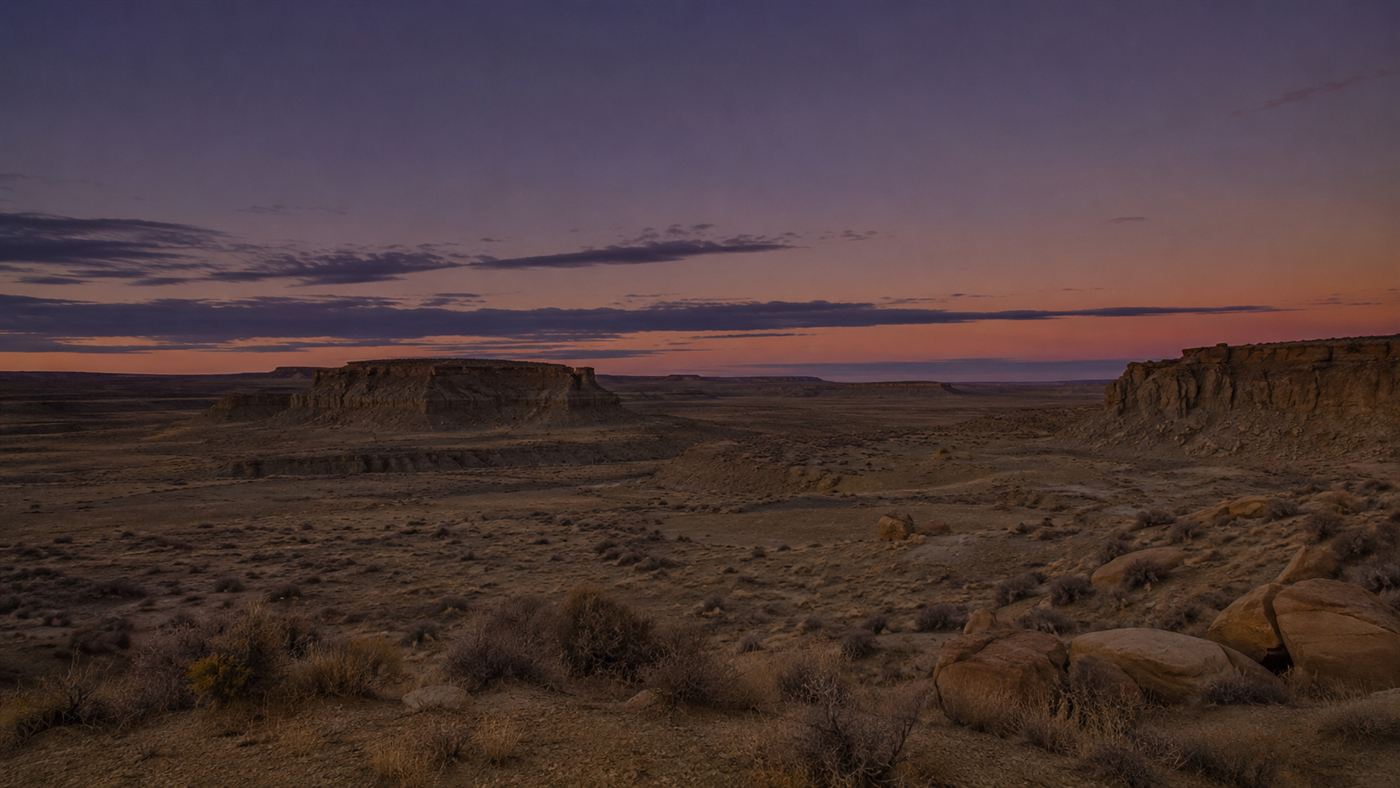
That is the puzzle that hangs over everything. Chaco sits in a harsh, arid canyon with thin soils, unreliable rain and almost no wood, which makes it a strange choice for the centre of a civilisation. Feeding and supplying the people who gathered there must have been a constant, grinding challenge.
Researchers still debate exactly how many people lived at Chaco year round versus gathered there for great ceremonies, and how so much food and timber was funnelled into such a dry place. Whatever the answer, it is clear that the location was chosen for reasons of meaning and power, not comfort, and that holding it together took remarkable coordination.
What really happened to the people
Here is where the popular story goes wrong. In the 1100s and 1200s, a series of long, brutal droughts struck the region, and combined with other strains they made life at Chaco Canyon impossible to sustain. Over decades, people moved away, and the great houses fell silent.
But the phrase everyone reaches for, that the civilisation mysteriously "vanished," is simply false. The Ancestral Puebloans did not disappear off the face of the earth. They migrated, joining and founding other communities, and their descendants are the living Pueblo, Hopi and Zuni peoples, who still know Chaco as part of their own history and hold it sacred today.
The honest catch
The romance of a lost civilisation is powerful, and Chaco is often sold that way, as an eerie ghost city abandoned by a people who melted into thin air. That framing is not just wrong; it quietly erases the very people it should honour, treating living cultures as though they ended a thousand years ago.
The honest version is better and harder. Chaco Canyon was not a mystery solved by disappearance but a home changed by drought and choice, left by people who carried its memory forward rather than dying with it. The real wonder is not that a civilisation vanished, because it did not, but that ordinary human beings built something this vast and precise in such a hard place, and that their descendants are still here to tell you so.
An entire civilisation built a stone metropolis in a desert, then moved on when the rains failed, and their descendants live on today. Why do we keep insisting these people vanished when they never did? Tell us what you think in the comments.
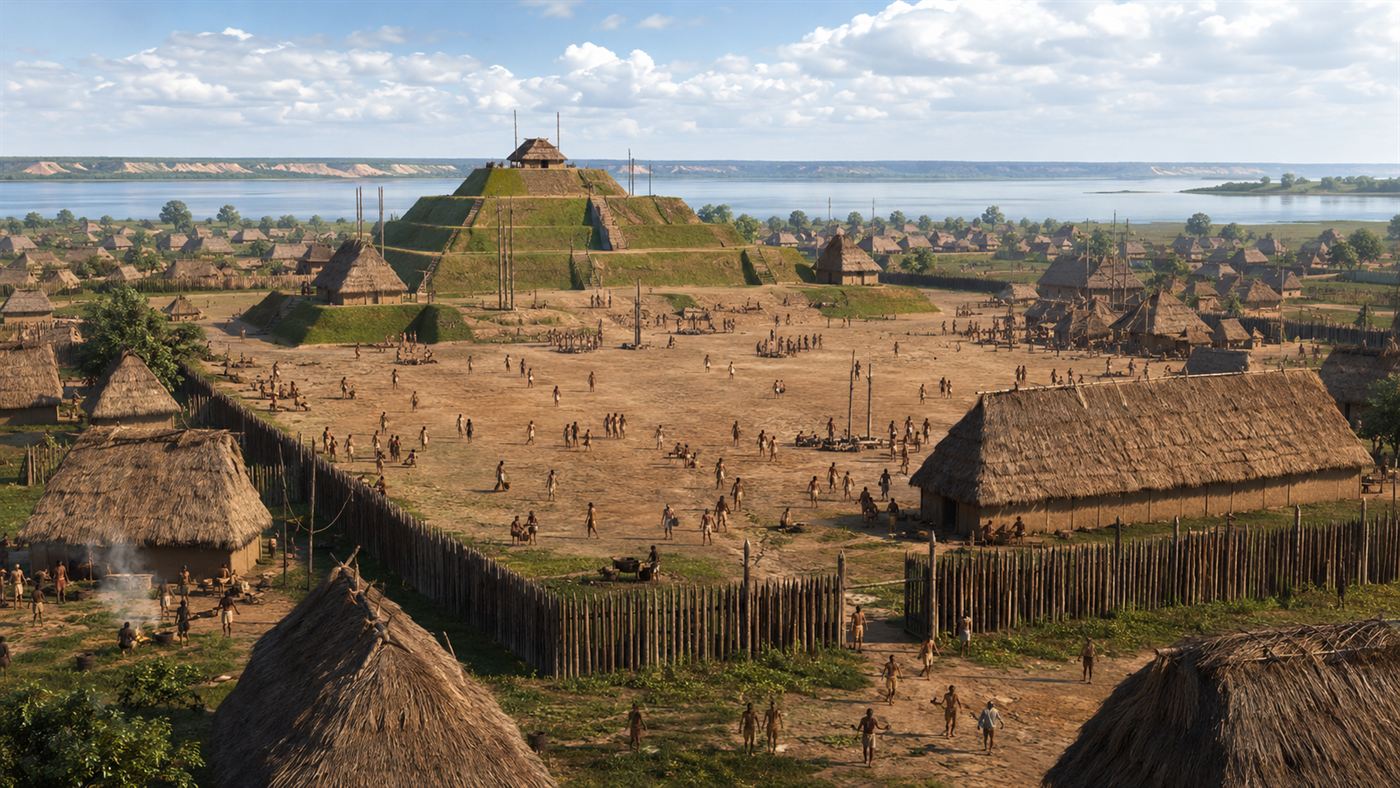
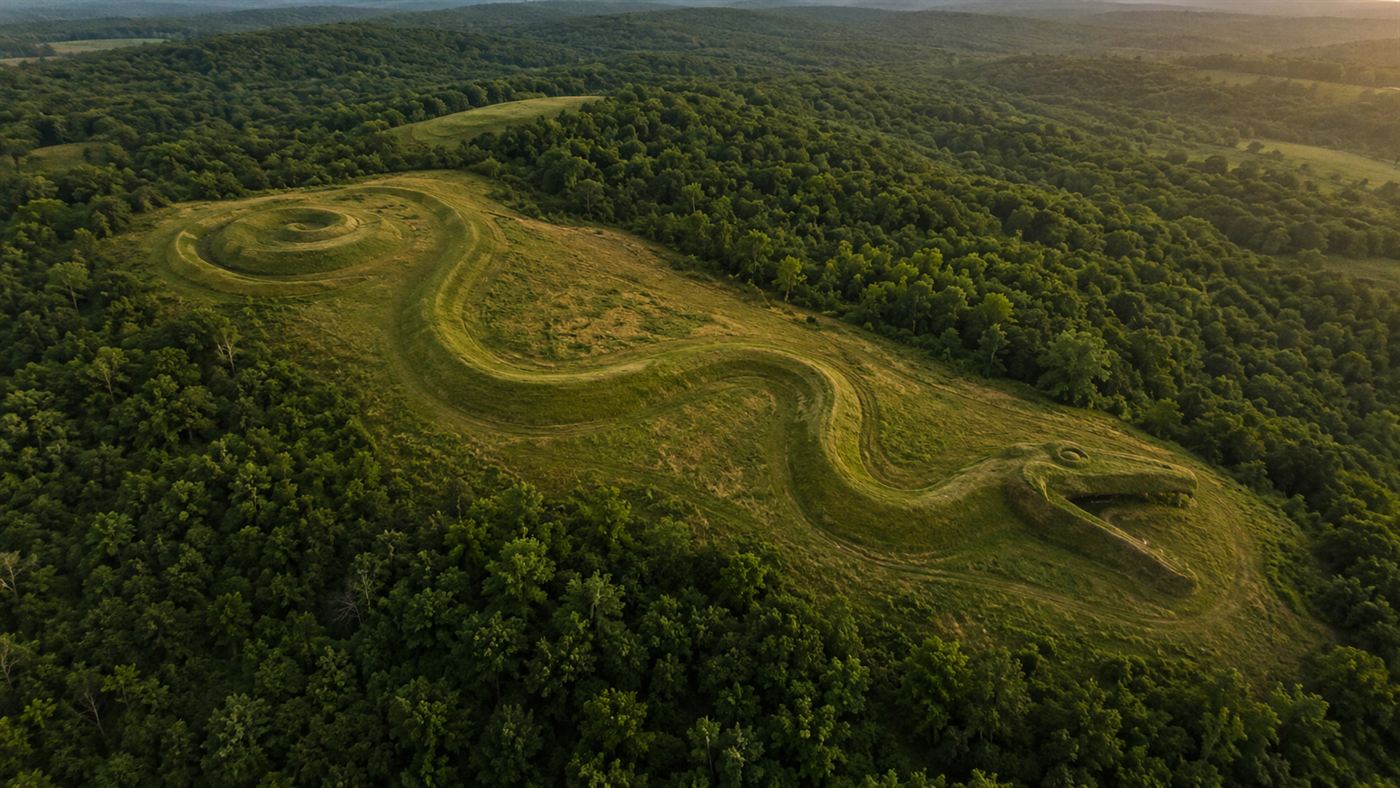
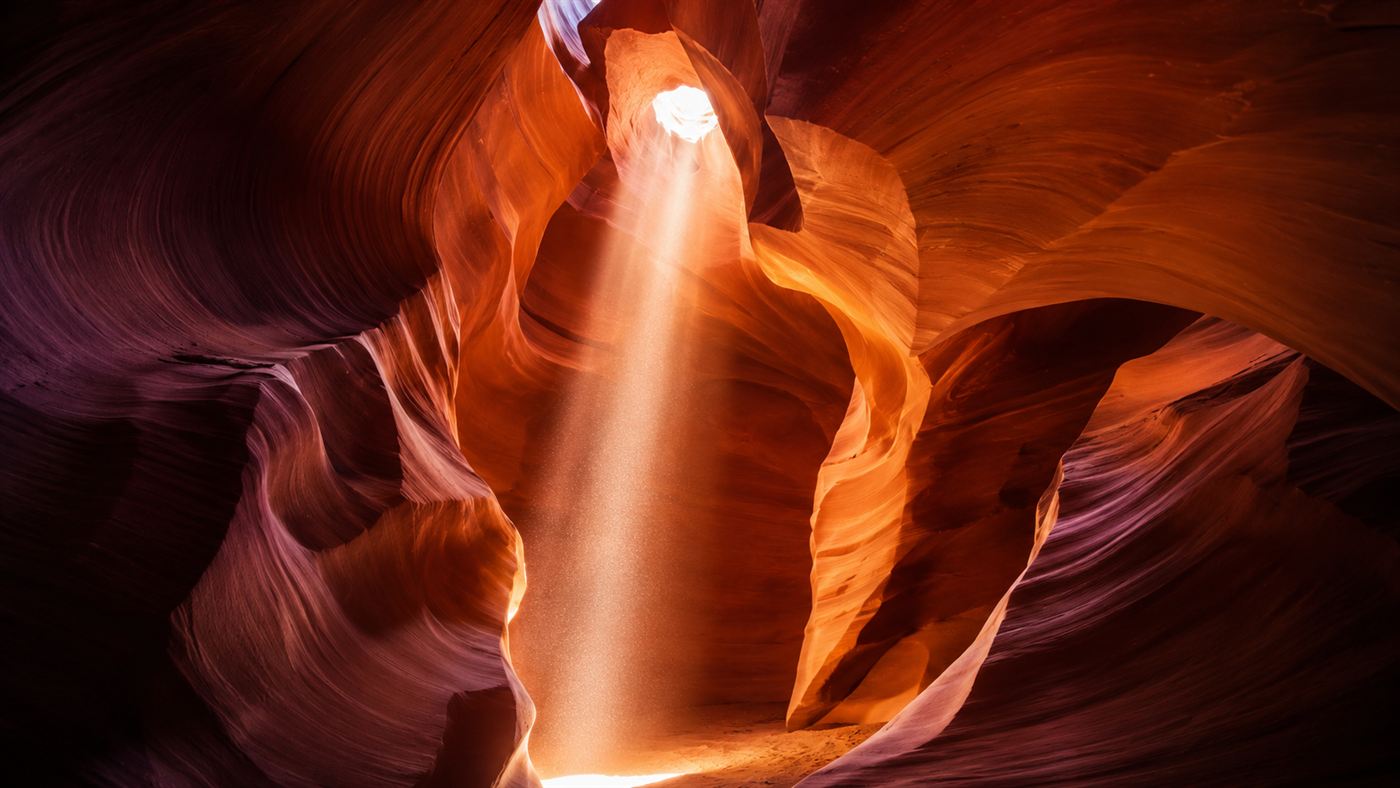
Related reading: Cahokia, a vast lost city of earthen mounds near the Mississippi. See also the Serpent Mound, another ancient American puzzle in the earth, and the beautiful, deadly slot canyon of the same desert Southwest. See also Poverty Point, built by hunter-gatherers who were not supposed to build at all.