A glacier in Antarctica appears to bleed bright red into the snow, and for a century the cause was a mystery, until scientists traced Blood Falls to rust and hidden life
In one of the coldest, driest places on Earth, a glacier seems to be bleeding. Blood Falls pours a deep red stain down the white ice of Antarctica's Taylor Glacier. The colour is not blood but rusting iron, leaking from a hidden world sealed under the ice for a million years.
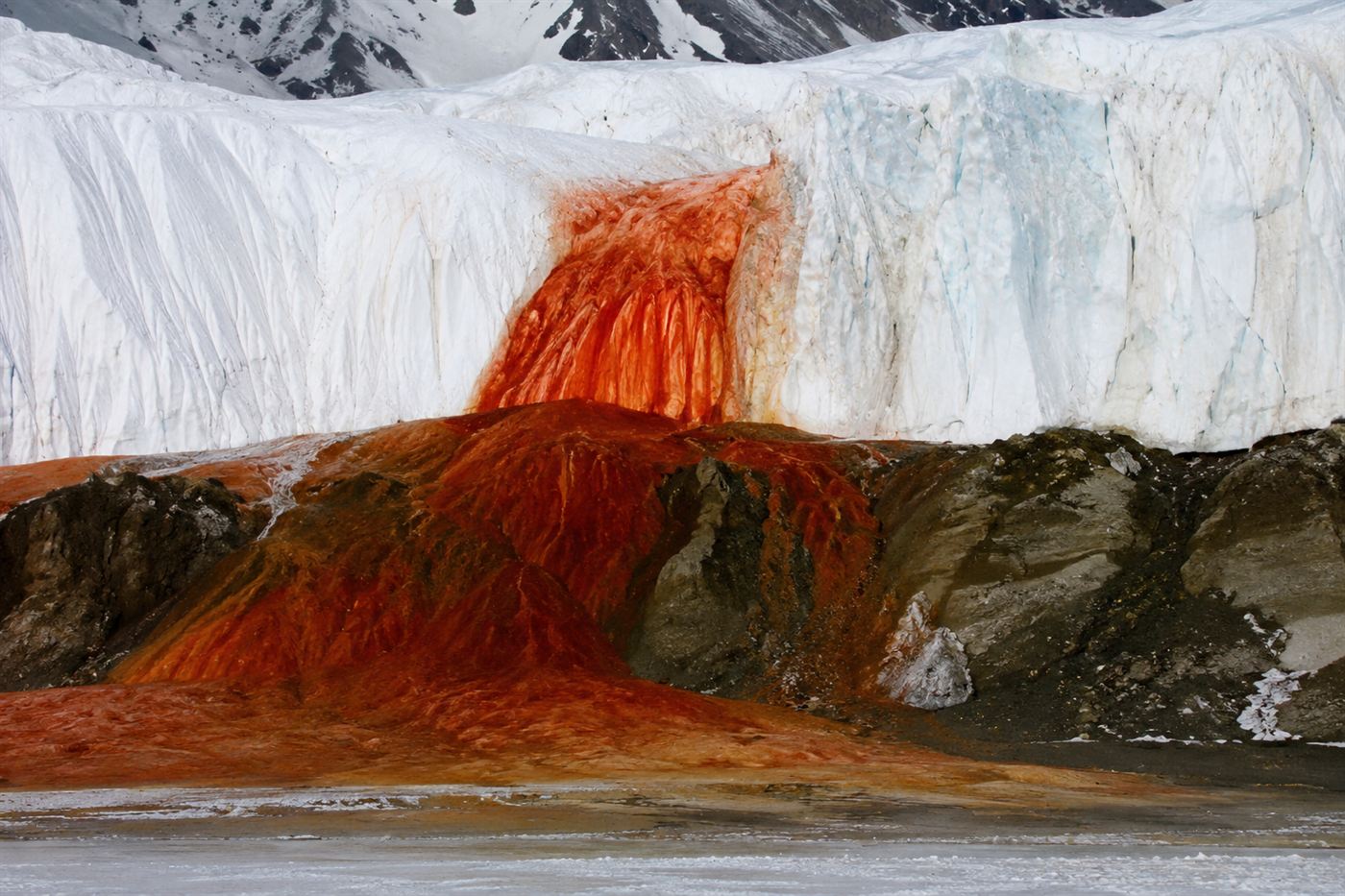
Blood Falls stains the snout of the Taylor Glacier a startling red. Illustration: Watts & Wild.
In one of the coldest and driest corners of the planet, a glacier appears to be bleeding. Blood Falls, in Antarctica, sits at the snout of the Taylor Glacier in the McMurdo Dry Valleys, where a deep red stain spills from a crack in the white ice and runs down onto the frozen lake below. Against the blue-white glacier it looks unnervingly like an open wound, which is exactly how it earned its name.
For more than a hundred years, nobody could say for certain what made it red. The answer, when it came, was stranger and more wonderful than blood: rust, an ancient hidden sea, and life surviving in total darkness.
Blood Falls is a red, iron-rich flow that seeps from the Taylor Glacier in Antarctica. The colour comes from iron in an ancient, very salty brine that has been trapped beneath the glacier for around a million years. When the brine reaches the surface and meets the air, the iron rusts and turns the ice blood red.
A glacier that looks like a wound
Blood Falls sits in a place that already feels like another planet.
The McMurdo Dry Valleys are a bare, ice-free polar desert, among the most lifeless-looking landscapes on Earth.
Out of all that white and grey, the falls bleed a vivid rust-red that seems impossible.
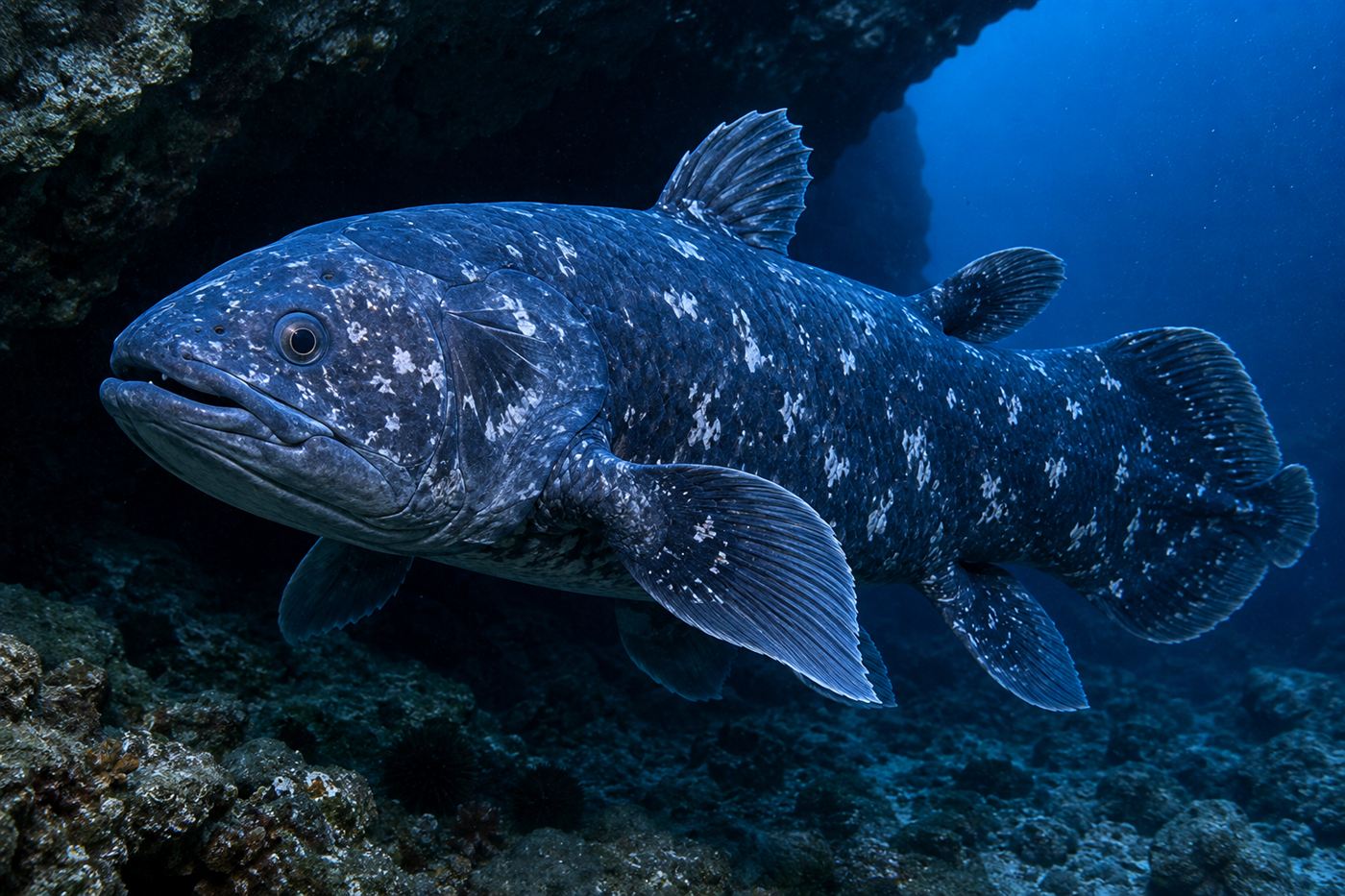
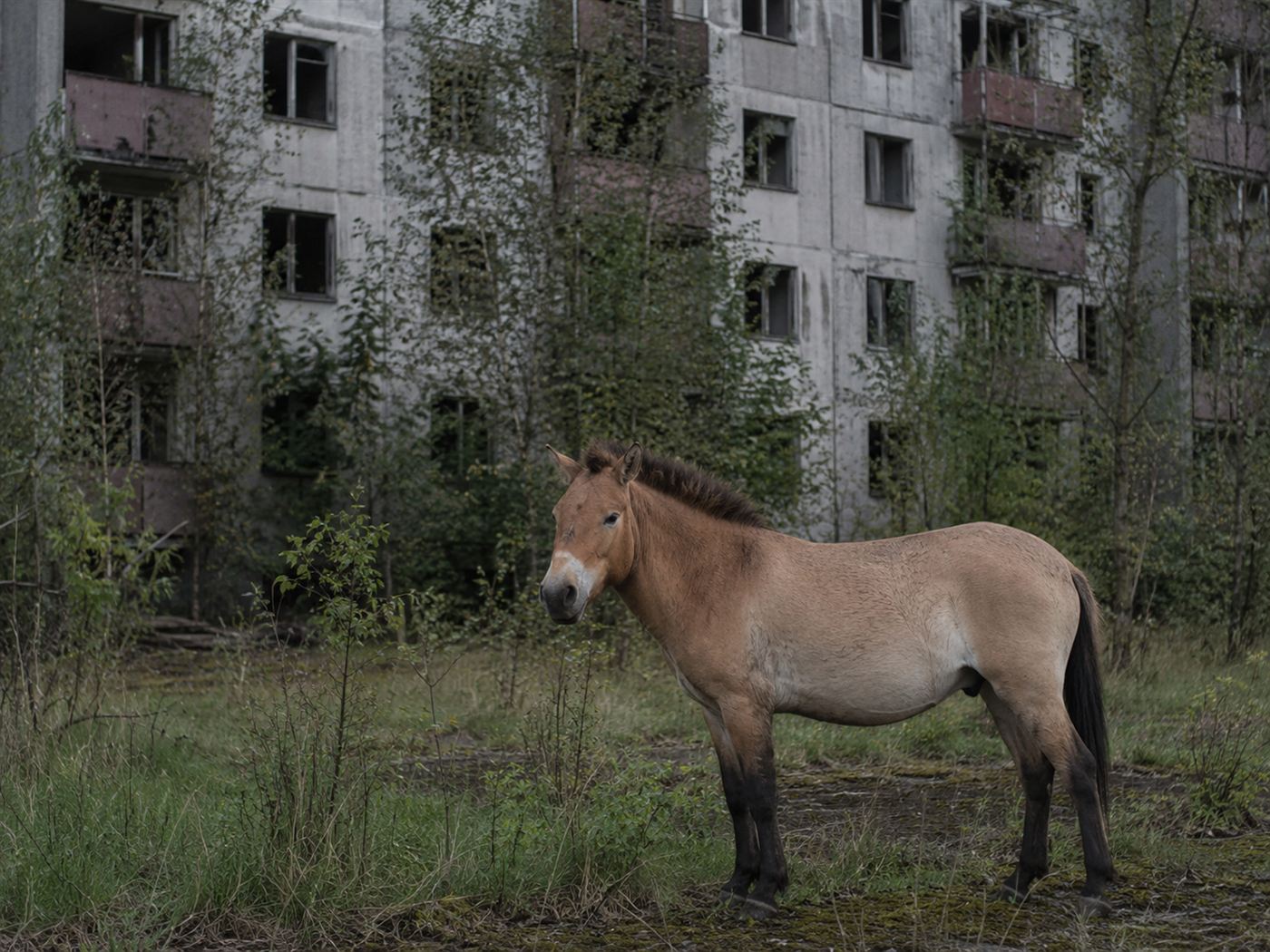
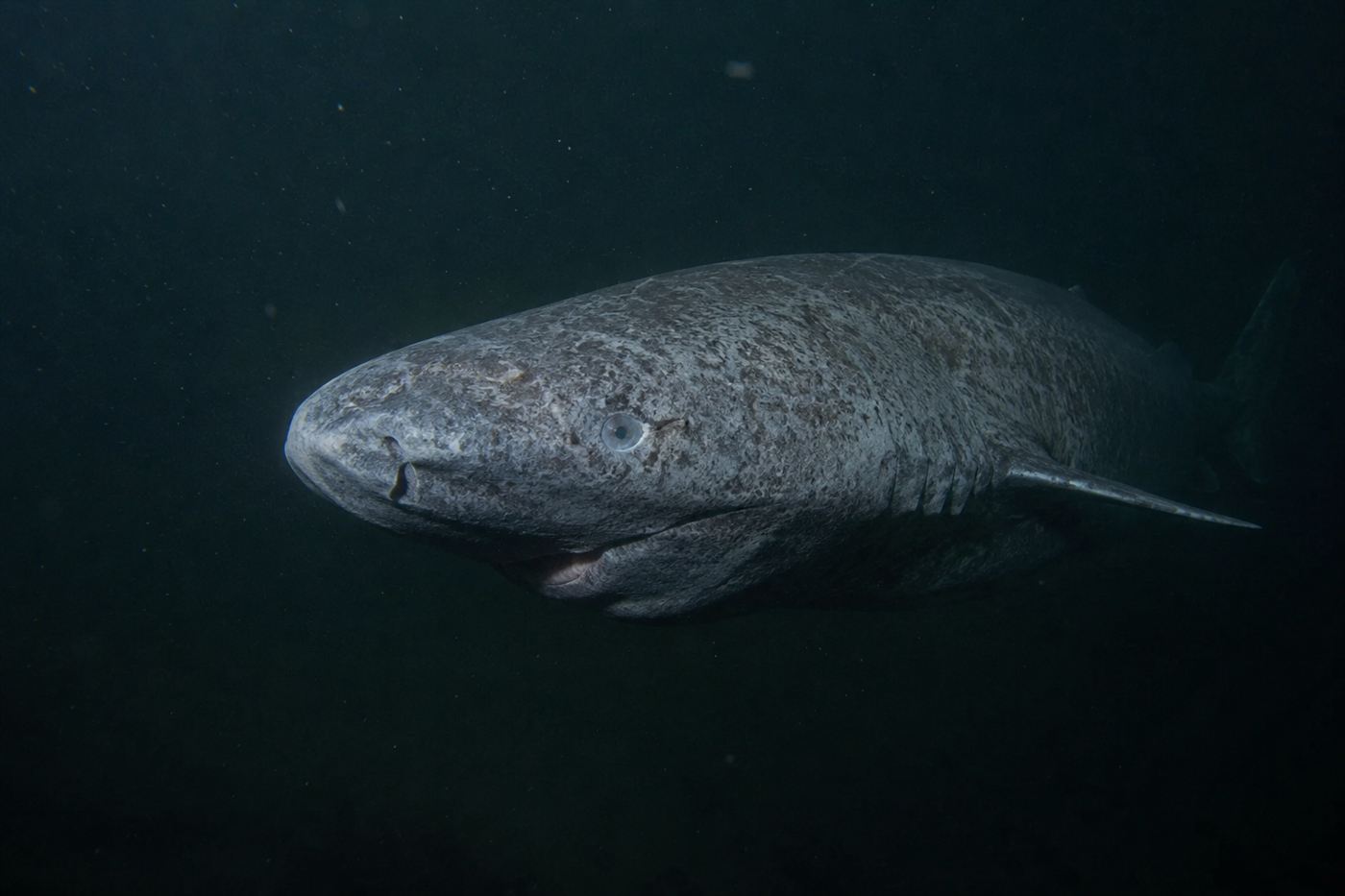
Photographs of it look almost fake, like paint spilled across a glacier, the kind of scene that belongs beside a fish thought extinct for 66 million years.
It is one of the eeriest natural sights anywhere on the continent.
A mystery more than a century old
He guessed the red came from some kind of red algae growing in the ice.
That idea stuck for decades, even though nobody could ever prove it.
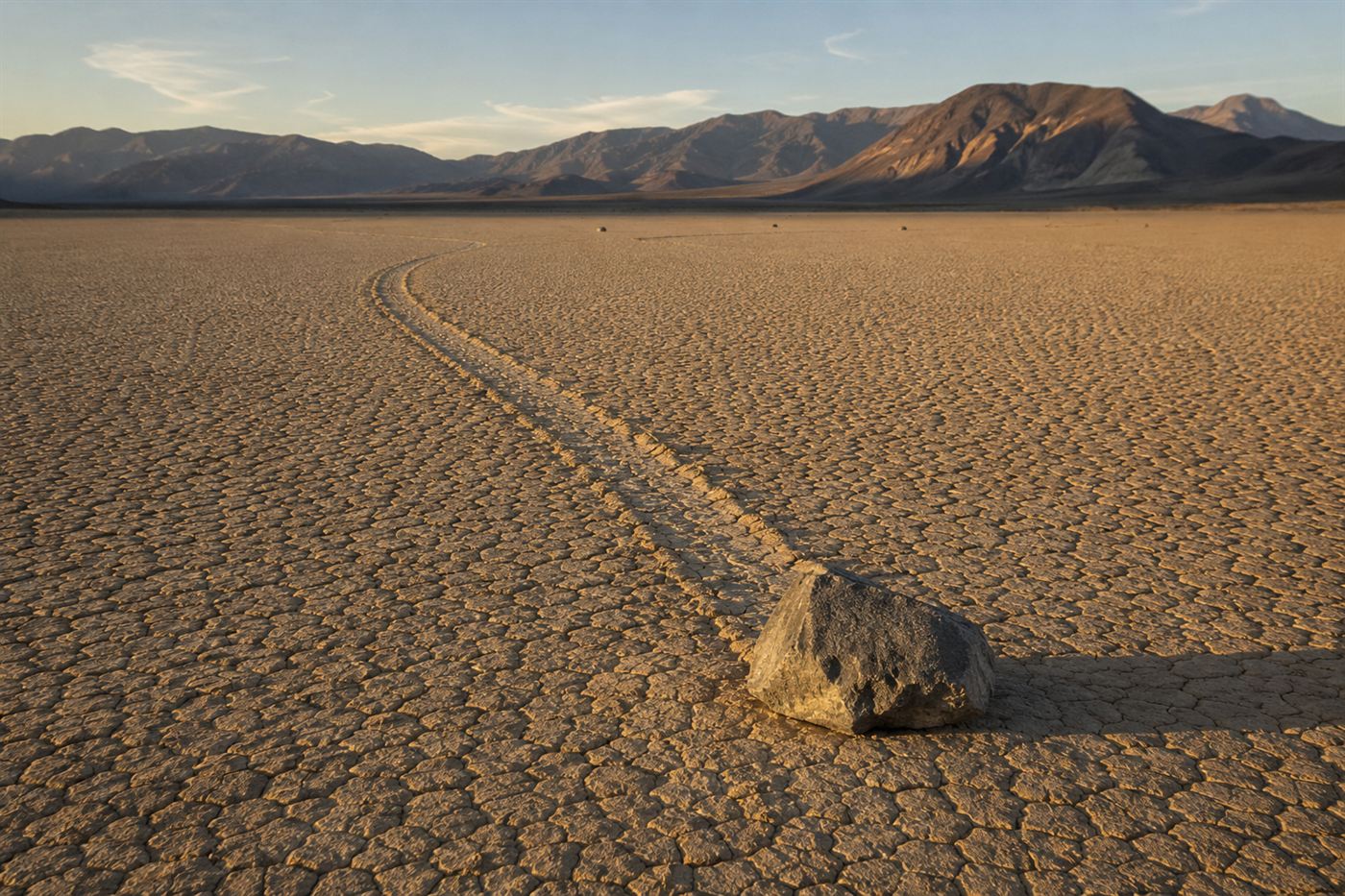
The real cause turned out to have nothing to do with life on the surface, a puzzle unravelled as patiently as the moving stones of Death Valley.
In the end, the answer was basic chemistry.
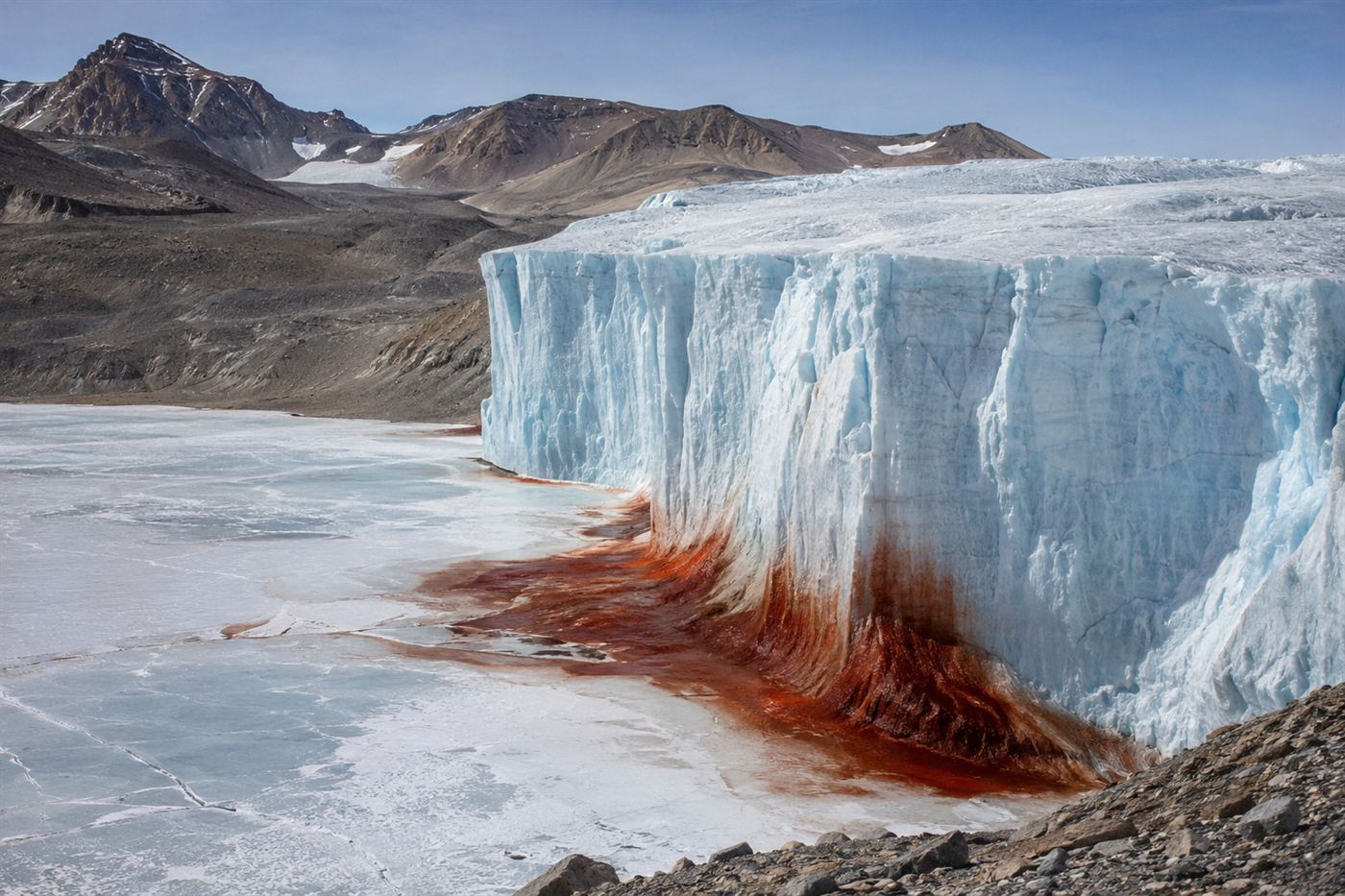
It is rust, not blood
The red is iron, plain and simple, not blood and not algae.
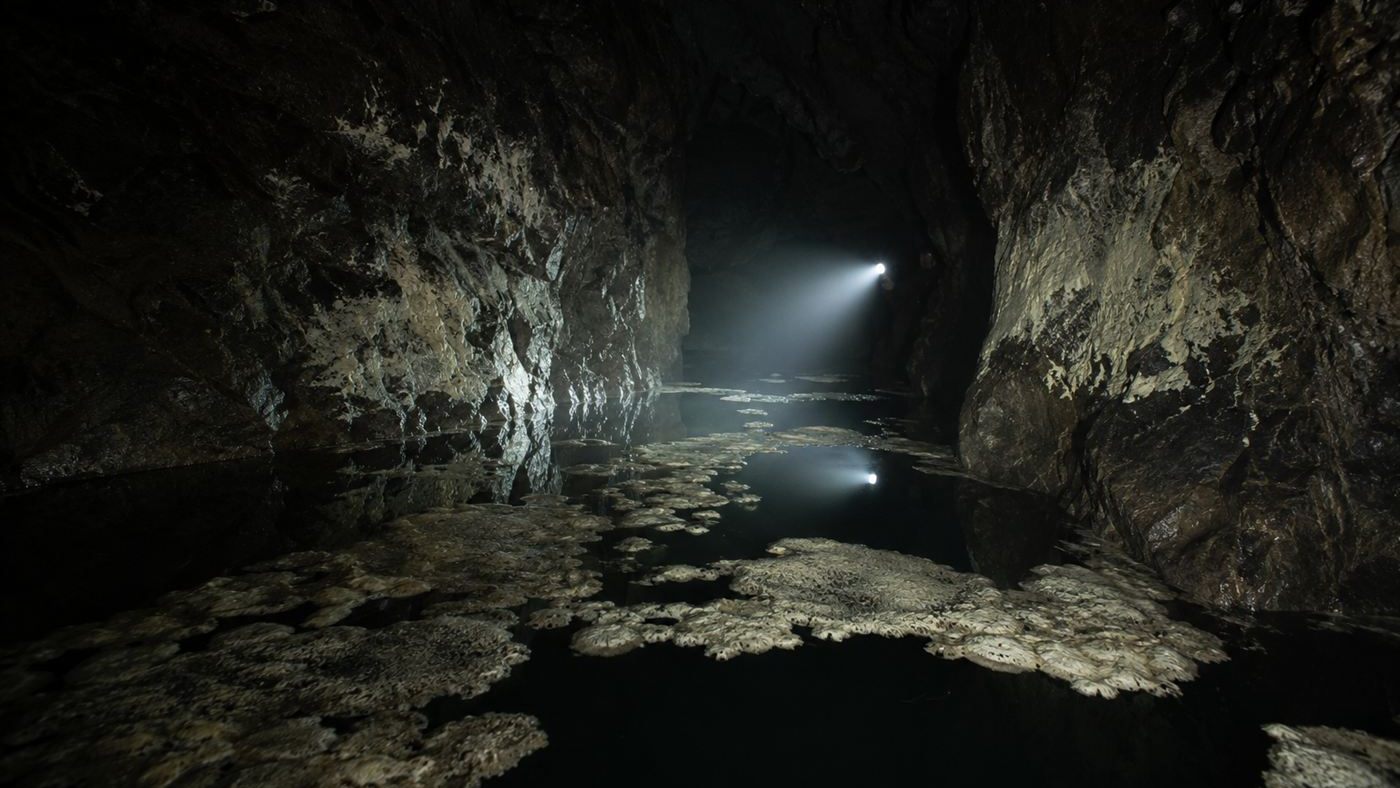
Deep under the glacier lies a pocket of extremely salty water, a brine loaded with dissolved iron. Cold, heavy brine drives another of Antarctica's strangest sights too, the brinicle, an icicle of death that grows downward beneath the sea ice.
That water has been sealed beneath the ice, cut off from the air, for something like a million years or more.
When it finally escapes through a fissure and meets the oxygen in the atmosphere, the iron rusts almost at once.
The very same reaction that turns an old nail orange is what paints the glacier red.
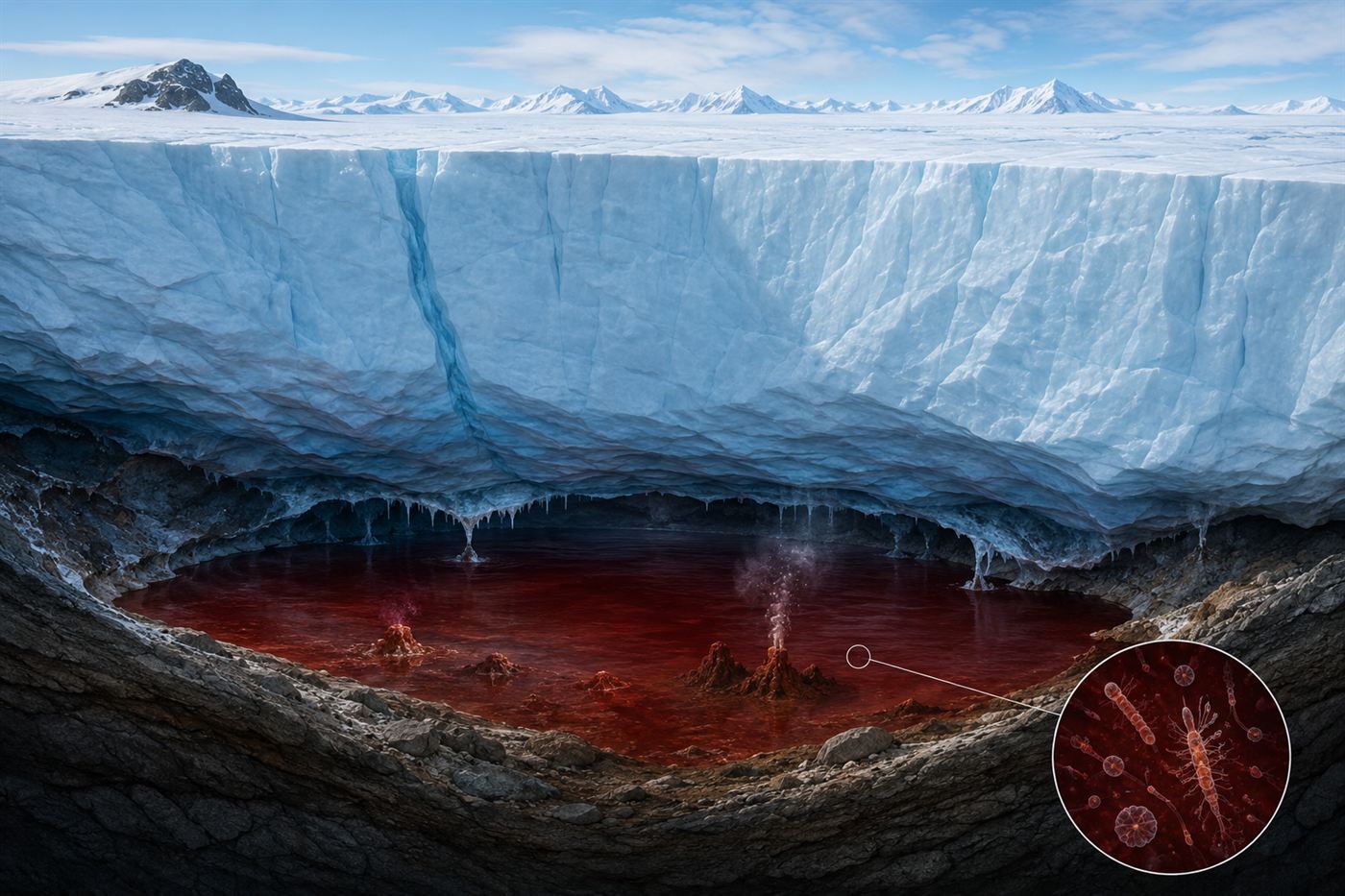
The hidden world beneath Blood Falls in Antarctica
The real shock was never the colour but what the brine was carrying.
The trapped water is not dead at all, but home to microbes that have survived sealed in cold and total darkness.
With no sunlight and no oxygen, they live off iron and sulfur compounds dissolved in the water.
It is an ecosystem running on chemistry alone, isolated for ages, a relative of the life that hides in the deep sea.
Scientists study it as a stand-in for what life might look like under the ice of Mars or the frozen moons of Jupiter.
Mapping the rivers no one can see
For a long time, no one knew exactly where the brine was coming from.
Then, around 2017, researchers used radar to look straight through the glacier itself.
They found a whole network of briny rivers and a lake hidden inside and beneath the ice.
The salt, plus the heat released as water slowly freezes, keeps that system liquid even in the deep Antarctic cold.
Life clinging on in such a place echoes how nature reclaimed the dead zone of Chernobyl.
The honest catch
Blood Falls is a wonderful story, but the name does a lot of dramatic work.
Up close it is more a rusty stain and a slow seep than any gushing wound.
It was never blood, and Taylor's original guess about algae was wrong from the start.
The site is so remote and protected that much of what we know comes from radar and a handful of precious samples, not close-up study.
And the microbes are an exciting analogue for alien life, not proof that any exists.
Still, there is something fitting about a frozen desert that appears to bleed.
A glacier that looks like a wound turns out to be a doorway into a buried, living world, the kind of place that hints at where to look for life beyond Earth, much as a probe sent to touch the sun teaches us about our own star.
If life can survive sealed under a glacier with no sun and no oxygen for a million years, where else do you think we might find it? Tell us in the comments.