A whole world of creatures has survived sealed off from the sun for millions of years, eating poison gas in air that would kill a person in minutes
Almost everything alive depends, in the end, on sunlight. Movile Cave in Romania does not. Sealed away from the surface for millions of years, it holds a complete little ecosystem of dozens of species that have never seen daylight and live instead on toxic chemistry, in air so foul it would kill an unprepared human.
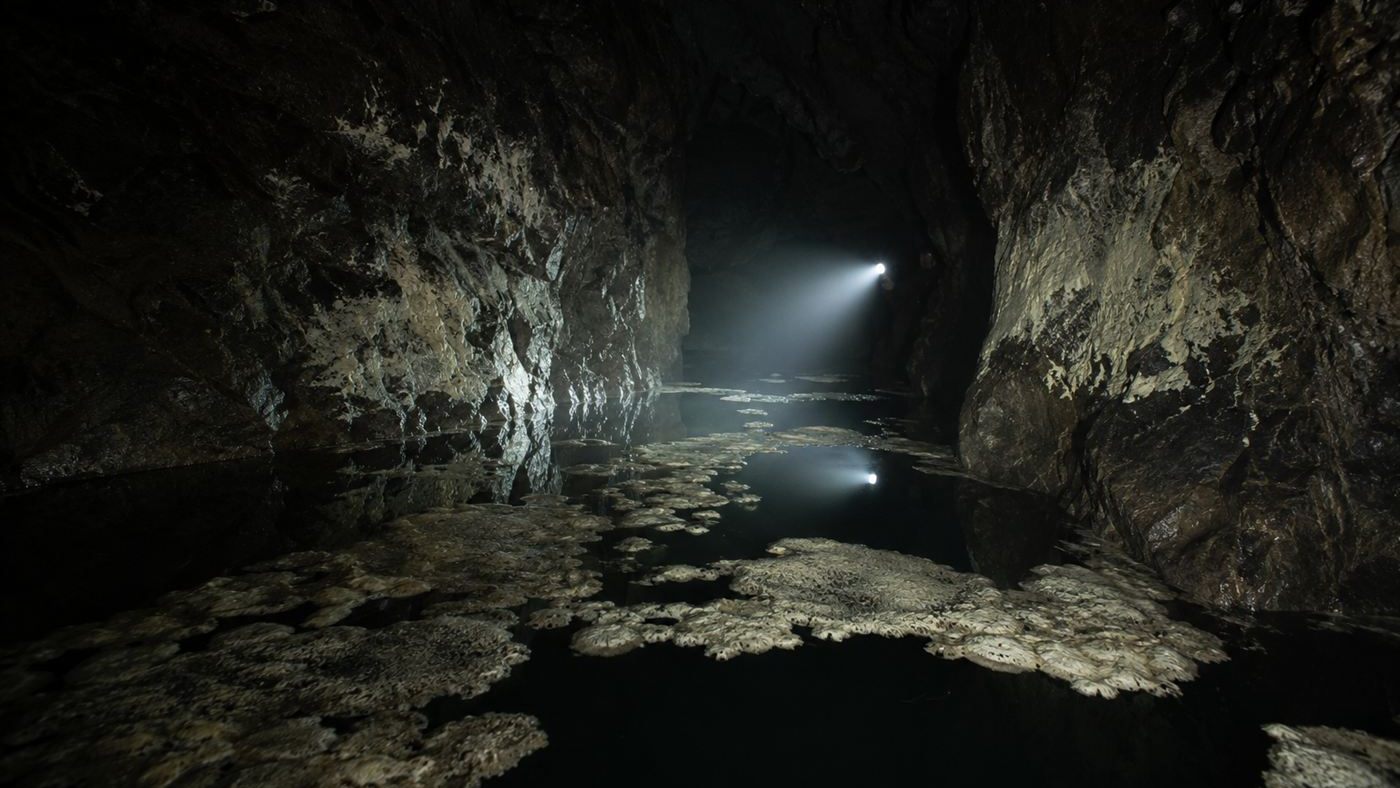
Inside Movile Cave, life runs on chemistry, not sunlight. Illustration: Watts & Wild.
To grasp how strange this is, start with the rule it breaks. Nearly every food chain on the planet begins with plants or algae using sunlight to make food, through photosynthesis. Everything else, all the way up to us, ultimately eats sunlight at one remove. A place with no light should therefore be a desert, a dead zone where nothing can grow. Movile Cave is the glaring exception.
It sits near Mangalia in southeastern Romania, and it has no natural entrance at all. As Discover Wildlife explains, the cave has been sealed off from the outside world for an almost unimaginable span of time, cut off by impermeable layers of rock, leaving whatever was trapped inside to evolve entirely on its own.
How was Movile Cave discovered?
Because it has no opening, the cave stayed completely unknown until very recently. In 1986 the Romanian scientist Cristian Lascu was investigating ground for a potential power station near Mangalia when a shaft dug into the earth broke through into a hidden network of warm, watery passages. Lowering himself in, Lascu became one of the first humans ever to enter a world that had been quietly running itself for millions of years.
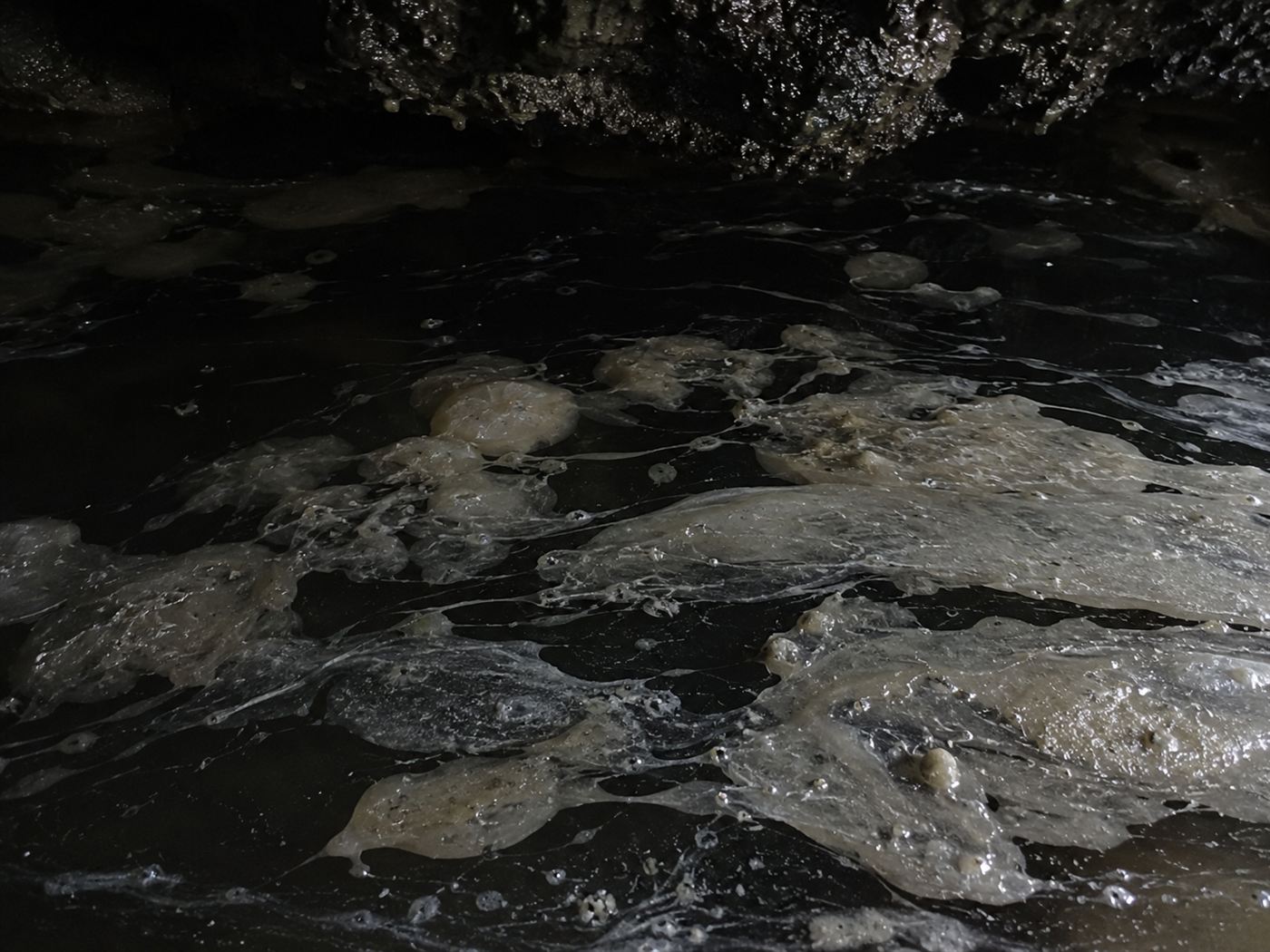
What he found was not an empty hole but a living system: still pools, slimy films coating the water and walls, and pale creatures moving in the dark. It was, researchers soon realised, something genuinely new to science.
How Movile Cave runs without the sun
The secret is a different kind of life at the bottom of the food chain. Instead of plants, the base is made of bacteria that get their energy from chemicals, a process called chemosynthesis. As researchers writing for GEOERA describe, microbes in Movile feed on the hydrogen sulfide and methane dissolved in the water and gas, building floating mats that everything else then eats. The sun is replaced by sulfur.
Those mats, sometimes nicknamed cave snot, are grazed by tiny animals, which are eaten by slightly larger predators, and so on, a full food web powered entirely by chemistry. Movile was the first land-based ecosystem of this type ever found, proof that life can build itself a whole functioning world out of poison and darkness, with no help from the sky at all.
Life that breathes poison
The air in the cave's pockets is the stuff of nightmares for a visitor. It is thick with hydrogen sulfide, that rotten-egg gas, along with methane, ammonia and a lot of carbon dioxide, and it holds only about half the oxygen of normal air. For a human, breathing it would bring on collapse within minutes, which is why only a handful of scientists are ever allowed in, briefly and with care.
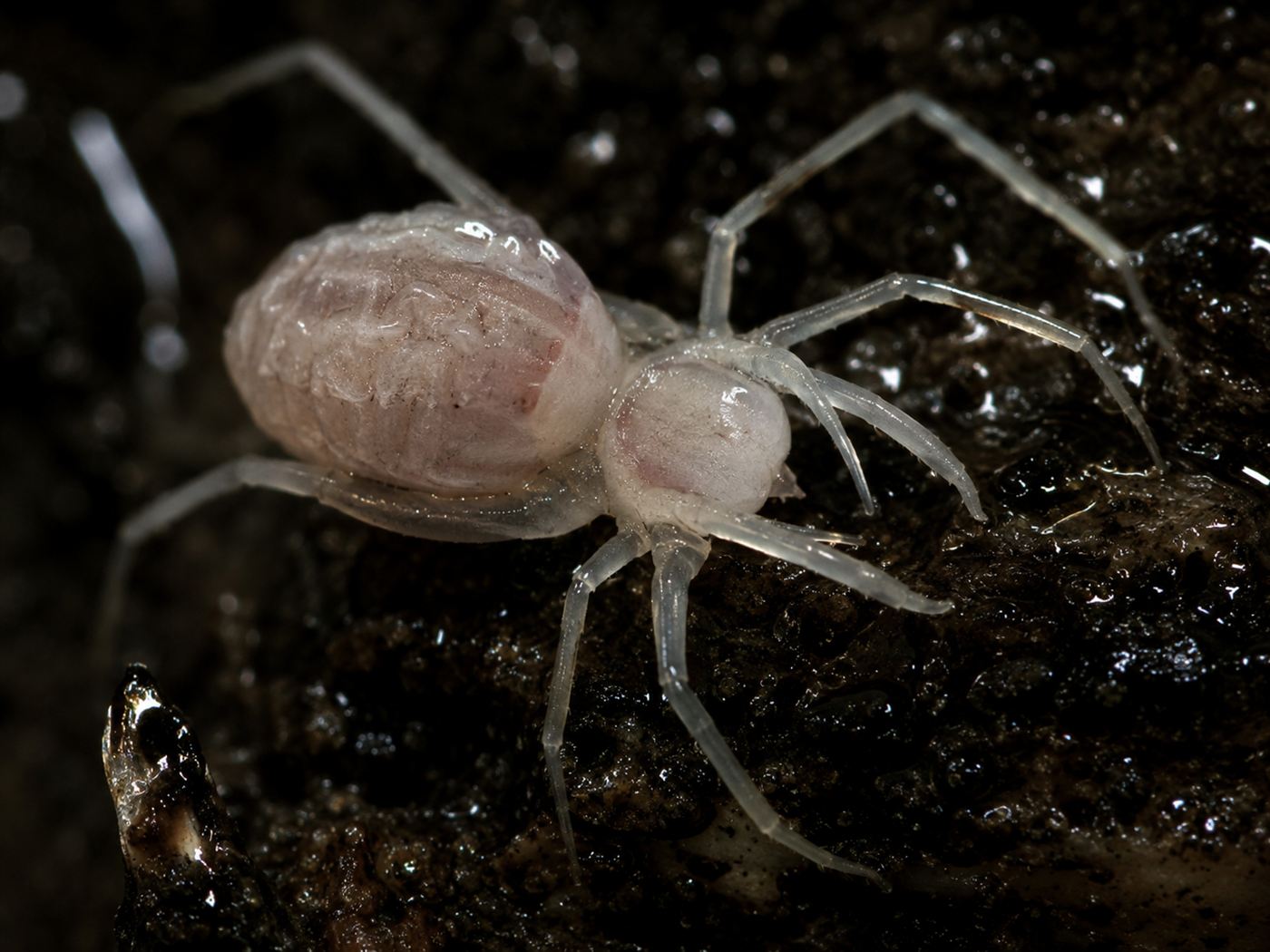
For the cave's residents it is simply home. As UNESCO notes in listing the site, the cave hosts dozens of species, many of them found nowhere else on Earth, blind and colourless leeches, spiders, a water scorpion, centipedes and woodlice, all evolved over a vast isolation into forms perfectly suited to a toxic, lightless world.
The honest catch
A couple of clarifications keep the wonder honest. The often-quoted "five and a half million years" really refers to how long ago the rock and water system started forming; the true sealing-off of the ecosystem from the surface seems to have happened somewhat later, and exactly how isolated it has been is still studied and debated. The cave is ancient and cut off, but the headline number is a little neater than the geology.
The word "alien," which often gets attached to Movile, is also more poetry than fact. The chemistry that powers it, bacteria living off sulfur and methane, is ordinary Earth biology, just rarely seen running an entire ecosystem on its own. That is exactly why scientists are so interested: Movile is a real, studyable model for how life might survive without sunlight elsewhere, on Mars or under the ice of a moon like Europa, not because it is otherworldly but because it shows our own planet's life doing something we did not think possible.
Why a sealed cave still matters
The deepest lesson of Movile Cave is how loosely life clings to the rules we assume are universal. We treat sunlight as the source of everything, and here is a complete, ancient, thriving world that has done without it entirely, fed by the kind of toxic gas that would kill the things reading this. It widens the map of where life can be.
If life can build a sealed kingdom on poison in the dark under Romania, it becomes much harder to be sure it has not done the same somewhere far stranger. Does Movile make you more hopeful that we will find life beyond Earth? Tell us in the comments.
Related reading: A glacier in Antarctica bleeds rust-red brine from a lake of microbes sealed off for nearly two million years.