Deep under a Mexican desert lies a chamber of crystals taller than houses, grown over half a million years in air so hot it can kill a person in minutes
Three hundred metres beneath the desert of Chihuahua, the Naica crystal cave hides the largest natural crystals ever found, gleaming beams of selenite the size of tree trunks. It is one of the most beautiful places on Earth, and one of the deadliest, hot and wet enough to kill an unprotected person in a few minutes.
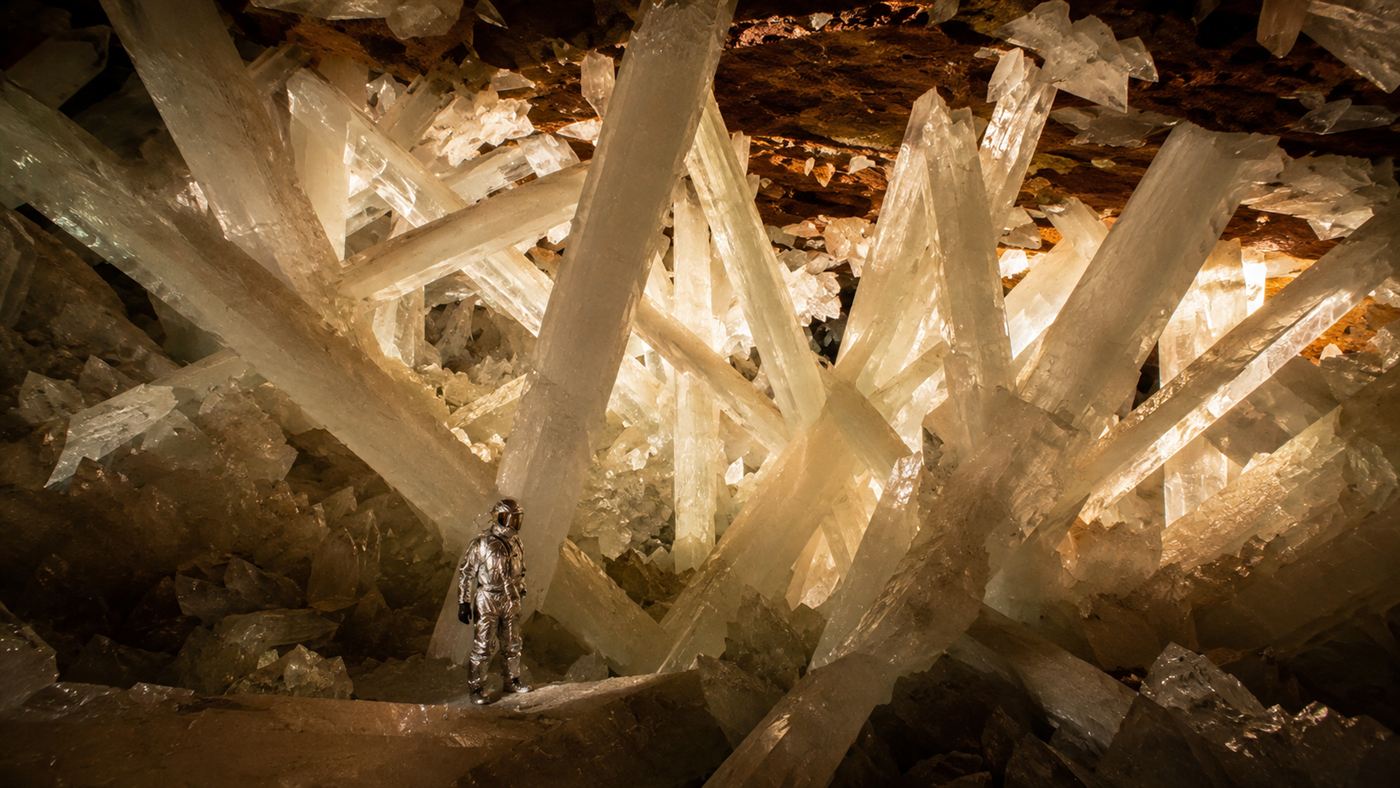
The giant selenite beams of Naica dwarf a person in a heat suit. Illustration: Watts & Wild.
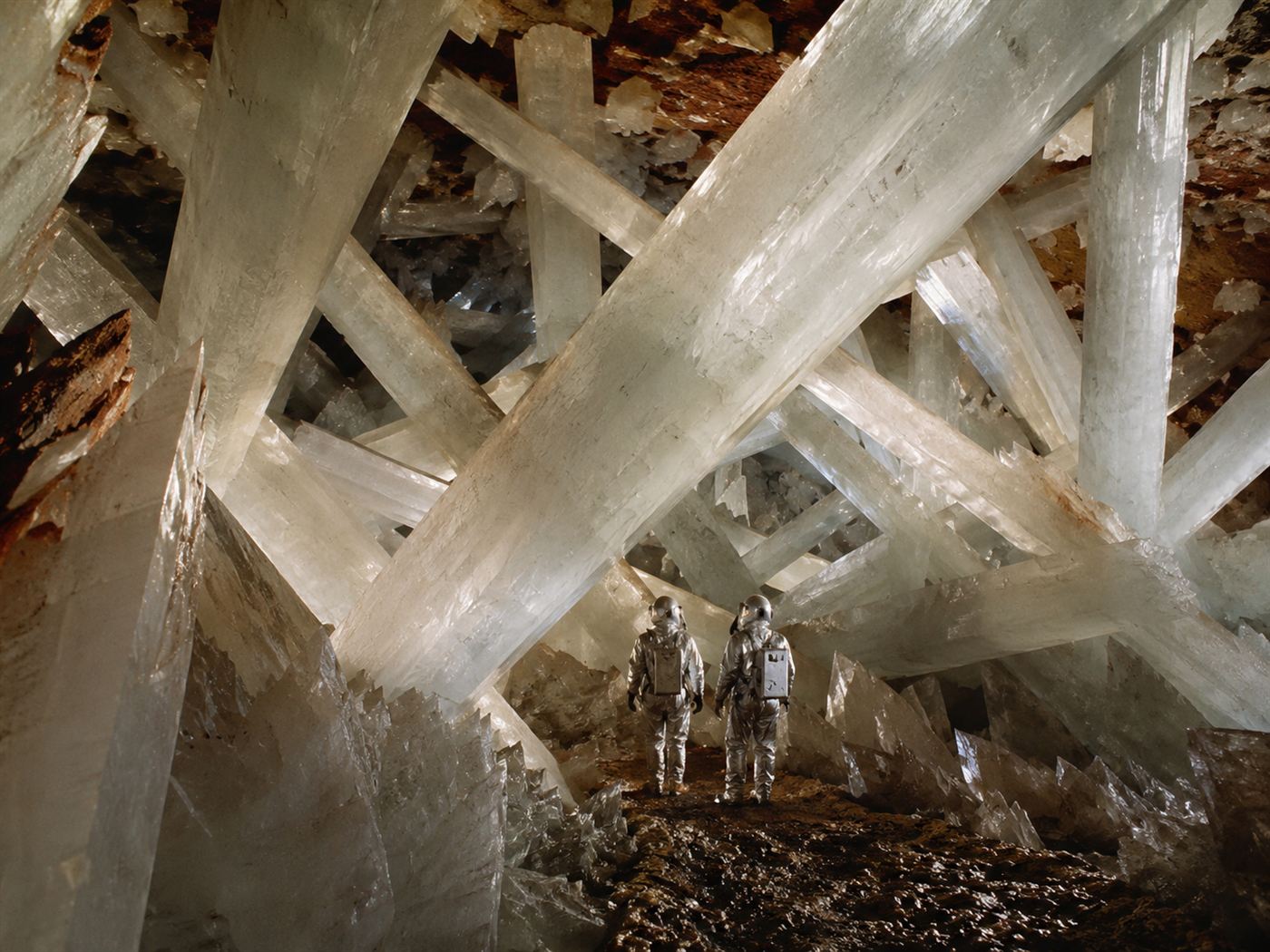
Nobody was looking for it. In April 2000, miners working for the Industrias Peñoles company were drilling a new tunnel deep inside the Naica mine, which produces lead, zinc and silver, when they broke through into a hidden chamber. What they found stopped them cold. The cavern was packed with translucent crystal beams, some longer than a bus, jutting across the space in every direction like the inside of a geode built for giants.
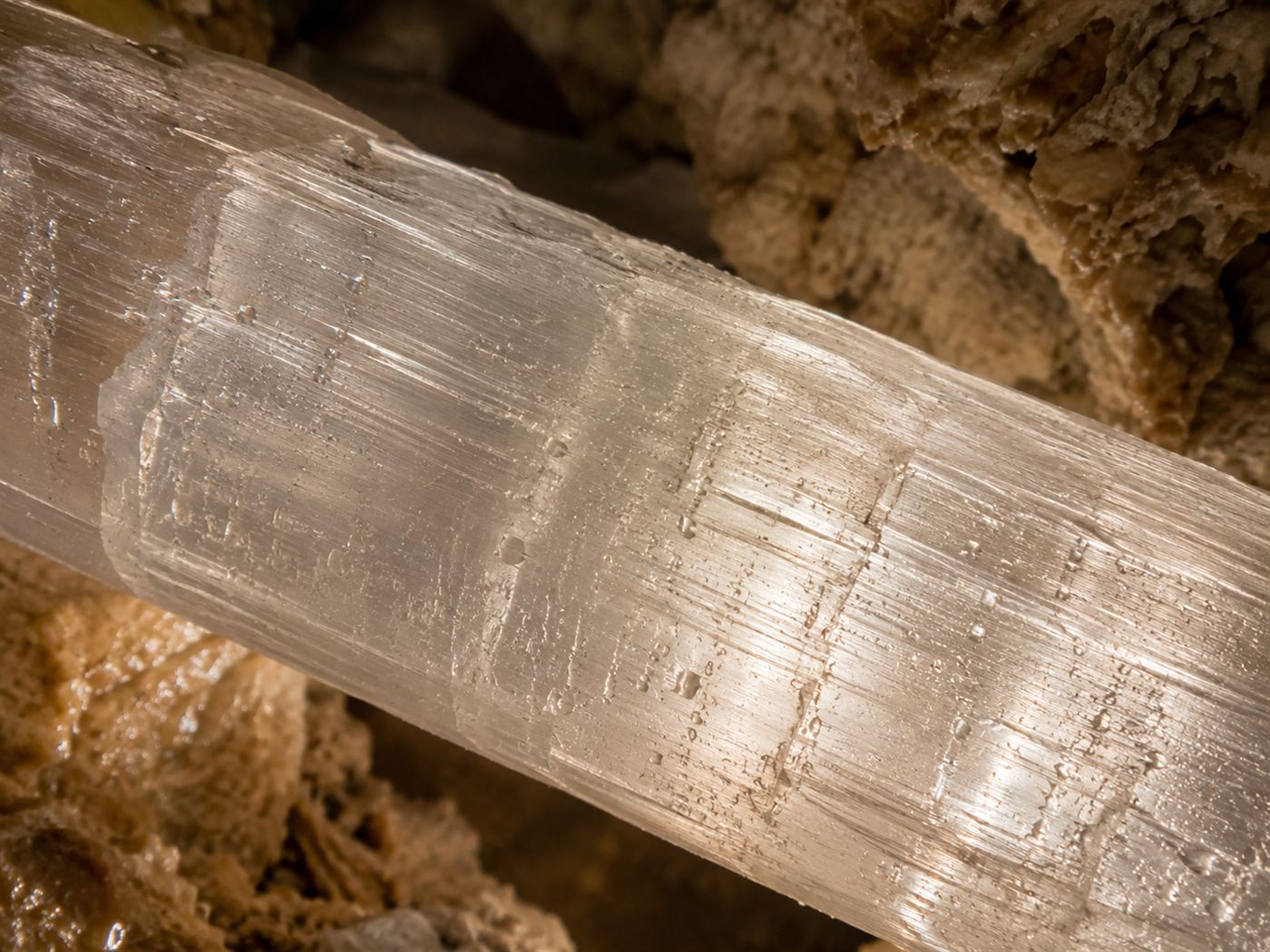
These are crystals of selenite, a form of gypsum, and they are record-breakers. As National Geographic has reported, the largest measured beam is about 11.4 metres long, with a mass of around 12 tonnes, making these the biggest natural crystals ever documented. Standing among them, a person looks like a doll dropped into a chandelier.
How the Naica crystal cave formed
Crystals do not normally grow that big, and the reason these did comes down to time and an almost perfectly tuned temperature. Long ago, magma deep beneath the mountain heated water and packed it with dissolved minerals. The key was a delicate balance: around 58 degrees Celsius, one mineral, anhydrite, slowly dissolves and re-forms as gypsum. Sitting for ages just on the gypsum side of that line, the crystals had near-ideal conditions to keep adding material without ever stopping.
And they had almost unimaginable patience. As Chemical & Engineering News describes, uranium-thorium dating put the maximum age of the giant crystals at around 500,000 years. They grew so slowly that the human eye could never have caught any movement, a fraction of a hair per year, century after century, while ice ages came and went on the surface far above.
Beautiful enough to kill you
The same heat that grew the crystals makes the cave lethal. With the mine's pumps holding back the groundwater, the chamber sat in air of up to 58 degrees Celsius and 90 to 99 percent humidity. In those conditions a human body cannot shed heat, and water condenses inside the lungs. An unprotected person collapses within minutes, and a longer stay is simply fatal.
To study the crystals at all, researchers had to dress like deep-sea divers crossed with astronauts, wearing suits packed with ice and carrying bottles of cooled, breathable air. Even then they could only last a short while before the heat forced them out. The most beautiful cave on the planet could be visited only in stolen minutes, by people racing their own body temperature.
Can you visit the Naica crystal cave?
For most of us the answer is a flat no, and it has become even more final. The cave was never a tourist site; it was far too hot, and in its brief years of access it was also damaged, with people breaking off pieces of the crystals. The wonder was always fragile as well as dangerous.
Then the decision was taken out of human hands. When mining at Naica wound down and the pumps were switched off, the groundwater rose back up and reclaimed the chamber. The Cave of the Crystals is now flooded once more, sealed under water, exactly as it spent most of its existence.
The honest catch
It is worth being precise about a few things. The claim of the largest crystals on Earth refers to the size of single crystals, not the largest crystal formations of every kind, and other caves hold their own superlatives. The romance of an untouched natural cathedral also needs tempering: in the short window when people could enter, the site suffered real damage from removed and broken crystals.
And the flooding, which sounds like a tragedy, may be the best thing for it. Out in the open air the giant crystals had begun to degrade, and being back underwater is closer to the stable, drowned state in which they grew and survived for half a million years. We did not so much lose the cave as return it to the conditions that made it.
Why a flooded cave still matters
Even sealed away, the Naica crystal cave is a humbling thing to know about. It is a reminder that the planet is still hiding spectacles we stumble into entirely by accident, and that some of the most extraordinary objects on Earth were built not by any sudden event but by deep time, doing the same quiet thing for hundreds of thousands of years.
There is something fitting about a wonder so perfect that we are not really allowed to be there. Is it sadder that we can no longer reach the crystal cave, or better that it is safely back underwater beyond our reach? Tell us in the comments.
Related reading: A glacier in Antarctica bleeds a river of rust-red brine from a lake sealed off for nearly two million years.