Across the Namib Desert, thousands of bare circles dot the grass in an eerily perfect honeycomb, and scientists have argued for decades over what makes the fairy circles form
Fly over parts of the Namib and the ground below looks stippled by a machine: millions of round bald spots in the grass, spaced with unsettling regularity. The fairy circles are one of nature's most beautiful puzzles, and the fight over what causes them has run for decades.
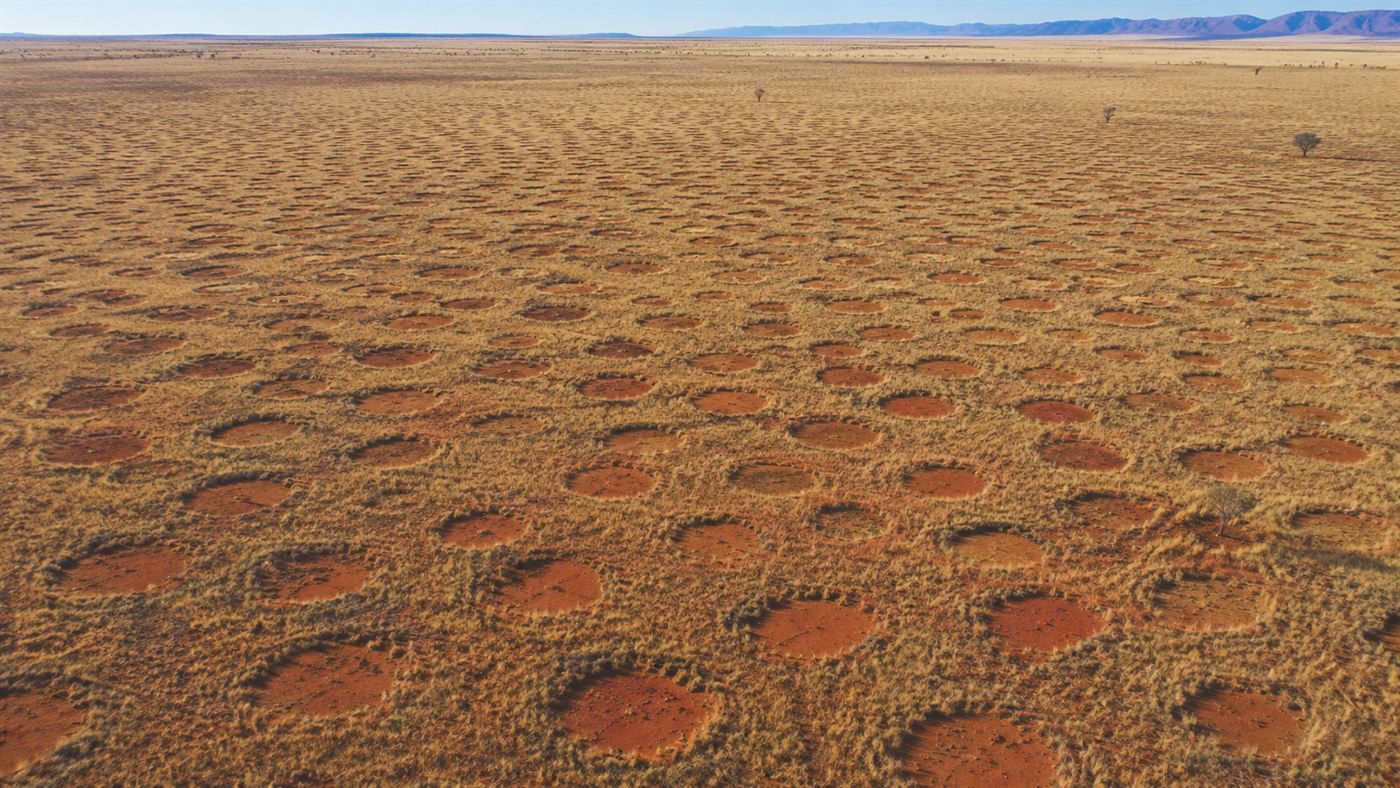
Fairy circles freckle the Namib Desert in a strikingly regular honeycomb pattern. Illustration: Watts & Wild.
They are exactly what they sound like: circles of bare earth, usually a few metres wide, each ringed by a tidy fringe of taller grass, scattered across the desert in their millions. Seen from above, the fairy circles form a pattern so even and so deliberate that it is hard to believe no one arranged them. For as long as people have studied them, they have refused to give up a simple answer.
As Conservation Namibia has laid out, the fairy circles have been one of the most stubborn debates in ecology, with respected scientists lined up on opposite sides for years. The circles are gorgeous, and they are also a genuine scientific whodunit that is only now approaching an answer, and not without argument.
The short version: Fairy circles are bare patches ringed by grass that cover parts of the Namib Desert in a regular honeycomb pattern. Two theories have battled for years: that sand termites eat the roots, or that the grasses self-organize by competing for scarce water. Recent research points strongly to water competition producing a mathematical pattern, though the mystery is not entirely closed.
Polka dots across a desert
The scale of it is part of the wonder. Fairy circles stretch across hundreds of kilometres of the Namib grasslands, and up close each one is a clean disc of bare, reddish soil, typically two to fifteen metres across, surrounded by a ring of grass that grows noticeably taller than the rest. They are not random smudges. They keep an almost crystalline spacing from one another, as if the desert had been tiled.
They are not unique to Africa, either. Very similar formations were later found in the remote outback of Western Australia, which deepened the puzzle: whatever makes them had to be something that could happen on two continents. And the circles are long-lived, individual ones persisting for decades before slowly closing over, which means the pattern is not a passing accident but something the land maintains.
The circles that will not explain themselves
Unsurprisingly, people reached for stories. The Himba people of the region have long explained the circles as the work of the spirit world, the footprints of gods walking the desert, or the scorched breath of a dragon living beneath the sand. Faced with a perfect pattern and no obvious maker, myth is a very human response.
Science found the circles just as baffling, only with better tools. What could carve millions of near-identical bare discs, keep them evenly spaced, and hold the arrangement steady for years across an entire desert? Every easy explanation fell apart on inspection. The Namib Desert had produced a pattern that looked engineered, and finding the engineer became a decades-long quest.
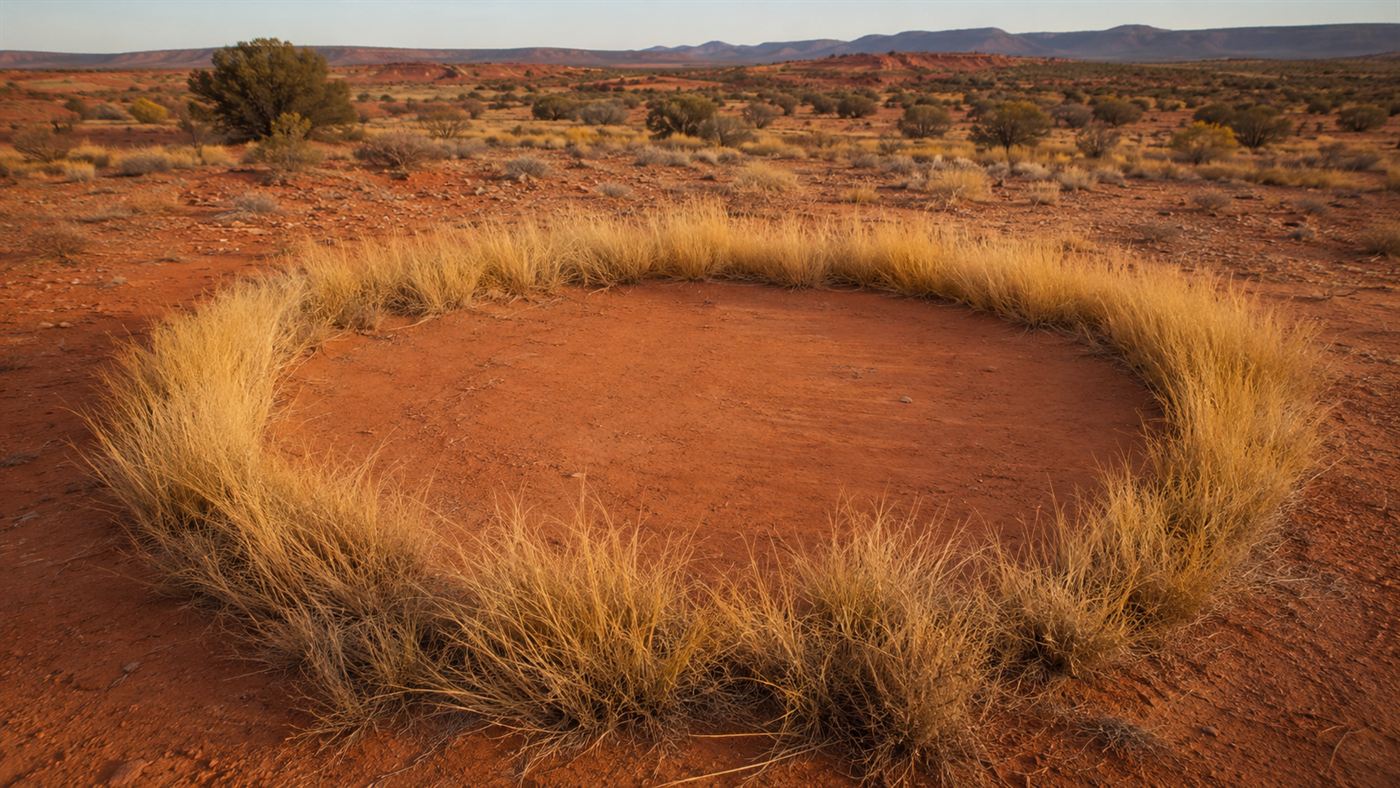
Termites or thirsty grass?
Two rival explanations came to dominate. The first blames insects. On this view, colonies of sand termites live beneath the circles and eat away the grass roots in the centre, killing the plants and creating a bare patch that then soaks up and stores rainwater, a private reservoir for the colony. Supporters pointed to termites reliably found under many circles as evidence.
The second explanation involves no animals at all. It says the grasses organize themselves through a brutal competition for water. In a desert this dry, plants around the edge of a gap pull moisture inward so aggressively that they drain the middle, killing any grass that tries to grow there and keeping the centre bare. The two camps, one led by researchers backing the sand termites, the other backing plant self-organization, spent years trading studies and sharp words.
What really makes the fairy circles
The balance has tipped. As reported via ScienceDaily, researchers from the University of Göttingen used two unusually wet seasons to watch the circles closely and found that the grasses inside them died from water stress soon after rain, while termite damage to the roots was not the cause. Careful, continuous measurements showed the grasses ringing each circle rapidly sucking the water out of the bare centre.
That fits the self-organization idea beautifully, and it connects the fairy circles to a piece of mathematics from an unexpected source. The regular, repeating honeycomb is what scientists call a Turing pattern, named for the codebreaker Alan Turing, who worked out how simple local rules can spontaneously generate ordered patterns. The circles, on this reading, are the desert doing maths.
A pattern written by math
Turing's insight was that you do not need a designer to get a pattern. You just need two opposing tendencies working at different distances: something that encourages growth locally, and something that suppresses it further away. Apply that to grass and water, plants helping their close neighbours but starving distant ones by hogging the moisture, and a regular grid of gaps falls out naturally, no plan required.
It is the same family of maths thought to lie behind the spots on a leopard and the stripes on a fish. Seen that way, the fairy circles stop being spooky and become something arguably more astonishing: proof that a bare desert, given nothing but grass and a shortage of water, can organize itself into one of the most orderly patterns in the natural world, entirely on its own.
The honest catch
It would be neater to end there, but the case is not fully closed. As the University of Hamburg has argued, other researchers still find strong evidence that termites cause fairy circles, and the two sides have not simply merged into agreement. Headlines that declare the mystery solved are running ahead of the science.
The likeliest truth may be a blend: the grasses and their fight for water create the pattern, and termites, finding those moist bare patches ideal, move in and help maintain them. The Australian circles, too, may not work in exactly the same way as the Namibian ones. What is clear is that these are not fairy rings or dragon breath, but the product of ordinary forces arranged in an extraordinary way. That the answer is still being argued over only makes the desert's polka dots more interesting, not less.
A desert with nothing but grass and thirst may be quietly doing geometry. Do the fairy circles show that nature builds order all on its own, or is it unsettling that after decades of study we still cannot fully agree on how a patch of grass makes a circle? Tell us what you think in the comments.
Related reading: The Welwitschia, another Namib survivor that keeps two leaves alive for a thousand years, or the brainless slime mold that solves mazes and designs transport networks.
More from Watts & Wild
More in Energy & the Wild →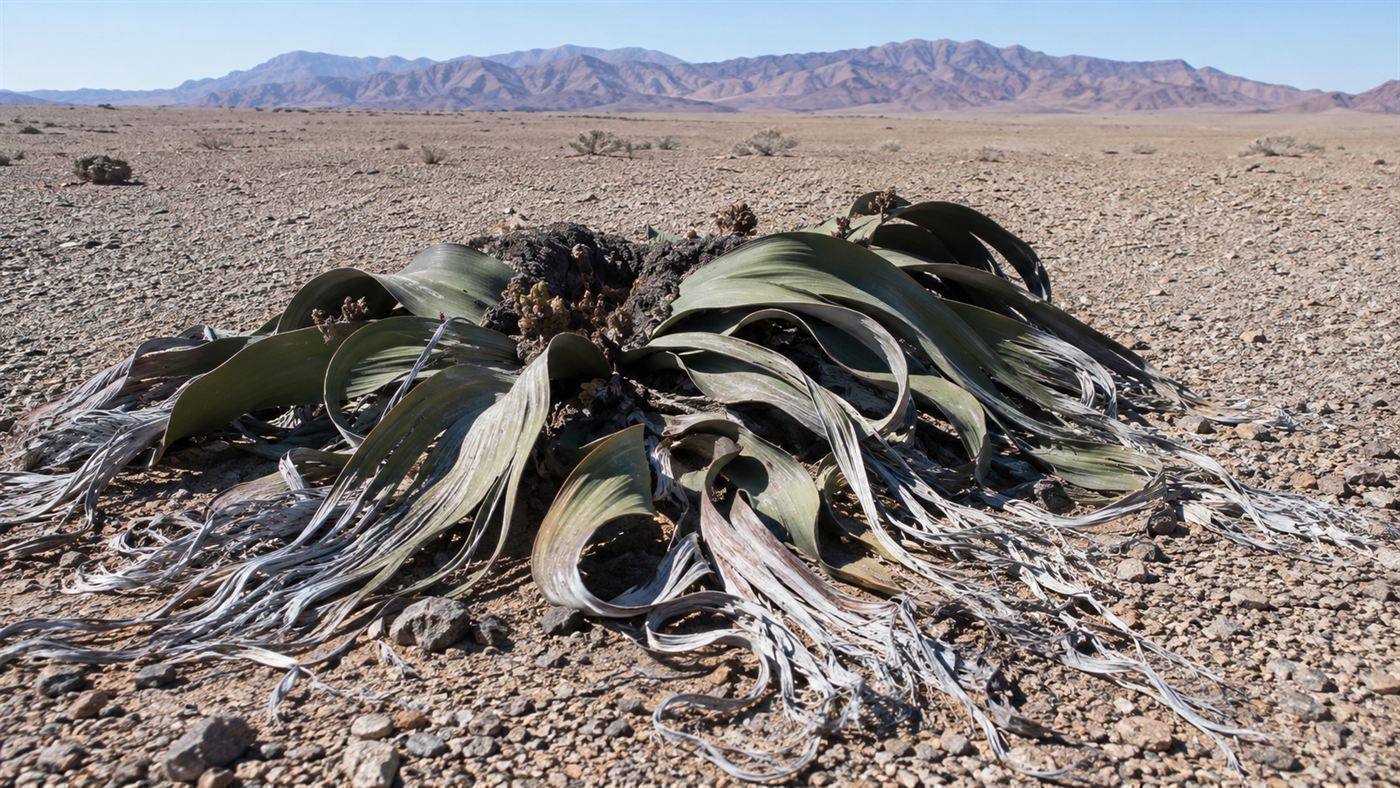

Maria writes about wildlife, ecology, and the strange places where nature and human history collide. She is based in Brazil.