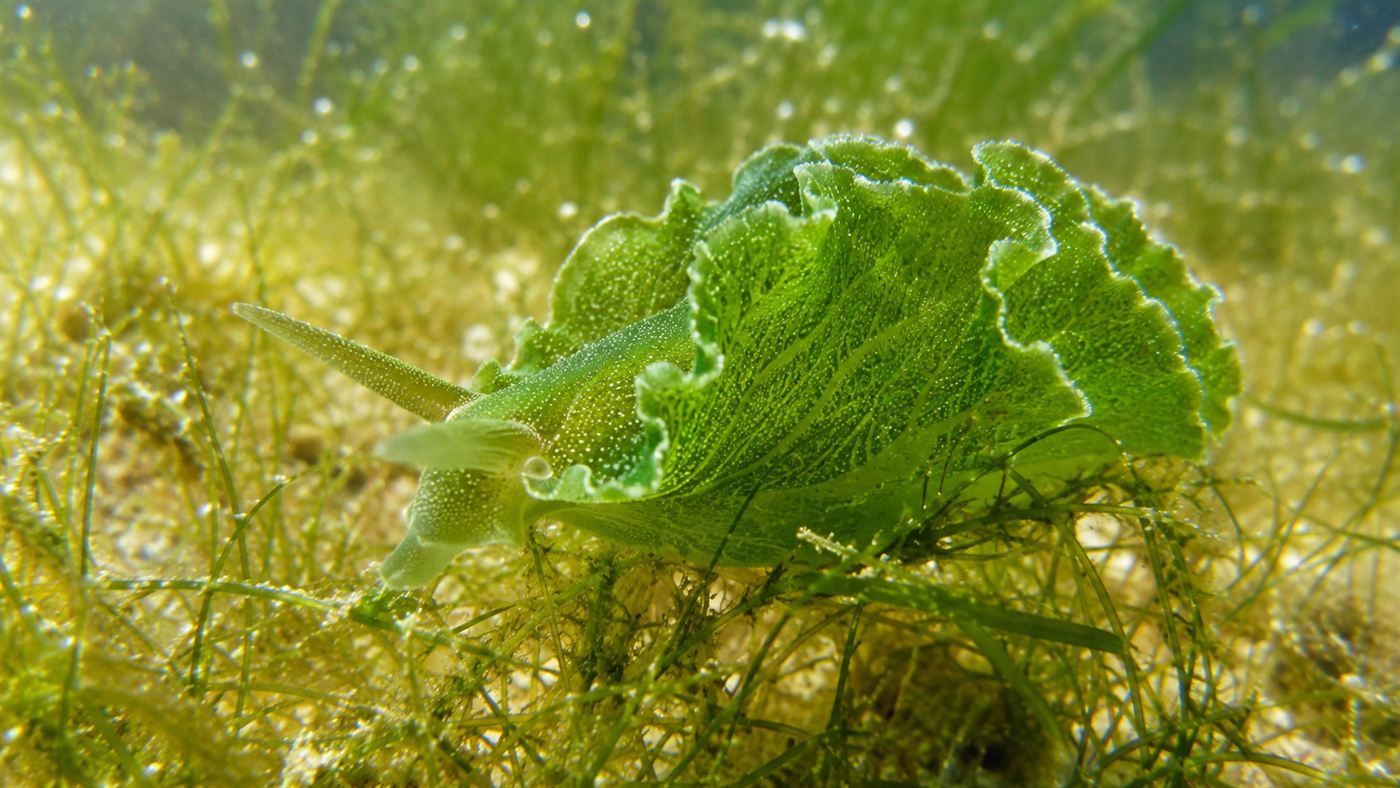
Most animals grow old and die, but one tiny creature in the sea hits reset when its body fails, which is why the immortal jellyfish may never die of old age
It is barely the size of a fingernail, but the immortal jellyfish can do something no other animal can. When it is hurt, sick or simply old, it melts back into its baby form and grows up all over again. Biologists have watched it cheat death this way again and again.
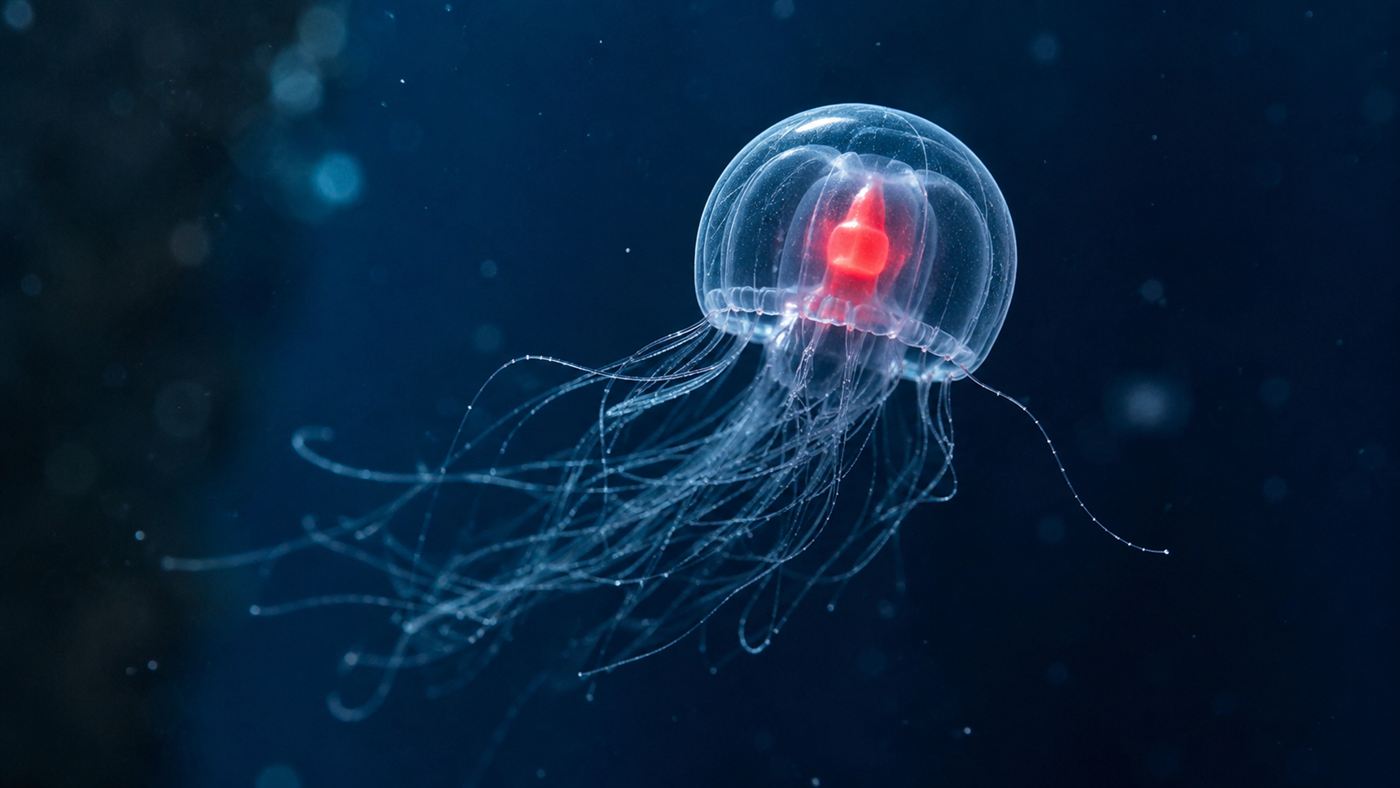
Turritopsis dohrnii, the immortal jellyfish, is about four millimetres across. Illustration: Watts & Wild.
The immortal jellyfish is not a myth or a metaphor. Turritopsis dohrnii, a creature about four millimetres across, can reverse its own life cycle, turning from an adult back into its juvenile stage and starting over, and as the Natural History Museum explains, it can in principle do this indefinitely.
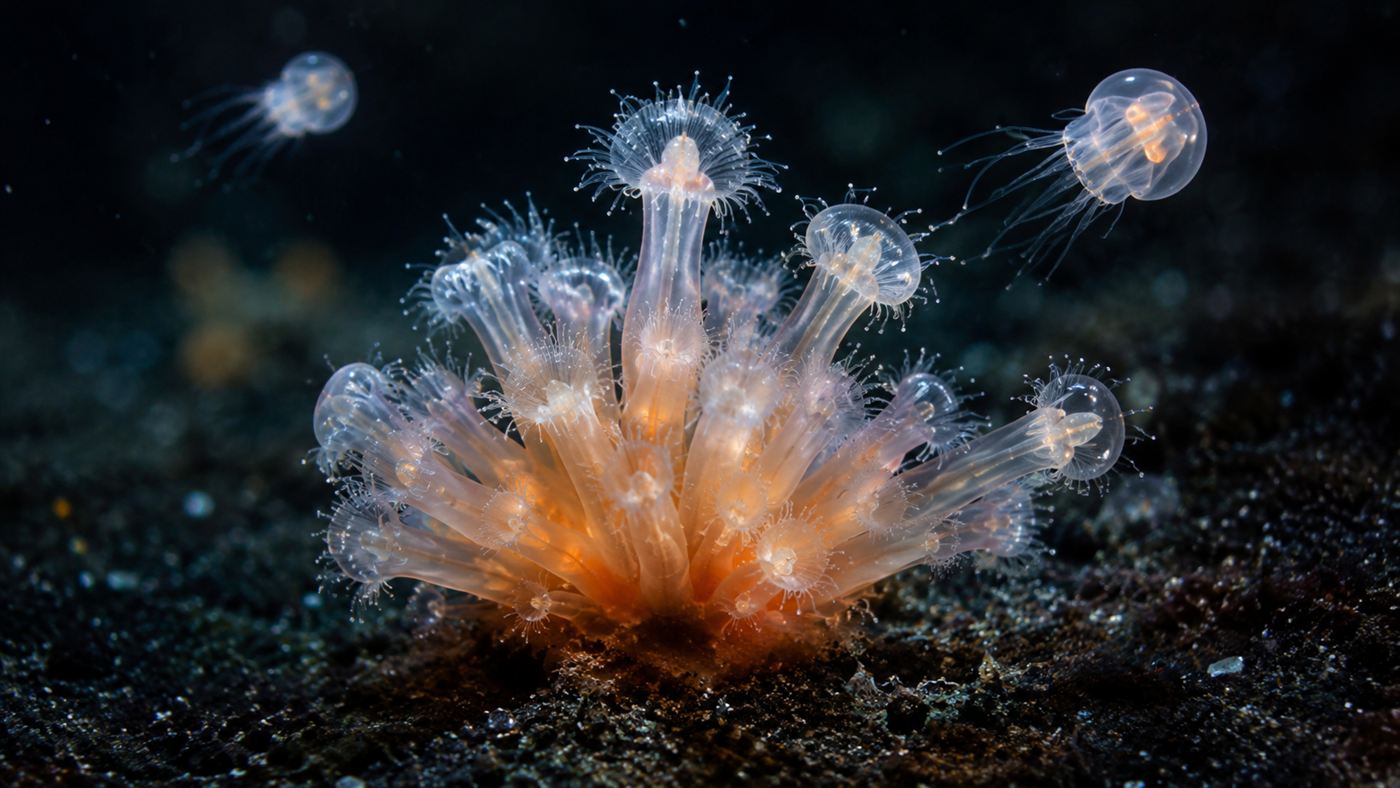
Most animals, us included, run in one direction: born, grown, old, gone. This jellyfish has an escape hatch. When stress, injury or age threatens it, its body collapses into a small blob and then regrows as a polyp, the bottom rung of the life cycle it began on, which buds off brand-new jellyfish. It is, very roughly, as if a butterfly could turn itself back into a caterpillar.
How does the immortal jellyfish reverse aging? Under stress it collapses into a cyst, and its specialized cells switch into other cell types, a process called transdifferentiation, rebuilding the animal as a young polyp. That polyp then grows a new colony that buds fresh jellyfish, resetting the life cycle from the start.
How the immortal jellyfish turns back time
A normal jellyfish life runs egg, larva, polyp, then the free-swimming adult called a medusa.
For almost every species that arrow points one way, and the adult eventually dies.
Turritopsis can spin the arrow backward: a stressed medusa sinks, pulls in its tentacles, and within a day or two becomes a blob that settles and grows into a polyp again.
The engine of the trick is transdifferentiation, the rare ability of a fully specialized cell to transform directly into a completely different kind of cell.
A 2022 genome study found the animal carries extra copies of genes for repairing DNA and maintaining its telomeres, the caps on chromosomes that usually fray with age, so it can keep resetting the clock.
The man who watches jellyfish grow young
No one has stared at this process longer than Shin Kubota.
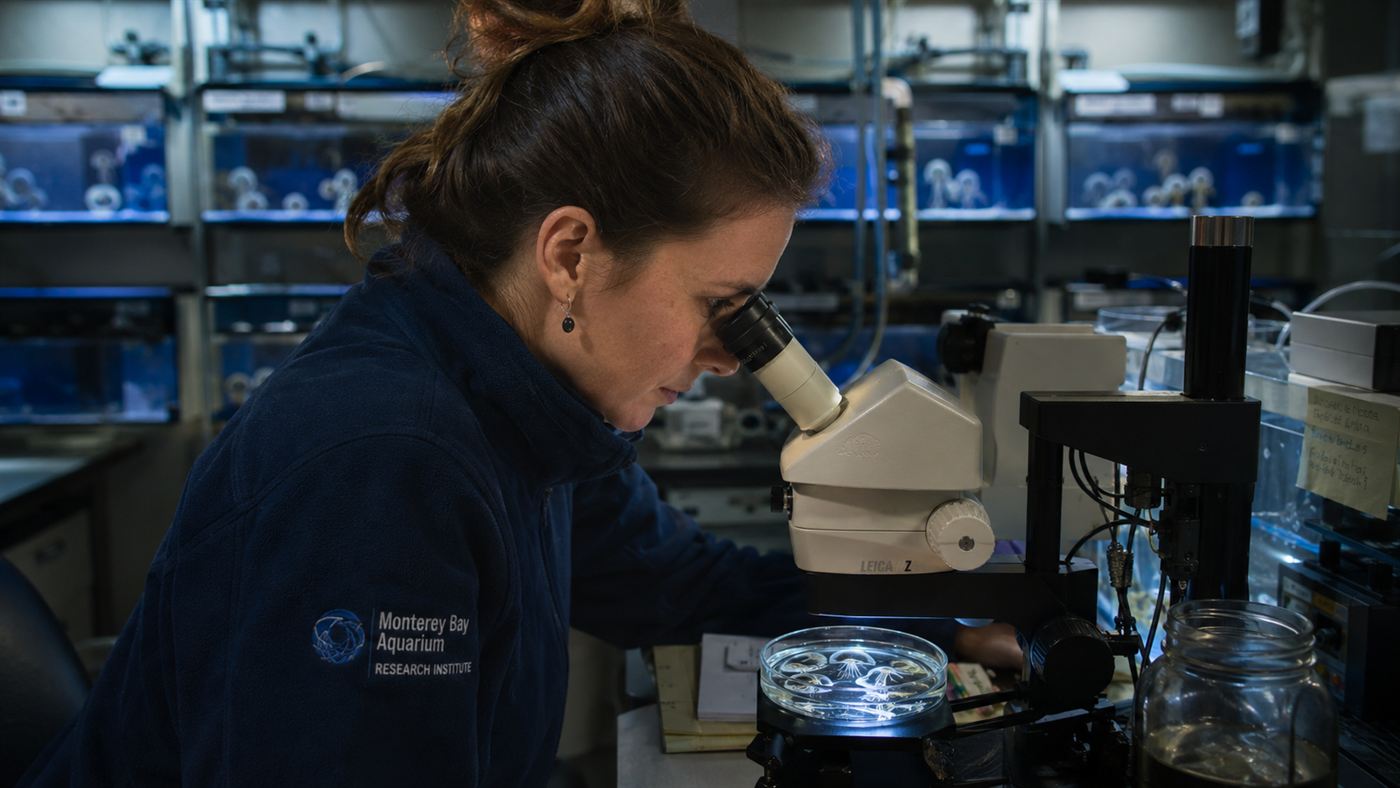
Kubota, a scientist at Kyoto University's Seto Marine Biological Laboratory, has raised Turritopsis through the cycle more times than anyone alive.
In one stretch Kubota recorded a single jellyfish rejuvenating ten times in two years, with no sign that the reversals were wearing it out.
As a New York Times Magazine profile described, keeping them alive is painstaking work, down to slicing brine shrimp eggs under a microscope so the tiny mouths can eat.
Kubota is so devoted that he writes and sings karaoke songs about the jellyfish, determined to make the world care about a four-millimetre miracle.
How a tiny jellyfish quietly conquered the seas
For something so fragile, the immortal jellyfish gets around.
Turritopsis has hitched rides in the ballast water that cargo ships pump in and out, and has spread from its Mediterranean origins into oceans around the world.
Scientists have described it as a silent, worldwide invasion, the same animal turning up on distant coasts genetically almost identical.
It is a strange thought that a creature most people have never heard of may be one of the most widespread jellyfish on the planet.
Why scientists are chasing it
The reason labs care is not the promise of human immortality, whatever the headlines say.
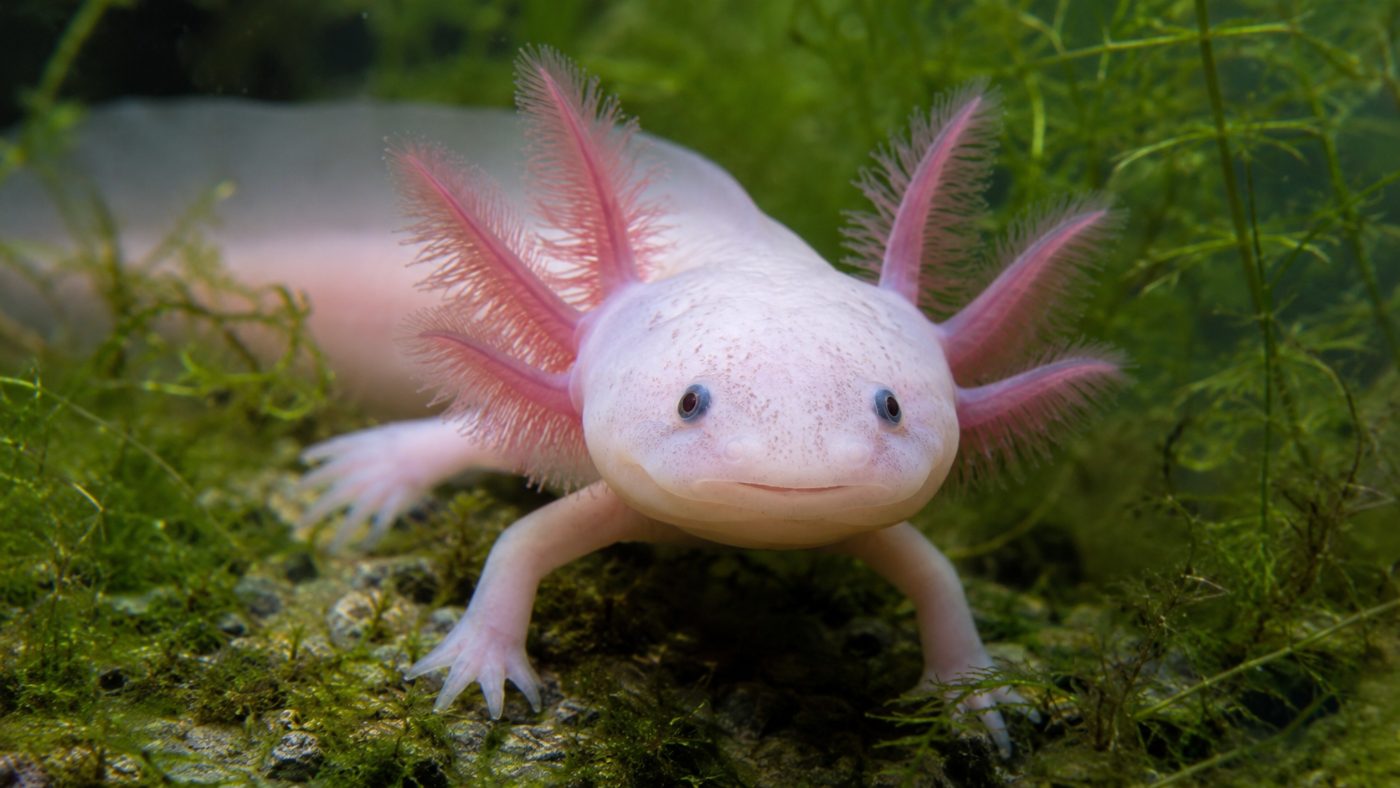
Turritopsis is a living model for transdifferentiation, regeneration and cellular plasticity, the same questions that make the axolotl, which regrows its own limbs and spine, so valuable to science.
Understanding how a cell can safely rewind and become something new could one day inform how we heal wounds, grow tissues or slow the damage of aging. It is one of several creatures pushing the limits of biology, like the wood frog that freezes almost solid each winter and revives.
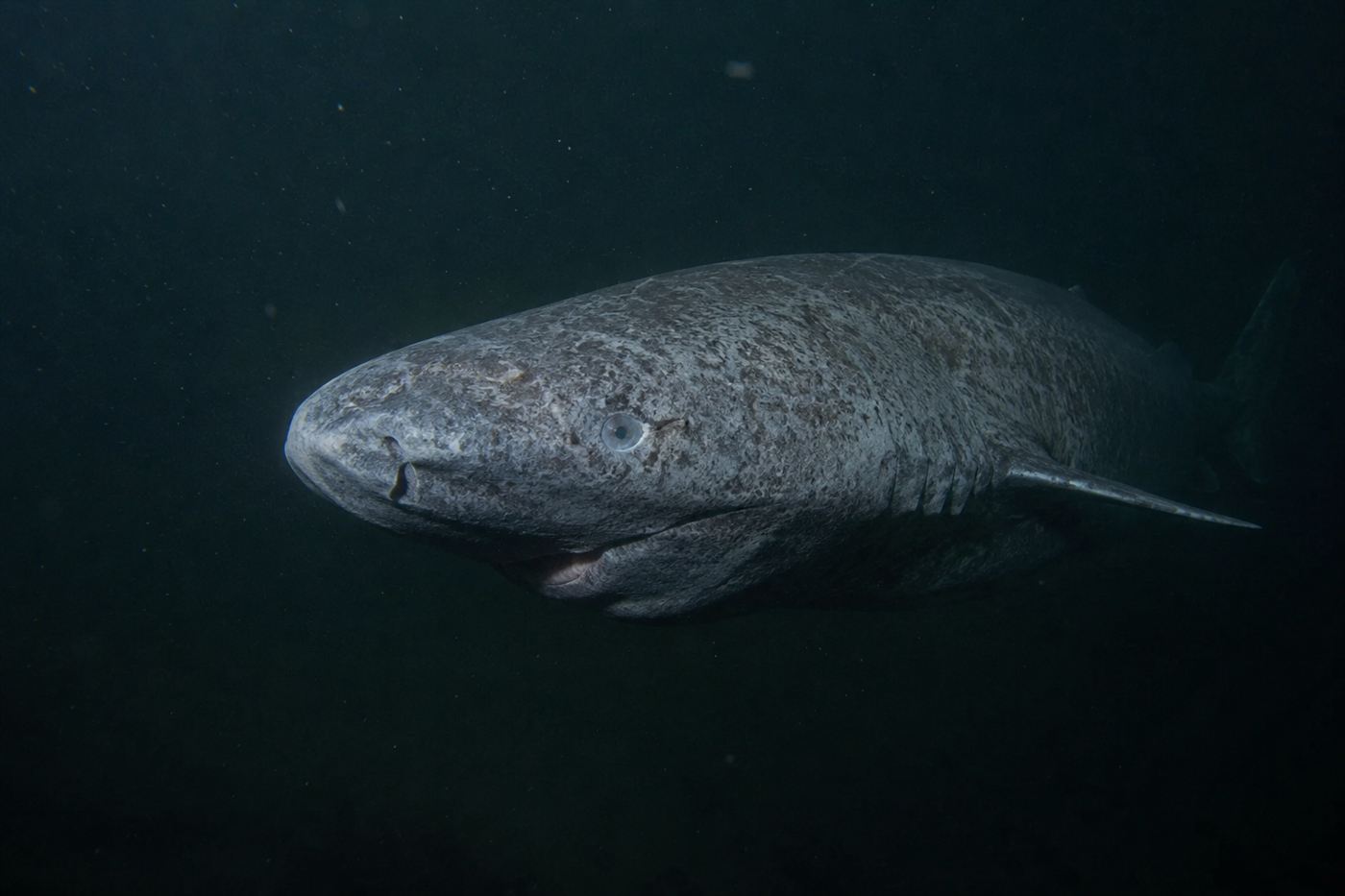
It sits alongside other deep-time biological puzzles, like the Greenland shark that can live for centuries, as a window into how life manages time.
The honest catch
The word immortal is doing a lot of unearned work here.
Turritopsis can dodge death by old age, but it is still soft, tiny prey, eaten by fish and other predators or killed by disease long before it ever needs to reset.
The reversal can also fail if the animal is too badly damaged or the conditions are wrong, so immortality is a capability, not a guarantee.
And the leap from a self-rebooting jellyfish to anti-aging medicine for humans is enormous, far beyond anything the science can promise today.
What it really offers is humbler and stranger: proof that the one-way road from young to old is not a law of nature, just the path most of us happen to take.
The immortal jellyfish will not make anyone live forever, and it does not know it is famous.
But in a body smaller than a pea it holds one of biology's most astonishing tricks, transdifferentiation, a reminder that nature still keeps secrets as big as death itself, much like the near-immortal aspen grove Pando, a single tree that may be 80,000 years old.
If a jellyfish can reset its own aging, do you think we will ever learn the trick, and would you even want to? Tell us in the comments.