The island of Socotra looks so alien that visitors swear they have left Earth, but its strangest inhabitants, the blood-red dragon trees, are quietly dying out
Four hundred kilometers off the coast of Yemen sits an island that time and the ocean forgot. On Socotra, a third of the plants grow nowhere else on the planet, and the most famous of them bleeds red. Now those ancient trees are vanishing, one storm and one hungry goat at a time.
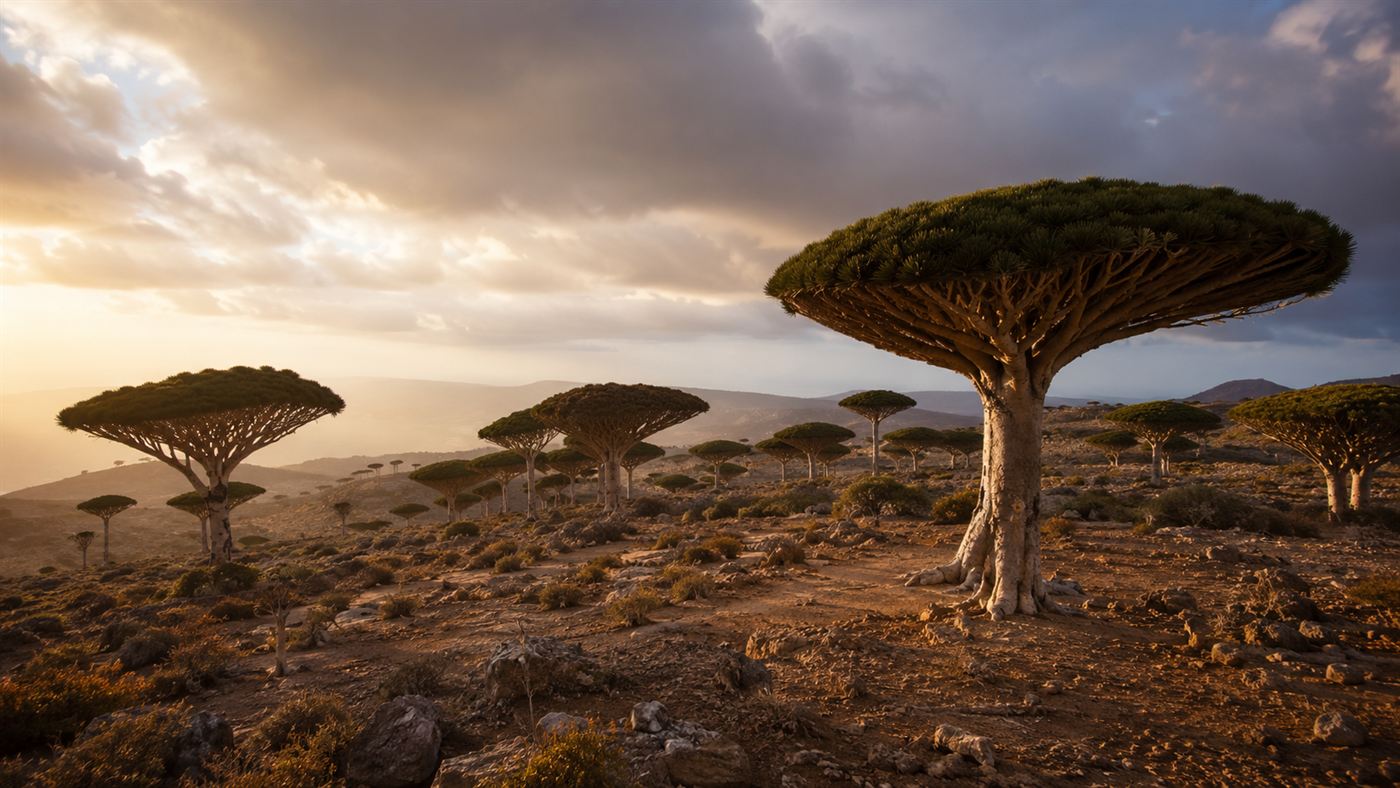
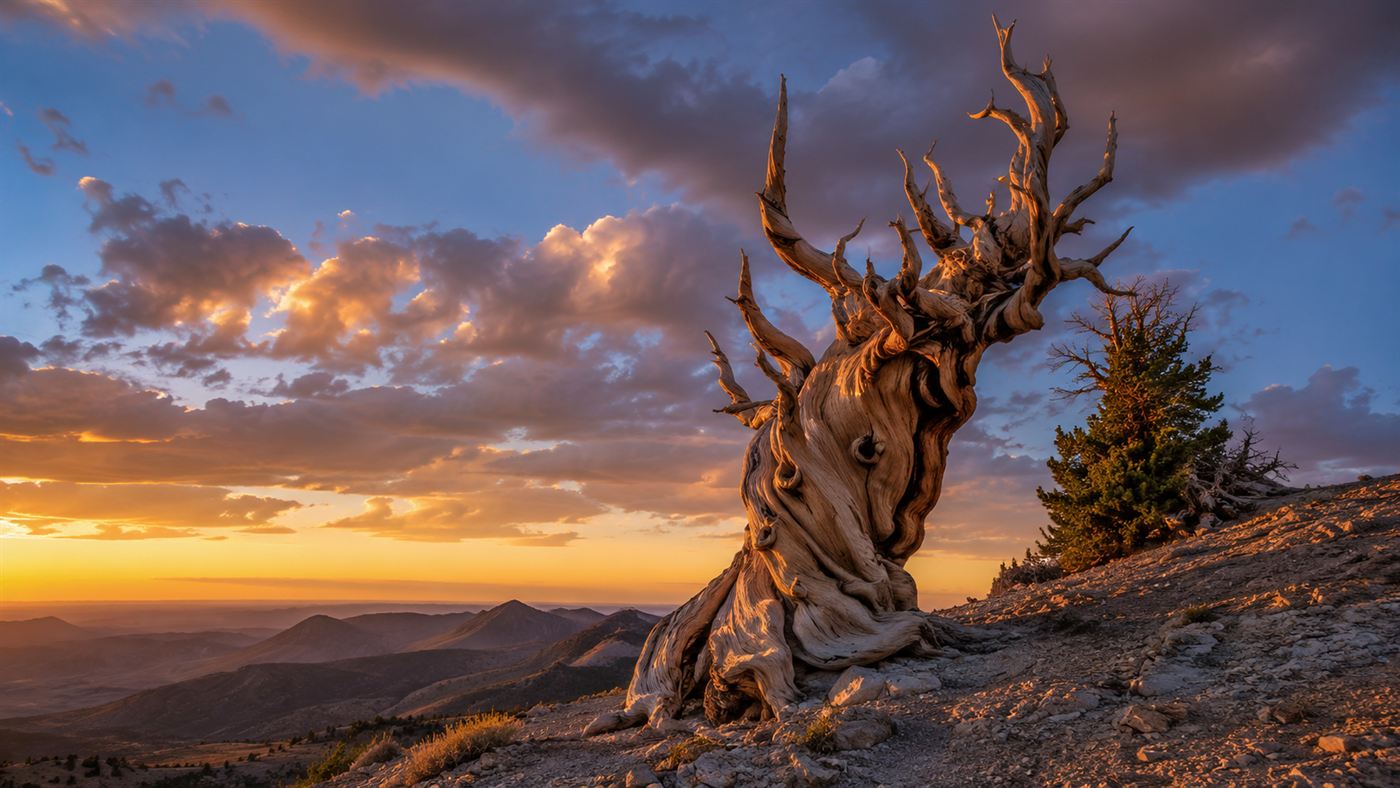
Dragon blood trees on the plateaus of Socotra, a landscape that looks like another world. Illustration: Watts & Wild.
Show someone a photograph of Socotra and they will assume it was taken on another planet. The horizon bristles with trees shaped like enormous upturned umbrellas, standing over a bare rocky ground that looks scorched and lunar. It is one of the most otherworldly landscapes on Earth, and it is entirely, stubbornly real.
The island belongs to Yemen, marooned in the Indian Ocean near the Horn of Africa, and its long isolation turned it into a living laboratory of evolution. As UNESCO notes in listing Socotra as a World Heritage Site, the archipelago is of universal importance for its biodiversity, with a huge share of its plants found nowhere else on Earth. And the crown jewel of that strange flora is a tree that seems to bleed.
The short version: Socotra is a Yemeni island so isolated that about a third of its plants are found nowhere else. Its icon is the dragon blood tree, an umbrella-shaped species that oozes red resin. But the ancient trees are barely reproducing, and grazing goats, a drying climate and fierce cyclones are pushing this UNESCO-listed Eden into a slow decline.
An island that looks like another planet
Socotra sits roughly 350 kilometers off the Yemeni mainland, close enough to Africa to feel adrift between continents and far enough from everything to be left alone for millions of years. That isolation is the whole story. Cut off from the mainland for so long, its plants and animals evolved down their own private paths, producing forms that exist nowhere else.
The numbers are staggering for a place so small. Something like a third of Socotra's plant species are endemic, found only here, which is why biologists reach for comparisons like the Galapagos of the Indian Ocean. Add in endemic birds, reptiles and snails, and the island becomes less a piece of Yemen than a small, self-contained world with its own rules.
The tree that bleeds red
The star of that world is the dragon blood tree, Dracaena cinnabari. It grows into a shape almost too neat to be natural, a stout trunk topped by a dense, upward-curving canopy like an umbrella turned inside out. That shape is a survival tool: the tightly packed crown combs moisture out of the passing fog and funnels it down to the roots, while shading the ground below from the punishing sun.
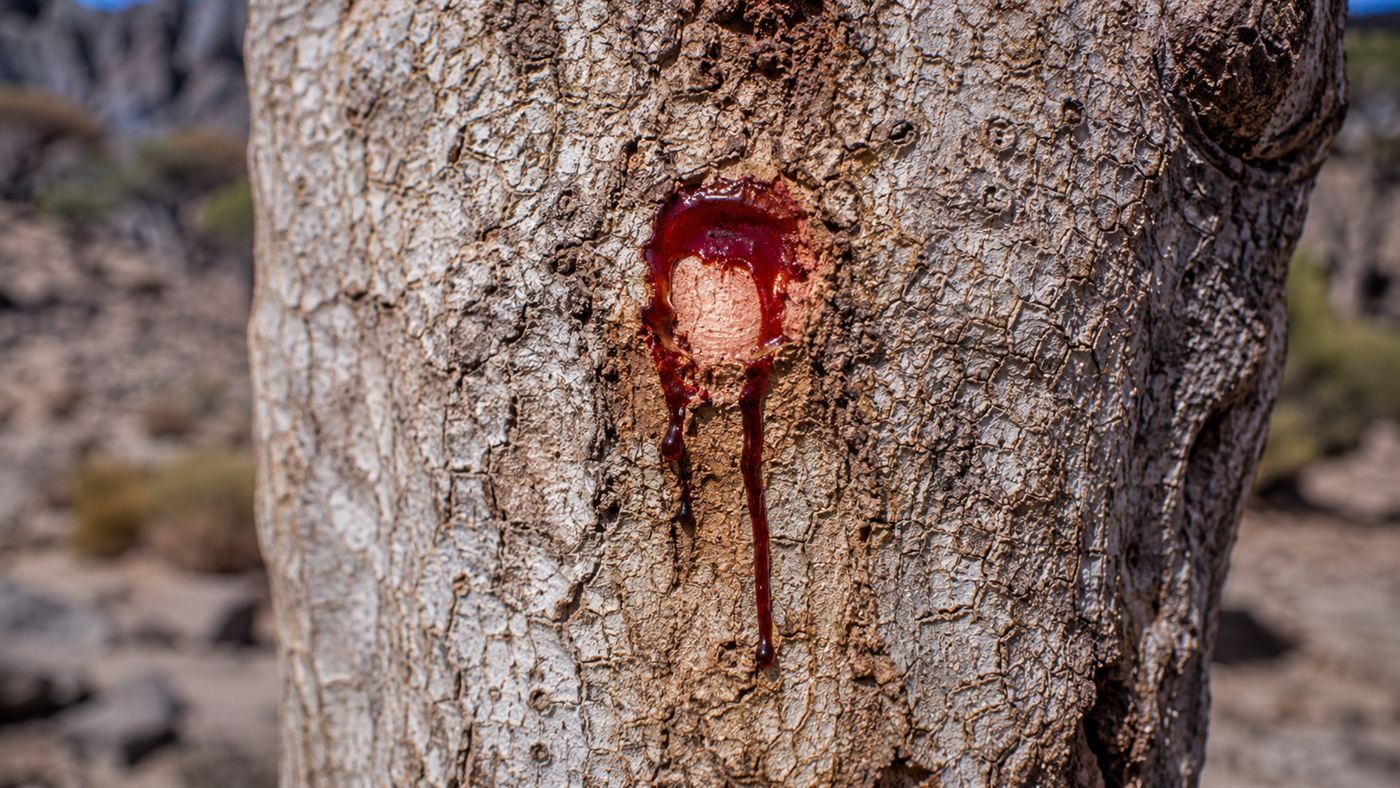
Its name comes from what happens when you wound it. Cut the bark and the tree weeps a deep red resin, the dragon's blood that people have harvested for thousands of years as a dye, a varnish and a folk medicine. Traders prized it in the ancient world, and it still trickles out of the trees today, a small crimson miracle on an island full of them.
A whole world found nowhere else
The dragon trees are not just scenery, they are infrastructure. Their canopies create islands of shade and moisture in a harsh landscape, and beneath them shelters a supporting cast of species that depend on the microclimate they build. Among them are rare reptiles, including a critically endangered gecko that lives on the trees themselves, its fate tied directly to theirs.
That web of dependence is exactly why Socotra earned its layers of protection. The archipelago was named a UNESCO Man and Biosphere Reserve in 2003 and a World Heritage Site in 2008, formal recognition that this is one of the most biologically precious places on the planet. Protect the dragon trees, and you protect an entire miniature ecosystem that leans on them. Lose them, and much of that world goes too.
Why Socotra's giants are dying
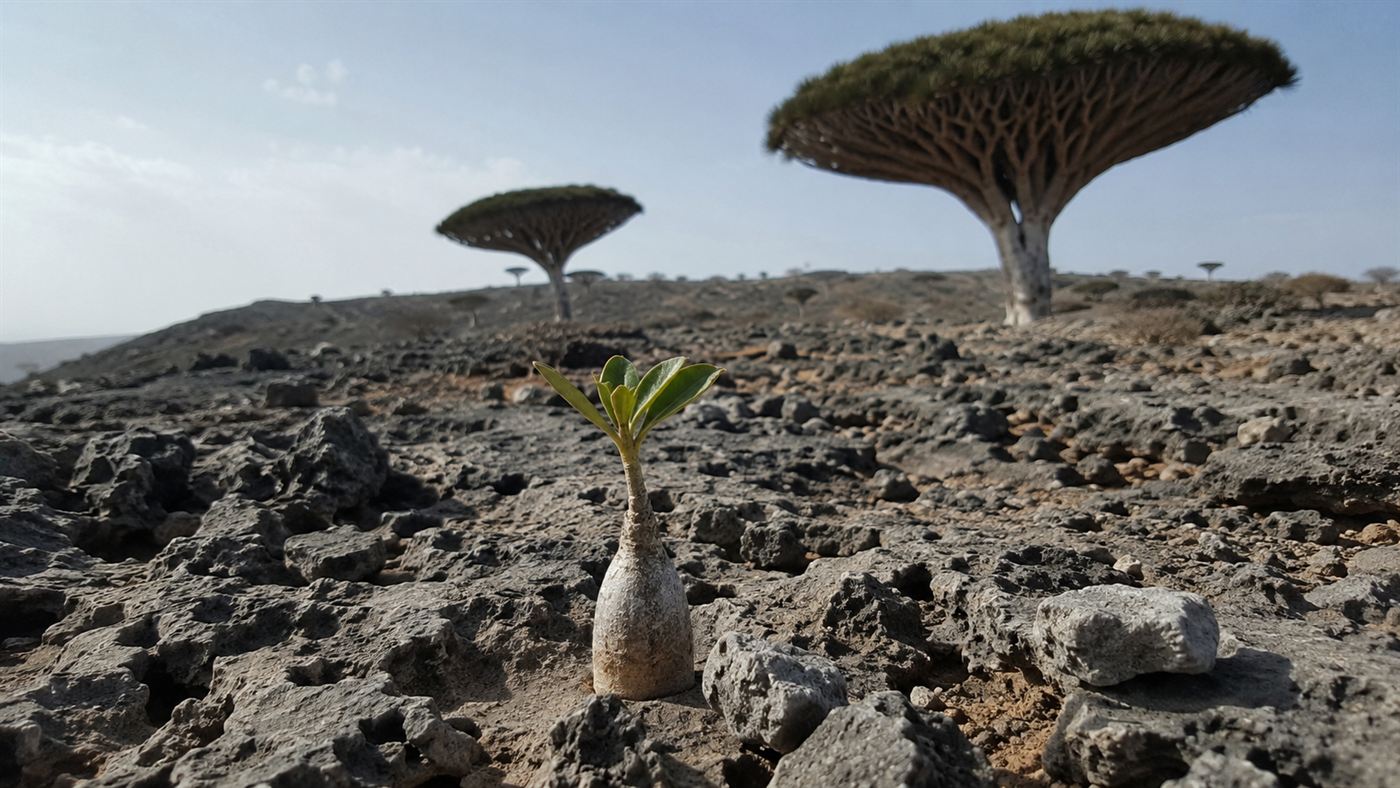
Here is the heartbreak. Walk through the dragon tree groves and you notice something wrong: almost all the trees are old. As Earth Island Journal has reported, the species is struggling to regenerate, and researchers fear the iconic tree could fade into legend. The elders still stand, but young trees to replace them are scarce.
Several forces are squeezing them at once. Herds of goats roam the island and eat the seedlings before they can grow, so few reach maturity. The climate is drying out, and models predict a large share of the tree's suitable habitat could vanish by 2080. And in 2015 and again in 2018, unusually violent cyclones tore across Yemen's normally storm-sheltered island and flattened thousands of the great trees in a matter of hours. An organism that measures its life in centuries is being undone in decades.
The people caught in the middle
It would be easy to cast the goats as villains, but they belong to people, and those people are part of Socotra too. The islanders speak Soqotri, an ancient unwritten language, and have herded livestock here for generations. The same goats that nibble away the dragon tree seedlings are also how many families feed themselves on a poor and remote island.
That makes saving the trees a delicate, human problem, not just a botanical one. Conservationists have begun fencing off nurseries where seedlings can grow safe from grazing, trying to buy the next generation of trees a chance. But this work is happening against the backdrop of Yemen's long civil war and a tangle of outside political interests in the strategically placed island, which makes steady, patient conservation genuinely hard to sustain.
The honest catch
It is worth resisting the urge to tell this as a simple fable of paradise lost. The islanders are not careless stewards wrecking an Eden, they are poor people relying on the same land, and the deepest threat, a changing climate, is being driven mostly from far away by countries that will never see a dragon tree. Pointing at Socotra's goats while ignoring that is too easy.
And the ending is not written. The old giants are tough, some pockets are being protected, and a slow-growing tree that has survived on this rock for millions of years may yet cling on in refuges. But the trajectory is real and sobering. If we lose them, we will not just lose a spectacular sight, we will lose a genuinely alien branch of life that grew on no other patch of Earth, and there will be no getting it back.
An island of trees that bleed red is slowly losing them, and much of its hidden world with them. Should the world be doing far more to save Socotra's dragon trees, or is a remote island's fate always going to lose out to war and distance? Tell us what you think in the comments.
Related reading: the Welwitschia, a desert plant that keeps just two leaves alive for a thousand years, or Surtsey, the brand new island Iceland sealed off so life could colonize it from scratch.
More from Watts & Wild
More in Energy & the Wild →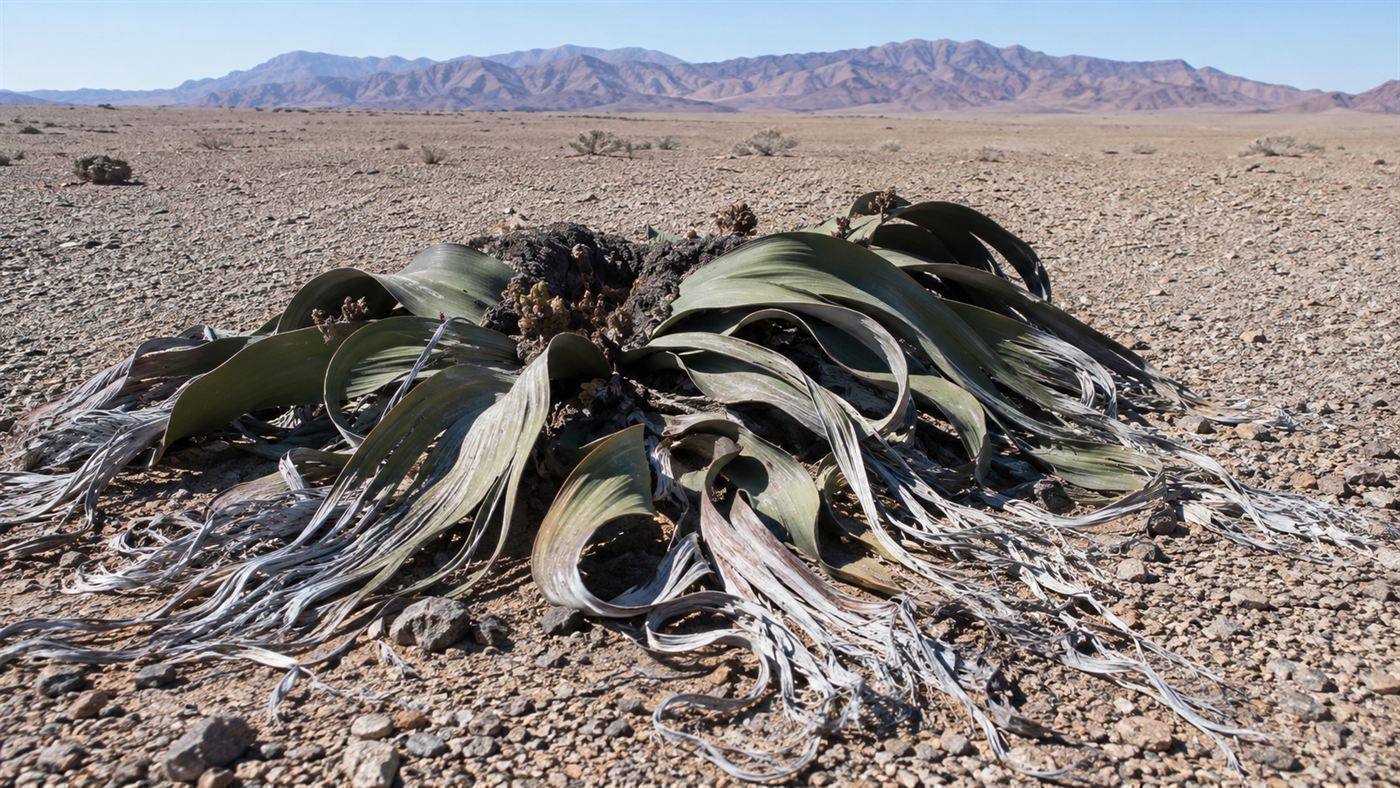

Maria writes about wildlife, ecology, and the strange places where nature and human history collide. She is based in Brazil.