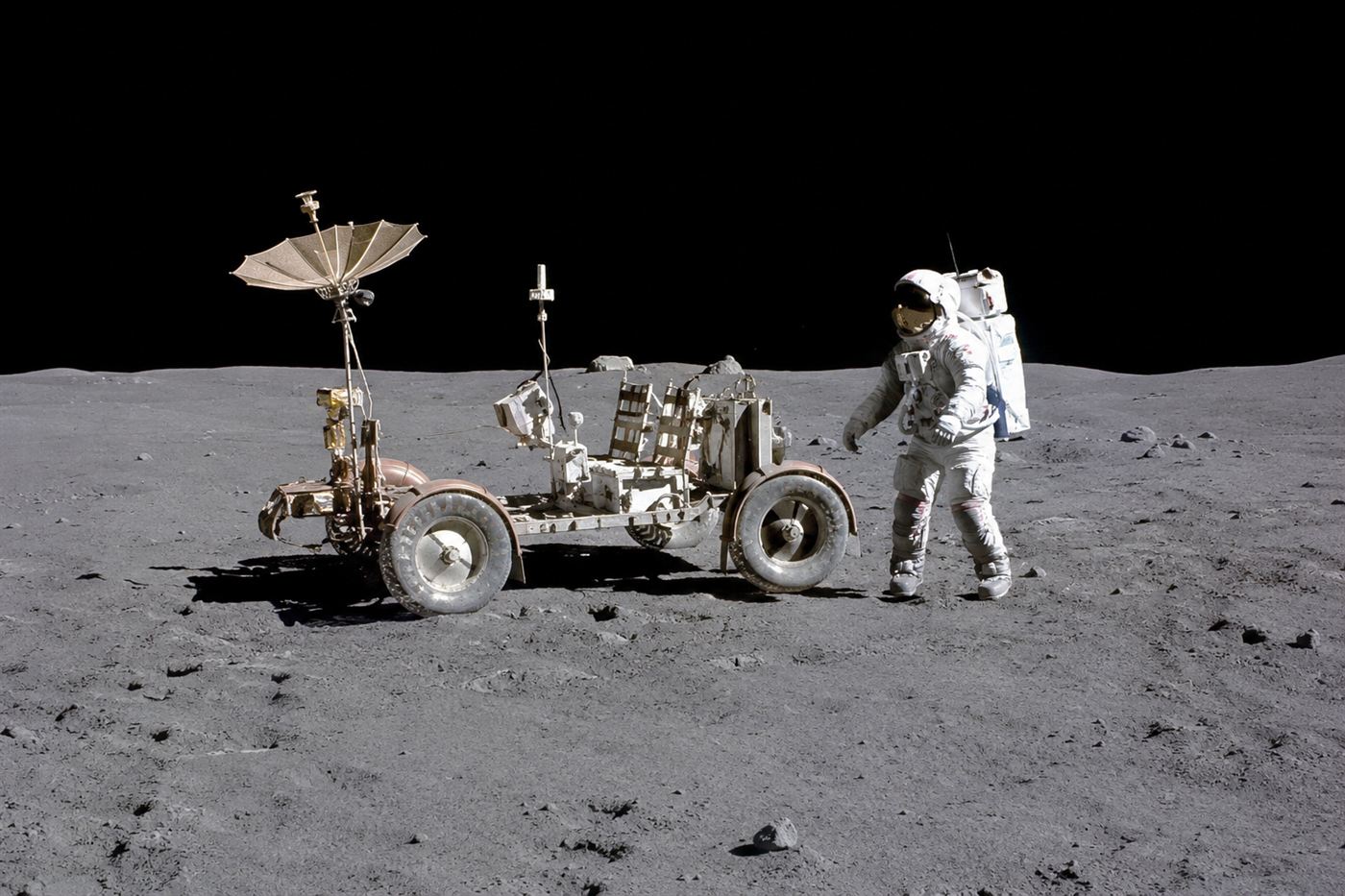
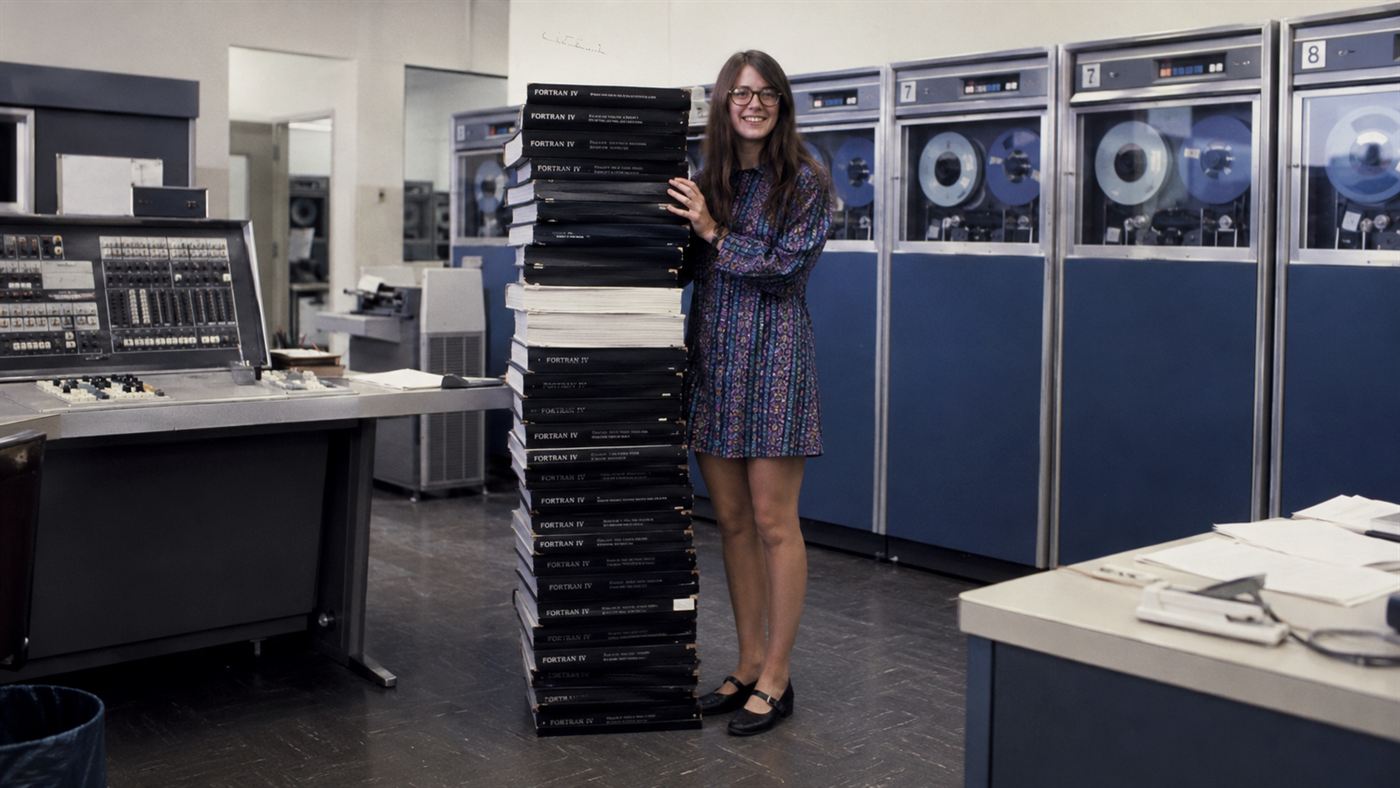
While making a golden record to introduce Earth to the stars, Carl Sagan and Ann Druyan fell in love, so they recorded her brainwaves and heartbeat onto the Voyager Golden Record now flying through interstellar space
In 1977, NASA bolted a gold-plated phonograph record to each of two spacecraft and flung them toward the edge of the solar system. The Voyager Golden Record was meant as a hello to any alien who might find it, but the most human thing on it is a love story hiding in a heartbeat.
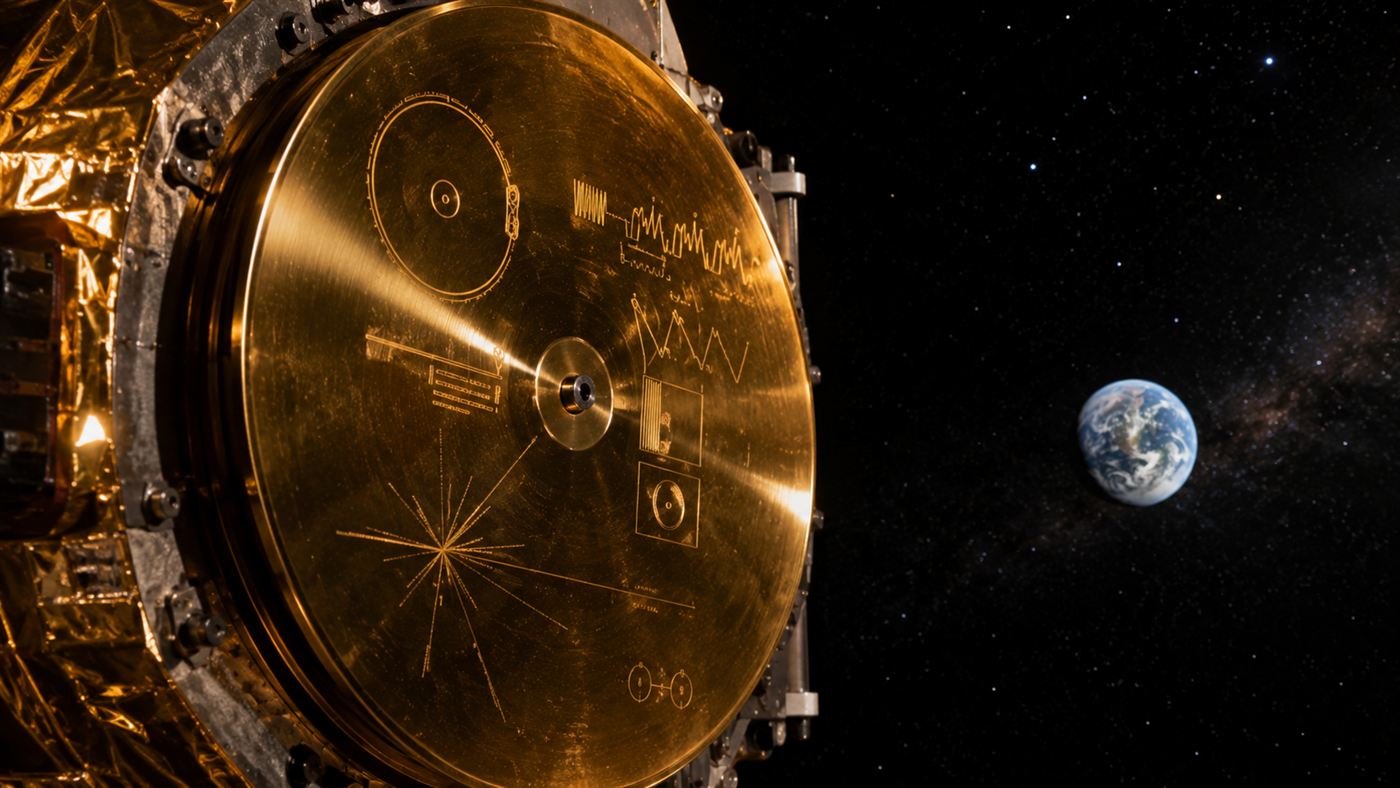
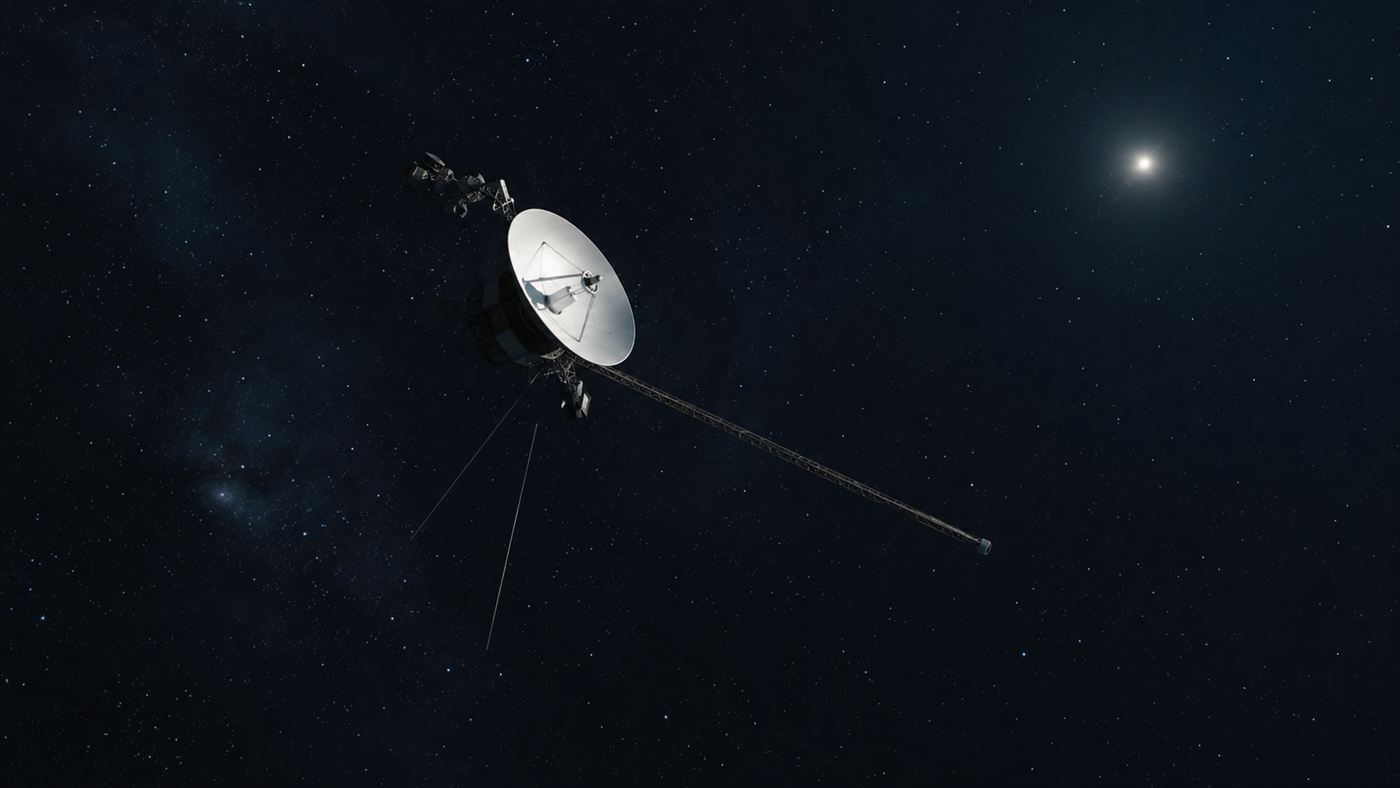
A gold disc built to outlast the planet that made it, now riding through the dark between the stars. Illustration: Watts & Wild.
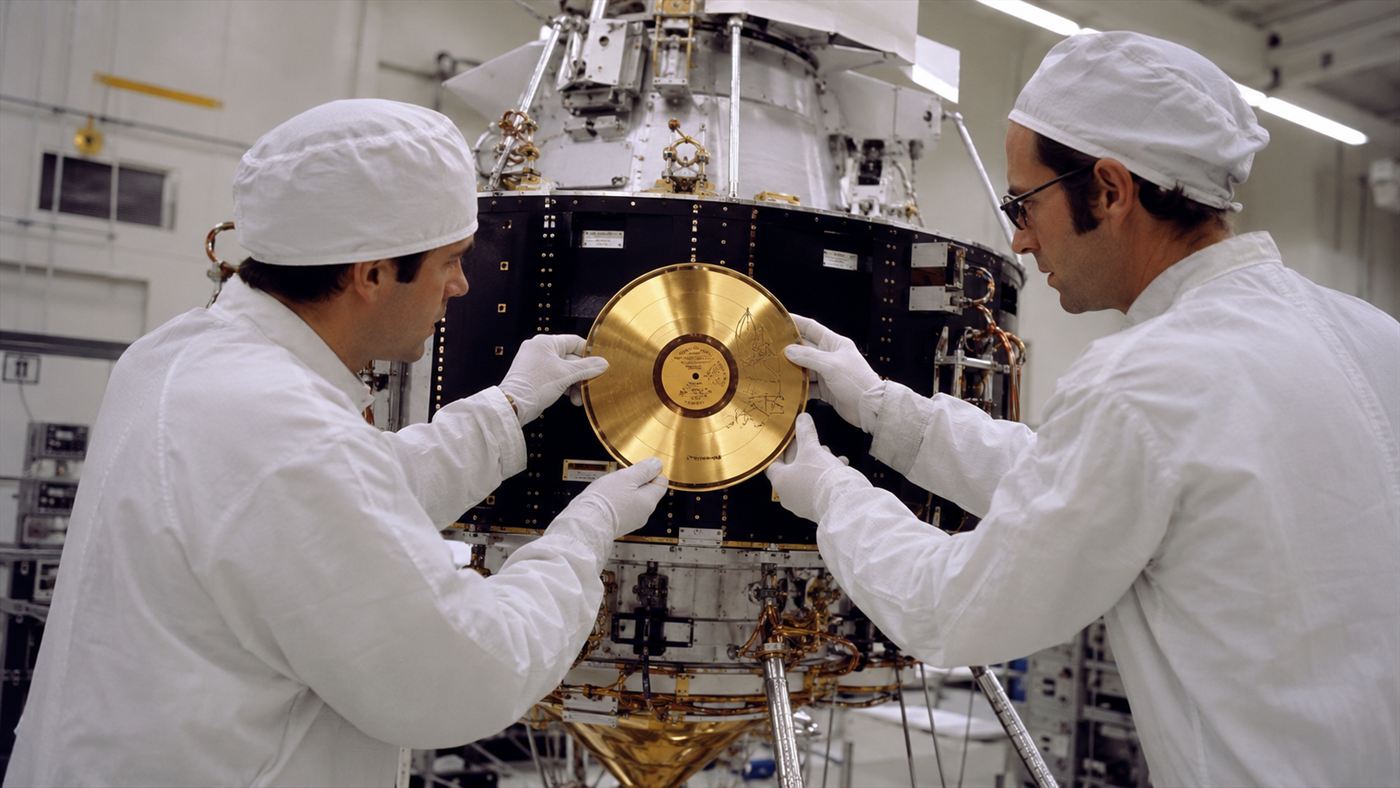
The Voyager Golden Record is the strangest message in a bottle ever thrown. In 1977, NASA launched the twin Voyager probes to tour the outer planets, and a team led by the astronomer Carl Sagan seized the chance to attach something audacious: a 12-inch copper disc plated in gold, engraved with instructions, carrying the sound of Earth to whatever might be out there. Two identical records left the planet, one on each spacecraft.
What went onto it was a deliberate self-portrait of humanity. As NASA's own catalog of the contents lists, the disc holds 116 encoded images, spoken greetings in 55 languages, an hour and a half of music spanning Bach to Chuck Berry, and a soundscape of the planet, wind and thunder, surf, birdsong, and the deep calls of whales. It was meant to last a billion years, far longer than any monument on the ground.
The Voyager Golden Record is a gold-plated disc carried by both 1977 Voyager probes as a message to any intelligent alien life. Curated by a team led by Carl Sagan, it holds 116 images, greetings in 55 languages, natural sounds, about 90 minutes of music, and an hour of Ann Druyan's brainwaves and heartbeat.
How Carl Sagan built a portrait of Earth
Pulling the record together in under a year was a small miracle of taste and argument. Carl Sagan chaired a committee that had to decide, in effect, what all of human culture sounds like, and the choices were gloriously eclectic. Beethoven sits next to a Pygmy girls' initiation song from the Congo, a Japanese shakuhachi flute, Blind Willie Johnson's wordless blues "Dark Was the Night," and Chuck Berry's "Johnny B. Goode."
The spoken greetings ran from ancient Akkadian to modern Mandarin, 55 languages in all, including one from the United Nations Secretary-General and a small voice from Sagan's six-year-old son. There were earthly sounds too, footsteps, laughter, a mother's first words to her newborn, even the sound of a kiss. The team was trying to compress a whole world onto one disc, and the seams of all those human hands show in the most beautiful way.
The love story hidden in the Voyager Golden Record
The most intimate track on the disc is one you cannot really hear. The creative director of the project was Ann Druyan, and she had the idea to record a person's brainwaves and heartbeat, compress an hour of them into a minute, and send a human nervous system to the stars. She volunteered her own, lying in a lab at a hospital wired to sensors, meditating on what it means to be alive on Earth.
Here is the twist that makes the whole record ache. Days before that session, Ann Druyan and Carl Sagan, who had been working side by side, declared their love over the phone and decided on the spot to marry. So when she lay down to record her mind, as Druyan has told the Planetary Society, part of what her brain was doing was the thought of having just fallen in love. The Voyager Golden Record carries, literally, the neural signature of a woman in love, and the couple stayed together until Sagan's death in 1996.
A map for a finder who may never come
To be of any use, the record had to teach a stranger how to play it, and the cover is a small marvel of wordless instruction. Engraved diagrams show how to spin the disc with the included needle and how to turn its data back into pictures. A patch of uranium slowly decays on the cover as a clock, so a finder could work out how long the record had been traveling.
The cleverest mark is a starburst of lines called a pulsar map, drawn by the astronomer Frank Drake. Each line points to a pulsar, a spinning dead star that flashes at its own exact rhythm, with the rhythm written in binary alongside. Read together, those beacons pin down where and when the record was made, an address for Earth that should still make sense from anywhere in interstellar space.
Where the record is now
Both probes are still out there, and still, faintly, talking to us, and NASA still tracks Voyager 1 and Voyager 2 in real time. Voyager 1 crossed out of the Sun's bubble and into interstellar space in 2012, making it the most distant object human hands have ever made, with Voyager 2 following years later. They are now so far away that their whisper-faint radio signals take more than a day to reach Earth, and their power is slowly running down.
Their records, though, will outlive everything. The probes are aimed at no star in particular, but in roughly 40,000 years Voyager 1 will drift within about 1.8 light-years of a star called Gliese 445, and Voyager 2 will pass a star named Ross 248. Long after Voyager 1 and its twin go silent, the gold discs will keep coasting through the dark, carrying Bach and whale song and one woman's heartbeat into deep time.
The honest catch
The odds, to be honest, are almost nonexistent. The chance that any alien ever finds a Voyager probe, let alone decodes the Voyager Golden Record, is so small it rounds to zero, because space is almost entirely empty and the discs will not come near another star for tens of thousands of years. As a literal message to extraterrestrials, this is a lottery ticket with absurd odds.
The record is also a flattering self-portrait. The team largely left out war, cruelty, and poverty, choosing to show humanity at its best rather than its whole. But maybe that misses the point. The real audience for the Voyager Golden Record was always us, a reminder that a species capable of war also made Beethoven, sent Ann Druyan's heartbeat to the stars, and wanted to introduce itself kindly to the universe. That is a message worth sending, even if the only ones who ever truly receive it are here at home.
A love story, a planet's worth of music, and one woman's heartbeat are coasting forever through the dark on the chance that someone, someday, is listening. If you had one track to add to the record for all of humanity, what would you send? Tell us in the comments.
Related reading: For 72 seconds in 1977 a telescope caught a signal so strong an astronomer scrawled "Wow!" beside it, and we have never heard it again. See also how NASA revived Voyager 1 from 15 billion miles away, and the Pioneer plaque, the simpler gold message we launched to the stars first.