In the 1970s, doctors put a speck of plutonium in people's chests to power their pacemakers, and decades later a few of those nuclear hearts are still ticking
It sounds like science fiction, or a bad idea: a sliver of plutonium, the stuff of bombs and reactors, sealed inside a metal capsule and tucked next to a beating heart. But for a few hundred patients in the 1970s, that tiny atomic furnace was the thing keeping them alive, and for some of them it just kept going, and going, and going.
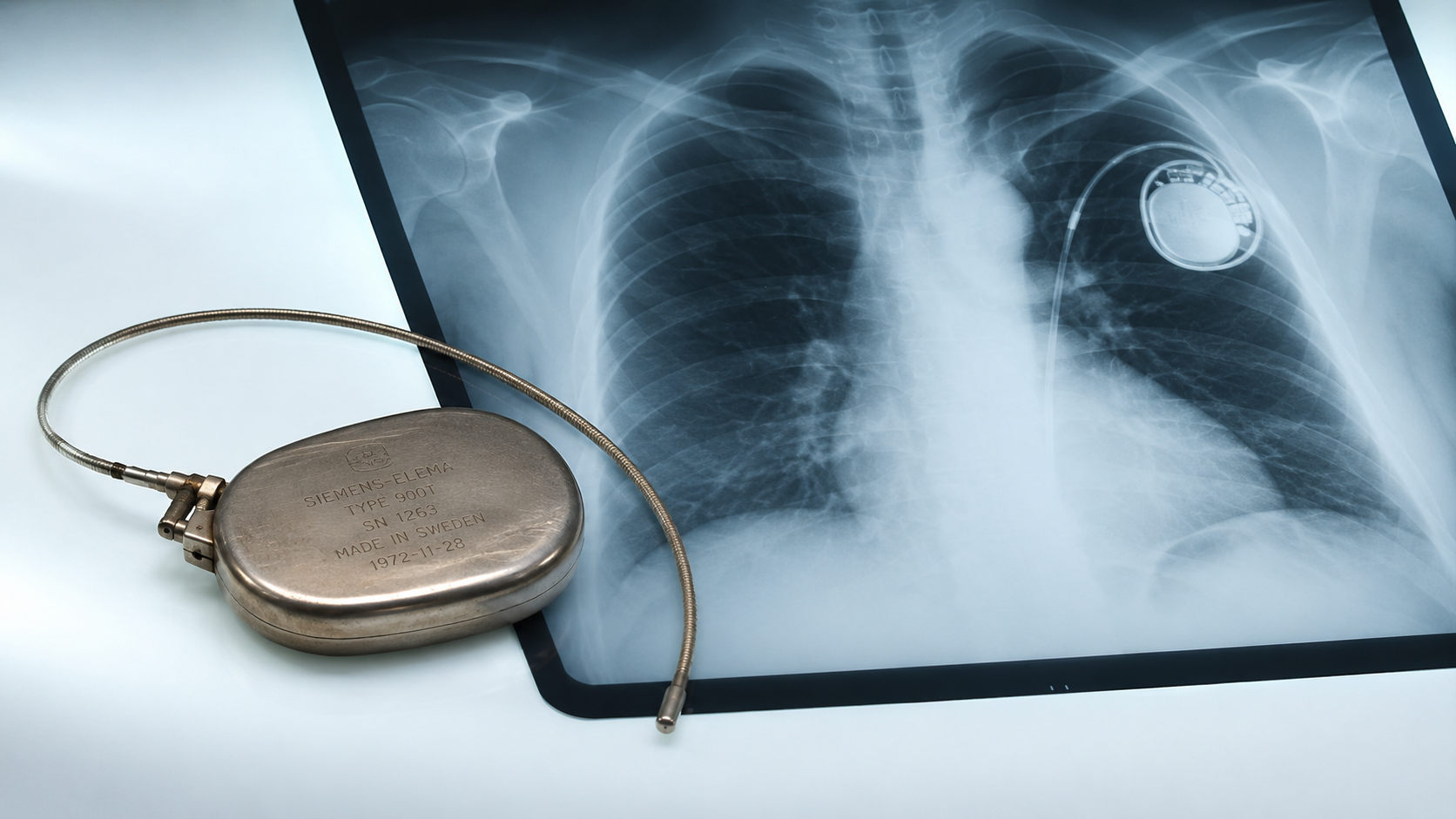
The nuclear pacemaker carried a microscopic plutonium source meant to outlast its owner. Illustration: Watts & Wild.
The nuclear pacemaker is one of the strangest footnotes in the history of medicine and energy. In the early 1970s, the battery problem in pacemakers was deadly serious. The chemical cells of the day faded fast and unpredictably, which meant repeated surgeries to swap them out, each one a risk for an already fragile patient. Engineers went looking for a power source that would never run flat. They found one in the nuclear industry.
The answer was plutonium-238, a radioactive isotope that does something quietly remarkable: it gives off a steady, gentle heat for decades as it decays. Wrap that heat in the right materials and you have a power source that barely weakens in a human lifetime. So that is exactly what they implanted.
What was a nuclear pacemaker?
A nuclear pacemaker looked much like an ordinary one, a small sealed capsule with a wire running to the heart. The difference was inside. Instead of a chemical battery, it held a minuscule pellet of plutonium-238, heavily shielded, sitting against a device called a thermopile that turns a temperature difference into electricity. The plutonium ran warm, the thermopile sipped that warmth, and out came the trickle of current a heart needs.
Starting around 1970, several manufacturers built them, with early units developed by the Numec company under the United States Atomic Energy Commission. In total, only a modest number were ever implanted, somewhere over a hundred patients across the decade. Each one was, in effect, walking around with a thumbnail-sized nuclear power plant stitched into their chest.
How a pinch of plutonium runs a heart
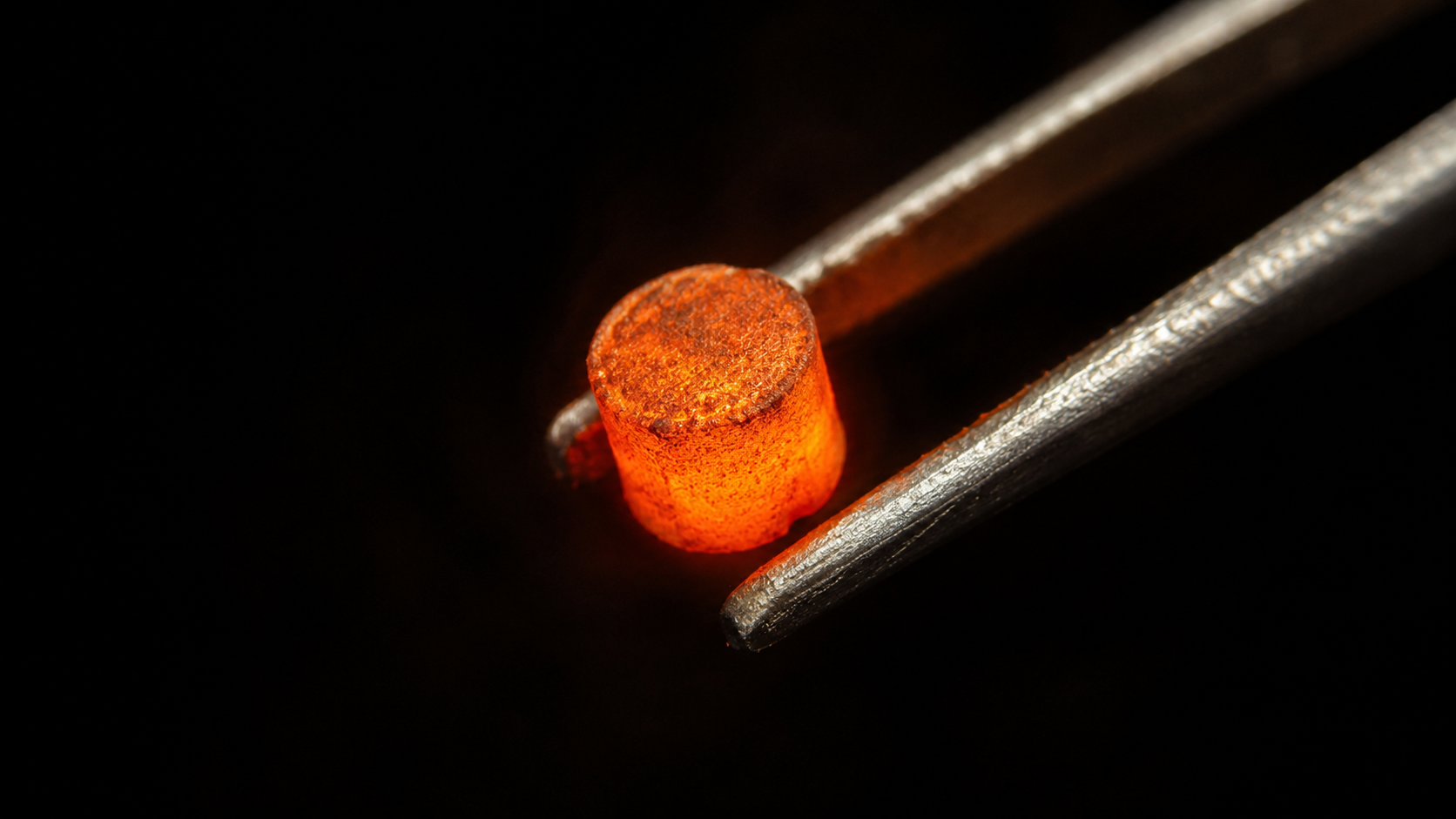
The physics is elegant. Plutonium-238 is not the bomb-grade material; it is an intense heat source, the same isotope NASA uses to power deep-space probes far from the sun. As its atoms decay they release energy that warms the surrounding metal. Place something cooler on the other side, and that heat flows across a junction of special materials, generating a small voltage. No moving parts, no chemistry to exhaust, nothing to wear out in any ordinary sense.
The key number is the half-life. Plutonium-238 takes about 88 years to lose half its power, which means a pacemaker built around it would still be delivering most of its output long after the patient had lived a full life. For the first time, doctors had a pacemaker designed to outlive the person carrying it.
Built to outlive the patient
And outlive them it often did. Follow-up studies tracked these devices for years and found them astonishingly reliable. Long after the patients who received them in the 1970s had grown old, a meaningful fraction of the pacemakers were still pulsing away exactly as designed. One woman's plutonium pacemaker, implanted in 1973, was reported to be still working in 2007, thirty-four years later, on its original power source.
By the 2000s, only a small handful of these patients remained, but they remained. Estimates suggested that into the early twenty-first century there were still dozens of people in the world quietly carrying a 1970s atomic pacemaker, decades after the last one was installed. The technology had done precisely what it promised.
Why did the nuclear pacemaker disappear?
If it worked so well, why is nobody fitted with one today? The answer is partly a better mousetrap and partly bureaucracy. In the early to mid-1970s, the lithium-iodine battery arrived, and it changed everything. Lithium cells were cheap, reliable, lasted a perfectly acceptable ten years or so, and contained no radioactive material at all. For the vast majority of patients, that was more than good enough.
Against that, plutonium carried serious baggage. The devices were expensive and tightly regulated. Patients had to be tracked for life, the units had to be recovered and returned after death so the plutonium did not go astray, and travelling with a radioactive implant could mean awkward encounters at borders and airports. A power source that lasts forty years is wasted if the rules around it make everyone's life harder than a battery you simply replace. The nuclear pacemaker was not beaten on performance. It was beaten on convenience.

The honest catch
It is worth puncturing the obvious worries and a bit of the romance. The plutonium amount was tiny and well shielded, and decades of follow-up did not show patients being harmed by radiation from their own devices, so this was not the reckless gamble it sounds like. The isotope used, plutonium-238, also cannot be used to make a weapon, which is part of why it was acceptable to implant at all.
On the other hand, the legend that these things are flawlessly immortal needs trimming. The plutonium source may be near-eternal, but the rest of the pacemaker, its electronics and the wire leads into the heart, can still fail with age. The atomic heart of the device might outlast everything around it, including, eventually, the machine it was built to power. It was a brilliant solution to a real problem, not a miracle.
Why the nuclear pacemaker still matters
The story is having a quiet second life. As medical implants get smarter and hungrier for power, engineers are once again hunting for tiny energy sources that last for decades, and the old idea of a miniature nuclear battery keeps resurfacing, now with safer, smaller designs. The dream the 1970s chased has never really died.
More than that, it is a near-perfect parable about technology. The best-performing option does not always win; the most convenient one does. Somewhere out there, a few people may still be walking around with a piece of the atomic age beating inside them, a reminder that we once solved the problem of a pacemaker that never dies, and then decided we would rather just change the battery.
We built a pacemaker that could outlast its owner by decades, then abandoned it for a battery we have to replace. Would you rather carry a power source that never dies, or one that is simpler and you just swap out? Tell us what you think in the comments.
Related reading: The Voyager probes run on the very same plutonium-238 heat source, which is why they are still calling home from interstellar space.