A 47-year-old spacecraft 15 billion miles away started sending home gibberish, and NASA engineers had to debug and reprogram Voyager 1 across a signal that takes almost a full day to arrive
In November 2023, the most distant machine humanity has ever built began speaking nonsense. Voyager 1, launched before most people alive today were born, was still out there in interstellar space, but its messages home had turned to meaningless static. What NASA did next was one of the great long-distance repair jobs in history.
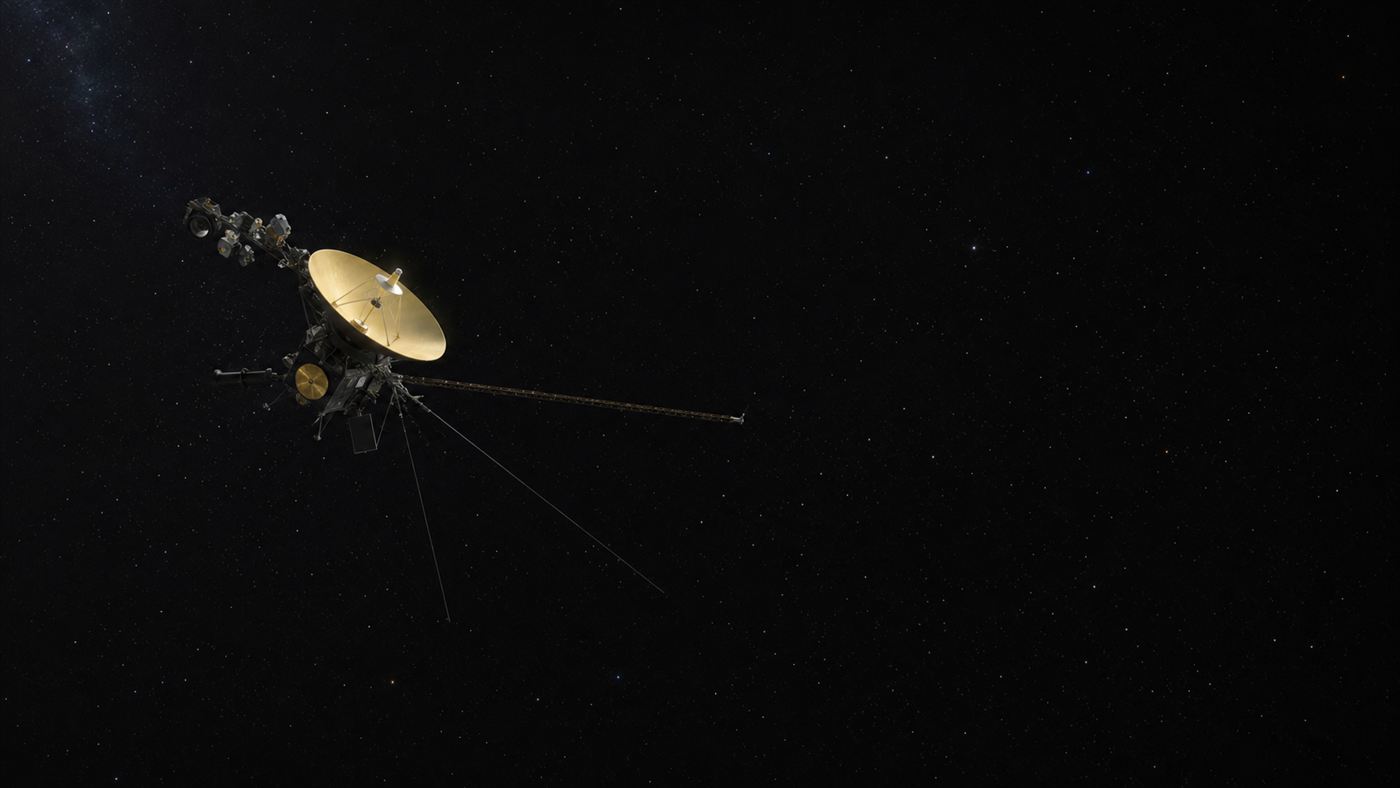
Voyager 1 is the farthest human-made object from Earth, still sending data after nearly half a century. Illustration: Watts & Wild.
Voyager 1 launched in 1977 on what was meant to be a four-year tour of Jupiter and Saturn. Nearly fifty years later it is still going, having crossed into interstellar space in 2012, the first human object ever to leave the Sun's bubble. It now sits more than 15 billion miles away, so far that its radio signal, traveling at the speed of light, takes about 22.5 hours just to reach us. And in late 2023, that faint, ancient signal stopped making sense.
The short version: In November 2023, Voyager 1 began transmitting a meaningless stream of ones and zeros after a memory chip failed in its onboard computer. Over months in 2024, NASA engineers diagnosed the fault from 15 billion miles away, rewrote the affected code, relocated it into working memory, and brought the probe back. By June 2024 its science instruments were reporting again.
The most distant machine we have ever built
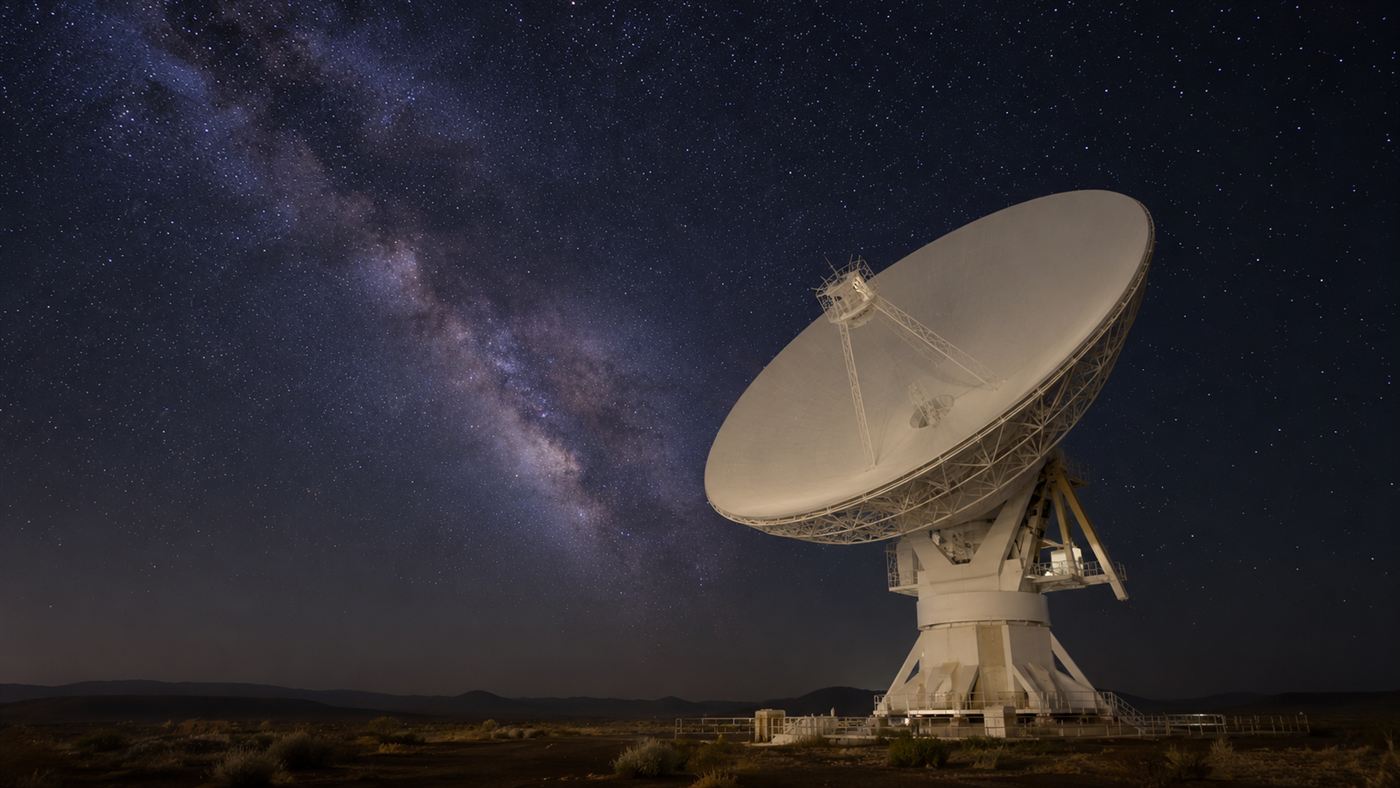
To grasp the repair, you have to grasp the distance. Voyager 1 is the loneliest object ever made by humans, coasting through the space between the stars where the Sun is just another bright point. Its instruments still measure the interstellar medium, sending back the only readings we have ever taken from out there, a whisper of data captured by giant dish antennas back on Earth.
The spacecraft runs on a slowly dying nuclear battery and a computer far less powerful than a modern car key. It was built with 1970s technology, and the people who designed it are mostly retired or gone, leaving today's team to nurse a machine using decades-old manuals. That such a thing still functions at all is remarkable. That it can be fixed when it breaks, across billions of miles, borders on the unbelievable.
The day Voyager 1 stopped making sense
The trouble began in November 2023. As IEEE Spectrum chronicled in detail, the probe suddenly started sending back a repeating pattern of ones and zeros that carried no usable information, like a person reciting the same syllable over and over. The science was gone, the engineering readings were gone, and there was no obvious way to ask a silent patient what hurt.
The culprit was the flight data subsystem, the onboard computer that gathers the spacecraft's readings and packages them for the long trip home. Something in it had failed, and the team could not simply open it up and look. Every question they wanted to ask took nearly a day to arrive and another day for the answer to come back, turning even the simplest test into a two-day round trip across the solar system.
How engineers found Voyager 1's dead chip
In March 2024 the team tried a clever gambit. They sent a command nicknamed a poke, telling the failing computer to dump a readout of its own memory, and when that readout came back they could finally see the damage. About three percent of the memory was corrupted, and they narrowed it to a single failed chip, most likely killed by a cosmic ray strike or simply by wearing out after 46 years in space. One tiny piece of 1970s hardware, impossible to reach, had scrambled the machine's mind.
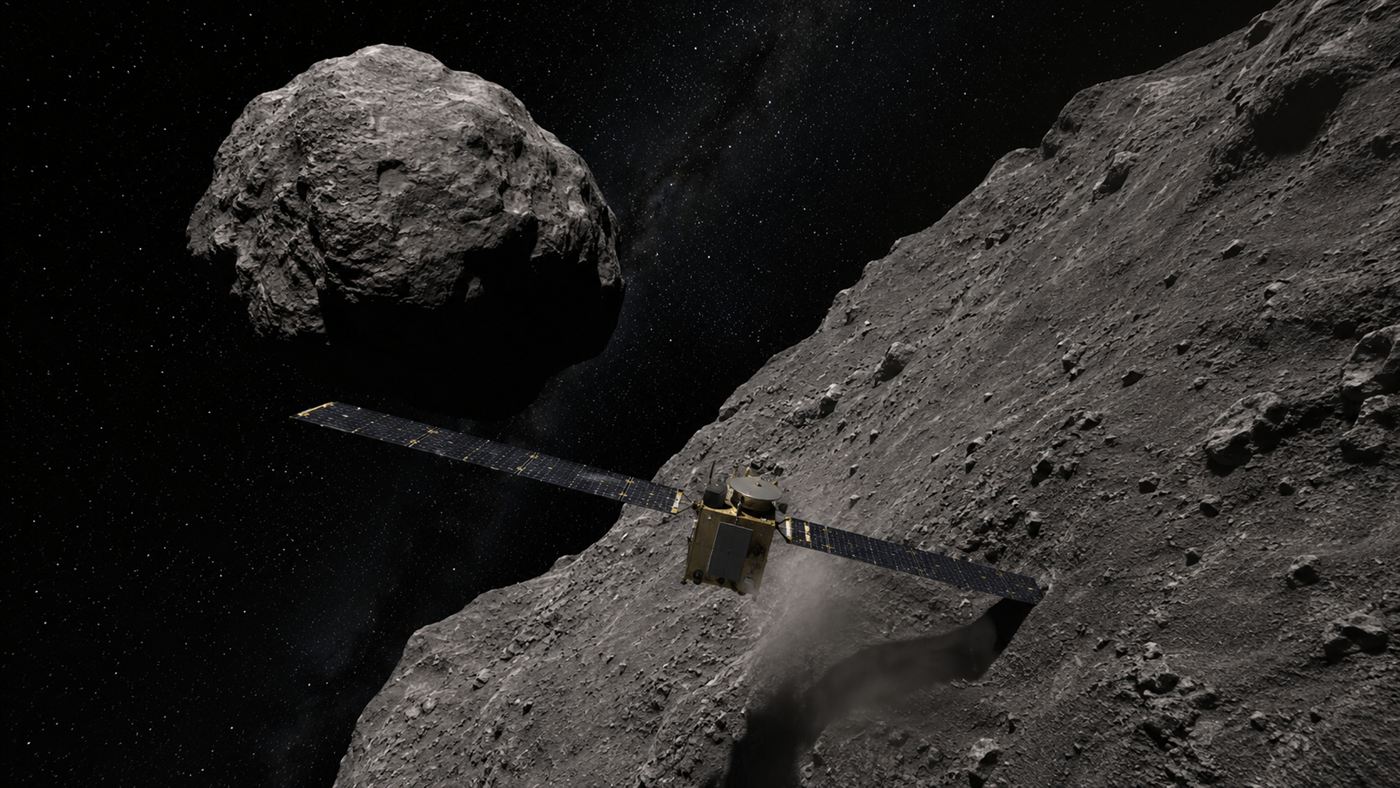
You cannot swap a chip 15 billion miles away, so the engineers had to work around the dead tissue rather than replace it. The corrupted code that lived on that chip had to go somewhere else, but the computer's memory was small and there was no single empty space big enough to hold it. This is the same breed of against-all-odds fix that NASA pulled off when it slammed a spacecraft into an asteroid, only performed by remote control on a patient that could not be touched.

The fix that had to fit in the cracks
So they got surgical. As NASA's Jet Propulsion Laboratory described, engineers broke the affected code into pieces small enough to tuck into unused corners of the working memory, then rewrote those pieces so they would still function as a seamless whole. It was the software equivalent of rehousing a family, room by room, into whatever empty closets were left in a house you could only redecorate by mail.
On April 18, 2024, they beamed up the first relocated chunk of code and waited out the two-day round trip. Two days later, engineering data came through cleanly for the first time in five months, and the control room erupted. Over the following weeks they moved the rest, and by June all four of the probe's remaining science instruments were reporting again. A space probe that had effectively suffered a stroke had been coaxed back to full speech from across the void.
Why keep a 47-year-old probe alive?
It is fair to ask why anyone bothers with a spacecraft this old and this far gone. The answer is that there is nothing else like it. Voyager 1 and its twin are the only human instruments ever to sample interstellar space directly, measuring the plasma and magnetic fields beyond the Sun's influence, and every extra month of data is unique and irreplaceable. When they die, that window closes and does not reopen for decades, if ever.
There is sentiment in it too, and no shame in that. These are the probes that carry the Golden Record, humanity's message in a bottle to the stars, and they have become something close to family for the people who tend them. Keeping Voyager 1 talking is partly hard science and partly a refusal to let go of our farthest scout, the same spirit that put a record of Earth's sounds aboard in the first place.
The honest catch
The rescue was a triumph, and it was also a reprieve, not a cure. Voyager 1 is running out of power, its nuclear battery fading by about four watts every year, and the team has already been switching off heaters and instruments one by one just to keep the essentials alive. No amount of clever coding changes the arithmetic. Within a handful of years, probably in the 2030s, both Voyagers will fall permanently silent, not because they broke, but because there is simply no power left to run them.
It is worth being clear-eyed that this fix bought time, perhaps a few more years of that priceless interstellar data, and no more. But that is exactly what makes it worth doing. A team on Earth reached across 15 billion miles of nothing, found a single dead chip, and talked a dying machine back to life, all so we could keep listening a little longer to the farthest thing we have ever made. If that is not worth the effort, it is hard to say what is.
Engineers reached across 15 billion miles of empty space, found one dead chip, and brought a 47-year-old probe back from the edge of silence. When Voyager 1 finally goes quiet for good, will you feel we lost something, or that it simply earned its rest? Tell us what you think in the comments.
Related reading: The gold-plated record bolted to the Voyager probes, carrying Earth's sounds into the galaxy.
More from Watts & Wild
More in Science & Tech →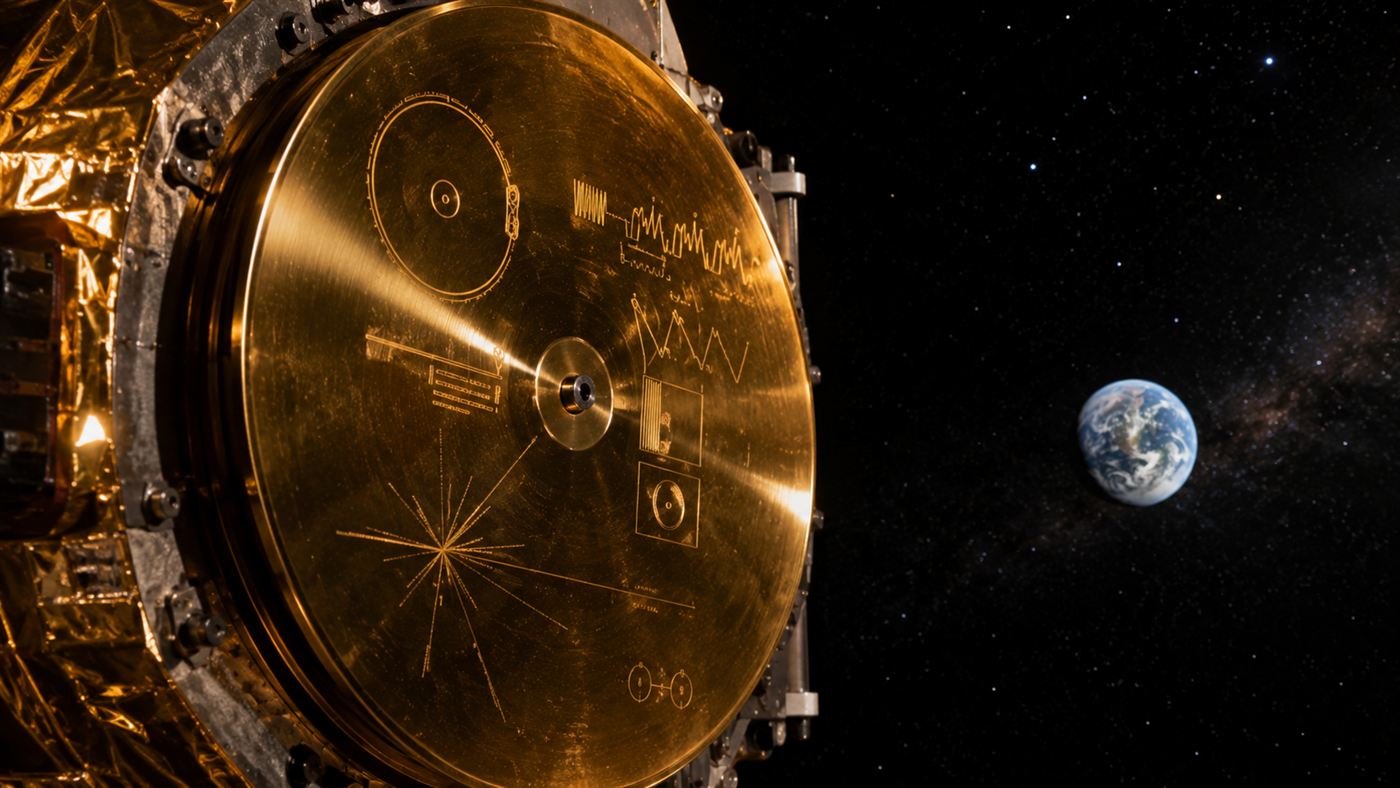

Bruno writes about energy history, industrial disasters, and the people who shaped the technologies we take for granted. He is based in Brazil.