SpaceX needed a dummy weight for its first giant rocket, so Elon Musk strapped in his own electric Tesla Roadster and a spacesuited mannequin, and the car is still orbiting the Sun
On its first test flight in 2018, the most powerful rocket in the world needed something heavy to carry. Instead of a block of concrete, SpaceX bolted in a cherry-red Tesla Roadster with a dummy in a spacesuit, and flung the first car ever into deep space.
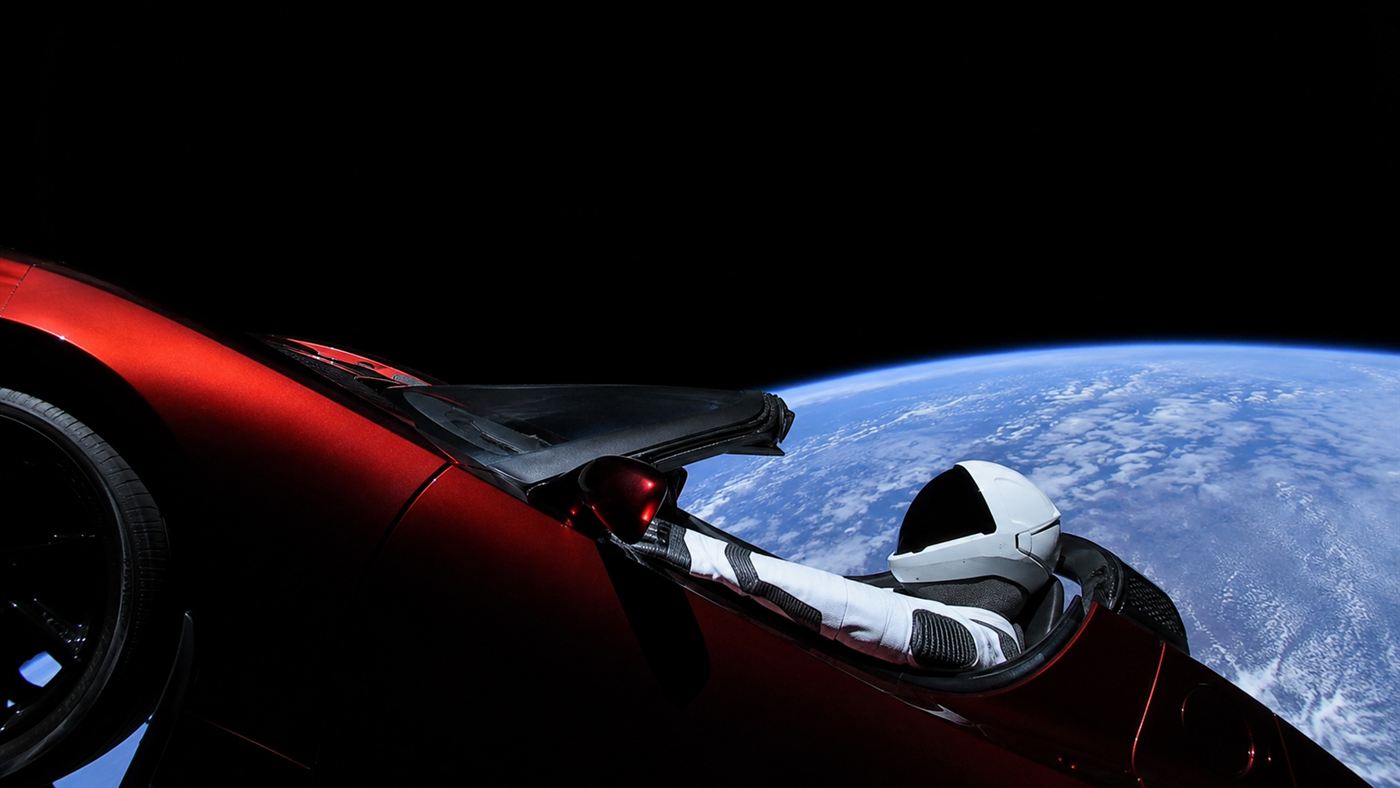
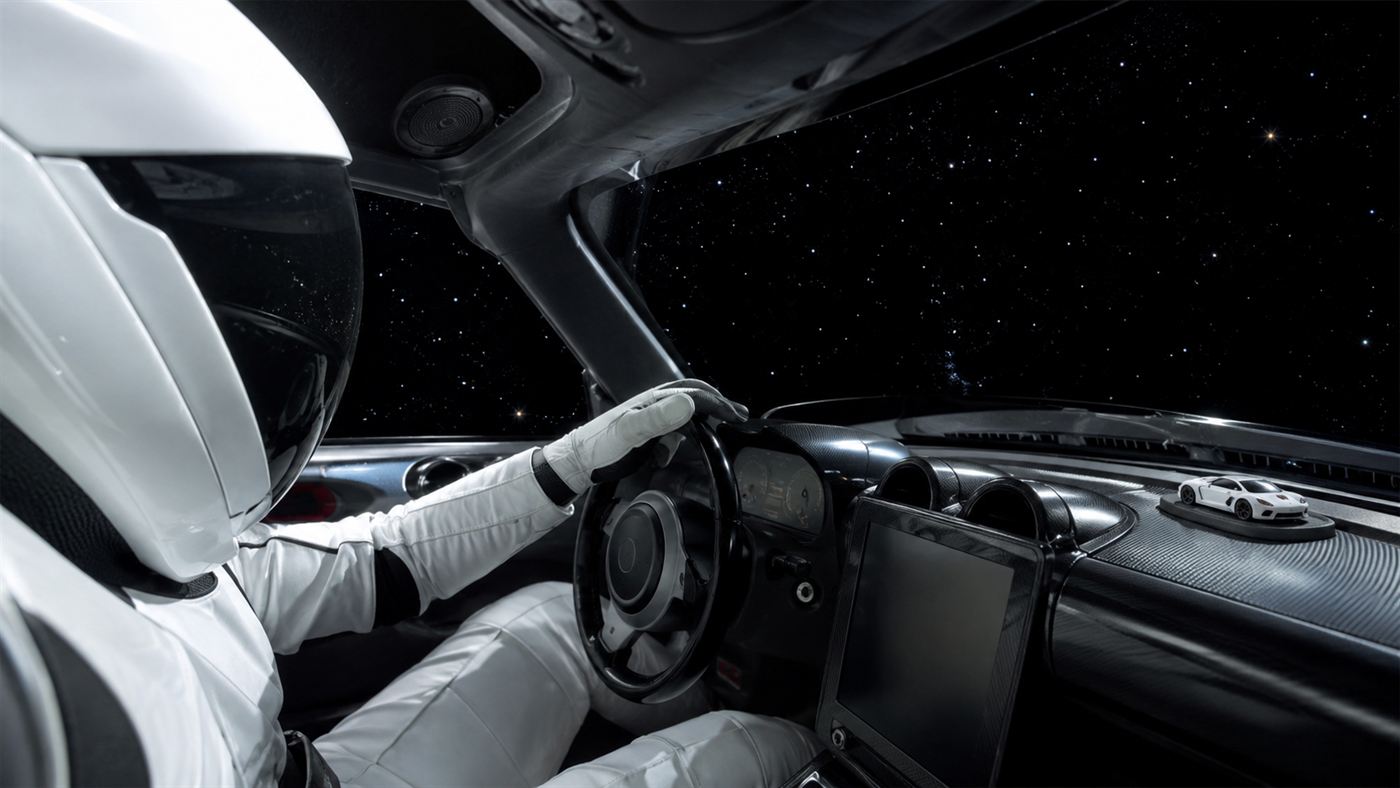
Starman at the wheel of the Tesla Roadster, the first car ever sent into deep space. Illustration: Watts & Wild.
The Tesla Roadster that SpaceX launched in February 2018 was never going anywhere useful, and that was exactly the point. When the company's enormous new rocket, the Falcon Heavy, flew for the first time, it needed a heavy test payload, the kind of dead weight engineers normally fake with a slab of steel or concrete. As Space.com has tracked ever since, Elon Musk, who runs both SpaceX and Tesla, decided to use his own electric sports car instead.
So on February 6, 2018, the Falcon Heavy thundered off the same Florida pad that once launched Apollo to the Moon, carrying a midnight-cherry Roadster with a mannequin in a SpaceX spacesuit buckled into the driver's seat. They named him Starman, after the David Bowie song, set the stereo looping Space Oddity, and printed the words "Don't Panic" on the dashboard. Then the rocket let go, and the car simply kept going.
Where is the Tesla Roadster now? The Tesla Roadster and its Starman dummy are in an elliptical orbit around the Sun that crosses the orbit of Mars, looping once roughly every 557 days. It made its first close pass by Mars in October 2020 and will likely keep orbiting for millions of years.
Why launch a Tesla Roadster into space?
The unglamorous truth is that a rocket's maiden flight is risky, so nobody puts a real satellite on it. They bolt on a mass simulator, a lump of metal or concrete that weighs the same as a payload and does nothing else, just to prove the rocket can carry it. Musk thought that was depressingly dull. He owned the first car his other company ever built, a 2008 Tesla Roadster, and decided that flying it would be far more memorable than launching a block of concrete, and a spectacular advertisement for both of his companies at once.
There was a neat symmetry to the choice. That original Roadster was the car that proved an electric vehicle could be quick and desirable rather than a glorified golf cart, the machine that put Tesla on the map. Sending it beyond the Moon meant the first car ever launched into deep space would be an electric one, a fact that delighted Musk and annoyed his critics in roughly equal measure.
Who is Starman?
The figure at the wheel is not a person but a full spacesuit stuffed into the shape of a driver, a test article for the suit SpaceX was developing for real astronauts. Musk named him Starman, after Bowie, and the car was loaded with small jokes for whoever or whatever might find it. One hand rests casually on the door, the stereo was set to loop Bowie, and "Don't Panic" on the dash nods to Douglas Adams and The Hitchhiker's Guide to the Galaxy.
There is more tucked away. A tiny Hot Wheels Roadster with a miniature Starman sits on the dashboard, a copy of Isaac Asimov's Foundation novels rides along on a quartz data disc, and a circuit board is stamped with "Made on Earth by humans." None of it serves any purpose. It is a message in a bottle, thrown into the one ocean that never reaches a shore.
Where the Tesla Roadster actually went
Contrary to a lot of headlines at the time, the car was never aimed at Mars itself. The upper stage fired a little harder than planned and pushed the Roadster onto an elliptical heliocentric orbit, meaning it now circles the Sun the way a planet does. That loop carries it out past the orbit of Mars at its farthest point, around 1.66 times the Earth's distance from the Sun, and back in toward Earth's orbit at its nearest, completing a lap about every 557 days.
It is not headed for any particular destination. On October 7, 2020, the Roadster made its first reasonably close pass by Mars, though "close" in space still meant a gap of millions of kilometers. Hobbyists track its position on live websites, and the only honest answer to "where is it" is a set of orbital numbers, a lonely red dot looping the Sun somewhere between the worlds.
Falcon Heavy and the boosters that came home
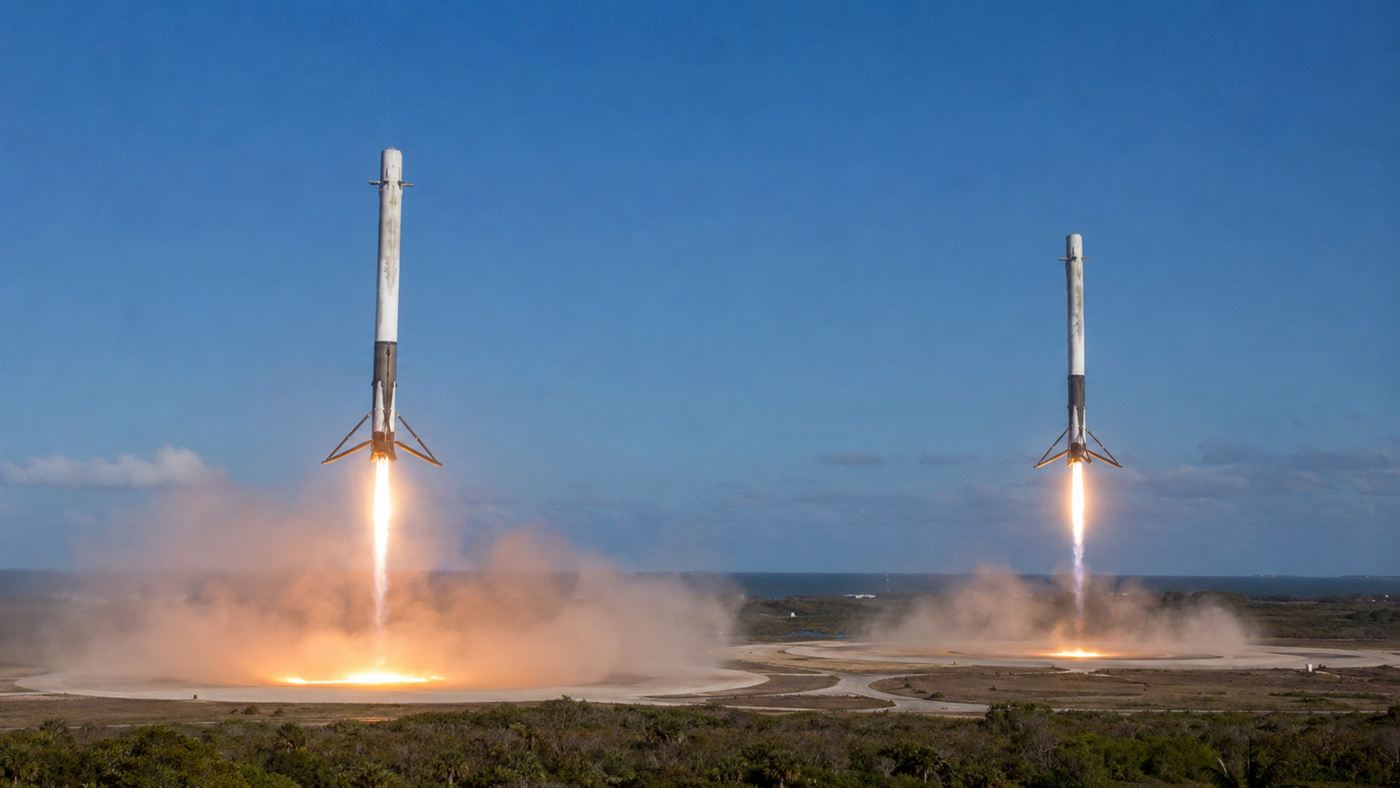
The stunt would have meant little if the rocket had failed, and the launch itself was the real achievement. The Falcon Heavy was, at the time, the most powerful operational rocket in the world, with 27 engines firing together across three strapped-together boosters. Minutes after liftoff, its two side boosters peeled away and flew back to Cape Canaveral, touching down upright and almost simultaneously on their landing pads, a piece of synchronized choreography that looked like science fiction.
That reusable landing, far more than the car, was the point SpaceX wanted to make: that big rockets did not have to be thrown away after a single flight. The center booster missed its drone ship and crashed into the sea, a reminder that none of this was routine yet. But the headline image the world remembered was a sports car drifting over a blue Earth, with a spaceman at the wheel.
How long will the Tesla Roadster last?
A very long time, in the sense that matters. With no air to slow it and no ground to hit, the Tesla Roadster will keep orbiting the Sun for millions of years. One study that simulated its path over three million years found roughly a 6 percent chance it eventually collides with Earth and about 2.5 percent with Venus, most likely far in the future, long after anyone is around to notice.
The car itself will not stay pretty. Unfiltered sunlight, cosmic radiation and the steady sandblasting of micrometeorites will, over centuries, crack the tires, bleach the paint and break down the rubber, leather and plastic, leaving mostly the aluminum frame and the tougher metal parts. Its battery died within hours of launch, the music stopped almost immediately, and Starman has been coasting in silence ever since. The romance is real, but so is the slow decay.
The honest catch
It is worth saying plainly that this was a stunt, a brilliant one, but a stunt. The Roadster did no science, carried no instruments, and exists mainly as the most expensive advertisement in the history of either of Musk's companies. Some astronomers grumbled that it was simply litter flung into the Solar System, and the term space junk is not entirely unfair, even if a car orbiting the Sun threatens nothing out there.
What it did do was hand the public an unforgettable image and prove a serious point about reusable rockets in the same afternoon. The Bowie song is not really "playing" in the vacuum, the car is dead and slowly crumbling, and Starman cannot see the Earth he is sailing away from. And yet, somewhere out past Mars right now, an electric sports car really is circling the Sun, which is the kind of true thing that sounds made up.
An electric sports car with a spaceman at the wheel has been quietly circling the Sun since 2018, and it may still be out there long after everyone reading this is gone. Was launching a Tesla into space a brilliant bit of showmanship, or just expensive litter? Tell us what you think in the comments.
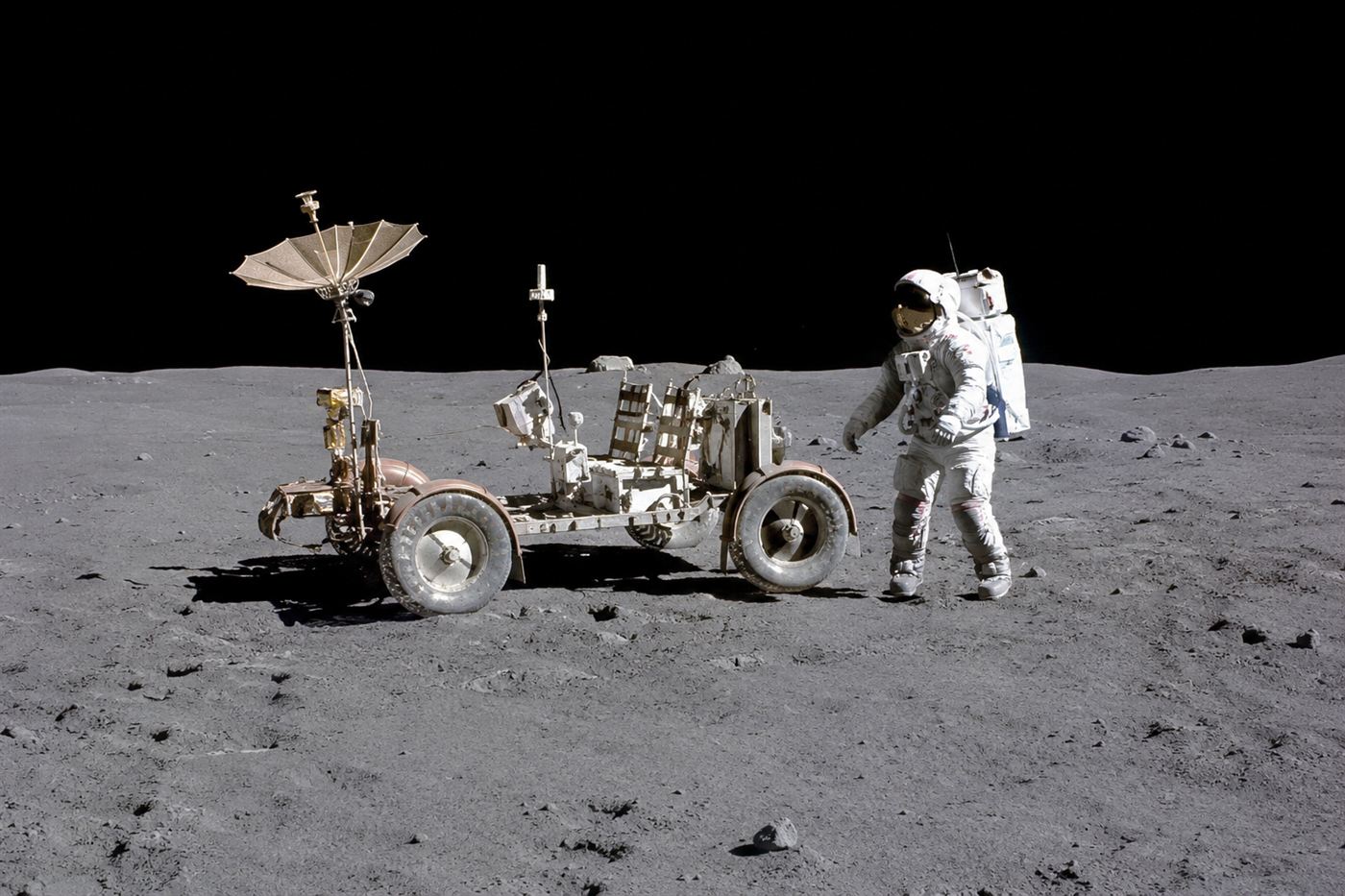
Related reading: The other electric car off the Earth, the battery-powered rover that Apollo astronauts drove across the Moon.