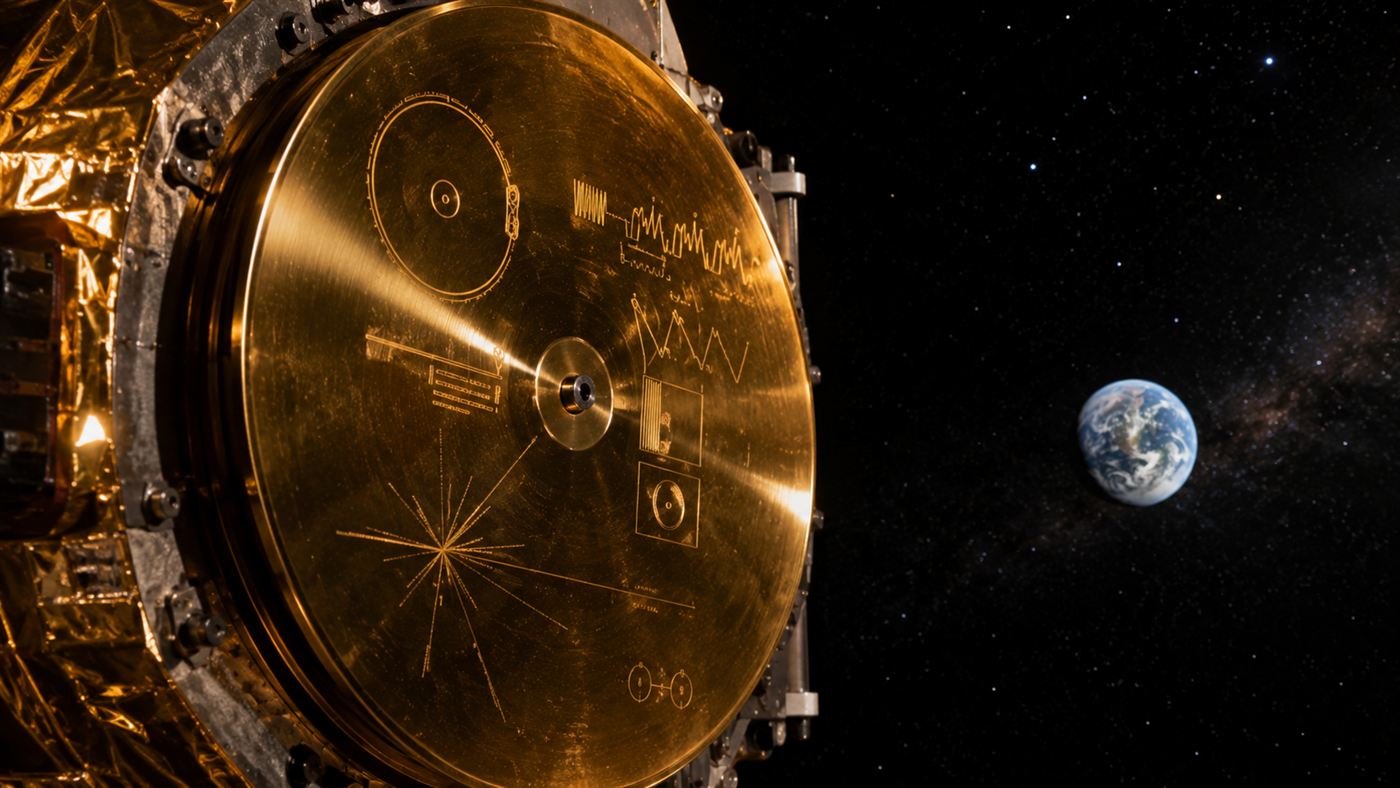
We engraved a naked man, a naked woman and a map to Earth on a gold plate and threw it into the galaxy, and almost no one will ever see it
In 1972, humanity did something both absurd and beautiful. We bolted a small gold message to a spacecraft leaving the Solar System, a note in a bottle flung into an ocean so vast that the bottle will drift for millions of years and probably never wash up anywhere at all.
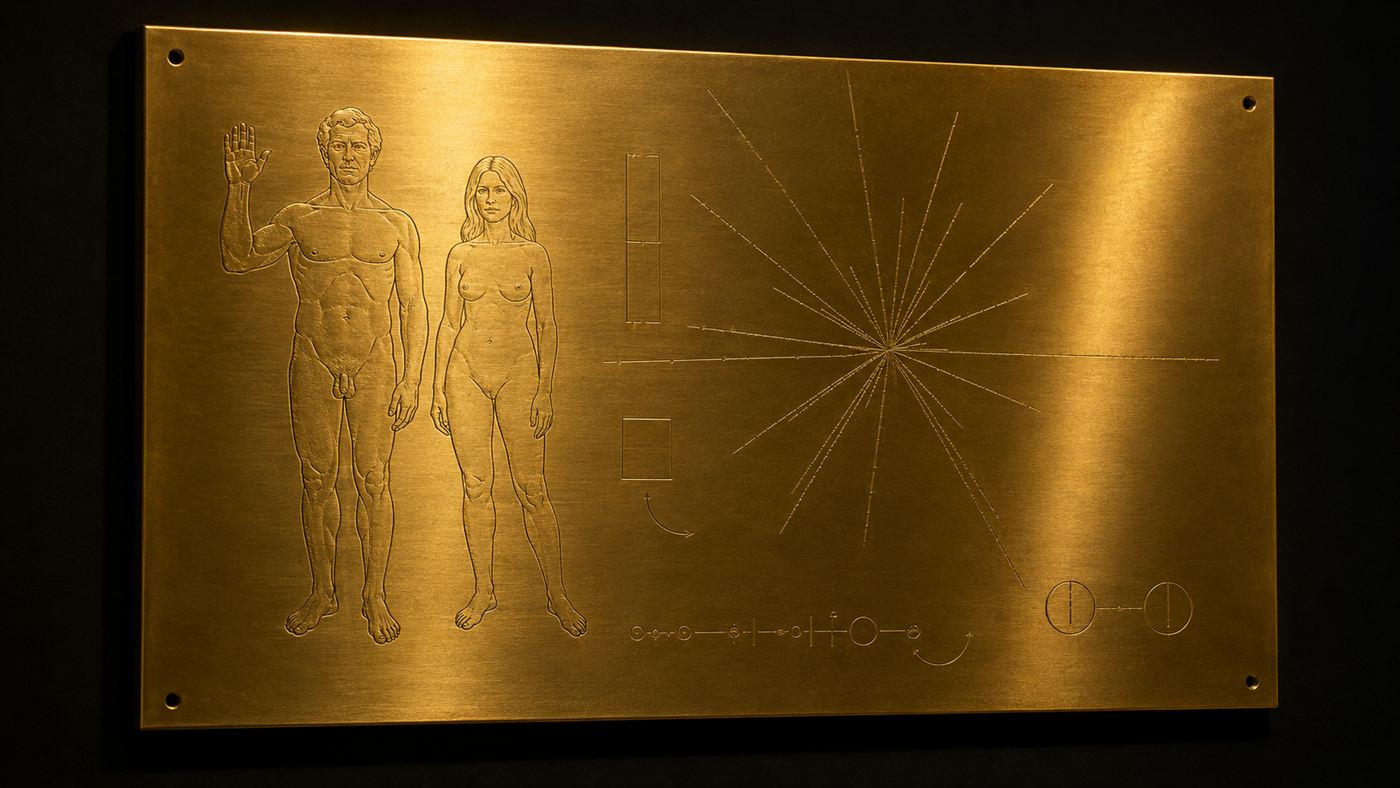
The Pioneer plaque tried to say hello to the universe on a small sheet of gold. Illustration: Watts & Wild.
When NASA launched the Pioneer 10 spacecraft in 1972, and its twin Pioneer 11 the next year, it knew that these were the first machines ever put on a path to leave the Solar System entirely. Someone realised that meant they would become humanity's first ambassadors to the stars, and that perhaps they should carry a word of greeting.
So they were each fitted with the Pioneer plaque, a small plate of gold-anodised aluminium engraved with a message meant for whatever intelligent life might one day find them. It was the first time our species had deliberately sent a physical letter beyond our own cosmic neighbourhood, addressed, in effect, to everyone and no one.
The short version is that the Pioneer plaque is one of the most hopeful and most hopeless things humanity has ever made, and understanding which parts are which tells you a great deal about us.
What the Pioneer plaque actually shows
The design was led by the astronomers Carl Sagan and Frank Drake, with the drawing done by the artist Linda Salzman Sagan. At its centre stand a nude man and woman, the man's hand raised in a gesture of greeting, sketched to show a finder what we look like, with the spacecraft drawn behind them for scale.
Around them sits a careful attempt at a universal language of science. There is a symbol for the hydrogen atom to set a scale of size and time, a little diagram of the Solar System with the craft's path out of it, and, most cleverly, a burst of lines known as the pulsar map, which pins down the Sun's position using the steady beats of distant pulsars as cosmic landmarks.
A map written in dying stars
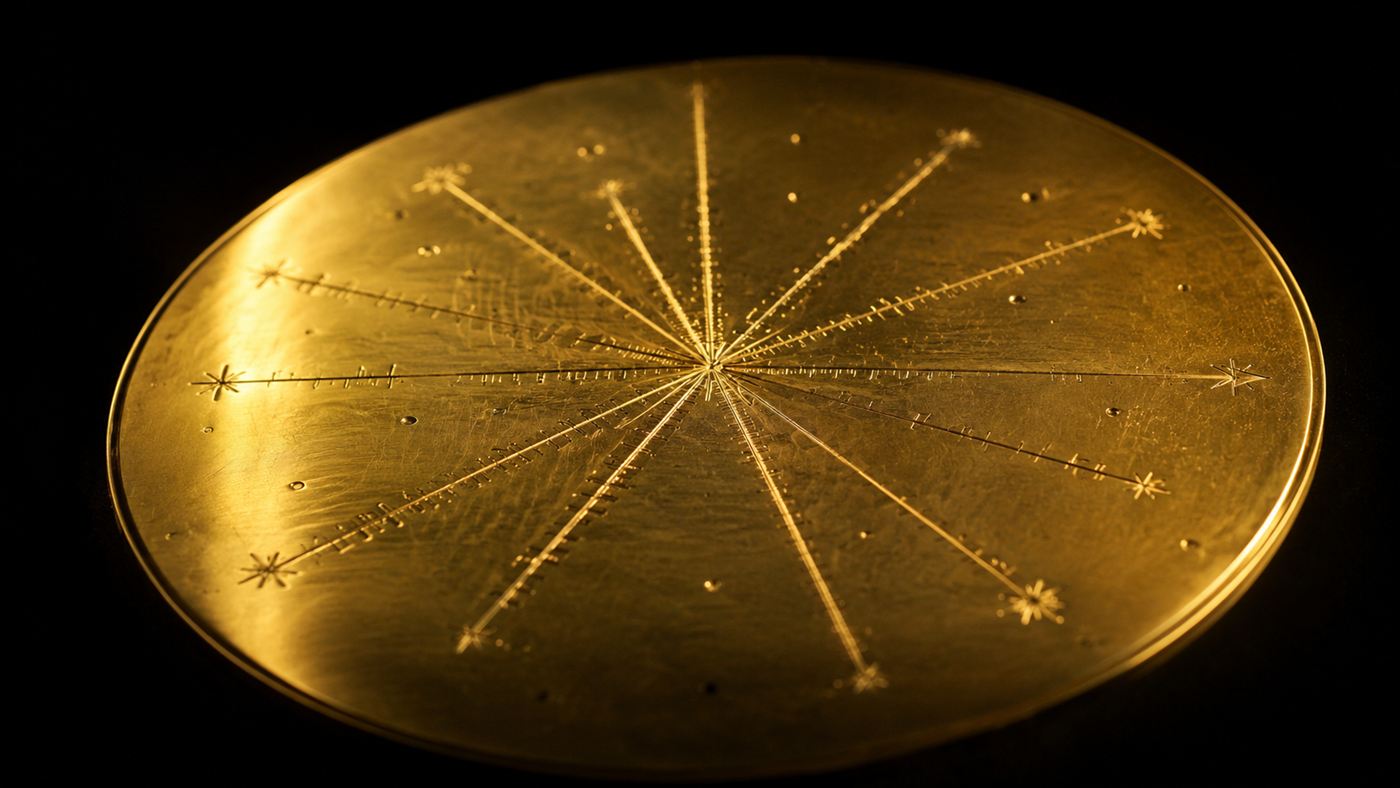
That pulsar map is the real stroke of genius. Pulsars are collapsed stars that spin and flash with incredibly precise rhythms, each with its own signature beat, and Sagan and Drake used fourteen of them like lighthouses. The lines show the directions and frequencies of those pulsars as seen from our Sun.
In theory, an advanced civilisation could read that pattern, work out which pulsars we meant, and use them to triangulate not only where the message came from but roughly when, since pulsars slow over time. It is a return address written in the ticking of dead stars, which is about as poetic as engineering ever gets.
Why it will almost certainly never be read
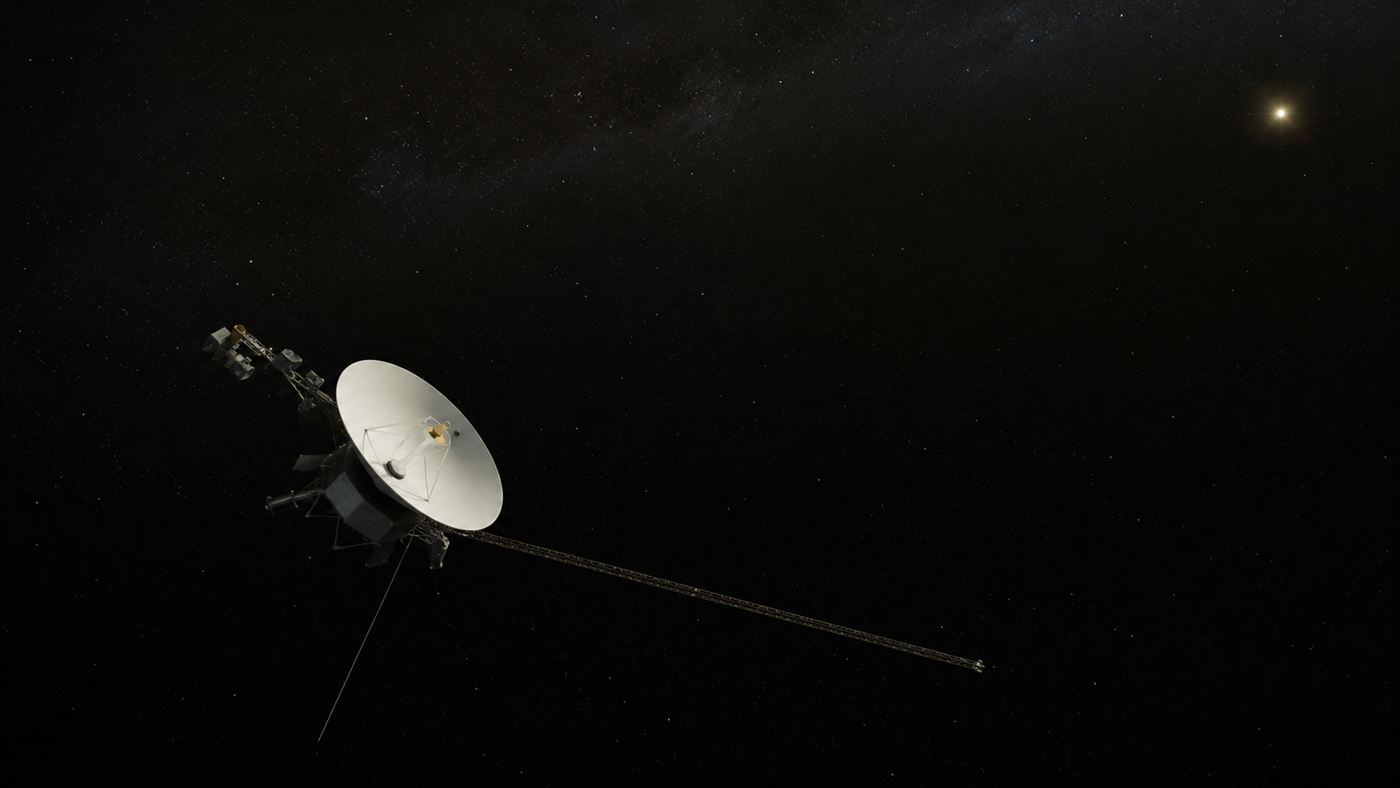
Here is the deflating truth. Space is so unimaginably empty that the odds of anyone ever intercepting a small plaque on a slow, dark spacecraft are effectively zero. The Pioneers are not aimed at any particular star, and they will drift for millions of years through mostly nothing, growing colder and more anonymous the whole way.
Even if some being did stumble across it, whether they could read a set of diagrams drawn by human minds, full of human assumptions, is far from certain. The message was a genuine effort to be universal, but it was still written by us, for a reader we can only guess at, and can never meet.
Why did we send it anyway?
Because the plaque was never really only about aliens. The moment humanity tried to explain itself to a total stranger, it had to decide what mattered most about being human, and in doing so it held up a mirror. The Pioneer plaque is at least as much a portrait of us in 1972 as it is a letter to them.
You can even read our anxieties in it. The nude figures caused a small scandal back on Earth, with complaints about sending obscene pictures into space, and later critics argued the couple looked too idealised to represent all of humanity. Every choice on that little gold plate says something about who we thought we were.
The honest catch
It is easy to call the Pioneer plaque a lovely failure, a message no one will ever read, and in the narrow sense that is true. But treating it as a failed letter misses what it really is. Its value was never in the tiny chance of an alien reply; it was in the act of a young species pausing, looking at itself from the outside, and choosing hope over silence.
Carl Sagan understood that perfectly. The plaque made millions of people picture the Earth as one small world among the stars, worth introducing and worth protecting, and that shift in view mattered far more than any message ever reaching an alien. The Pioneer plaque is drifting into the dark unread, and it may be one of the most quietly important things we have ever made, precisely because the real audience was always ourselves.
We wrote a letter to the whole universe knowing almost no one would ever read it, and did it anyway. Is a message worth sending if it is really meant for us, not for whoever might find it? Tell us what you think in the comments.
Related reading: the Voyager Golden Record, the richer message we sent five years later. See also the Arecibo dish that beamed a message to a distant star cluster, and Mariner 1, an earlier reach for another world undone by a tiny error.