Frances Kelsey spent fourteen months refusing to approve thalidomide for the American market despite a pharmaceutical company's pressure campaign, and the ten thousand babies born with malformed limbs in Europe proved she had been right
In September 1960, the pharmaceutical company William S. Merrell submitted an application to the US Food and Drug Administration to sell thalidomide in America under the brand name Kevadon. The reviewer who received it was Frances Kelsey, a Canadian-born pharmacologist on her first week at the agency. She said no. She kept saying no for fourteen months.
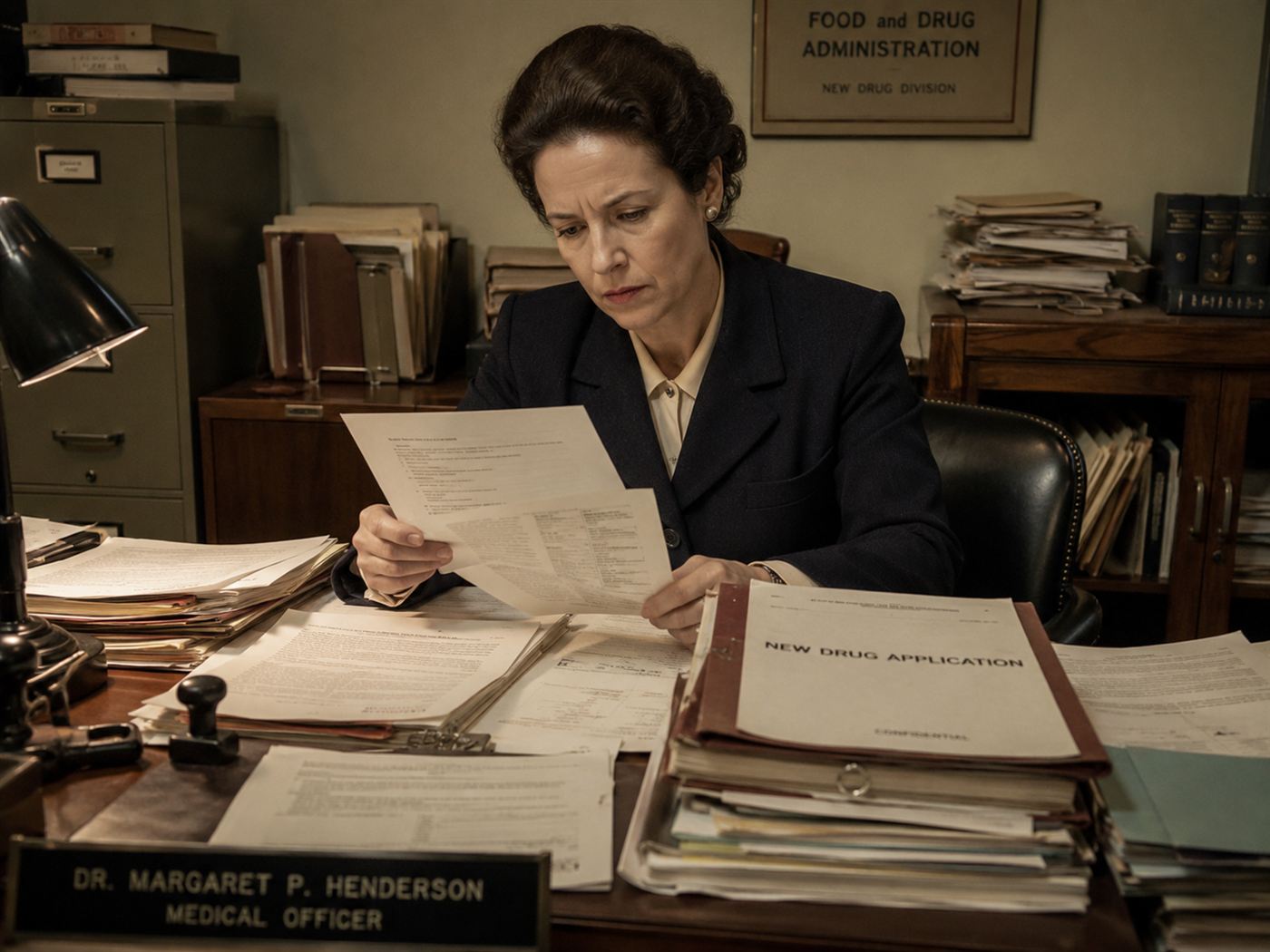
Frances Kelsey at the FDA in the early 1960s. She was 46 years old when she received the thalidomide application. The drug was already sold in 46 countries and had been called one of the safest sleeping pills ever developed. Illustration: Watts & Wild.
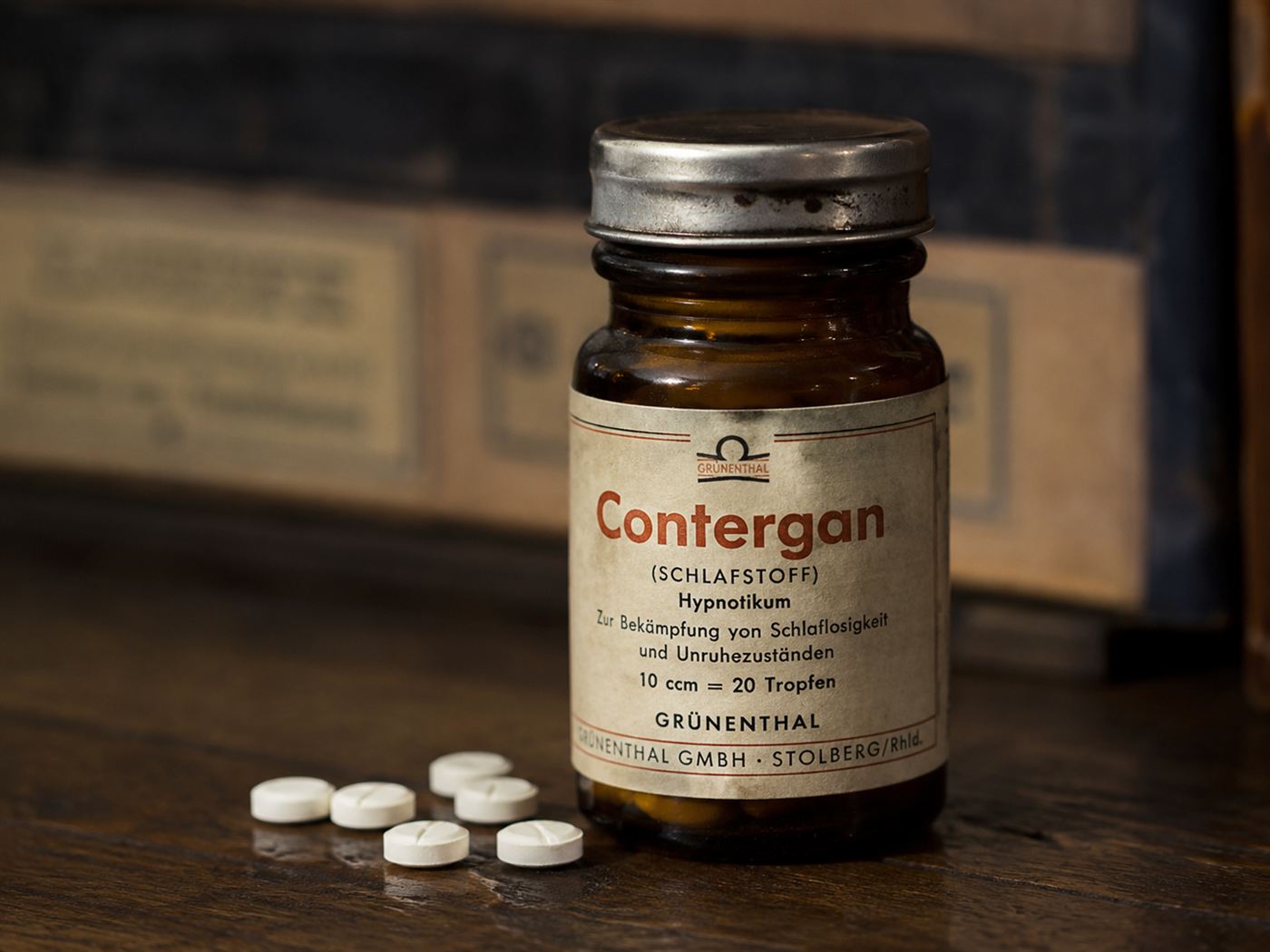
Thalidomide was developed by a West German pharmaceutical company called Grünenthal in the 1950s and marketed under the brand name Contergan starting in 1957. It was sold as a sedative and, crucially, as a treatment for morning sickness in pregnant women. It was available without prescription in West Germany. Doctors and patients described it as unusually safe. Company literature claimed that no dose had ever produced a lethal overdose in animals.
By 1960, thalidomide was being sold in 46 countries across Europe, Canada, Australia, and parts of Asia and Africa, marketed by Grünenthal and its various licensed partners under at least 37 different brand names. The American market was the obvious next step. FDA drug approval at the time required a company to submit safety data, and then the FDA had 60 days to reject it. If the agency did nothing, the application was automatically approved. Merrell filed in September 1960. The clock started.
The drug Europe trusted in the late 1950s
Grünenthal had tested thalidomide extensively in animals without finding a lethal dose, which they interpreted as evidence of extraordinary safety.
What the animal tests did not reveal was what the drug did to developing human fetuses.
The compound, which had never been adequately tested in pregnant animals, crossed the placental barrier easily.
Taken during weeks four through eight of pregnancy, thalidomide interfered with the blood vessels supplying the developing limb buds.
Babies were born without arms, without legs, with flippers instead of hands, with ears missing, with hearts and kidneys malformed.
The name for the condition was phocomelia, from the Greek for "seal limb."
It had been extremely rare before Contergan appeared in German pharmacies.
After 1957, the incidence in West Germany rose sharply.
No one connected the increase to the drug immediately.
The cases looked like a rare birth anomaly cluster, and doctors in different cities were not coordinating their observations in any systematic way.
Frances Kelsey's first assignment
Frances Kelsey had a doctorate in pharmacology from the University of Chicago and a medical degree from the same institution.
She had worked as a researcher under pharmacologist E.M.K. Geiling, who had investigated the 1937 Sulfanilamide disaster in which 107 people died after taking a drug dissolved in diethylene glycol, the main ingredient of antifreeze.
That experience had made her careful about what companies called "proven safe."
When she received the thalidomide application, she read the supporting data and found gaps.
The toxicity studies were incomplete.
There was a report of peripheral neuropathy, tingling and numbness in the hands and feet, in long-term users in Britain, and the application materials did not address this adequately.
She sent the application back to Merrell with a request for more information.
The company responded, she found the response inadequate, and she sent it back again.
This process repeated itself six times over fourteen months.
What the thalidomide birth defects looked like in numbers
By 1960, pediatric wards across West Germany were seeing cases of phocomelia that had been essentially absent in previous decades.
A German pediatrician named Widukind Lenz began tracking the cases systematically in late 1961.
He interviewed the mothers, asked about every drug they had taken, and thalidomide came up again and again.
In November 1961, Lenz called Grünenthal and told them he believed their drug was causing the birth defects.
Grünenthal pulled Contergan from the German market on November 26, 1961.
The British licensed partner withdrew the drug in December.
By then, the damage was done.
Approximately 10,000 children around the world were born with thalidomide birth defects, the majority in West Germany.
About 40 percent of those children did not survive infancy.
The survivors grew up to become some of the most prominent disability rights advocates of the 20th century, winning legal settlements, legislative protections, and formal apologies from the German government decades later.
Fourteen months of thalidomide refusals
While Frances Kelsey was reviewing the application in Washington, Merrell's representatives were growing increasingly frustrated.
The drug was selling well across Europe.
Company executives complained about her to her supervisors at the FDA.
They called her unreasonable, obstructionist, and overly cautious.
She held her position and asked for more data.
In early 1962, as reports of thalidomide birth defects in Europe began reaching American newspapers, Merrell quietly withdrew its application without it ever being formally approved or rejected.
The American pharmaceutical industry had been distributing thalidomide samples to American doctors for what were described as clinical trials during the review period.
More than 1,200 doctors had received samples, and those samples had reached at least 20,000 patients, including 624 pregnant women.
Seventeen American children were born with thalidomide birth defects from the sample distribution, a number that would have been vastly larger if FDA drug approval had followed the European timeline.
What changed in FDA drug approval law
The thalidomide story reached the American public in mid-1962 through reporting by journalist Morton Mintz in the Washington Post.
Senator Estes Kefauver had been working on drug safety legislation for months, but the bill was stalled.
After the thalidomide coverage, Congress moved quickly.
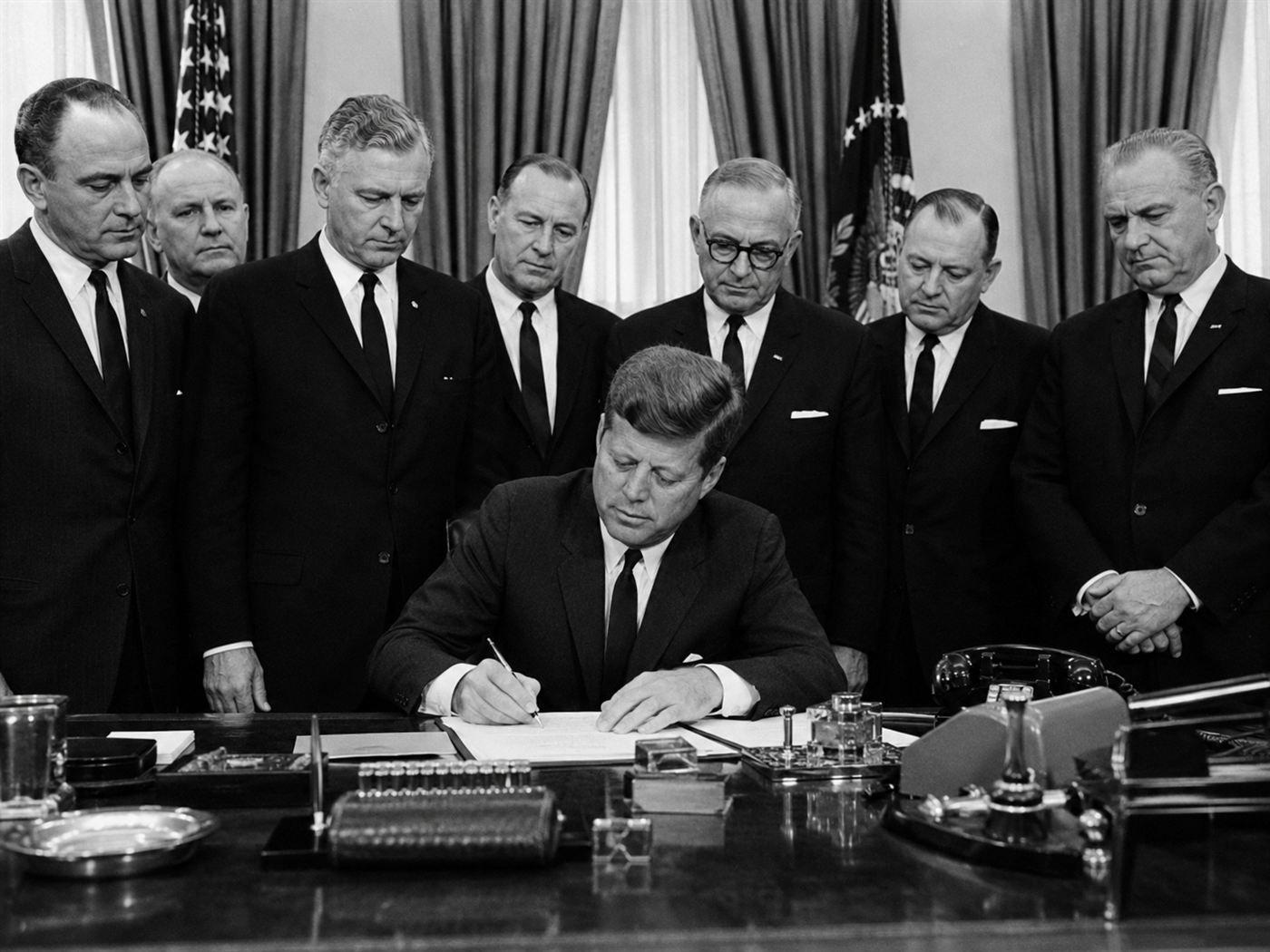
The Kefauver-Harris Amendment, signed into law by President John F. Kennedy in October 1962, fundamentally changed the requirements for FDA drug approval in the United States.
Before 1962, companies had to prove only that a drug was safe.
After 1962, they had to prove it was both safe and effective, and the FDA no longer had a passive approval timeline: drugs could not be sold until the agency affirmatively approved them.
The 1962 amendments also required that patients in clinical trials give informed consent, a requirement that had not previously been codified in American law.
Frances Kelsey received the President's Award for Distinguished Federal Civilian Service from Kennedy in August 1962, the highest honor available to a civilian government employee.
She continued working at the FDA until 2005, when she retired at age 90.
The honest catch
Thalidomide was not permanently banned.
In 1998, the FDA approved it for treatment of a painful complication of leprosy called erythema nodosum leprosum.
In 2006, it was approved for multiple myeloma, a blood cancer.
The drug works through mechanisms that were not understood in 1960, including anti-inflammatory and anti-angiogenic effects, the same anti-blood-vessel property that made it so dangerous to fetuses.
It is now prescribed with strict risk management controls under a program called STEPS, which requires pregnancy testing and contraception for all patients of childbearing potential and restricts prescribing to certified physicians and pharmacies.
thalidomide birth defects still occur in Brazil, where the drug is prescribed for leprosy, a disease that remains endemic there, and where the STEPS-equivalent controls have not always been followed consistently.
The 1962 FDA drug approval reforms are widely credited with making the American drug review process more rigorous than those of most other countries at the time, but the process is not perfect.
Drugs are still approved that are later withdrawn for safety reasons, and the tension between speed of access and rigor of evidence has never been fully resolved.
Frances Kelsey did not have certainty when she blocked the application.
She had questions the company could not answer.
That turned out to be enough.
Frances Kelsey said no because she had questions she could not get answered. What other questions do you think are going unanswered right now for the same reason she struggled in 1960?
Related reading: Eben Byers drank 1,400 bottles of Radithor because his doctor prescribed the radioactive patent medicine as safe, and it dissolved his bones over three years. See also the iron lung, the machine that breathed for polio patients and that a few relied on for life. See also the Tylenol murders, the poisoning that put a safety seal on every bottle.