For decades a huge metal cylinder breathed for people whose lungs had failed, and long after a vaccine made it obsolete a handful of Americans still spent their entire lives sealed inside one
Imagine a machine that does your breathing for you, a great steel tube you lie inside with only your head poking out, sighing air in and out of your body around the clock for years on end. It was one of the most important medical devices of the twentieth century, and for a few people it never stopped being a matter of life and death.
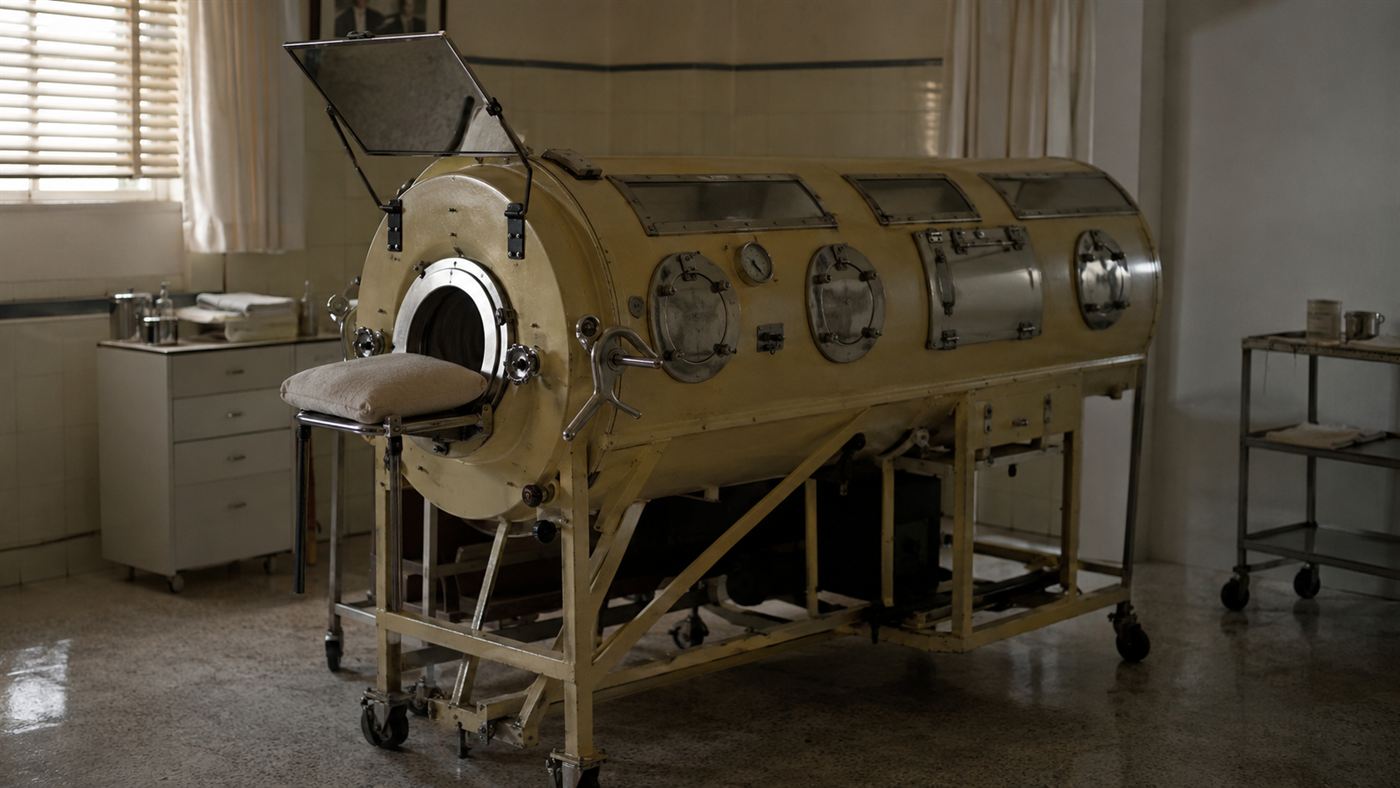
A patient lay inside the cylinder while it breathed for them. Illustration: Watts & Wild.
To anyone who lived through the mid-twentieth century, the sight was unforgettable: hospital wards lined with long metal cylinders, each with a human head resting on a pillow at one end, and the steady wheeze of bellows pushing life into bodies that could no longer breathe on their own. The machine was the iron lung, and it was the front line against one of history's most feared diseases.
It is a device that feels almost impossible today, a room-sized answer to a problem we now solve with a small tube and a bedside pump. Yet it saved a great many lives, and its slow slide from miracle to museum piece to lifeline for a forgotten few is one of the strangest arcs in medical history.
The short version: the iron lung was invented to breathe for people paralysed by polio, it filled hospital wards for a generation, and then a polio vaccine made it all but disappear, leaving only a tiny handful of people who would spend the rest of their lives inside one.
A machine that breathes for you
The idea behind it is ingenious and almost eerily simple. Normally you breathe by using muscles to expand your chest, which lowers the pressure inside and lets air rush in. If those muscles are paralysed, you suffocate. The iron lung solves that from the outside, by applying negative pressure around the whole body instead.
The patient lies inside a sealed tank with only their head exposed through an airtight collar. A pump repeatedly lowers the air pressure inside the tank, which pulls the chest open and draws breath in, then raises it again to push the breath out. The machine simply does mechanically what paralysed muscles no longer can, over and over, indefinitely.
How does an iron lung actually work?
It was the work of two researchers at Harvard, Philip Drinker and Louis Agassiz Shaw, who built the first practical version in 1928. Their machine used an electric pump and a set of bellows to cycle the pressure, and it was first tried on a child near death from polio, who reportedly revived within moments of being placed inside.
Because it works by negative pressure around the body, the iron lung needs no tube down the throat and no surgery, which made it relatively safe for its era. A cheaper, lighter design soon followed, and the machines spread through hospitals just as America's polio epidemics were building toward their terrifying peak.
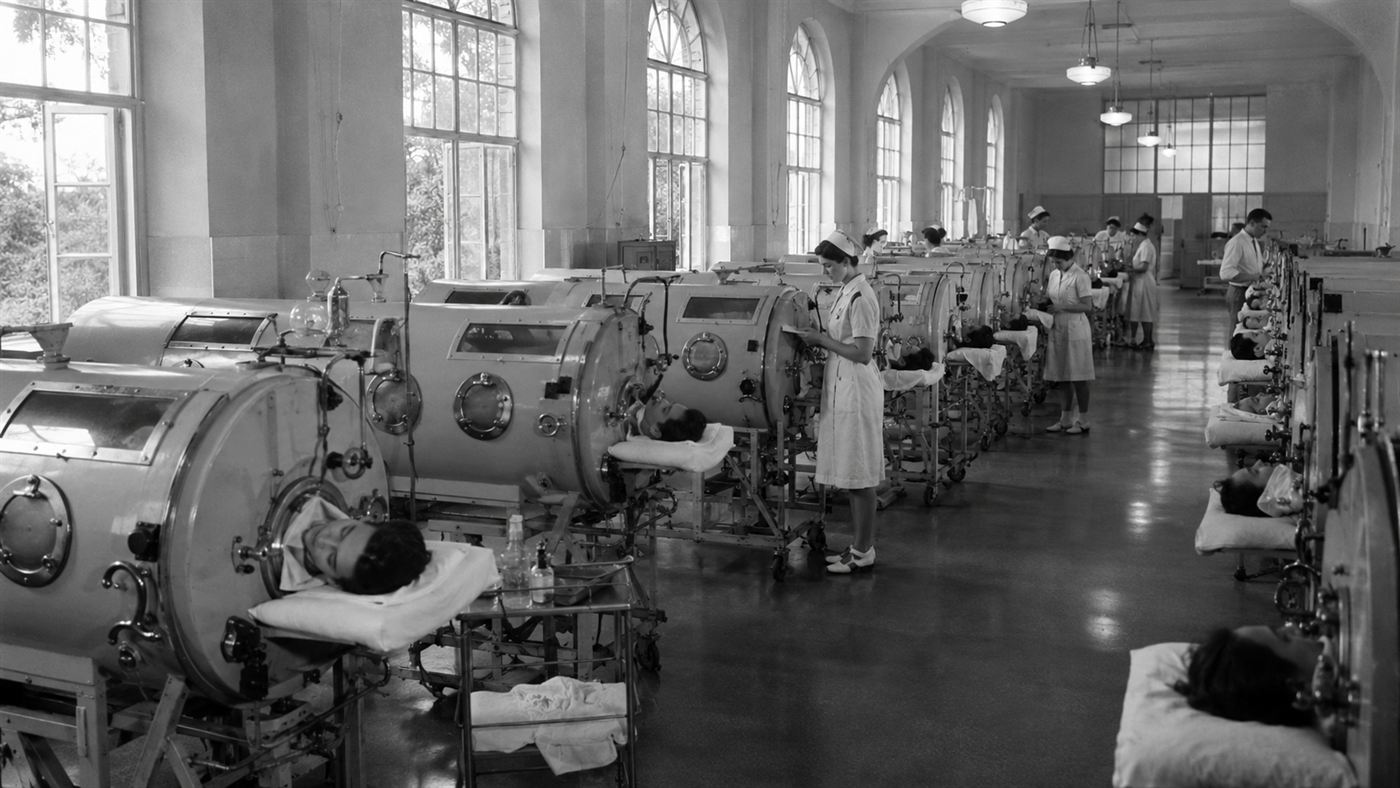
The polio wards full of iron lungs
In the 1940s and early 1950s, polio terrorised the United States. Every summer brought a fresh wave of the disease, striking children especially, and in its worst form it paralysed the muscles that power breathing. For those patients, the iron lung was the only thing standing between them and death.
Hospitals filled entire rooms with the machines, their bellows sighing day and night. Many patients recovered enough strength to leave the tank after weeks or months, but some never did, their damaged nerves leaving them dependent on the machine to breathe for the rest of their lives. An entire generation grew up with the iron lung as a symbol of both hope and terror.
The vaccine that made it obsolete
Then came the cure for the cause. The polio vaccine, proven in 1955, spread rapidly and drove the disease out of the United States within a few years. With almost no new cases of paralytic polio, the demand for the machines collapsed, and hospitals quietly retired their tanks.
Medicine moved on in another way too. Modern positive-pressure ventilators, which gently push air in through a tube, turned out to be smaller, more flexible and easier to manage than a body-sized steel cylinder. Between the polio vaccine and the new machines, the iron lung slipped from essential technology to a relic almost overnight.
The honest catch
It is easy to remember the iron lung purely as a triumph, but for the people who lived in one it was also a confinement. Life spent lying on your back inside a tank, unable to move freely, dependent on a machine and the electricity that ran it, was hard in ways the heroic old photographs never quite show.
It is also worth saying that its disappearance was genuinely good news, because it meant the disease that filled those wards had been beaten. And polio is not entirely gone from the world even now, which is a sobering reminder that the era of the iron lung is closer, and less safely behind us, than we like to think.
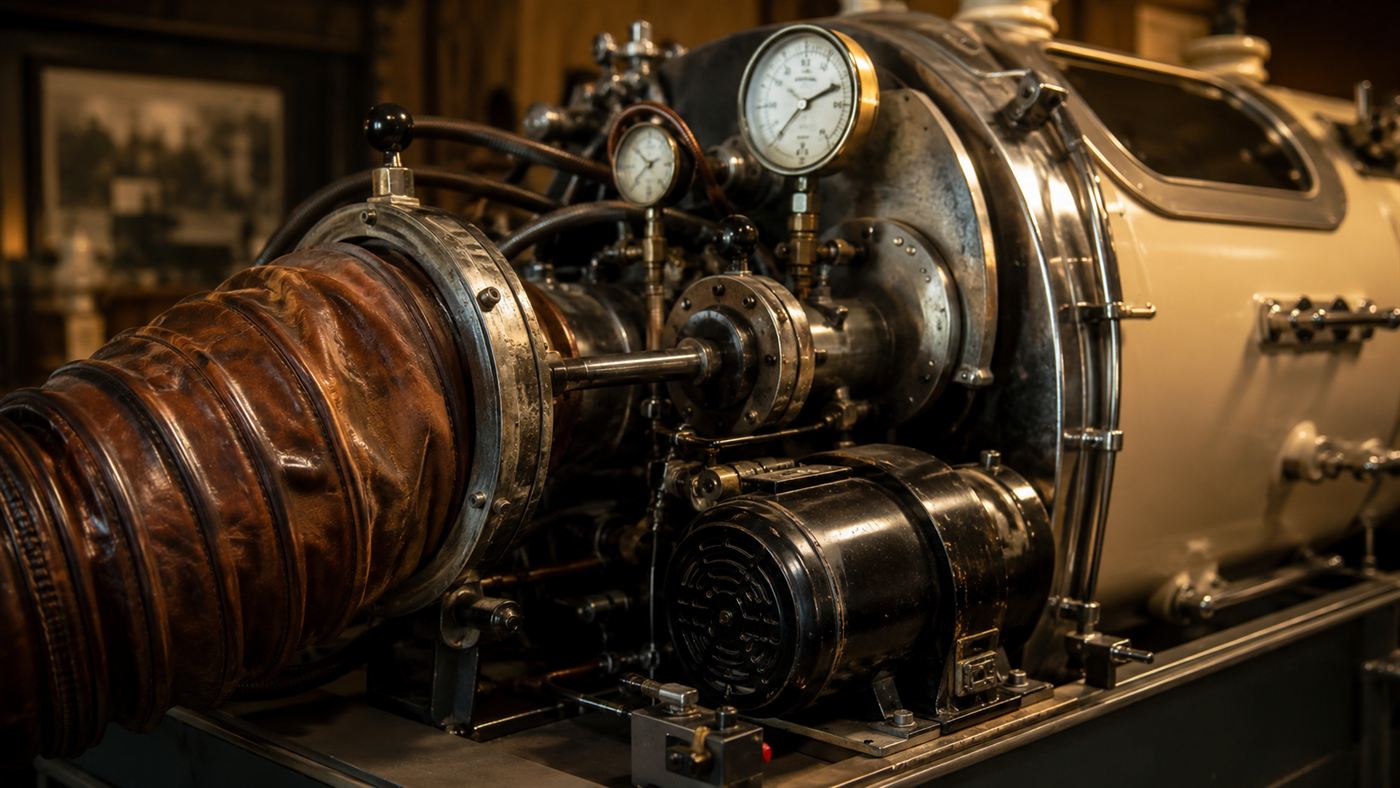
The last people in the iron lung
The most remarkable part of the story came at the very end. A small number of polio survivors, paralysed as children before the vaccine arrived, simply kept living in their machines for decade after decade, long after the rest of the world had forgotten the devices existed.
The best known was Paul Alexander, a Texan who caught polio at six in 1952 and lived in an iron lung for more than seventy years, teaching himself a trick of gulping air to leave it for short stretches, earning a law degree, and writing a book, before Paul Alexander died in 2024. By then the machines were so obsolete that keeping them running depended on volunteers machining and printing spare parts by hand, quietly fighting to keep a handful of forgotten cylinders breathing.
A machine that once filled hospital wards ended its days kept alive by hobbyists for a few people who had no other way to breathe. What do we owe the last users of a technology the rest of us have moved on from and forgotten? Tell us what you think in the comments.
Related reading: the scientist whose stubbornness kept a crippling drug out of America. See also the factory women whose poisoning rewrote workplace safety, and the man who survived an iron bar through his brain and changed neuroscience.