Aberfan residents had warned for years that the coal tip above their village would kill someone, and on October 21 1966 it slid onto a primary school and killed 116 children
The Aberfan coal tip disaster killed 144 people in the Welsh mining village of Aberfan on October 21, 1966. Of those killed, 116 were children at Pantglas Junior School. The National Coal Board had been warned repeatedly that its waste tips above the village were unsafe. No one was ever prosecuted.
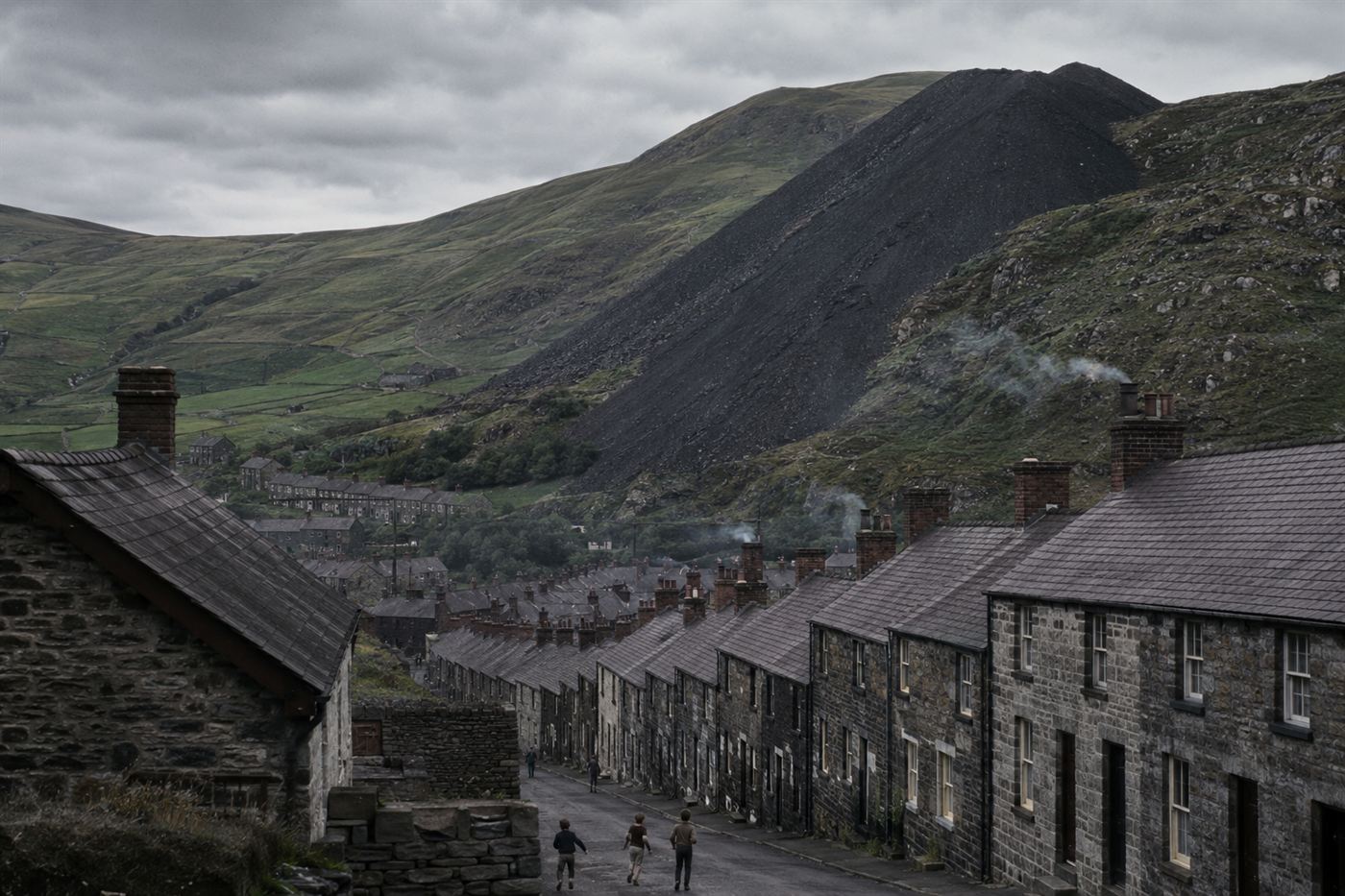
The coal tips of the Merthyr Vale Colliery rose on the hillsides above Aberfan, growing taller with each decade of mining. Residents had asked for them to be moved or stabilised for years before tip number seven collapsed. Illustration: Watts & Wild.
The village of Aberfan sits in the Taff Valley in South Wales, a long ribbon of terraced houses and a school pressed into the narrow floor of the valley, with the mountains rising steeply on either side. For most of the twentieth century those mountains were also the site of the spoil tips, the dark cones of coal waste produced by the Merthyr Vale Colliery, growing year by year as coal was extracted from below and the worthless rock and slate was dumped above. By the 1960s the tips had become a permanent feature of the landscape above the village, and above Pantglas Junior School.
At approximately 9:15 on the morning of October 21, 1966, tip number seven, saturated by weeks of rain and undermined by a natural spring that had been identified on older maps but overlooked by the National Coal Board, began to move. It slid down the hillside as a slurry of coal waste and water and hit the school in minutes. The Aberfan disaster killed 144 people, 116 of them children, in a village that had been warning the National Coal Board about the tips for years.
The Aberfan disaster occurred on October 21, 1966, when a coal tip collapse buried Pantglas School and several houses in the Welsh village of Aberfan. Of the 144 people killed, 116 were children. The National Coal Board had received warnings about unstable tips above Aberfan for years before the disaster. The subsequent inquiry found the NCB guilty of bungling ineptitude. No one was prosecuted, and the British government later took £150,000 from the victims' disaster fund.
Why were there coal tips above a village school in the first place?
The Merthyr Vale Colliery had been producing coal from the mountains above Aberfan since the 1870s.
The waste had to go somewhere, and the somewhere was the hillside above the village.
By 1966 there were eight separate spoil tips on the slopes, numbered in the order they had been created.
Tip number seven was the largest and most recent, and it had been growing since 1958.
The tips were the property and responsibility of the National Coal Board, the public body that had operated British coal mining since nationalisation in 1947.
The NCB had a duty of care over the tips, and the tips above Aberfan sat directly on the hillside above a primary school.
This had been true for years, and for years the people of Aberfan had been raising the question of whether it was safe.
A spring ran under the site of tip number seven.
Old maps of the area showed it.
The spring was never part of the NCB's assessment of the tip's stability.
Had anyone warned the National Coal Board about the Aberfan coal tips?
The record of warnings before the Aberfan disaster is one of the most painful parts of the story.
In 1963 the Welsh mining community had been alarmed enough by the condition of the tips that local officials wrote to the Merthyr Borough Council.
The council clerk, a man named David John Jones, noted the concerns in 1963 and 1964 and sent a formal letter to the NCB asking about the safety of the tips above the village.
The NCB responded that the tips were safe.
The Aberfan community's concerns about the tips above Pantglas School were formally raised with the National Coal Board on multiple occasions in the years before 1966, and on each occasion the NCB provided assurances that it regarded the tips as stable.
The residents did not have access to the geological surveys or engineering assessments that might have let them challenge those assurances.
They were mining families who knew that something about the tips made them uneasy, and who had nowhere to take that unease except to officials who were not listening.
On the morning of October 20, the day before the disaster, a tip worker named Gwyn Brown noticed that the top of tip seven had settled and there was a depression in it, a sign that something was shifting underneath.
He reported it to his supervisor.
No action was taken.
That night it rained heavily, as it had been raining for weeks.
What happened on the morning of October 21, 1966?
October 21, 1966 was a Friday and the last day of school before the half-term holiday.
The children had just arrived for morning assembly at Pantglas Junior School.
At 9:15 am, tip number seven began to move.
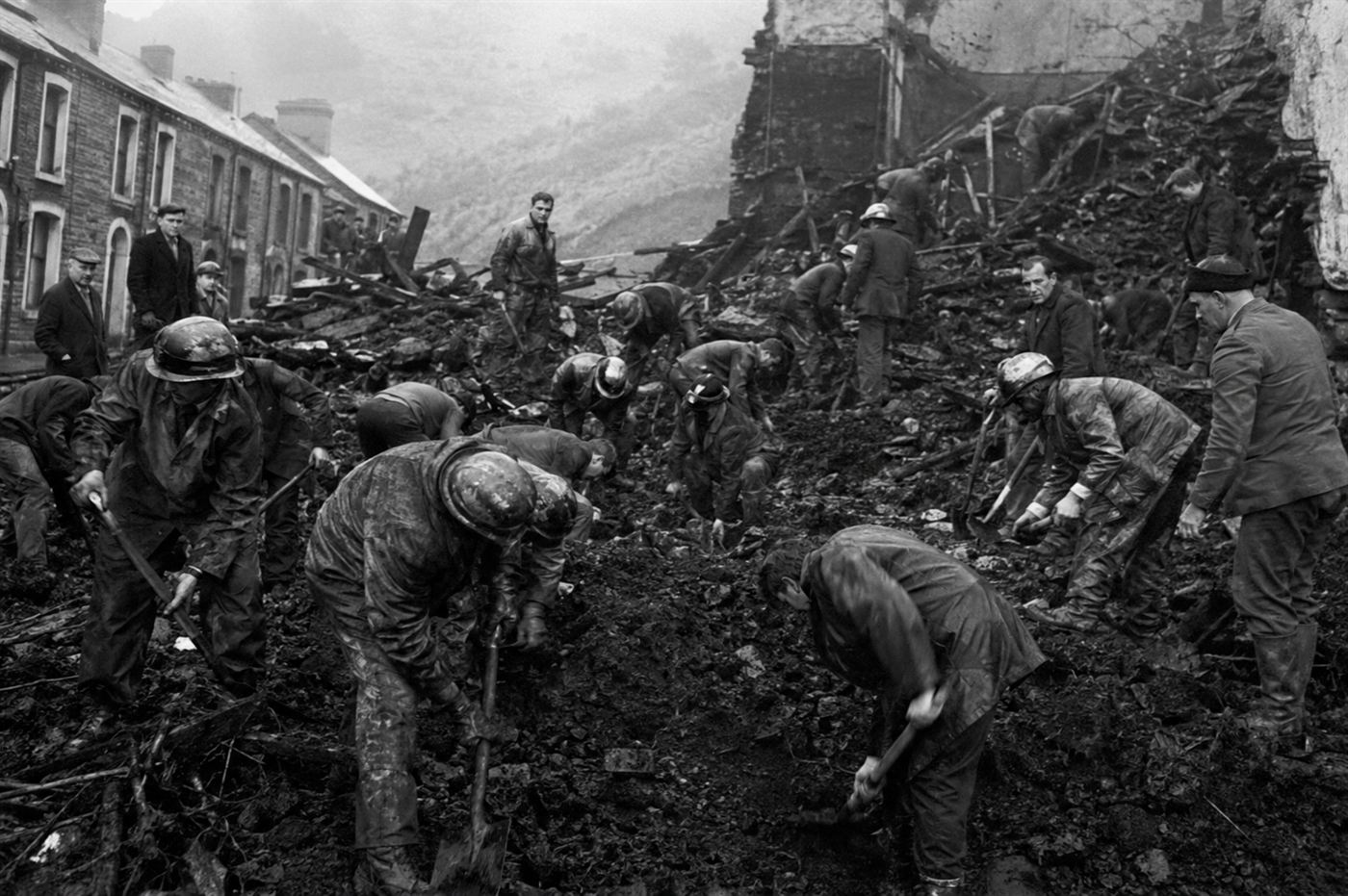
A wall of black coal waste and water slid down the hillside at speed, sweeping through a farm cottage and into the school.
The collapse killed 144 people, 116 of them children between the ages of seven and ten, almost the entire school year cohort.
Five of the teachers also died.
The rest of the village was buried under coal waste up to nine meters deep in places.
The slag had the consistency of wet concrete, and it set as it cooled.
Rescue workers arrived quickly but they were digging by hand and the material was not like rubble.
Miners from the colliery came down the hill to help.
Most of the children were found in their classrooms, still at their desks.
The last child pulled out alive was pulled from the wreckage at 11am, less than two hours after the collapse.
After that there were no more survivors.
For eight days the digging continued, and for eight days parents waited to find out whether their children would be recovered.
What did the Aberfan inquiry find and who was held accountable?
A Tribunal of Inquiry was established under Lord Justice Edmund Davies and reported in 1967.
Lord Robens, the chairman of the National Coal Board, had been away when the disaster happened.
He did not arrive at Aberfan until the evening of October 22, a day and a half after the collapse.
He initially gave evidence to the inquiry suggesting he had no prior knowledge of any concerns about the tips' safety.
The inquiry found correspondence in the NCB's own files demonstrating that warnings had been received and not acted upon.
Robens had given misleading evidence.
He was not prosecuted.
He did not resign.
He was supported in staying in his position by Harold Wilson's Labour government.
No individual at the NCB was ever charged with any criminal offence.
The institution was fined £500, a sum that one commentator described as "an insult to the memory of the dead."
The remaining tips above Aberfan were eventually removed, but the cost of the removal, approximately £150,000, was charged not to the NCB or to the government but to the Aberfan Disaster Fund, a relief fund that had been assembled from donations made by members of the public from around the world to help the bereaved families.
In China in 1975, the government classified the Banqiao Dam collapse for thirty years and the engineer who had warned about the dams' safety was silenced as a political enemy, the Aberfan story shows that the pattern of warnings unheeded and institutions avoiding accountability is not unique to authoritarian systems.
What was the long-term impact of the Aberfan coal tip disaster on the community?
Aberfan lost nearly a whole generation of children in twenty minutes.
The surviving children were the ones who had been absent from school that day, who had arrived late, or who had been in other parts of the building and escaped the worst of the collapse.
The Welsh mining community had already been under pressure from the decline of the coal industry.
The Aberfan disaster added a grief that the village carried into every subsequent generation.
Research conducted decades later found elevated rates of anxiety, depression, and post-traumatic stress disorder among survivors and bereaved parents, at a time when these conditions were poorly understood and largely unsupported.
Queen Elizabeth II visited Aberfan on October 29, eight days after the disaster.
The delay was later discussed and regretted by the Queen herself, who said in a 2002 interview that it was one of her greatest regrets.
Her advisors had counselled that a royal visit might be seen as intrusive on private grief.
The village later said that it would have meant a great deal to have had her there sooner.
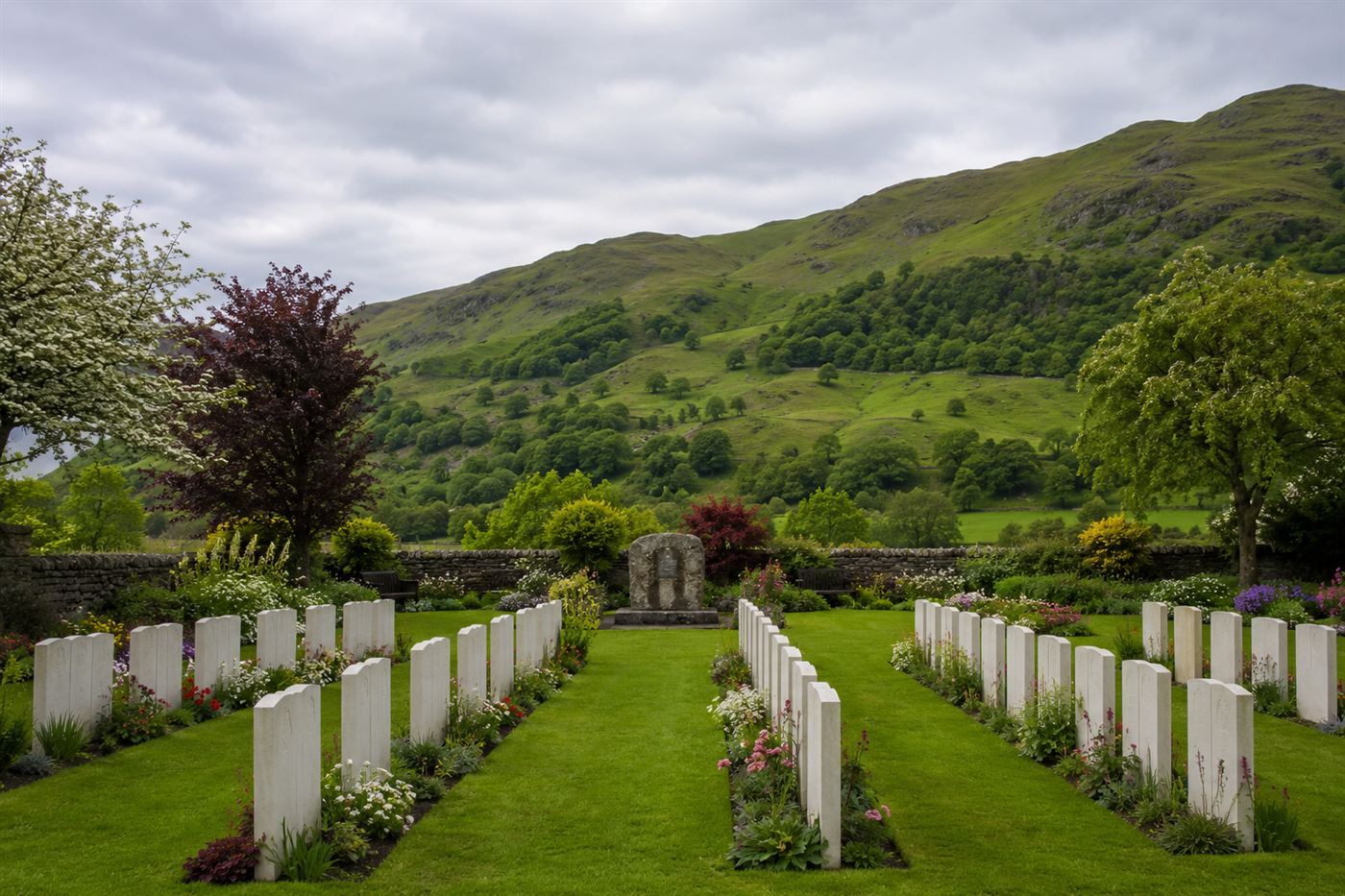
The Pantglas School building was demolished and the site became a memorial garden.
The remaining tips above Aberfan were removed in stages over several years.
The Merthyr Vale Colliery itself closed in 1989, three years after a broader wave of pit closures.
The landscape above Aberfan has been greened and no longer carries the black waste that once stood above the village.
But the memorial garden is still there, and the names of the 116 children are still on the stones.
For more on the human consequences of industrial decisions, see our Industry section.
The honest catch
The Aberfan disaster is often cited as a turning point in British attitudes toward corporate accountability and safety regulation.
It contributed to changes in how spoil tips were managed and eventually to the Mines and Quarries (Tips) Act of 1969, which gave new powers to regulate the safety of waste tips.
But those changes came after 116 children were dead, and the inquiry's findings of bungling ineptitude resulted in no criminal prosecution of any individual.
The NCB as an institution paid a fine equivalent to a fraction of its annual operating surplus.
Lord Robens remained chairman until 1971.
The taking of money from the disaster fund, which the bereaved families needed to begin rebuilding their lives and which had been given to them specifically for that purpose by members of the public, was a decision made by a Labour government that was ideologically committed to the coal industry and to the NCB.
It was only reversed when a different government came to power thirty-one years later.
At Aberfan, the NCB knew the tips were there and chose not to investigate the warning signs because removing or stabilising them would have been expensive and complicated.
The warning that was given was not a vague anxiety.
It was specific, it was in writing, and it was in the files.
A community lost 116 children because someone calculated that the tips could stay where they were for another year.
The Aberfan disaster is fifty-eight years in the past and the tips are gone and the hillside is green. But the specific people who made the specific calculation that the tips could stay for another year, people who had the warnings in their files and chose not to act, lived out their lives without facing a court. Where should the line be between institutional failure and individual criminal responsibility, and why is it that the line, when drawn, almost always falls on the side of the institution?
Tell us in the comments.
More from Watts & Wild
 On Piper Alpha in 1988, a maintenance permit left in a filing tray killed 167 men in the North Sea. The pattern of ignored warnings sounds familiar.
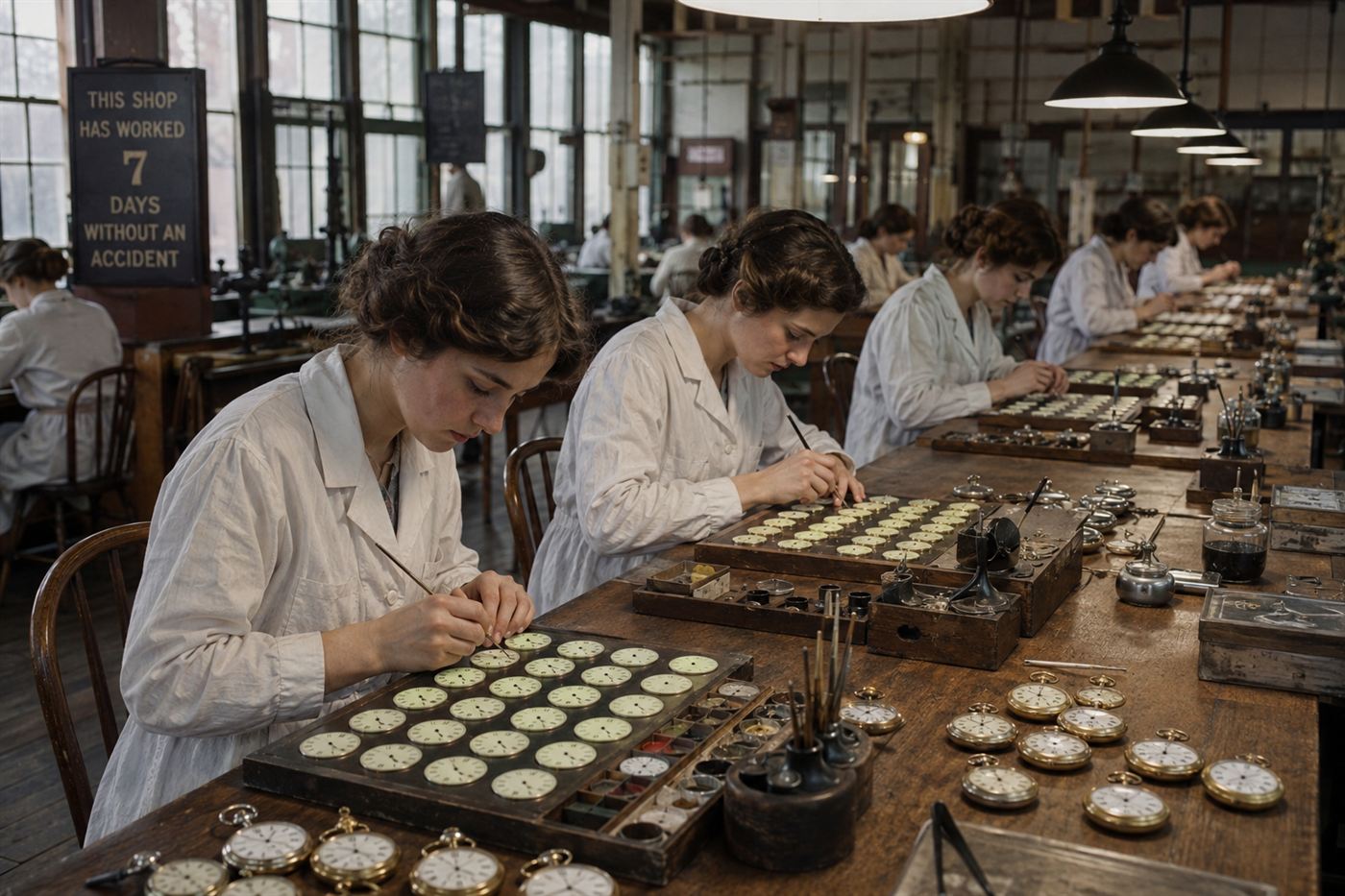 In Orange, New Jersey, a factory told young women to lick their radium paintbrushes while the men upstairs wore lead suits. Their lawsuit changed American labor law.
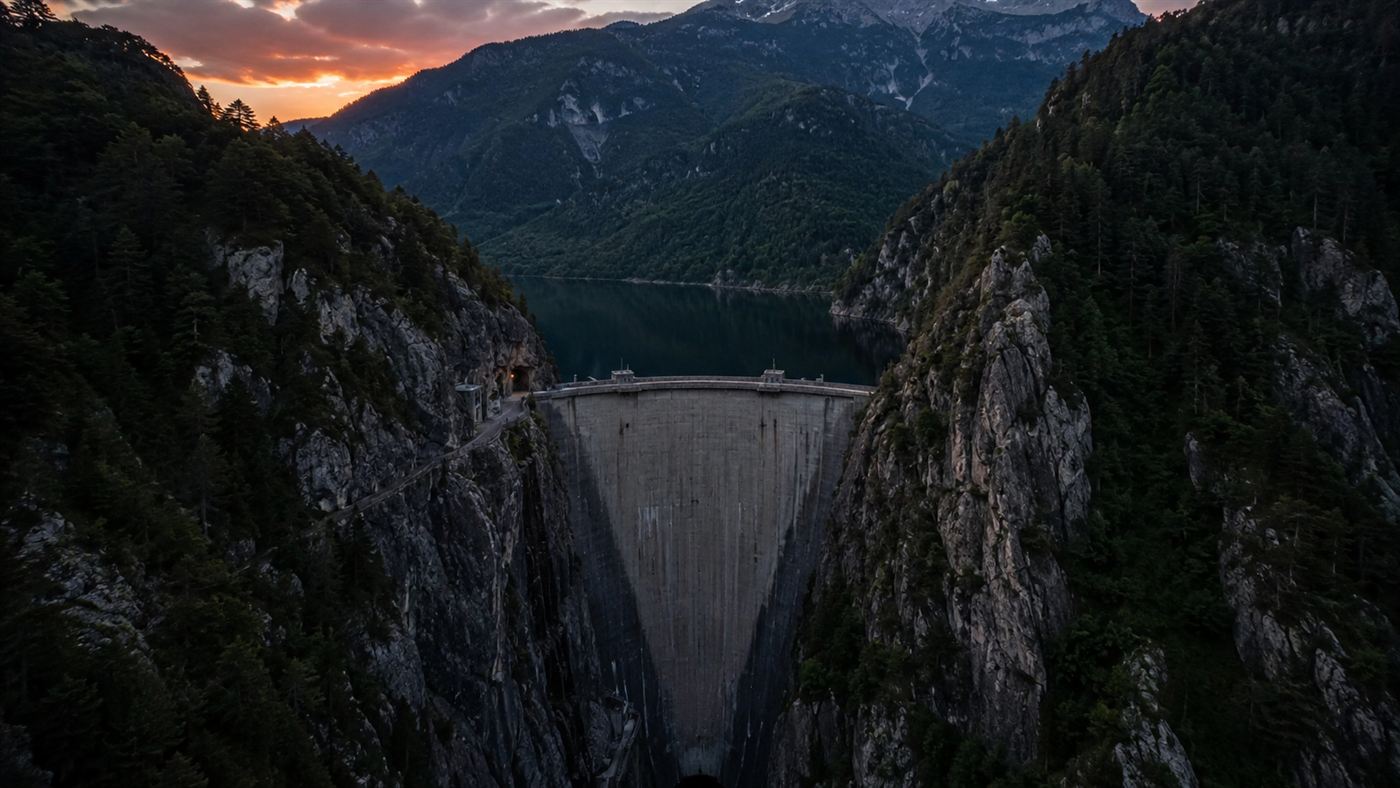 Italy's Vajont Dam killed 2,000 people in 1963 because engineers ignored a crumbling mountain above the reservoir
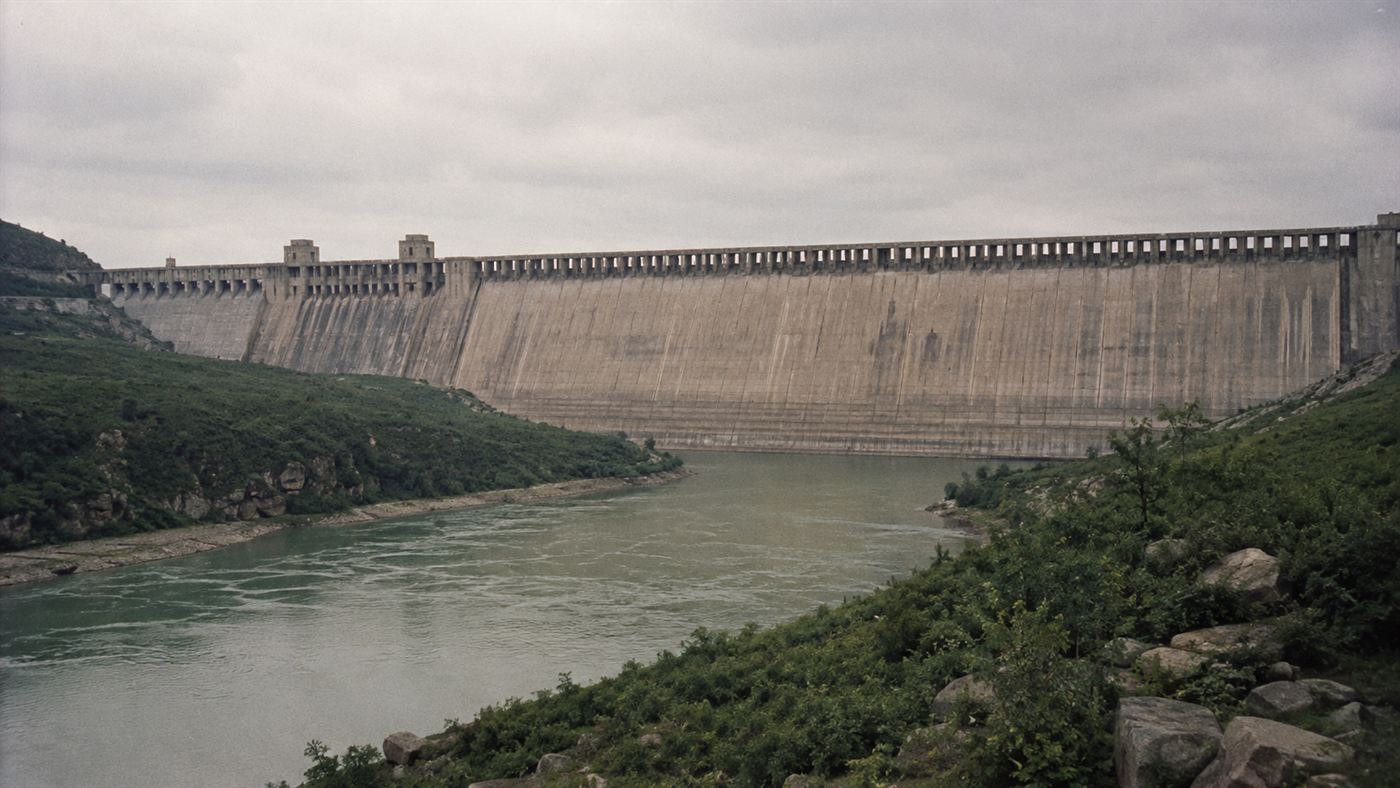 China's Banqiao Dam was called indestructible, silenced the engineer who warned it would fail, and collapsed in 1975 killing 170,000 people
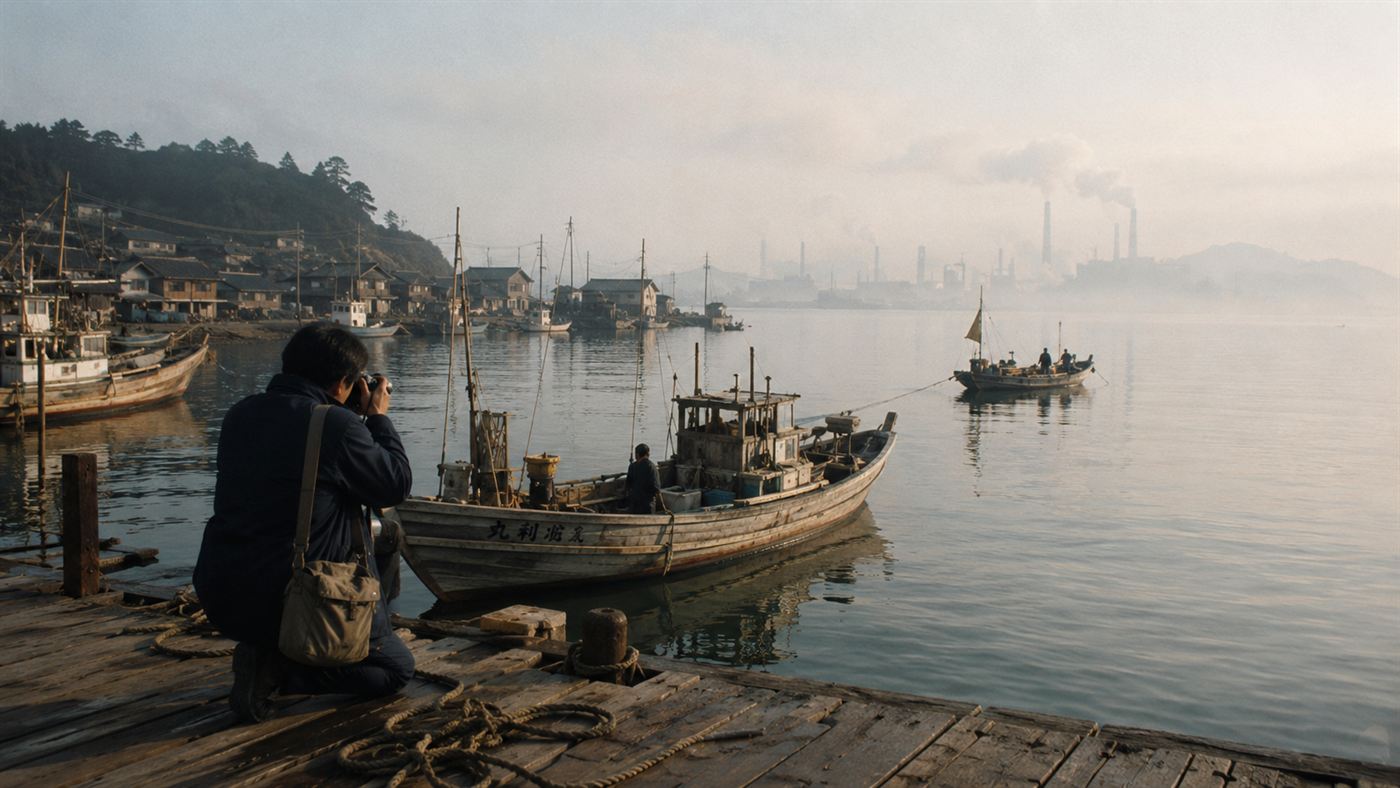 A Japanese company knew its mercury was killing a fishing city and suppressed its own researcher's proof for nine years