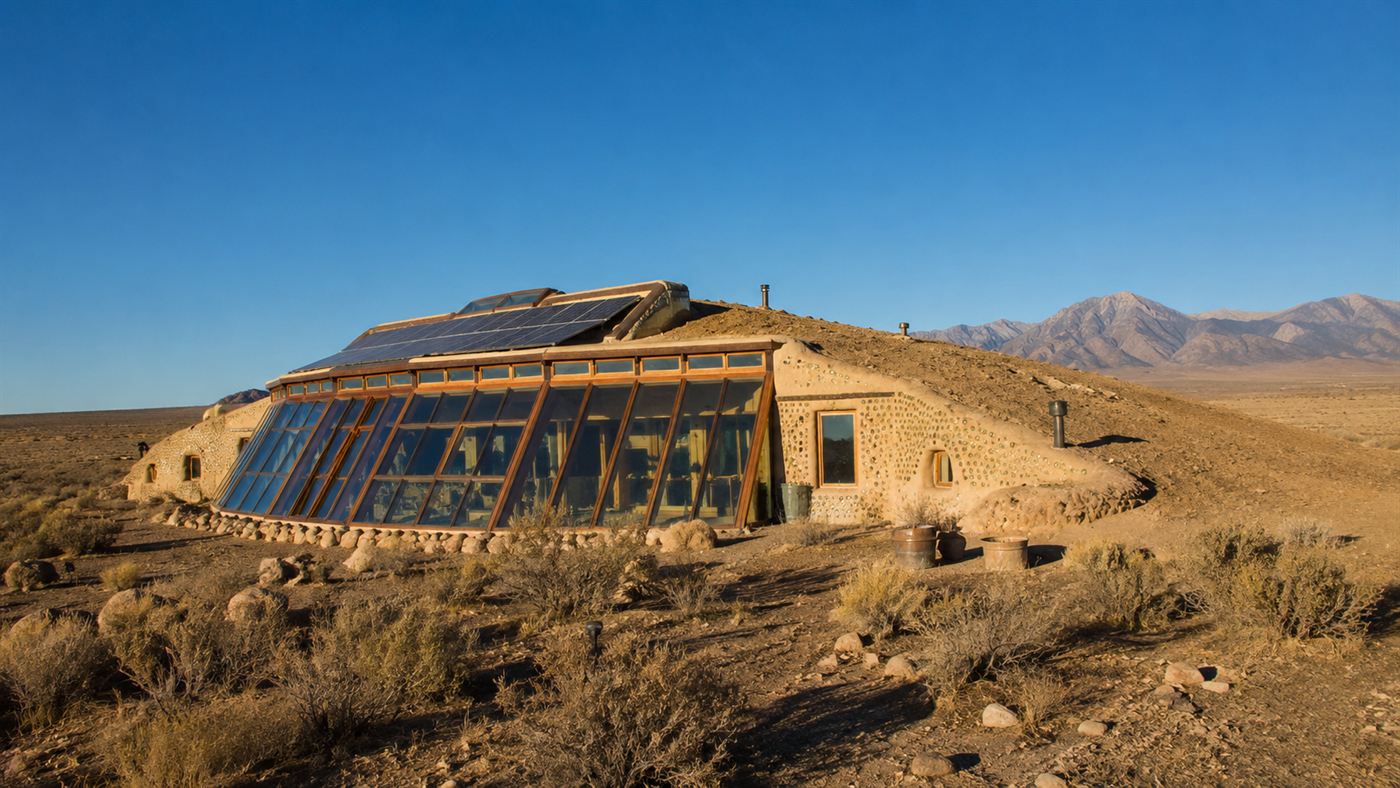
A machine the size of a house now squeezes out walls overnight, and from a Texas suburb to a Malawi schoolyard, 3D-printed homes are going up in a day instead of a year
A printer the size of a garage squeezes wet concrete into walls while the crew just watches. In Georgetown, Texas, the company ICON has finished the world's largest neighborhood of 3D-printed homes. In Malawi, the same idea raised a school in 18 hours. Construction's slowest craft is being rewritten.
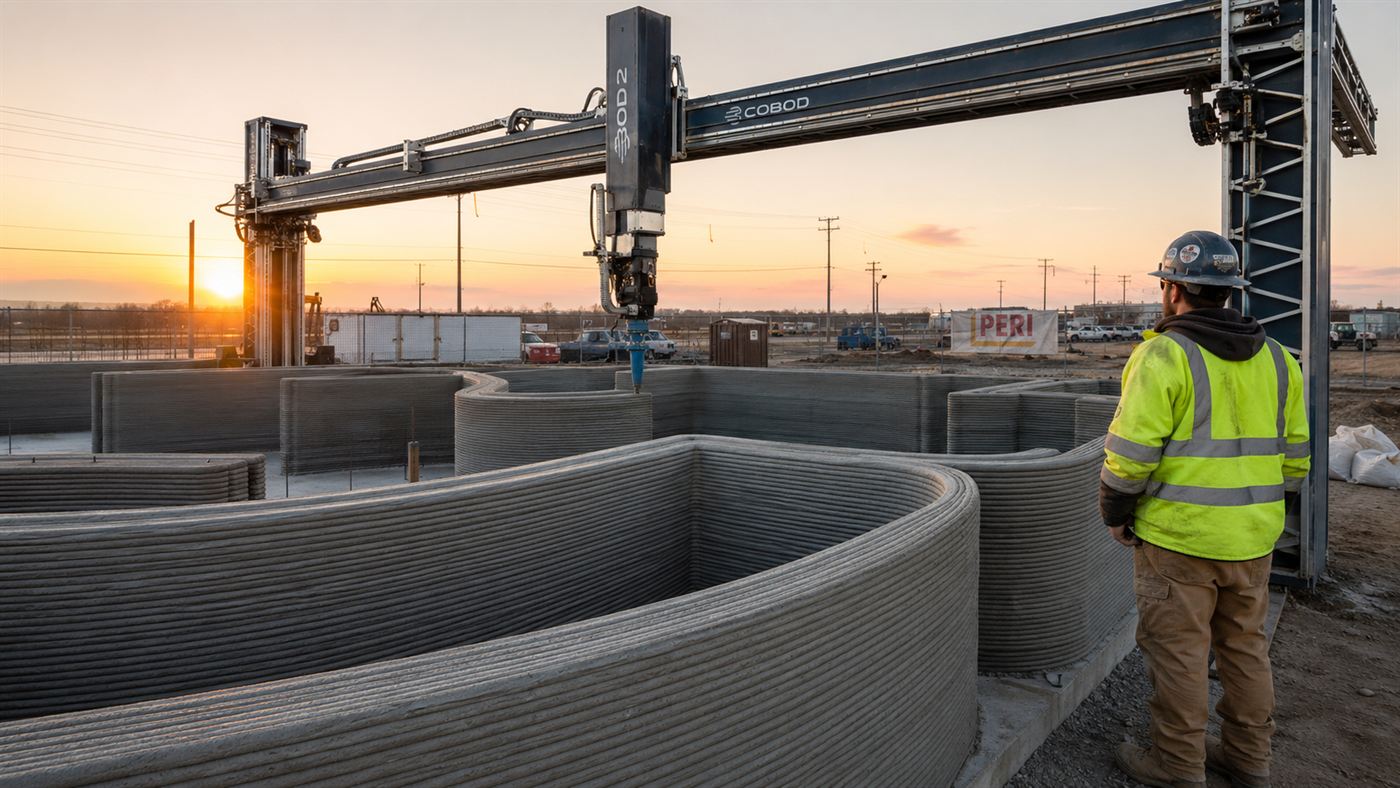
A gantry printer lays down a wall layer by layer, the signature ridges of printed construction. Illustration: Watts & Wild.
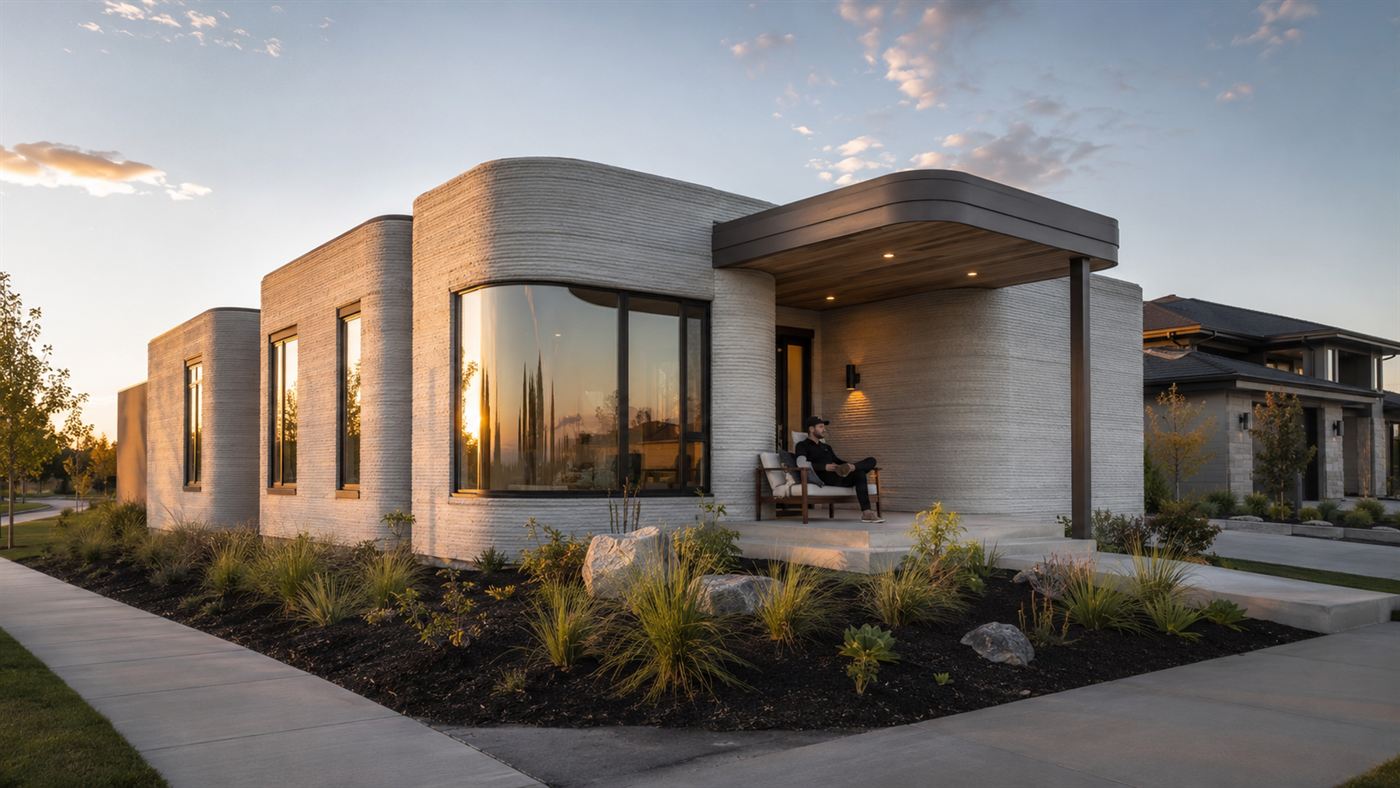
3D-printed homes have crossed the line from gimmick to neighborhood. In Georgetown, Texas, the construction firm ICON, the homebuilder Lennar and the architects at Bjarke Ingels Group have just finished a development of 100 houses with walls printed by robot, and as CNBC reported, it is now the world's largest 3D-printed community, with about three quarters of the houses already sold.
The technology matters most where the need is rawest. In Malawi, where UNICEF estimates the classroom shortage would take 70 years to close the old way, a builder printed a school's walls in roughly 18 hours. The promise sounds the same on both continents: faster, cheaper, with fewer hands, at a moment when much of the world is desperately short of affordable housing.
How are 3D-printed homes built? A large robotic printer follows a digital file and pumps out a special concrete mix layer by layer to form the walls, usually in a day or two. Human crews then add the foundation, the roof, the windows, the wiring and the plumbing. Done well, 3D printing can cut waste, labor and build time.
How do 3D-printed homes actually get built?
At the heart of ICON's 3D printing is a gantry printer called Vulcan, a steel frame that rolls along the slab on rails.
It reads a digital plan and extrudes a proprietary concrete-like mix the company calls Lavacrete, building the walls in ridged layers you can still see in the finished room.
At Wolf Ranch the printed houses run from about 1,574 to 2,112 square feet, roughly 146 to 196 square meters, with three or four bedrooms.
One thing to be clear about: the printer makes the walls, not the whole house.
The foundation, roof, windows and all the plumbing and wiring are still built the conventional way, by people.
As CNN has reported, ICON pitches the thick printed walls as resistant to fire, high winds and pests, which matters in a state that sees both wildfires and tornadoes.
The world's largest printed neighborhood
What makes Wolf Ranch different is that it is a street, not a stunt.
For years, 3D-printed homes existed mostly as single show houses, one printed box at a time.
The Genesis Collection is 100 of them in one subdivision, with parks, trails and the same amenities as any new development, which is why the companies can call it the largest 3D-printed community on Earth.
It is a strange sight next to the way we usually build the things we treasure.
The 2,000 carpenters and stonemasons who rebuilt Notre-Dame by hand spent five years on a single cathedral, and the Sagrada Familia has been under construction for over 140 years.
Here a robot lays the shell of a family house in a day or two.
A school in 18 hours
The most moving version of this story is not in Texas, but in Africa.
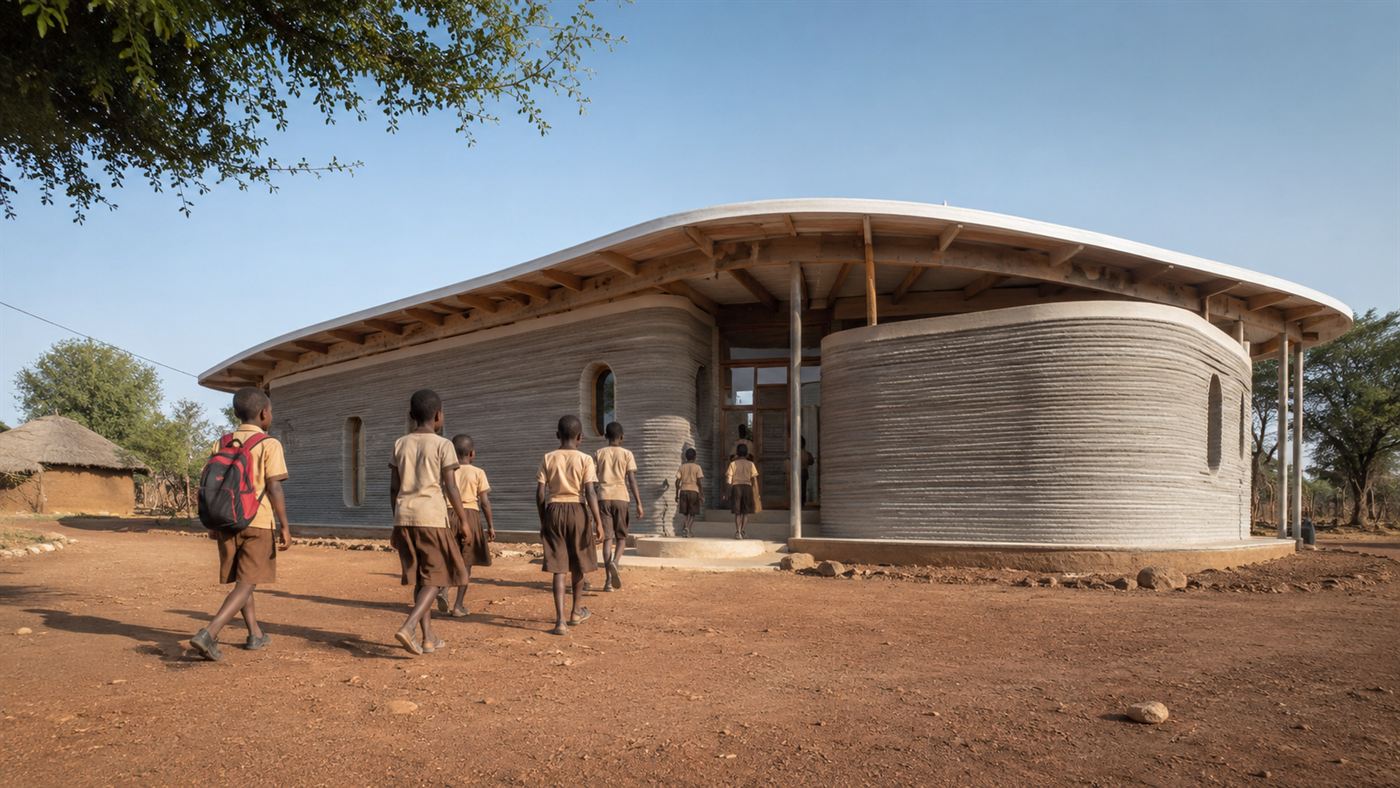
A company called 14Trees, a joint venture between the building giant Holcim and British International Investment, the UK's development finance arm, used 3D printing to raise the walls of a school in Malawi's Salima district in about 18 hours.
That number lands harder when you know the gap it is closing: UNICEF estimates Malawi is short some 36,000 classrooms, a backlog that would take about 70 years to clear with conventional building.
14Trees then went bigger, building Mvule Gardens in Kilifi, Kenya, a gated community of 52 houses that it bills as Africa's largest 3D-printed affordable housing project.
The homes start at around 2.46 million Kenyan shillings and earned a rare EDGE Advanced green-building certification.
Just as important, the company trains local workers to run the printers, so the machine arrives with jobs rather than only replacing them.
Why a robot is printing houses now
The reason this is happening now is that ordinary construction is stuck.
Building is one of the few big industries whose productivity has barely improved in decades, and skilled labor is scarce and aging in much of the world.
At the same time the planet faces a deepening housing shortage, with billions of people locked out of affordable housing.
3D printing, which pours a wall in hours, wastes little material and needs a small crew, is a direct answer to that math.
It is the clearest shot the industry has had in a generation at making affordable housing genuinely cheaper to build.
The honest catch
Now the cold water, because the hype runs ahead of the concrete.
Since 3D printing only does the walls, the headline of a "house in a day" hides the weeks of conventional work still needed to finish the rest.
The savings are real but modest so far, and the houses at Wolf Ranch sell at normal market prices, not bargain rates, so this is not yet the affordable housing the people who need it most are waiting for.
There is also a climate footnote: cement is responsible for roughly 8 percent of global carbon emissions, so squeezing out more concrete is not automatically green, even if 14Trees says its method cuts a wall's footprint by more than half.
Cleaning up the material itself, the way one Swedish plant is making steel without coal, may end up mattering as much as the printer.
Add in building codes written for bricks and timber, the limits of scaling up, and the question of what happens to construction jobs, and the printed house is a beginning, not a finished revolution.
From a cul-de-sac in Texas to a schoolyard in Malawi, the printer is changing who gets to build, and how fast.
But a printed wall is still only as good as the roof above it, the plumbing inside it, and the price on the door.
Would you buy a 3D-printed home, and would you trust a robot to build the place where you sleep? Tell us in the comments.