Antoni Gaudi spent 43 years on a church he knew he would never see finished, and now, 100 years after a tram killed him, Barcelona has finally crowned the Sagrada Familia as the tallest church on Earth
For 144 years the Sagrada Familia has been the world's most famous unfinished building, the life's work of an architect who died sure he would never see it done. In February 2026, on the centenary of Gaudi's death, workers fixed the cross to its central tower and made it the tallest church anywhere.
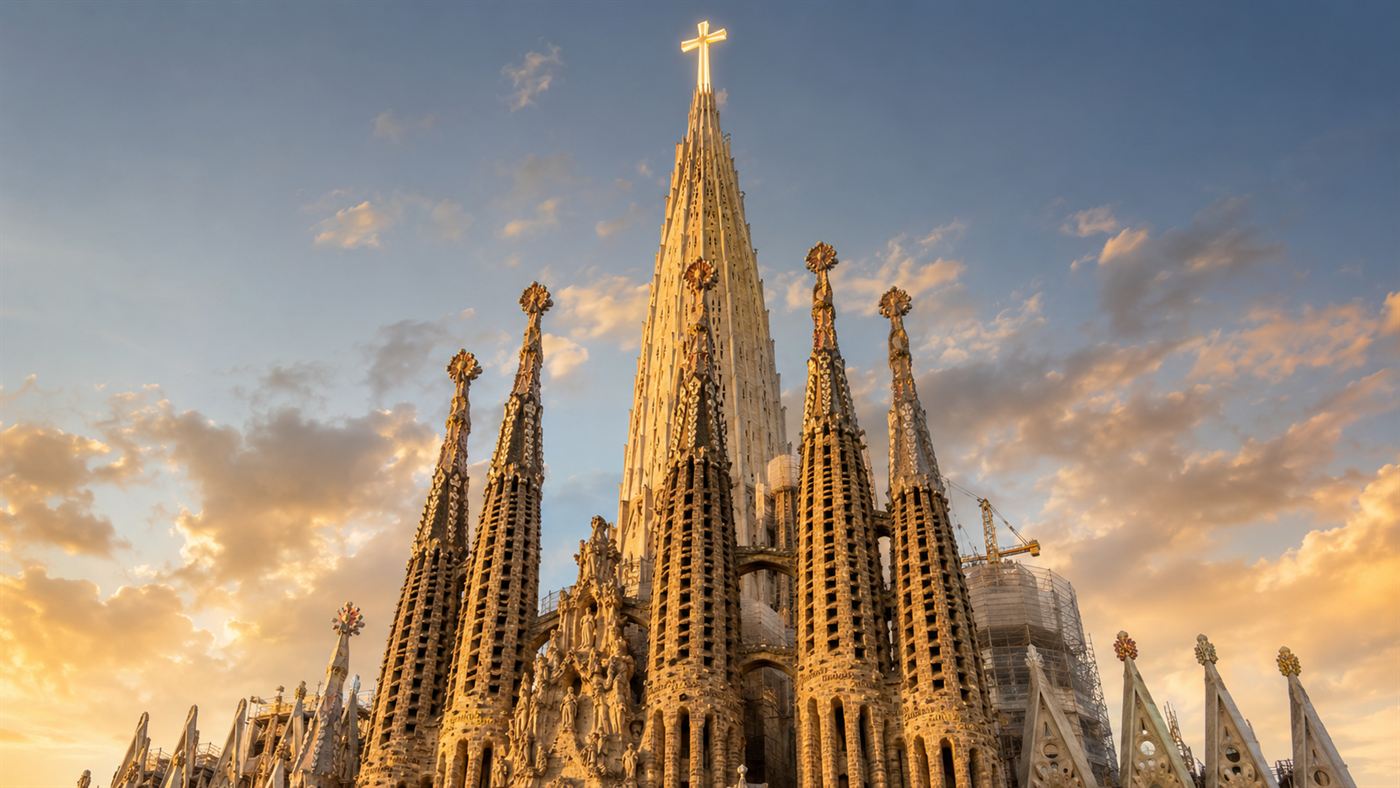
The completed Tower of Jesus Christ now crowns the Sagrada Familia, the tallest church in the world. Illustration: Watts & Wild.
Antoni Gaudi knew he was building something he would never live to see, and yet the Sagrada Familia is now the tallest church on the planet. When the Catalan architect took charge of the basilica in 1883, a year after the first stone was laid, he was 31 years old. He gave the rest of his life to it, more than four decades, and when people asked about the painfully slow pace he is said to have shrugged that his client, meaning God, was not in a hurry.
He was right not to rush. As CNN reported as the project finally neared its end, it has taken 144 years to reach this point, and Gaudi himself has been dead for a century. On 20 February 2026, almost exactly 100 years after a Barcelona tram knocked him down and killed him, workers lifted the last arm of a cross into place on top of the basilica's central tower, and the most famous unfinished building on Earth quietly became the tallest church on it.
How the Sagrada Familia became the tallest church
The new spire is the Tower of Jesus Christ, and at 172.5 metres it lifts the Sagrada Familia above Germany's Ulm Minster to make it the tallest church in the world.
It is the seventeenth of the basilica's eventual eighteen towers, and by far the tallest.
The timing was no accident.
The year 2026 marks exactly one hundred years since Gaudi's death, and finishing his central tower in the centenary turned a simple construction milestone into a tribute.
A height chosen out of humility
There is a quiet idea buried in that figure of 172.5 metres.
Gaudi deliberately designed his tower to stand just below the height of Montjuic, the hill that rises over Barcelona.
He believed that nothing made by human hands should reach higher than the work of God, and to him that meant the natural landscape itself.
So the tallest church in the world was built, on purpose, to come in about a metre shorter than a hill.
That instinct ran through everything he did.
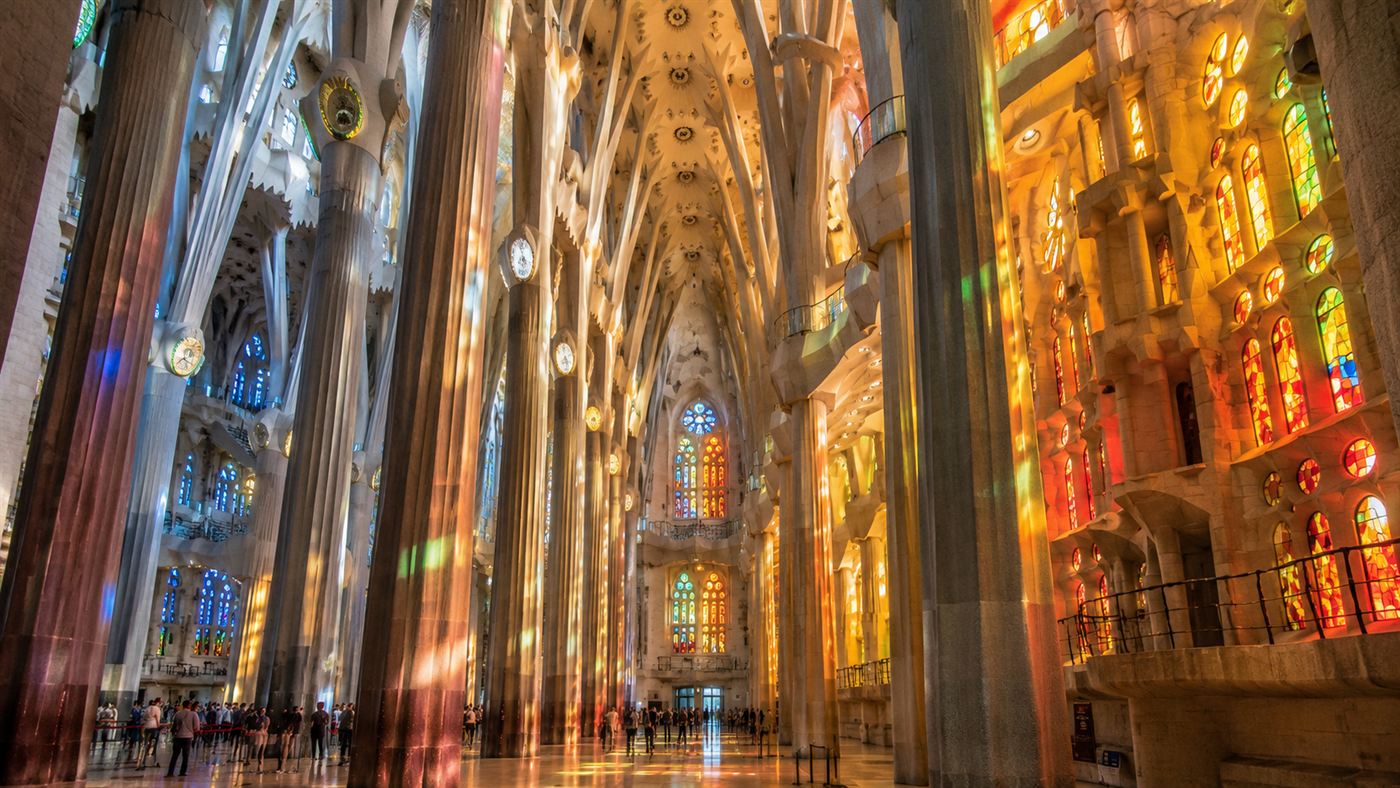
Gaudi took his shapes from nature rather than from old cathedrals, which is why the inside of the Sagrada Familia feels less like a stone box and more like walking into a forest.
The architect who died on the tram tracks
Gaudi's end was as unlikely as his building.
On 7 June 1926 the 73-year-old architect, by then living almost as a recluse on the building site and dressed in worn-out clothes, was struck by a tram on a Barcelona street.
Taken for a beggar because of how he looked, he was not recognised at first and got only basic care.
He died three days later and was buried in the crypt of the very church he had given his life to.
He left behind plaster models and drawings meant to guide the generations of work that would have to carry on without him.
The plans that were burned, and the permit that was missing
Then history twice tried to stop the project.
In 1936, at the start of the Spanish Civil War, anarchists broke into the crypt, set fire to Gaudi's workshop and smashed many of his original models and plans.
Architects ever since have had to reconstruct his intentions from the broken fragments that survived, which is part of why the work dragged on so long.
And there was a stranger gap.
For most of its life the Sagrada Familia was built with no building permit at all, an oversight nobody fixed for 137 years, until the basilica finally agreed terms with the city of Barcelona in 2019.
How a forever project finally got built
What changed the pace was not faith but technology and money.
The basilica has never been paid for by the Church or the state, relying instead on donations and, more and more, on tickets from the millions of tourists who file through it every year.
That income, which dried up painfully during the pandemic, funded a modern workforce armed with aircraft-industry design software and stone shaped by computer-controlled machines, which let builders cut Gaudi's fiendishly complex geometry far faster than chisels ever could.
The honest catch
It is a genuinely moving milestone, but calling the Sagrada Familia finished still needs an asterisk or two.
The central tower is structurally complete on the outside, yet the interior work runs on into 2027 and 2028, so the building is not actually done.
The bigger fight is over the last piece, the grand Glory Facade, whose planned entrance and staircase would mean demolishing a block of flats and moving out the people who live there, a dispute that has simmered for years.
There is an artistic catch as well.
Because so much of Gaudi's own record was lost in 1936 and so much of the recent work has been designed on computers, critics argue that the newest parts are an interpretation of Gaudi rather than his own hand, and that the man himself might not recognise all of it.
None of that erases what happened here.
A church begun in 1882, half-wrecked, unlicensed and long declared impossible to finish, now stands taller than any church ever built, largely because ordinary people kept paying for it for a century after the genius who dreamed it was gone.
What Gaudi understood about time
Gaudi treated his masterpiece the way nature treats a forest, as something that grows slowly and outlives whoever starts it.
He planted an idea he knew he could never harvest, and trusted strangers to keep tending it for a hundred years.
In an age that wants everything finished by the end of the quarter, a building that took six generations is a strange and humbling thing to stand under.
The Sagrada Familia took 144 years, and the man who designed it never doubted that was fine. Would you pour your life into a project you knew you would never live to see finished, the way Gaudi did, or does work only feel worth it if you get to see it done? Tell us what you think in the comments.
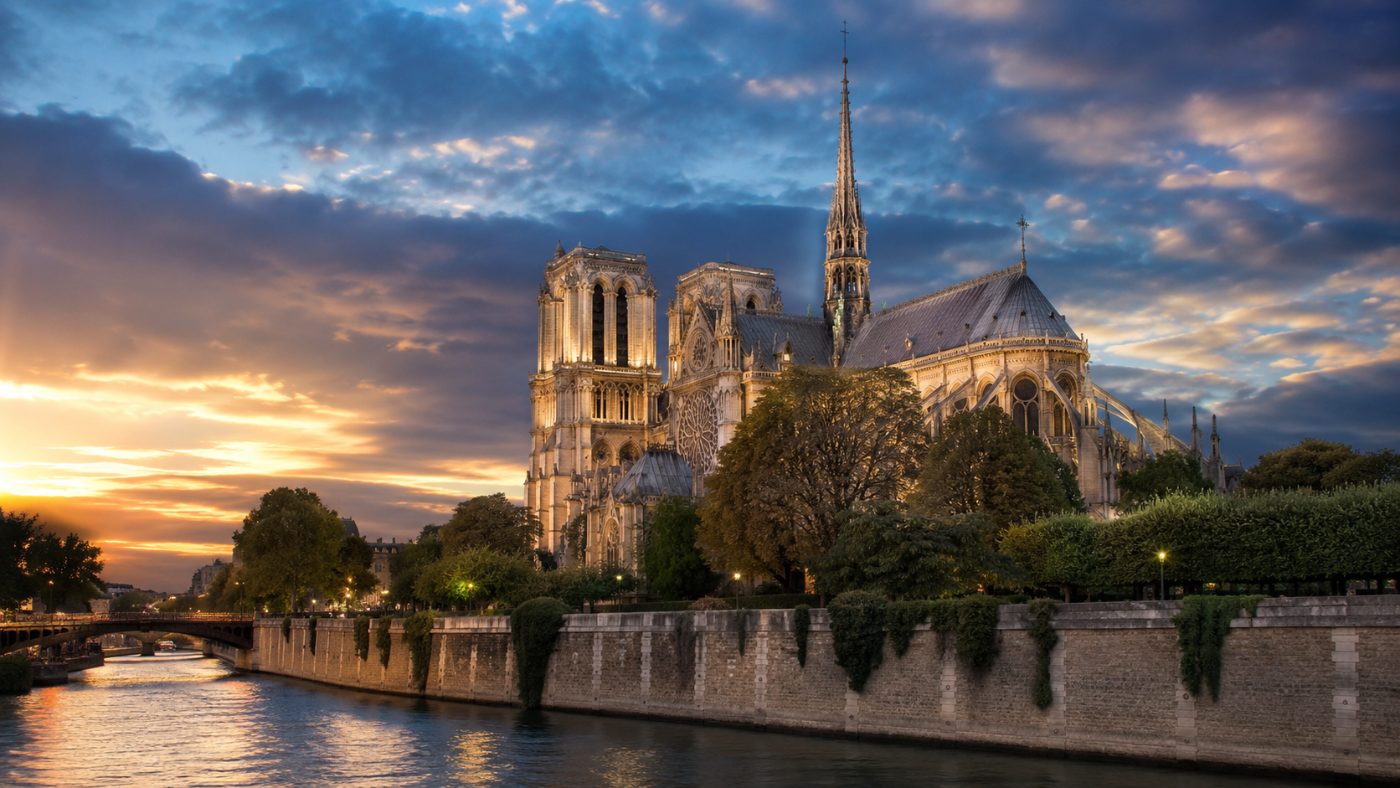
Related reading: Five years after the world watched Notre-Dame burn, an army of 2,000 artisans raised it from the ashes by hand with medieval techniques.

Bruno Teles is an energy and industry journalist at Watts & Wild, covering power, heavy engineering, and the mega-builds that reshape the world. More from Bruno Teles.