For 38 years nobody knew where North America's monarch butterflies vanished each winter, and the answer is that no single butterfly even knows the way
Every autumn, hundreds of millions of monarch butterflies drain out of Canada and the United States and simply disappear. For most of the twentieth century, no scientist could say where they went. Solving the monarch butterfly migration took one man almost four decades, thousands of volunteers, and a couple willing to climb a Mexican mountain, and the truth turned out to be stranger than the mystery.
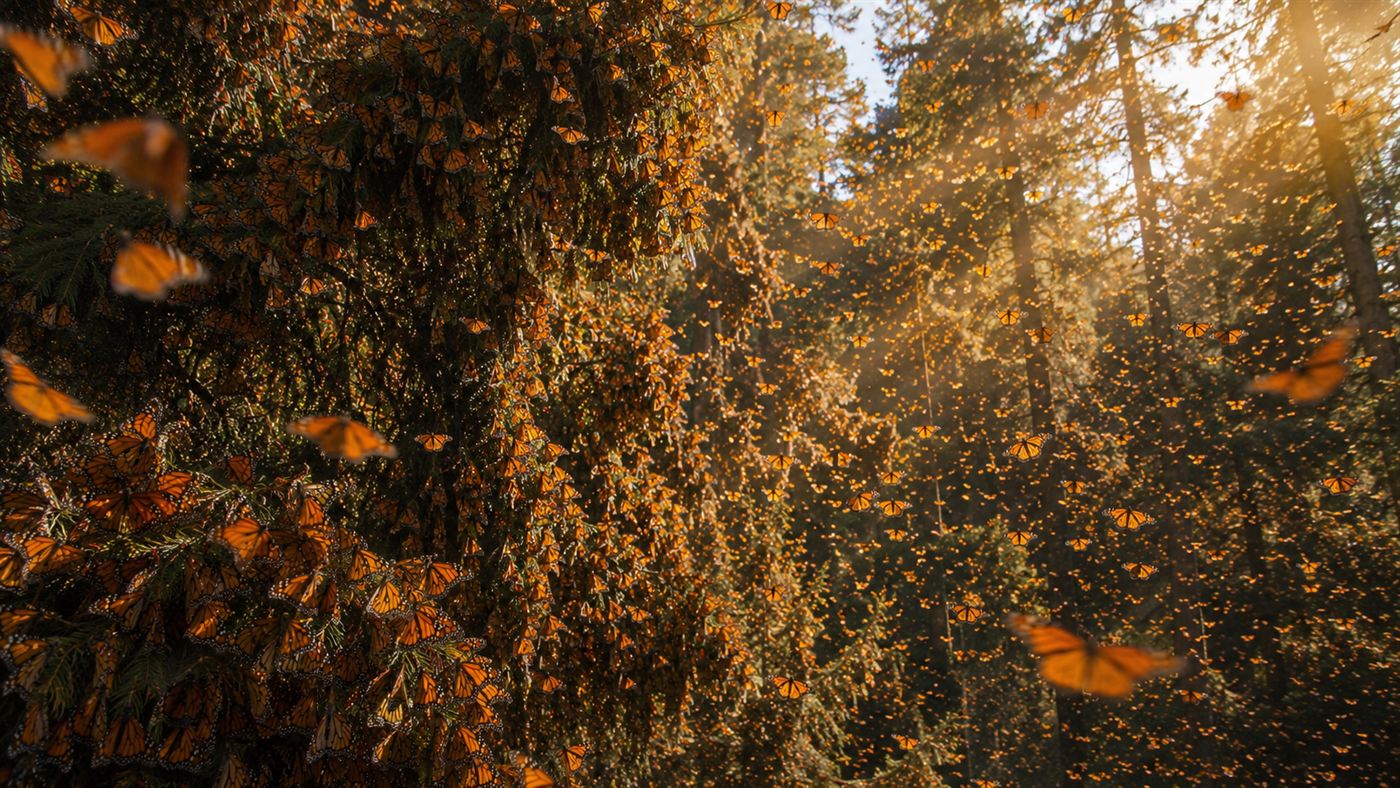
Hundreds of millions of monarchs overwinter on fir trees in central Mexico. Illustration: Watts & Wild.
The eastern monarch is a delicate thing, a scrap of orange and black that weighs less than a paperclip. And yet each year it makes a journey of up to four thousand kilometres, from the meadows of southern Canada and the northern United States all the way down to the mountains of central Mexico. There, in a tiny patch of high fir forest, the entire eastern population gathers and clings to the trees in such numbers that the branches sag and the bark vanishes under a living quilt of wings.
For generations, that destination was completely unknown to science. Butterflies poured south every autumn and reappeared every spring, and nobody could trace the line between. It was one of the great open questions in natural history, hiding in plain sight in everybody's back garden.
The man who chased the monarch butterfly migration for 38 years
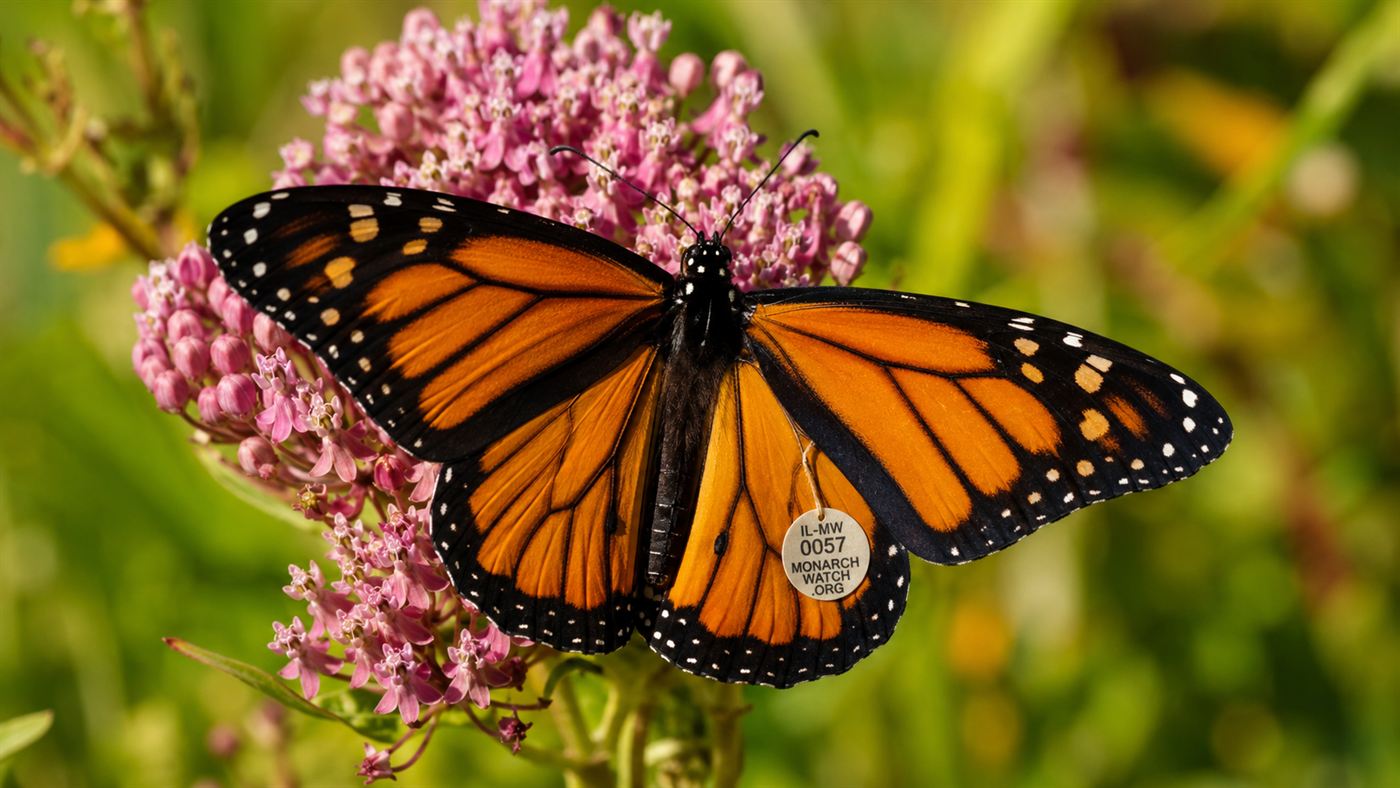
The person who refused to let it go was a Canadian zoologist named Fred Urquhart. Starting in 1937, he and his wife Norah set out to do something that sounds impossible: to tag butterflies. They worked out a tiny adhesive label that could be stuck to a monarch's wing without grounding it, printed with a "return to" address, and then recruited an army of ordinary people across the continent to catch, tag and report the insects they found.
It was citizen science decades before the phrase existed, and it was painfully slow. Over the years the tagged butterflies, recovered and reported one by one, drew a faint arrow pointing south and west, toward Texas and then beyond, into Mexico. As National Geographic has recounted, it took the Urquharts 38 years of patient tagging to get close, but they could not find the final destination themselves.
The day they found the forest
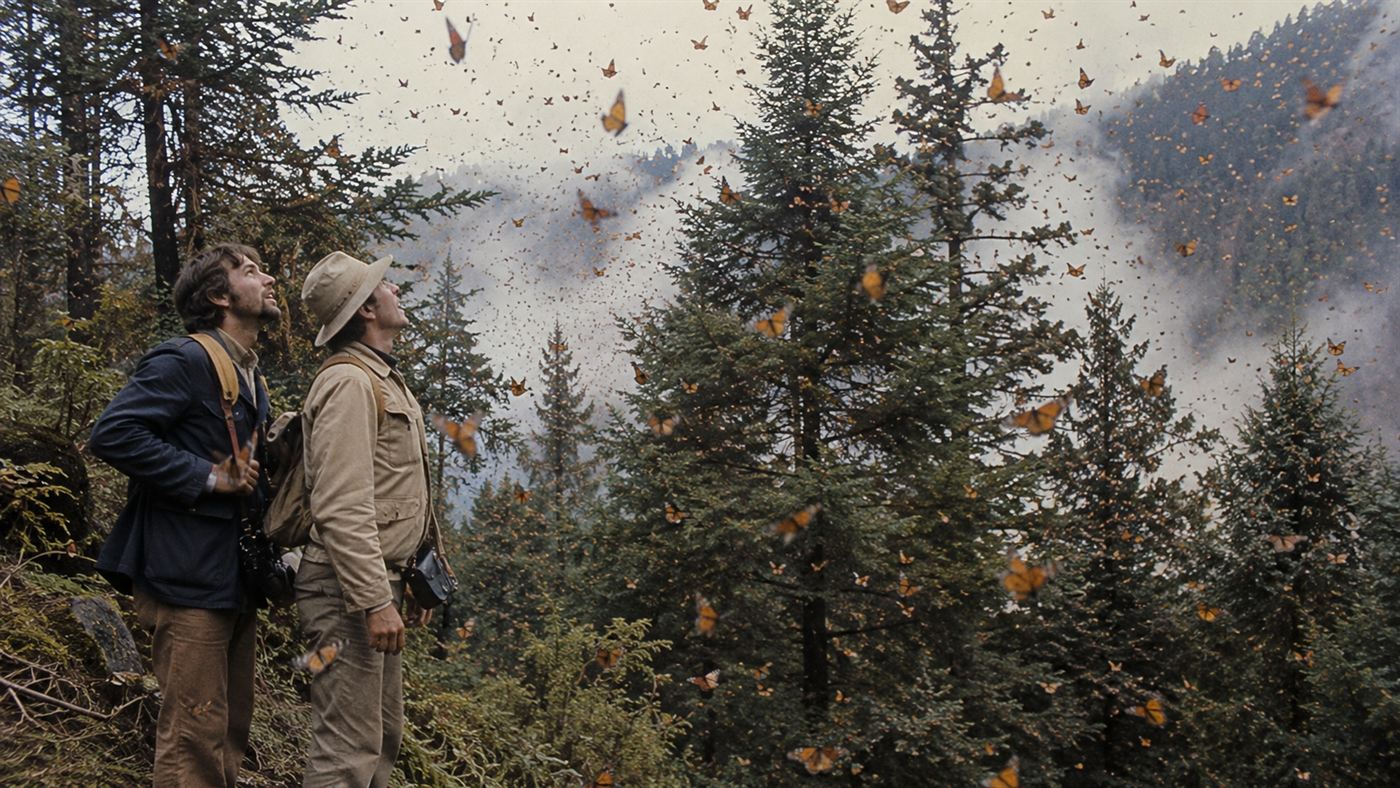
The last step came from a newspaper advert. Urquhart appealed in the Mexican press for help searching the mountains, and an American living in Mexico, Kenneth Brugger, together with his partner Catalina Trail, took up the hunt. On 9 January 1975 they climbed to a remote mountaintop in Michoacán and found it: millions upon millions of monarchs cloaking the fir trees, the lost winter home of a whole continent's butterflies.
When Urquhart finally visited the next year, the story closed with a perfect flourish. Among the countless wings he spotted a butterfly carrying one of his own tags, applied by a volunteer far to the north. A thread of paper and goodwill, stretched across thousands of kilometres and almost forty years, had at last been pulled tight.
Why no single butterfly knows the route
Here is the part that turns a lovely story into a genuinely mind-bending one. No individual monarch makes the round trip. The journey north in spring and summer is run as a relay, with each generation living only a few weeks, breeding, and dying after carrying the line a little further. It takes three or four such generations to repopulate the north.
Then, as the days shorten, something different is born: a "super generation" that lives for months instead of weeks, and it is these butterflies that fly the entire way back to Mexico in one go. Which means the monarchs arriving at those fir trees have never been there before. Their great-great-grandparents left that forest, and yet, with no one to follow and no memory of the place, they find the very same mountainside. How they do it, by the angle of the sun and perhaps a sense of the Earth's magnetic field, scientists are still working out.
How far do monarch butterflies migrate?
Up to about four thousand kilometres each way for the eastern population, from the northern edge of their range down to those few Mexican groves. For an insect you could close your hand around, it is one of the longest and most astonishing migrations on Earth, made all the more remarkable by the fact that it is shared out across several short lives rather than completed by one.
The honest catch
Two shadows fall across this sunlit tale. The first is a matter of credit. As Texas Parks & Wildlife magazine has reported, for decades the discovery was told as the work of Urquhart and Brugger, and Catalina Trail, who was often the one scrambling up the slopes and spotting the colonies, was quietly written out, only beginning to receive her due many years later. The second is darker. The migration the Urquharts spent their lives uncovering is now in real trouble: the monarchs' numbers have fallen sharply as the milkweed their caterpillars need is wiped out by herbicides, as the climate shifts, and as illegal logging eats into the Mexican forests where they shelter. We learned where the butterflies go just in time to watch fewer and fewer of them arrive. The wonder is real, and so is the risk of losing it.
A butterfly lighter than a paperclip flies to a forest it has never seen, guided by no one. Does the monarch butterfly migration leave you more amazed at the journey or more worried it could vanish? Tell us what you think in the comments.
Related reading: Another vast animal migration, the fifty million red crabs that march across an Indian Ocean island. See also the periodical cicadas that spend 17 years underground before erupting by the billions.