Every 13 or 17 years billions of periodical cicadas claw out of the ground across America all at once, scream for a few frantic weeks, mate, and vanish again for a generation
Somewhere under the eastern United States, right now, countless insects are counting. periodical cicadas spend almost their entire lives buried in the dark, then, on a schedule set to a prime number of years, they surface together in numbers so vast they can drown out traffic. In 2024 two of these broods did it at once, for the first time since 1803.
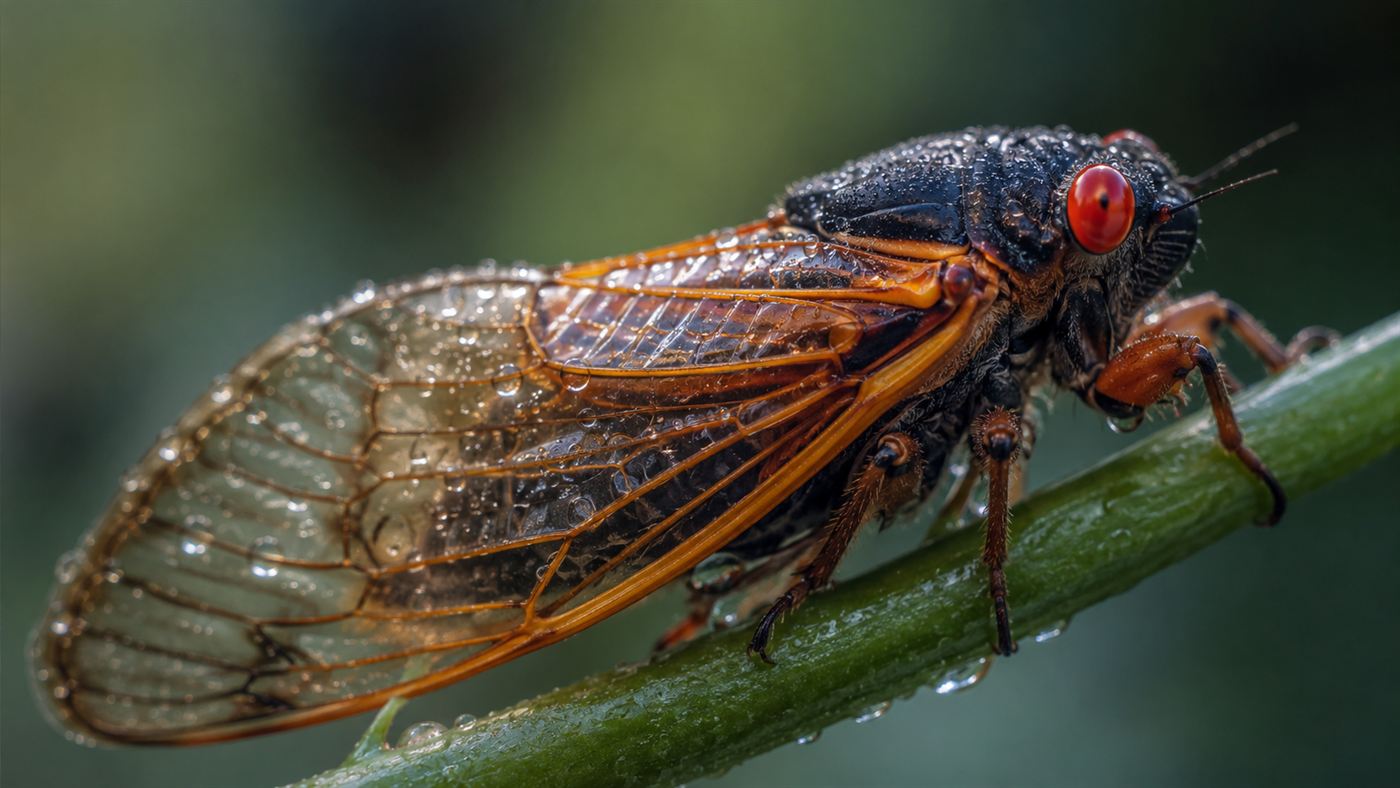
A freshly emerged periodical cicada, red-eyed and orange-winged, after up to 17 years underground. Illustration: Watts & Wild.
periodical cicadas are found nowhere else on Earth but the eastern half of North America, and they run one of the strangest life cycles in nature. As documented by biologists, these insects spend either 13 or 17 years underground as nymphs, feeding quietly on the sap of tree roots, doing essentially nothing that anyone can see. Then, all together, in a single synchronized burst, they climb out.
The short version: Periodical cicadas live 13 or 17 years underground, then emerge in enormous synchronized broods when the soil warms, molt into winged adults, sing deafeningly, mate, lay eggs, and die within about six weeks. In 2024, a 17-year brood and a 13-year brood emerged in the same year for the first time since 1803, filling parts of the US with trillions of cicadas.
A life spent almost entirely underground
For a periodical cicada, the brief, noisy time above ground is the exception, not the rule. It hatches from an egg laid in a twig, drops to the earth, burrows down, and then simply waits, feeding slowly on root sap through 13 or 17 long years of darkness. It is one of the longest-lived insects on the planet, and it spends more than 99 percent of that life hidden, marking time in the cool soil.
What triggers the end of the wait is temperature. When the soil about eight inches down warms to roughly 64 degrees Fahrenheit, usually in late spring, the whole brood seems to get the same signal at once. The nymphs dig their way up, break the surface in the millions, and climb the nearest vertical thing to shed their skins and unfurl their wings, leaving a landscape crusted with their empty amber shells.
The billions that emerge at once
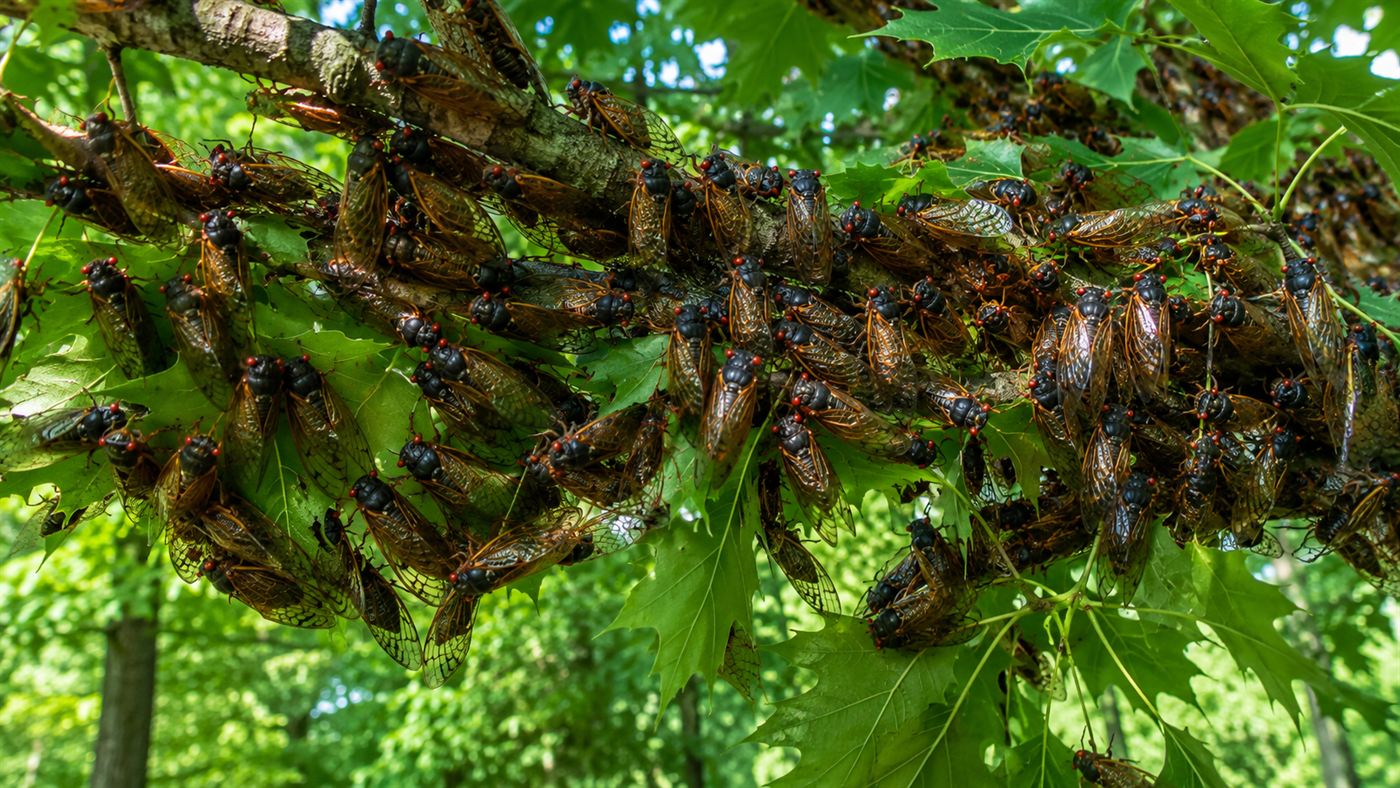
The scale is the thing you cannot quite believe until you have stood in it. As Smithsonian magazine reported ahead of the 2024 event, a dual emergence could bring on the order of a trillion of the insects. In a good spot the density is staggering, with historical estimates of up to a million cicadas emerging from a single acre of forest floor. They do not trickle out. They erupt.
Then comes the sound. Male cicadas sing to attract mates using drum-like organs, and a full cicada emergence produces a collective roar that can reach around 100 decibels, loud enough to rival power tools and to make conversation outdoors difficult. For a few frantic weeks the trees pulse with noise as the insects mate and the females slit twigs to lay their eggs. Then, almost as suddenly, it ends, the adults die in drifts, and the ground goes quiet for another decade or more, a rhythm as reliable as the return of the monarch butterflies.
Why 13 and 17? The prime-number trick
The oddest thing about these cicadas is the specific numbers, 13 and 17, and biologists think that is no accident. Both are prime numbers, divisible only by themselves and one, and a life cycle built on a prime is fiendishly hard for a predator or parasite to exploit. Any animal that tried to evolve a matching cycle to feast on the cicadas would find its own rhythm almost never lining up with theirs.
The mass emergence itself is a second layer of defense, a strategy called predator satiation. By surfacing all at once in overwhelming numbers, the cicadas simply flood the market. Every bird, snake, and mammal in the area gorges itself, but there are so many cicadas that the predators physically cannot eat them all, and more than enough survive to mate and seed the next generation. Being briefly, absurdly abundant is how a slow, defenseless insect wins.
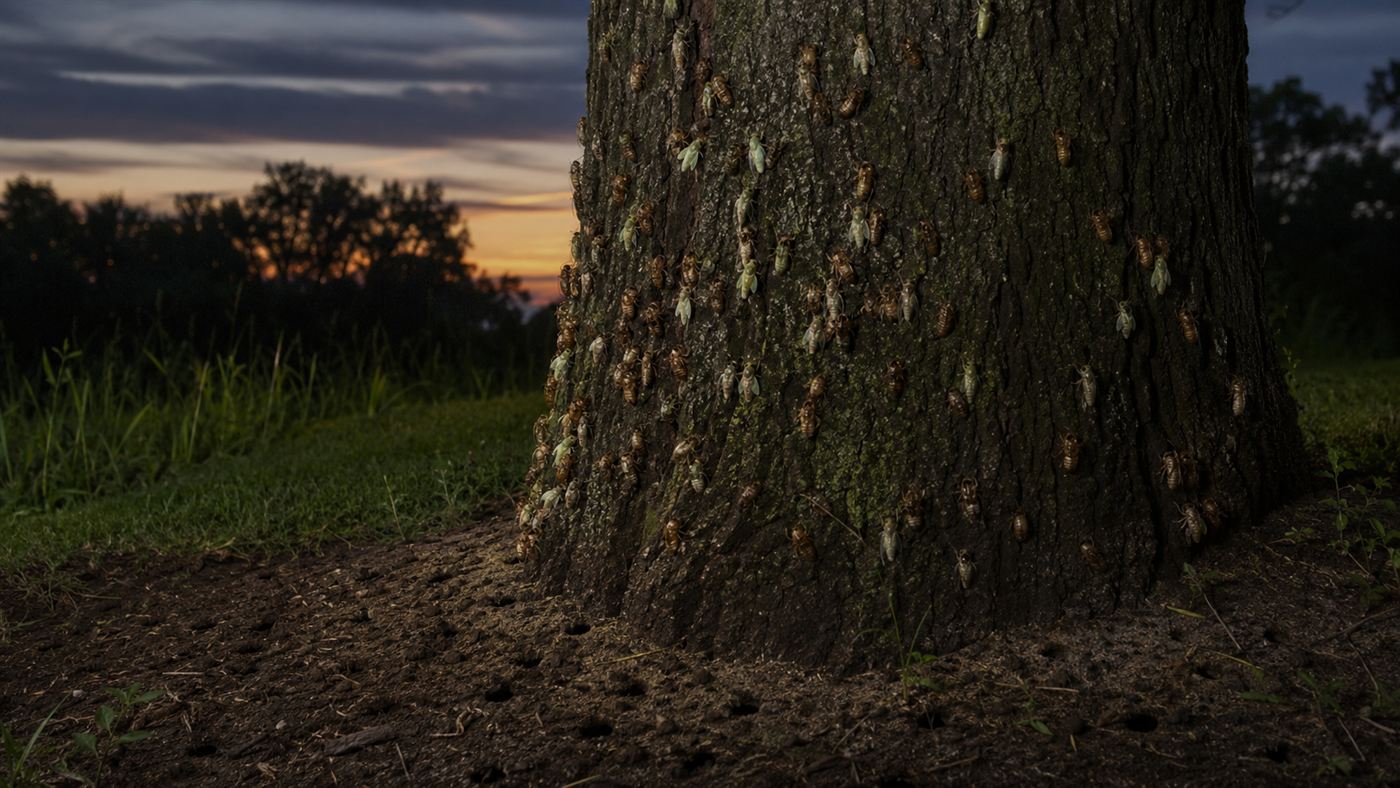
The 2024 double emergence, first since 1803
Every so often the different broods, which are staggered across the calendar and the map, happen to line up, and 2024 delivered a rare one. As NBC News explained, Brood XIII, on a 17-year cycle, and Brood XIX, on a 13-year cycle, emerged in the same season, something these two particular broods had not done together since 1803, back when Thomas Jefferson was president. Because of the math of 13 and 17, they will not pair up again until 2245.
The two broods appeared across parts of as many as 18 states, mostly in the Midwest and Southeast, with Illinois at the epicenter, one brood in the north of the state and the other in the south. Their ranges touched but barely overlapped, so few places got both at once, yet the combined spectacle put trillions of insects on the map and turned a routine natural event into a genuine national moment.
The people who chase the periodical cicadas
An event this big draws its own devoted watchers. Entomologists like Gene Kritsky have spent careers tracking the periodical cicadas, mapping exactly where each brood appears and comparing it to records stretching back over a century, and modern emergences have turned into vast citizen-science projects. Using smartphone apps, tens of thousands of ordinary people now photograph and pin cicadas as they surface, building the most detailed maps of the broods ever made.
It is a rare case of a wildlife spectacle that lands, quite literally, in everyone's backyard, and that people can help study just by looking out the window. For a few weeks the whole region becomes a laboratory, and the cicadas, which spent 17 silent years ignored underground, briefly become the most watched animals in the country.
The honest catch
The cicadas come wrapped in myth, so it is worth clearing some away. They are not locusts, the crop-destroying swarms of biblical fame, and they cause no famine. They do not bite or sting, they barely eat as adults, and beyond a little damage to the twigs of young trees and a lot of noise and crunchy dead bodies, they are harmless. Ecologically they are a gift, a sudden pulse of food for birds and mammals and a dose of nutrients for the soil when they die.
The real worry runs the other way. These ancient clocks are being disrupted by us. As forests are cleared and paved over, local broods lose the trees their nymphs depend on, and some populations have simply blinked out, gaps now visible on the old maps. A warming climate may be scrambling the timing too, coaxing more cicadas to emerge years early as off-schedule stragglers. A cycle that has ticked reliably since before the country existed is not guaranteed forever, and it would be a quiet tragedy to lose one of the great living clocks of the natural world.
An insect that waits 17 years in the dark to spend a few loud weeks in the sun is one of the strangest clocks in nature, and it is ticking right now beneath American soil. Would you travel to stand inside a trillion-strong cicada emergence, or is a wall of screaming insects your idea of a nightmare? Tell us what you think in the comments.
Related reading: The monarch butterfly's impossible migration, a journey no single insect lives to finish.
More from Watts & Wild
More in Energy & the Wild →



Bruno writes about energy history, industrial disasters, and the people who shaped the technologies we take for granted. He is based in Brazil.