Magawa was a rat too light to set off a landmine, and he cleared 141,000 square metres of Cambodia before winning a medal for bravery
We spend a fortune trying to keep rats out of our lives. Then a rat named Magawa spent his working days walking over buried landmines in Cambodia, calmly sniffing out the explosives that maim and kill long after the fighting stops, and saving more human lives than most humans ever will.
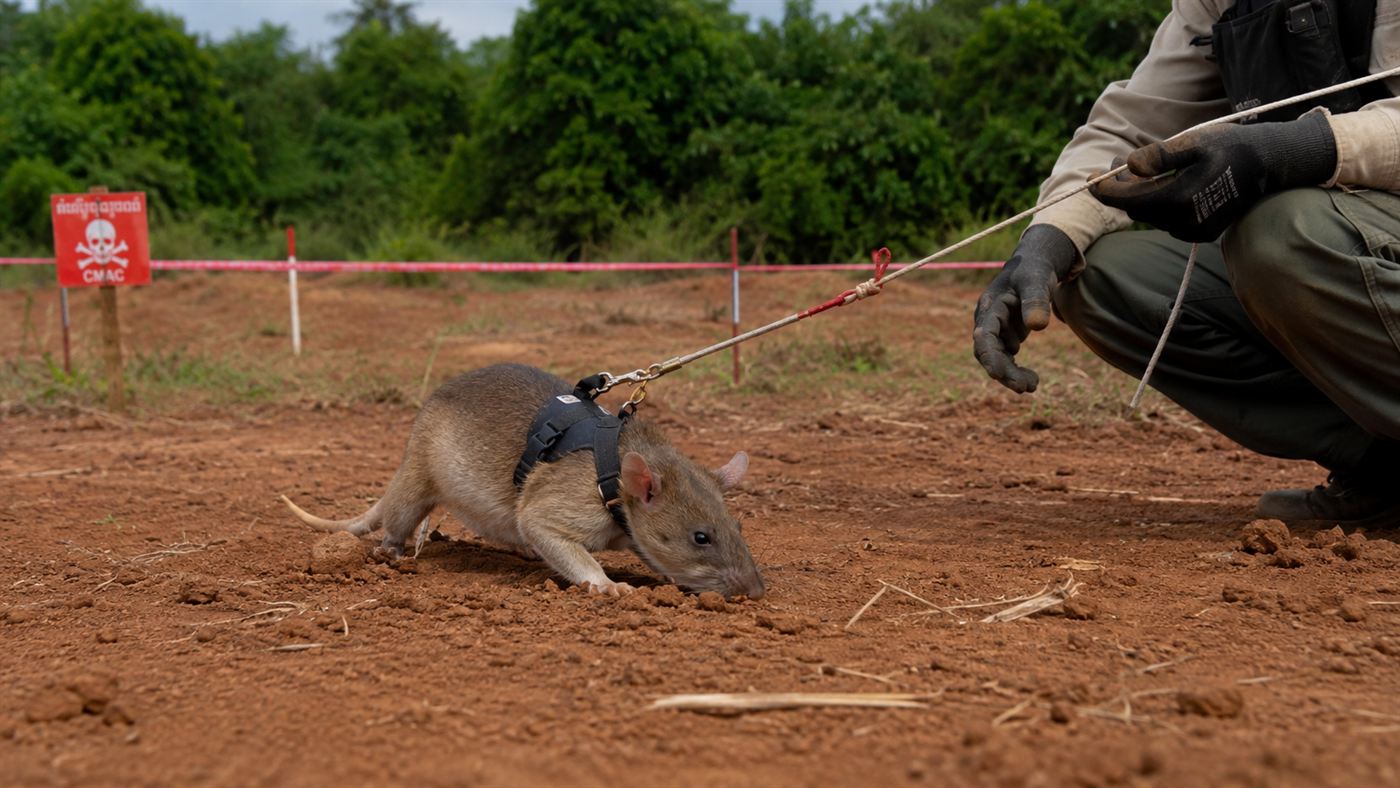
A trained giant pouched rat searches a Cambodian field for buried explosives. Illustration: Watts & Wild.
Magawa was an African giant pouched rat, a breed far bigger than the rats most people picture, about the size of a small cat. He was bred and trained in Tanzania by a Belgian charity called APOPO, whose trainers call their animals HeroRATs, and then flown to Cambodia, one of the most heavily mined countries on Earth after decades of war left millions of explosives in the ground.
For years those mines have kept farmers off their own fields and killed and crippled people, many of them children, who simply stepped in the wrong place. Clearing them is painfully slow and dangerous work, and this is where a rat turns out to be almost perfectly designed for the job.
Why a rat like Magawa is better than a metal detector
A landmine is usually set off by weight pressing on it from above. A grown man weighs enough; so does the equipment he carries. A pouched rat does not. Magawa, at little more than a kilogram, could scurry straight across a buried mine without ever triggering it, which makes the work that terrifies a human almost routine for him.
He also had the better nose. A metal detector beeps at every nail, bullet casing and scrap of shrapnel in the soil, so a human deminer has to stop and dig up each one. A rat is trained to smell the explosive itself and ignore the junk. One rat can clear a patch the size of a tennis court in about half an hour, a job that might take a person with a detector up to four days.
What Magawa actually achieved
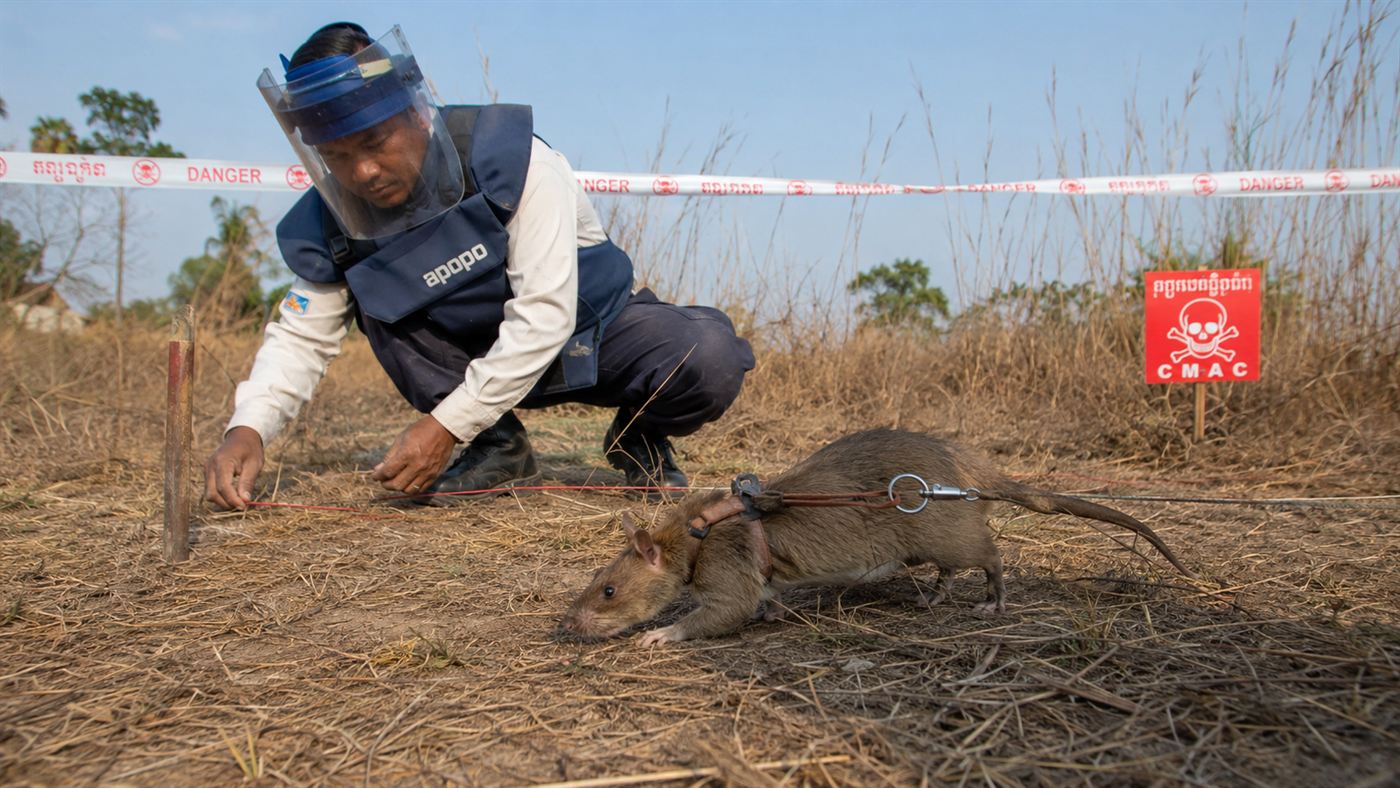
Magawa worked on a tiny harness clipped to a line strung between two handlers, sweeping back and forth across a marked lane. When his nose found the chemical signature of explosive, he stopped and scratched at the ground, and the human deminers moved in to confirm and safely destroy whatever lay beneath.
Over his career he sniffed out more than a hundred landmines and unexploded bombs and helped make over 141,000 square metres of land safe again, an area like twenty football pitches handed back to the people who live there. As APOPO records, he was the most successful mine-detection rat in the organisation's history.
The first rat ever to win a medal for bravery
In 2020 a British veterinary charity, the PDSA, gave Magawa its Gold Medal, an honour sometimes called the animal George Cross, for "lifesaving devotion to duty." He was the first rat ever to receive it, lined up in a history of recipients that until then had been dogs.
He retired in 2021, slowing down with age, after spending a few weeks showing a new intake of twenty young rats the ropes. He died peacefully the following year at the age of eight. As Smithsonian magazine reported, Cambodia has now unveiled a stone statue more than two metres tall in his honour, a hero's monument to a rodent.
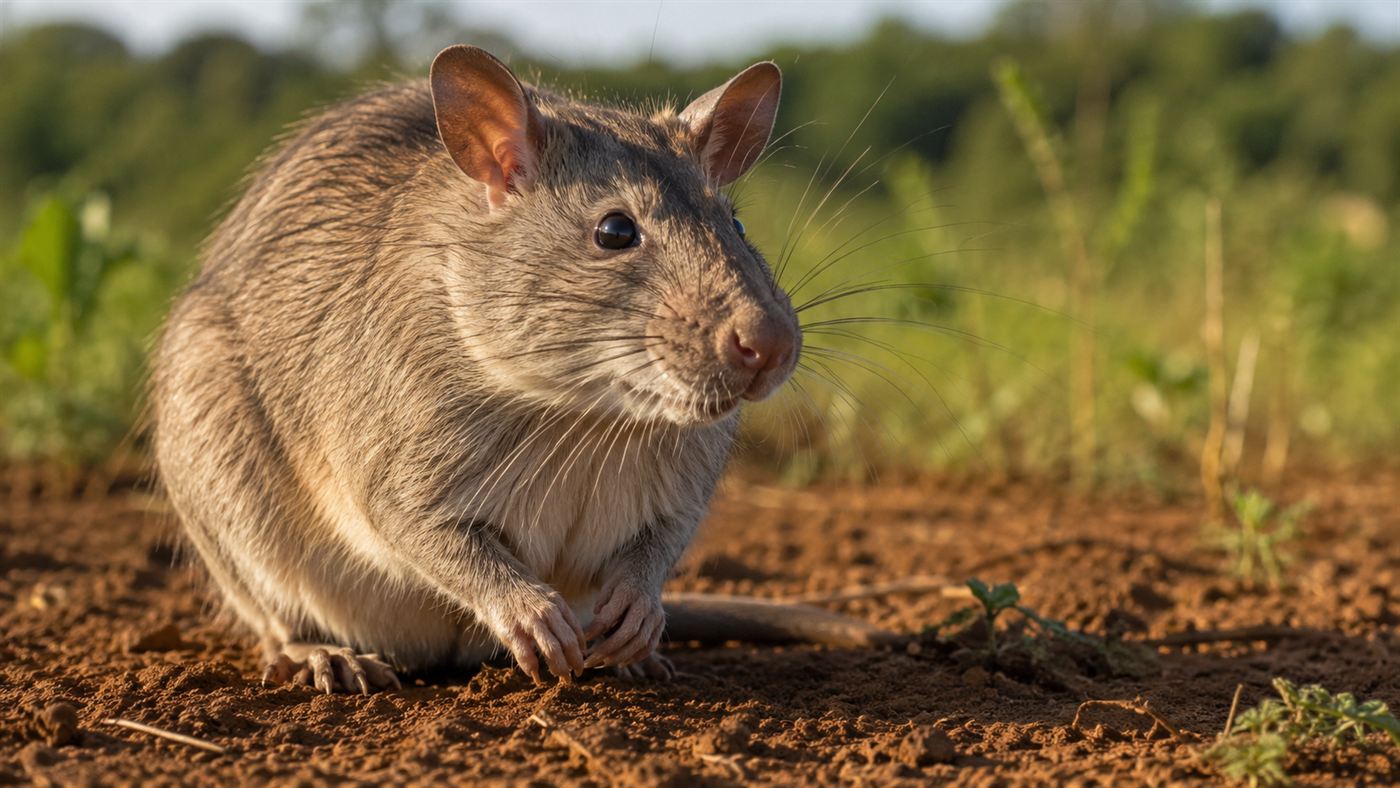
Why are rats used to find landmines?
Because they combine two rare advantages: they are light enough not to detonate the mines they walk over, and their sense of smell lets them home in on the explosive rather than the metal around it. That makes them fast, cheap to keep, and easy to transport compared with machines or dogs, and it means a single trained rat can give a whole village its fields back.
The honest catch
Magawa deserves the statue, but a couple of things keep the story honest. The rats do not clear mines themselves; they only point to them, and trained humans still do the dangerous work of digging up and destroying each one. And one brilliant rat, however famous, is a small part of an enormous problem: Cambodia still has millions of mines in the ground, and clearing them all will take decades and the patient labour of many animals and people. Magawa is not a miracle cure. He is proof that one of the creatures we treat as vermin can, given the chance, do something quietly heroic.
A creature we poison and trap turned out to be one of the best lifesavers in a minefield. Does Magawa change how you think about rats, or just about what we are willing to call a hero? Tell us what you think in the comments.
Related reading: Another unlikely human-animal partnership, where pilots in tiny aircraft taught cranes how to migrate.