A four-month-old bar-tailed godwit flew 13,556 km across the Pacific without once stopping to eat, drink or sleep
In October 2022 a young bar-tailed godwit tagged B6, barely four months old and on its very first migration, lifted off from Alaska and did not touch down again until it reached Tasmania, eleven days and roughly 13,556 kilometres later. It is the longest nonstop journey ever recorded for any animal.
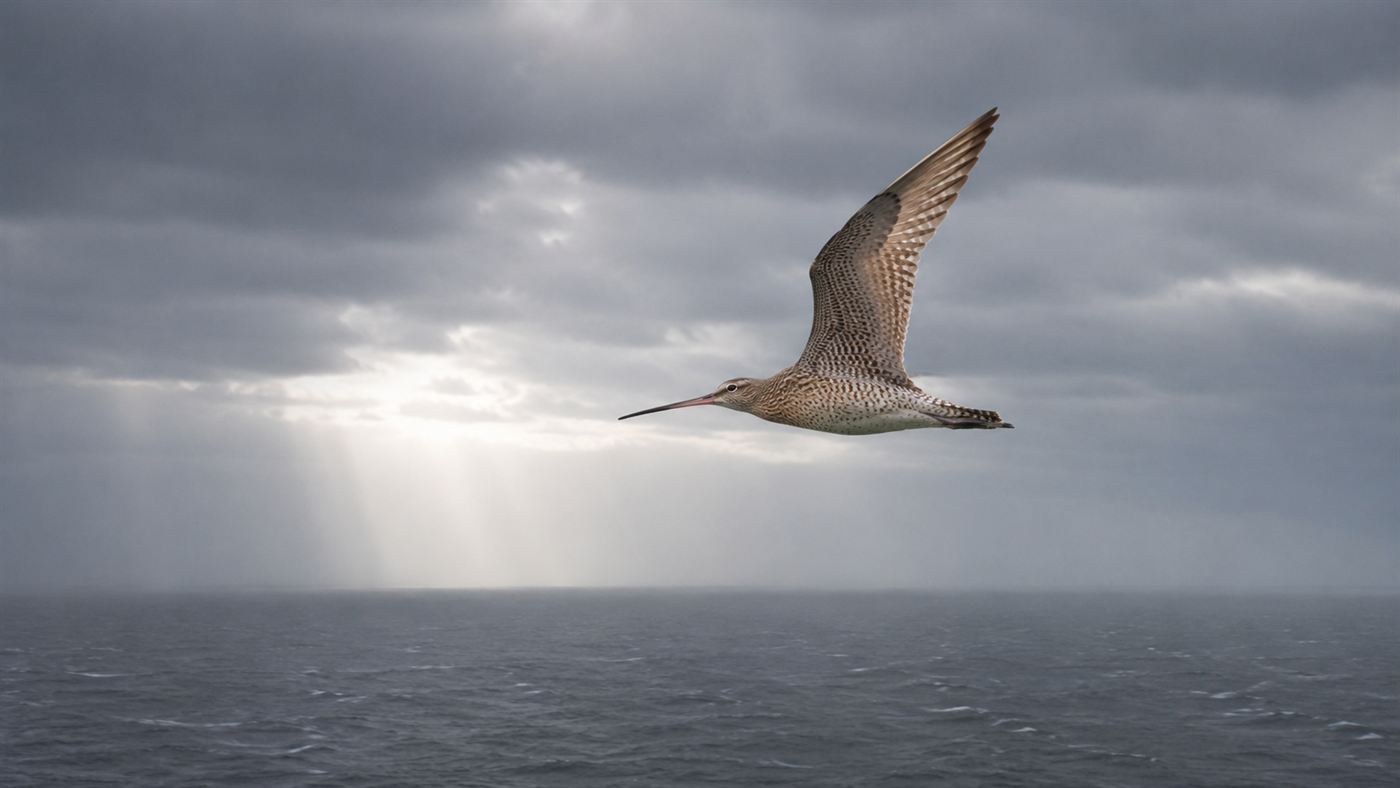
A single godwit over open water, days from the nearest land. Illustration: Watts & Wild.
The bird had no name, only a code. Scientists called it B6, after the alphanumeric flag on its leg, and they almost did not believe what their satellite map was telling them. As the U.S. Geological Survey reported, the four-month-old godwit left western Alaska on 13 October 2022 and flew without a single stop until it landed in Tasmania, Australia, on 24 October. That is roughly 8,425 miles of open Pacific, crossed by a bird the size of a town pigeon, with no chance to rest, feed or drink along the way.
To put it plainly, B6 stayed in the air for about 11 days and one hour. It did not glide on a single long tailwind and coast home. It flapped, more or less continuously, through storms and headwinds, over thousands of kilometres of water with nowhere to land even if it had wanted to. When the team plotted the track, they realised they were looking at a new world record for the longest nonstop flight by any animal, and it had been set by a juvenile making the trip for the first time.
How a bar-tailed godwit turns its body into an aircraft
A flight like this should be impossible, and the only reason it is not comes down to a brutal kind of biological engineering. In the weeks before departure, a bar-tailed godwit gorges on the rich mudflats of Alaska and packs on so much fat that, according to BirdLife International, fat ends up making up more than half the bird's body weight. The godwit becomes a flying fuel tank.
Then it does something stranger. Organs it will not need in the air, the gizzard and the intestines that digest food, shrink down to almost nothing, shedding dead weight before the journey begins. The bird effectively rebuilds itself for the trip, trading a working digestive system for more range, then regrows those organs at the other end. It is the closest thing in nature to stripping a plane of every non-essential part to squeeze out extra miles.
How far can a bar-tailed godwit fly without stopping?
B6's 13,556 km is the current record, but it is not a fluke of one freak bird. Bar-tailed godwits of the Alaskan population routinely cross the entire Pacific in one go, flying south to New Zealand and southeastern Australia each autumn and covering more than 11,000 km without a break. On the return leg they fly up the western Pacific to the Yellow Sea in flights of six to eight days. Across a lifetime that adds up to something staggering: BirdLife estimates a single godwit may fly more than 460,000 km, well over the distance to the Moon.
What makes B6 special is the raw number and the fact that it was a beginner. Adult godwits have made these crossings before and carry some experience. B6 had hatched only months earlier on the Alaskan tundra and had never flown the route, yet it pointed itself at the open ocean and got the navigation right on the first attempt, arriving on a small bay on the far side of the planet.
How does the bar-tailed godwit fly without sleeping?
This is the part that still unsettles the scientists who study them. A godwit cannot land on the sea, so for eleven days there is no rest in any normal sense. The leading idea is that the birds, like some other long-distance migrants, sleep one half of the brain at a time, keeping enough of themselves awake to hold course while the other half rests in short bursts. They fly on a kind of biological autopilot, navigating by the Sun, the stars and the Earth's magnetic field.
They also read the weather with uncanny skill. Godwits tend to launch on the back of favourable winds from departing storm systems, using the moving air to get a push out over the Pacific. None of this is taught. A four-month-old bird carries the whole programme, the fuelling, the timing, the route and the will to fly into an empty ocean, written into it from birth.
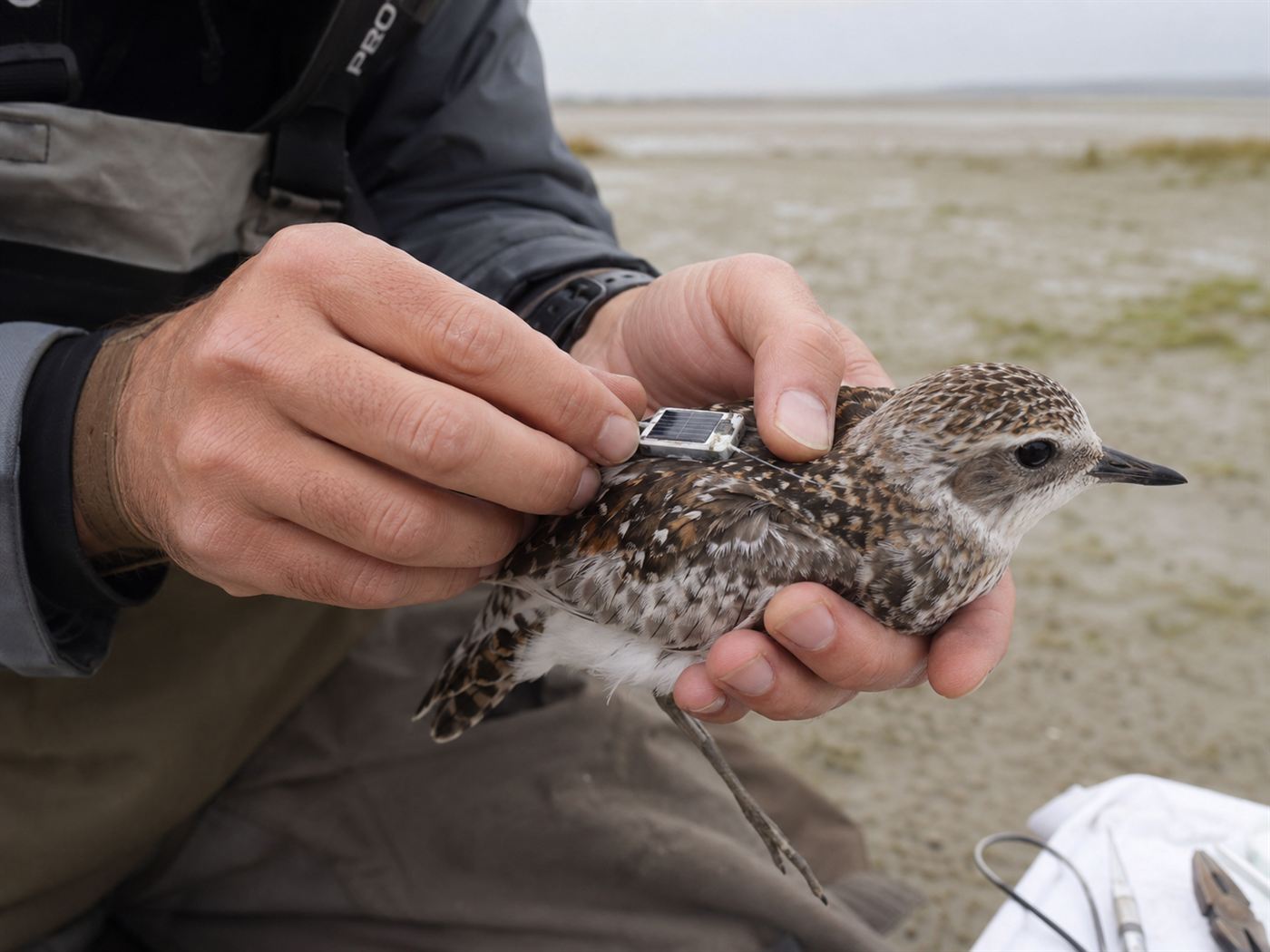
The tiny tag that told the whole story
None of this would be known without a piece of engineering almost as remarkable as the bird. B6 carried a solar-powered satellite transmitter weighing just 5 grams, fitted to its lower back by researchers from the USGS, the Max Planck Institute and the U.S. Fish and Wildlife Service. Light enough not to burden the bird, it pinged its position to satellites for the entire crossing, turning an invisible journey over empty water into a line on a map that scientists could watch in near real time.
Jesse Conklin, one of the godwit researchers who has tracked these birds for years, has described the flights as pushing the very limits of what a living body can do. Each new record forces a rethink of how far a bird can really go, and B6, a nameless juvenile, pushed that limit further than anyone expected.
The honest catch
A couple of caveats keep this from being a tidy fairy tale. The 13,556 km figure is the minimum straight-line distance between the tag's fixes, and the bird's real, wind-blown path was almost certainly longer, so in practice B6 may have flown even further than the record states. And while the navigation looks flawless, scientists still cannot fully explain how a first-time juvenile gets it so precisely right, which means part of the story is still genuinely unknown.
There is a shadow over the species, too. The mudflats and estuaries these birds depend on to refuel, especially around the Yellow Sea, are being lost to development, and bar-tailed godwit numbers have been falling. The most extreme athlete in the animal world is only as safe as the muddy stopovers where it rebuilds its body, and those are exactly the places most under threat.
Why one small bird matters
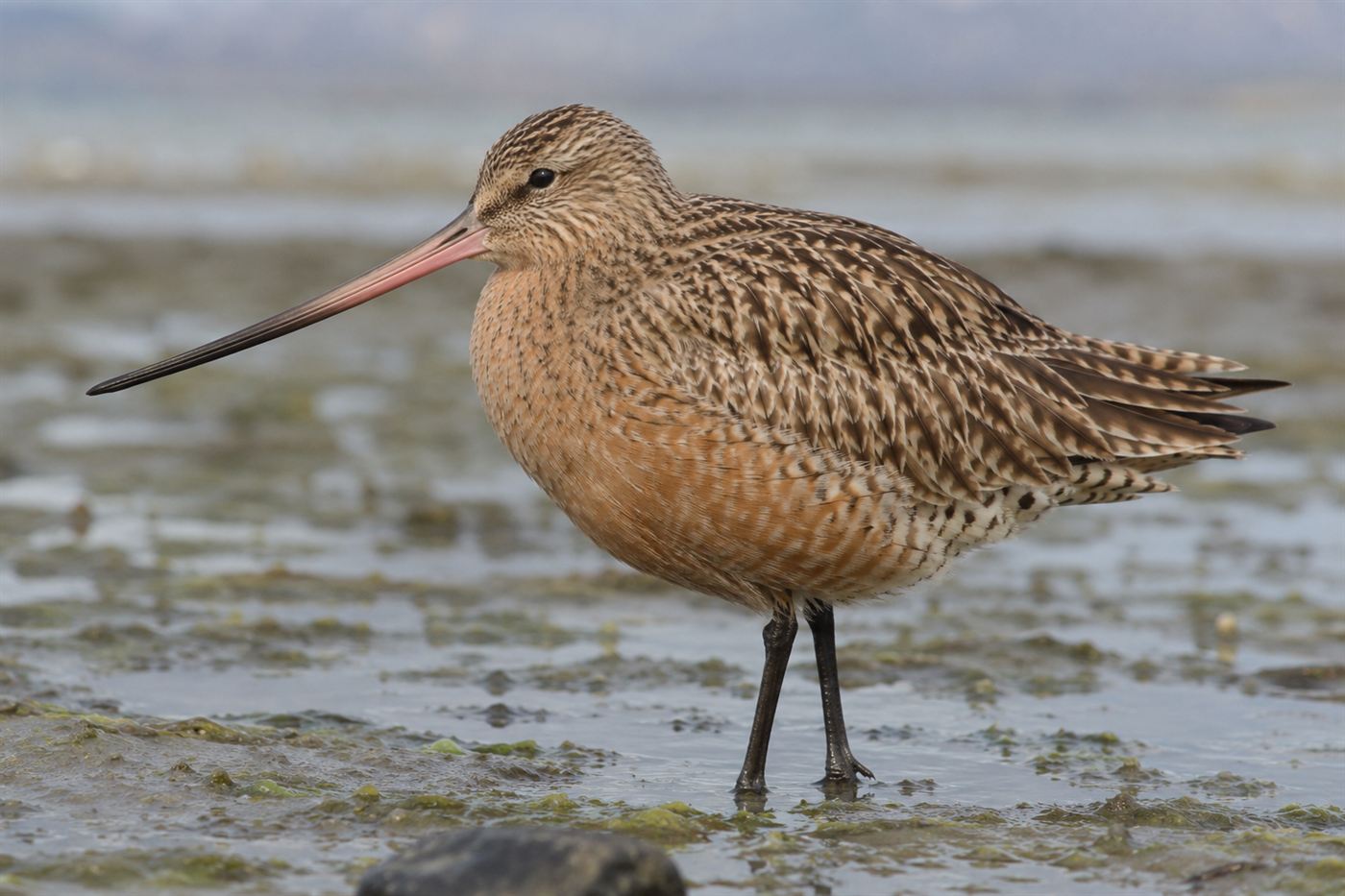
It is easy to look past a brown wading bird on a mudflat. But B6 did something no machine and no other animal has been shown to match: it crossed an ocean under its own power, in one unbroken effort, on its first try, fuelled only by the fat on its body. The bar-tailed godwit is a reminder that some of the most extreme feats of endurance on Earth are performed quietly, by creatures we barely notice, far out over water no one is watching.
The next time a flock of dull-coloured waders lifts off a shoreline, it is worth remembering what they might be capable of. Does a story like B6's change how you look at the ordinary birds on your local coast? Tell us in the comments.
Related reading: A butterfly that weighs less than a paperclip flies up to 4,800 km to a forest it has never seen, guided by a map written into its genes, or the frigatebird, which stays airborne for two months and sleeps on the wing, or the Arctic tern, whose pole-to-pole journey is the longest of all.