The poor girl who found the sea dragons and got none of the credit
On a storm-battered stretch of English coast two hundred years ago, a young woman in a soaked bonnet picked her way along the foot of crumbling cliffs, hammer in hand, racing the tide and the falling rocks. What she pulled out of that stone were monsters: huge reptiles from a vanished ocean, creatures no one had ever imagined. She helped invent an entire science. Mary Anning was the greatest fossil hunter of her age, and almost no one let her say so.
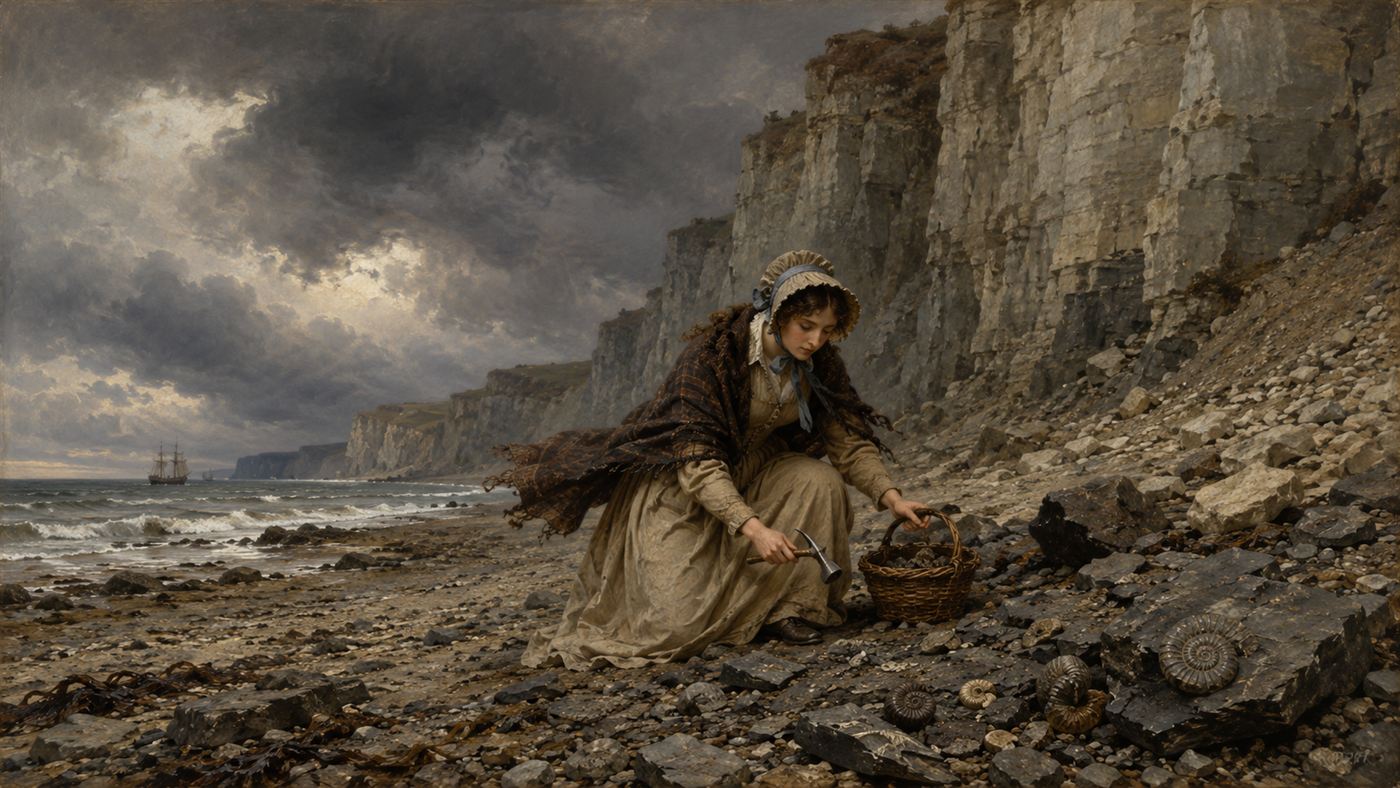
A woman who read the history of life in the rocks, against every disadvantage. Illustration: Watts & Wild.
Her story sits right at the birth of how we understand the deep past, the realisation that the Earth is unimaginably old and that strange creatures once lived and died and vanished forever. Much of that revolution was dug out of the ground by a poor, self-taught woman whose name was left off the discoveries she made.
To understand both her genius and her treatment, you have to go down to the beach where it all began.
A childhood spent hunting monsters
Mary Anning was born in 1799 in Lyme Regis, on the Dorset coast, into a poor family that scraped a living partly by selling fossils to tourists. When she was only about twelve, Mary and her brother uncovered the skeleton of an ichthyosaur, a giant dolphin-like sea reptile, one of the first ever properly recognised.
The cliffs she worked were deadly, prone to landslips that could bury a collector in an instant, and she gathered her finds in winter storms when fresh rock fell. Over the years she taught herself anatomy, geology and drawing, dissecting modern animals to understand the ancient ones, until she knew more about these creatures than most of the educated gentlemen who bought from her. In 1823 she found something even more astonishing: a nearly complete plesiosaur, a long-necked monster so bizarre that some experts at first refused to believe it was real.
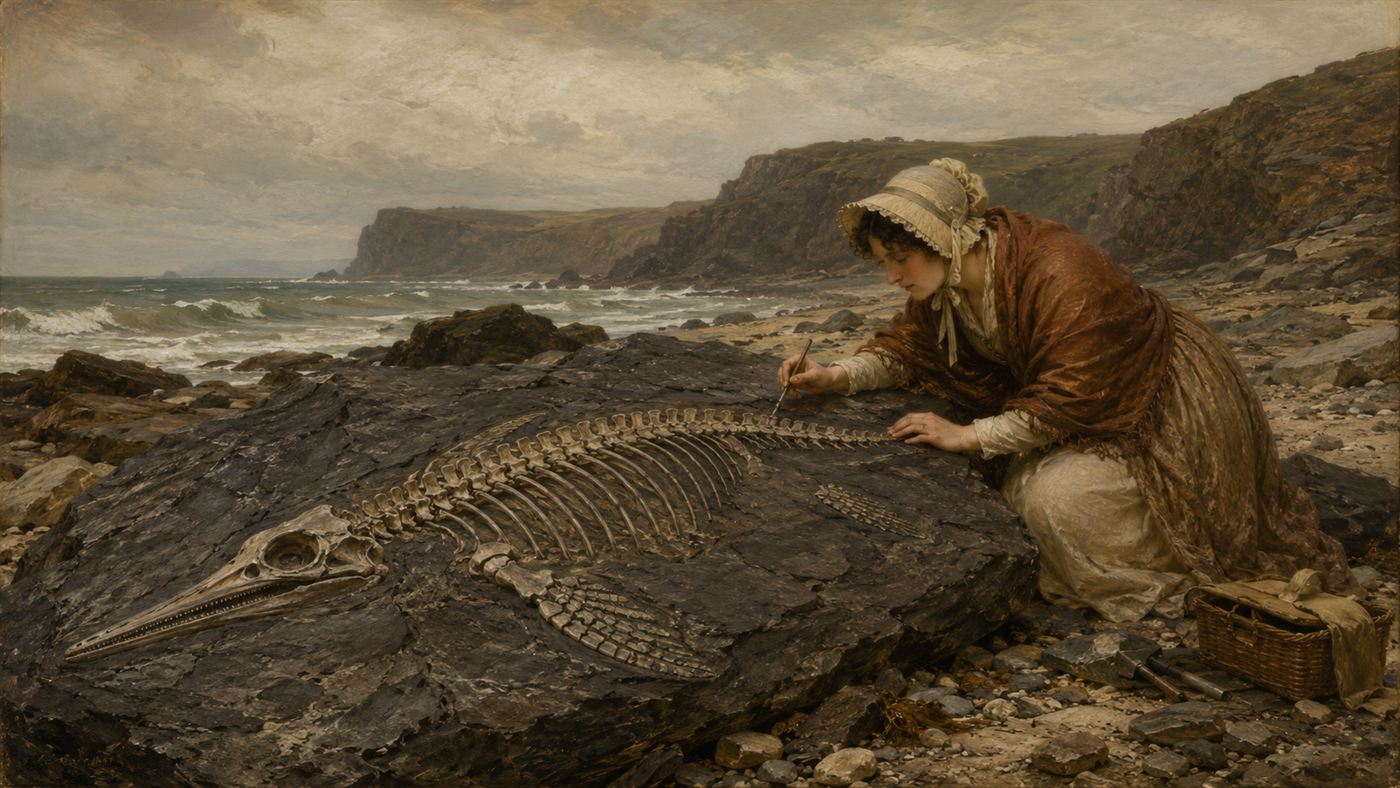
The fossils that rewrote the history of life
These were not just spectacular curiosities. They were evidence. Mary Anning's marine reptiles helped prove that entire kinds of animals had once existed and then died out completely, a deeply unsettling idea of extinction that was reshaping how people understood the age of the Earth.
Her discoveries fed directly into the new science of palaeontology and the slow dawning of deep time, the understanding that life has a long and changing history stretching back far beyond human records. The leading geologists of Britain came to her shop, relied on her sharp eye and her knowledge, and built theories on the creatures she dug from the cliffs. She was, in everything but title, one of the foremost scientists of her day.
Shut out of the science she helped build
And yet the title was exactly what she was denied. As a working-class woman, Mary Anning was barred from the Geological Society of London, not even invited to the meetings where her own fossils were discussed, and the men who bought her finds often described them in print without mentioning her name.
The specimens that made careers and filled museums had been found, freed from the rock, and understood by her, but the credit flowed to wealthier men. It is worth being fair that some geologists genuinely respected her and valued her expertise; she was not entirely ignored, and a few spoke up for her. But respect in private was not the same as recognition in public, and the formal honours, memberships and authorship of her age were closed to someone of her sex and class. She earned a modest living from the very science that refused to fully claim her.
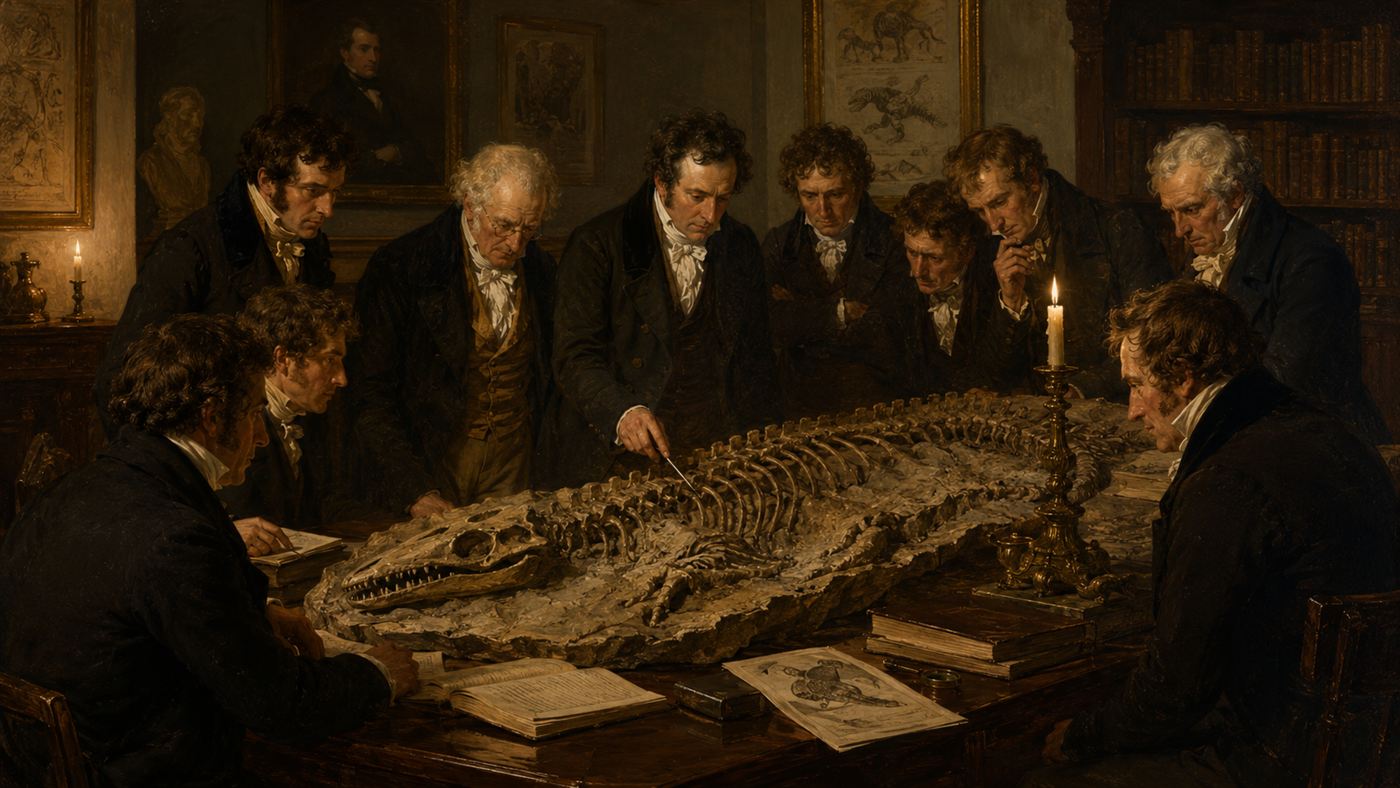
What did Mary Anning discover?
Some of the first great sea monsters of deep time. Mary Anning found early skeletons of the ichthyosaur and the plesiosaur, along with one of the first pterosaurs known outside Germany, and countless other fossils that helped establish that life on Earth has a vast, changing history.
Beyond the headline finds, her real contribution was a body of careful, expert work, the anatomy she understood, the specimens she prepared, the observations she shared, that quietly underpinned the discoveries credited to others. She did not just stumble on bones; she read them, and helped a whole generation of scientists learn to read them too.
Why was Mary Anning not recognised?
Because of who she was, not what she did. Mary Anning was a poor woman in a science dominated by rich men, and the rules of her time excluded her from its societies, its publications and its honours, no matter how brilliant her work.
She died of cancer in 1847, still not wealthy, still without the official standing her discoveries deserved. Real recognition came mostly after her death, as later generations realised how much of the foundation of palaeontology had been laid by a self-taught woman on a Dorset beach. Her story is now told partly as a wonder and partly as a warning, a reminder of how much genius the world has lost, or nearly lost, simply by refusing to listen to the wrong kind of person.
A girl with a hammer pulled the history of life out of a cliff, and her world thanked the men who watched. How many of the names on our great discoveries belong to the people who actually made them? Tell us what you think in the comments.
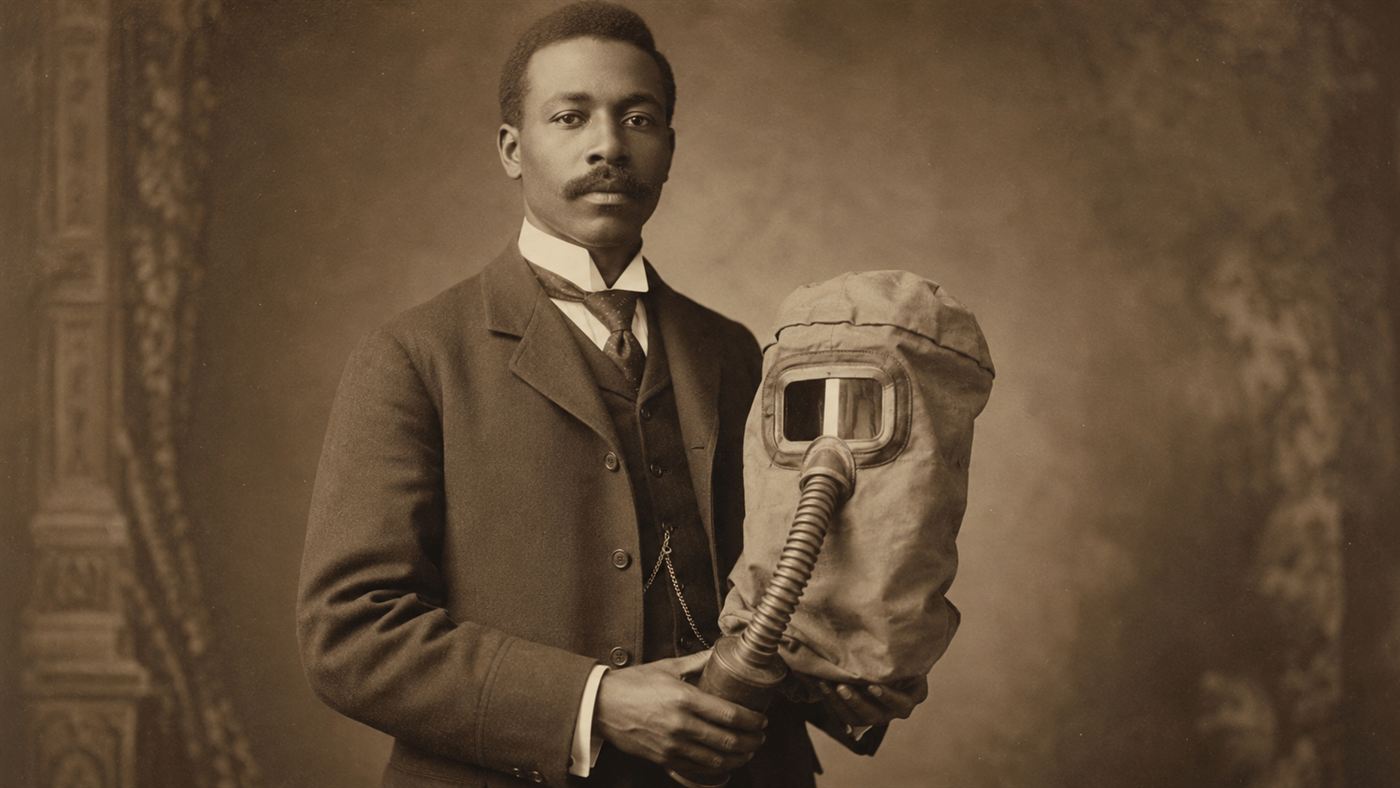
Related reading: Garrett Morgan, another inventor whose brilliance was nearly erased by the prejudices of his time, and Michael Ventris, the amateur architect who cracked an ancient script the experts could not read. See also the Antarctic dinosaur that hid in a museum drawer for 41 years, and how ancient fossil trails show animals learning to sense the world before the Cambrian explosion.