Long before the Cambrian explosion, the first animals were already learning to sense their world
The Cambrian explosion is usually told as life's big bang, the moment eyes, shells and legs suddenly appeared. A 2026 study reading the faint trails left by animals in ancient seabeds tells a quieter story. The great burst had a long fuse, and it was lit by the world's first faint awareness of a world outside.
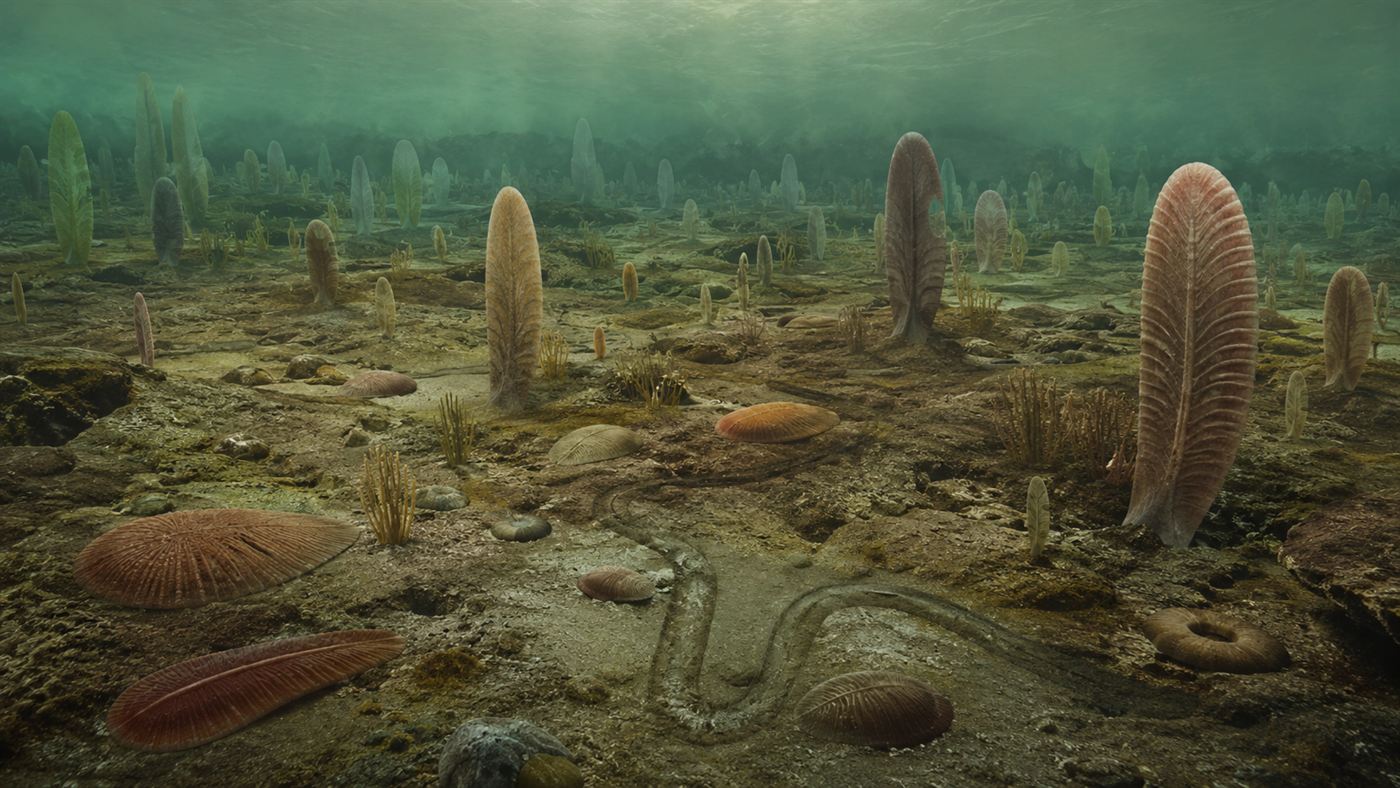
A soft, strange seafloor world, hundreds of millions of years before eyes and shells became common. Illustration: Watts & Wild.
The short version is this. In 2026, researchers whose work was highlighted by London's Natural History Museum analysed trace fossils, the trails and burrows left in the mud by early animals, from the Ediacaran and early Cambrian. They found that the creatures' ability to sense their surroundings sharpened steadily over roughly 20 million years, well before the famous Cambrian explosion. The senses came first, and the bodies followed.
It is a subtle idea with a big consequence. The Cambrian explosion, around 539 million years ago, is the point in the fossil record where most major animal groups seem to burst into being, suddenly armoured, legged and eyed. It has always looked like an abrupt switch being thrown. This new reading suggests the switch had been warming up for ages.
And the evidence is not bones or shells, which those soft early animals mostly lacked. It is their footprints.
How you read senses in fossils
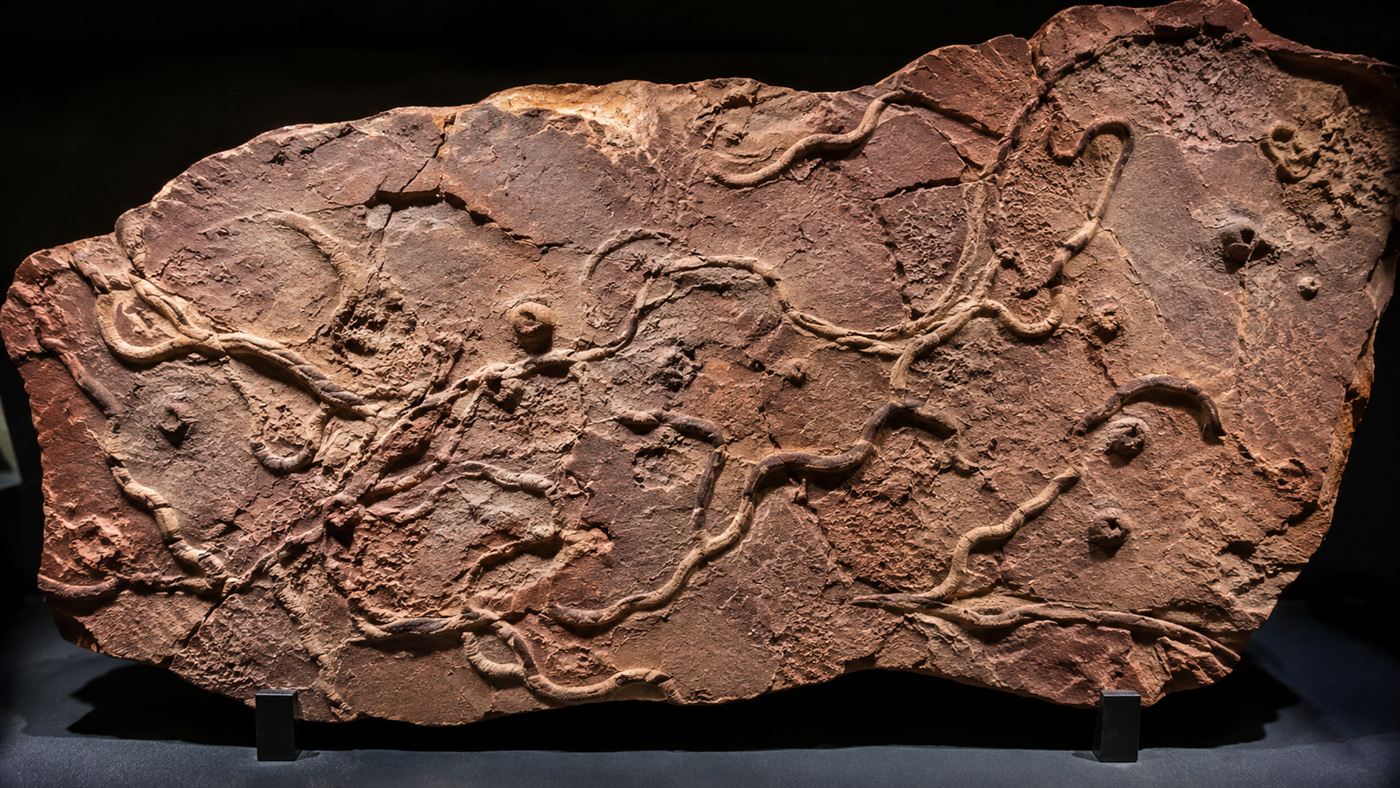
You cannot dissect the eye of an animal that left no hard parts, but you can watch how it moved. Trace fossils, the preserved tracks, trails and burrows of ancient life, are a record of behaviour rather than anatomy, and behaviour betrays perception. An animal wandering at random is not sensing much. An animal moving in a straight, deliberate line toward a patch of food is reacting to something it can detect.
By lining up these trails across millions of years, the team could watch perception improve. The earliest movements look aimless, the tracks of things barely aware of their surroundings. Later ones show purpose and direction. Reading the story this way is a bit like reading the doodles left in ancient mud and inferring the growing mind behind the pen.
What the early animals could actually perceive
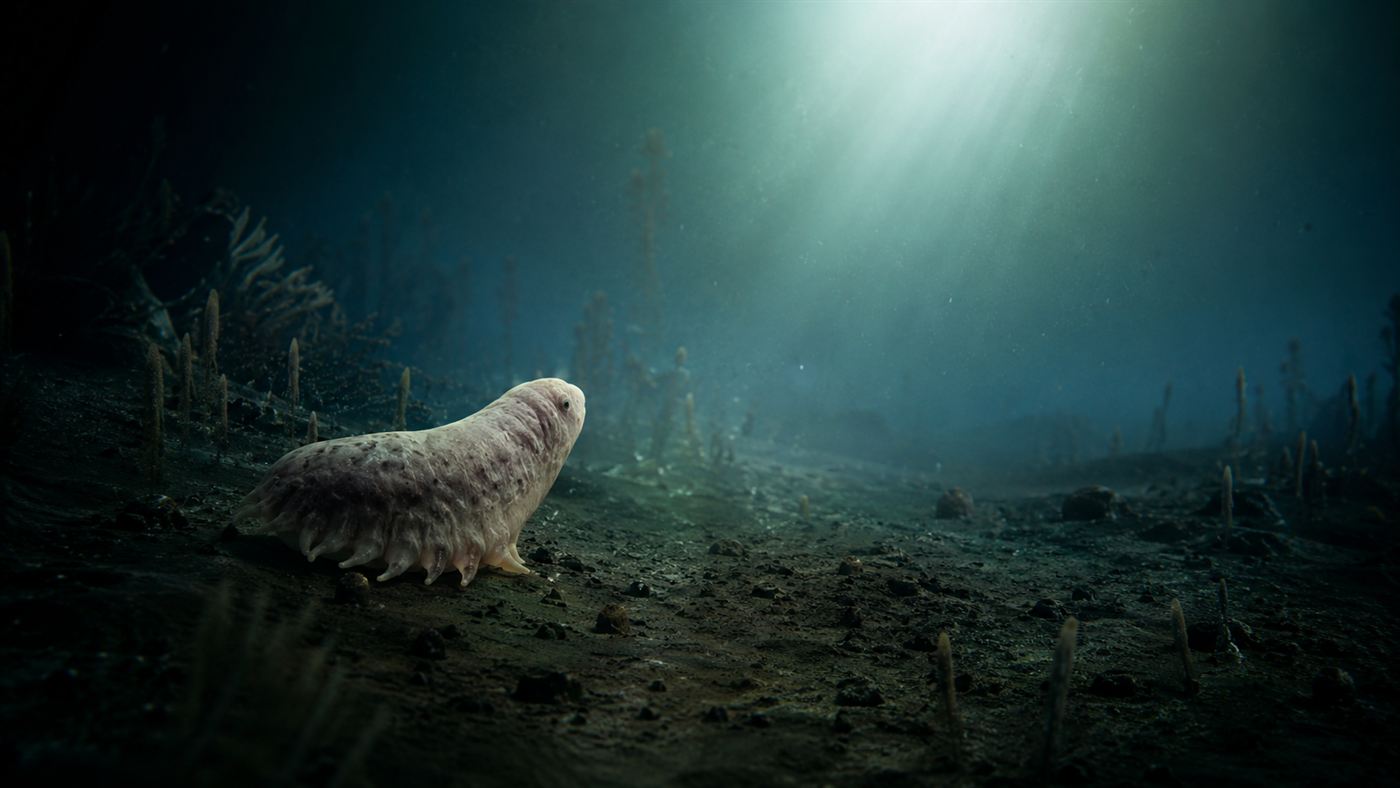
The picture that emerges is humbling and rather moving. At first these animals could perceive only a tiny bubble of the world, on the order of ten centimetres around their bodies. Beyond that lay nothing they could register, a universe they were effectively blind and numb to. Over time that bubble widened as their senses grew keener, perhaps as some of them first evolved to detect light, the crudest beginnings of vision.
Even a little sight changes everything. A creature that can spot food, or a predator, a few body lengths away lives in a completely different world from one that must blunder into things. That is why the emergence of even basic senses matters so much. A creature that can find food will always beat one that stumbles into it, and once that advantage exists, evolution races to sharpen it.
Was the Cambrian explosion really an explosion?
This is where the finding rewires an old story. If perception was climbing steadily for 20 million years beforehand, then the sudden Cambrian burst starts to look less like a bang and more like a slow dawn, not a sudden switch. The dramatic appearance of eyes and armour may have been the visible payoff of a long, invisible arms race in sensing that was already well underway.
A complementary idea gaining ground in 2026, sometimes called the brain-first hypothesis, pushes this further. It argues that the Cambrian explosion was driven not by shells or limbs but by the early build-up of complex nervous systems able to handle a flood of new information. On this view, the mind, in its most primitive form, may have come first, and the spectacular bodies were built to serve it.
The honest catch
As always, the excitement needs a cool head beside it. Trace fossils are famously slippery evidence. The same squiggle in the rock can be made by different animals doing different things, and inferring vision or intent from a trail is interpretation, not direct observation. This is a compelling reading of the marks, not a recording of an ancient mind at work.
The brain-first idea, too, is a hypothesis in active debate, not settled fact, and the Ediacaran remains one of the strangest and least understood chapters in the history of life. What the work does beautifully is shift the question. The Cambrian explosion may be less a mystery of why bodies appeared so fast, and more a story of how, in the dark and quiet of an ancient sea, life slowly learned to notice it was there at all.
Sources: Phys.org on the trace fossil study, Natural History Museum, and Sci.News on the brain-first hypothesis.
Half a billion years ago, in a dark sea, something began, faintly, to notice the world. Does it change how you picture the dawn of animal life to think it began not with bodies, but with the first flicker of perception? Tell us what you think in the comments.
Related reading: Mary Anning, the self-taught woman who dug the first great sea monsters out of English cliffs. See also the coelacanth, a fish thought extinct for 66 million years found alive in a net, and the Antarctic dinosaur that sat unrecognised in a museum drawer.