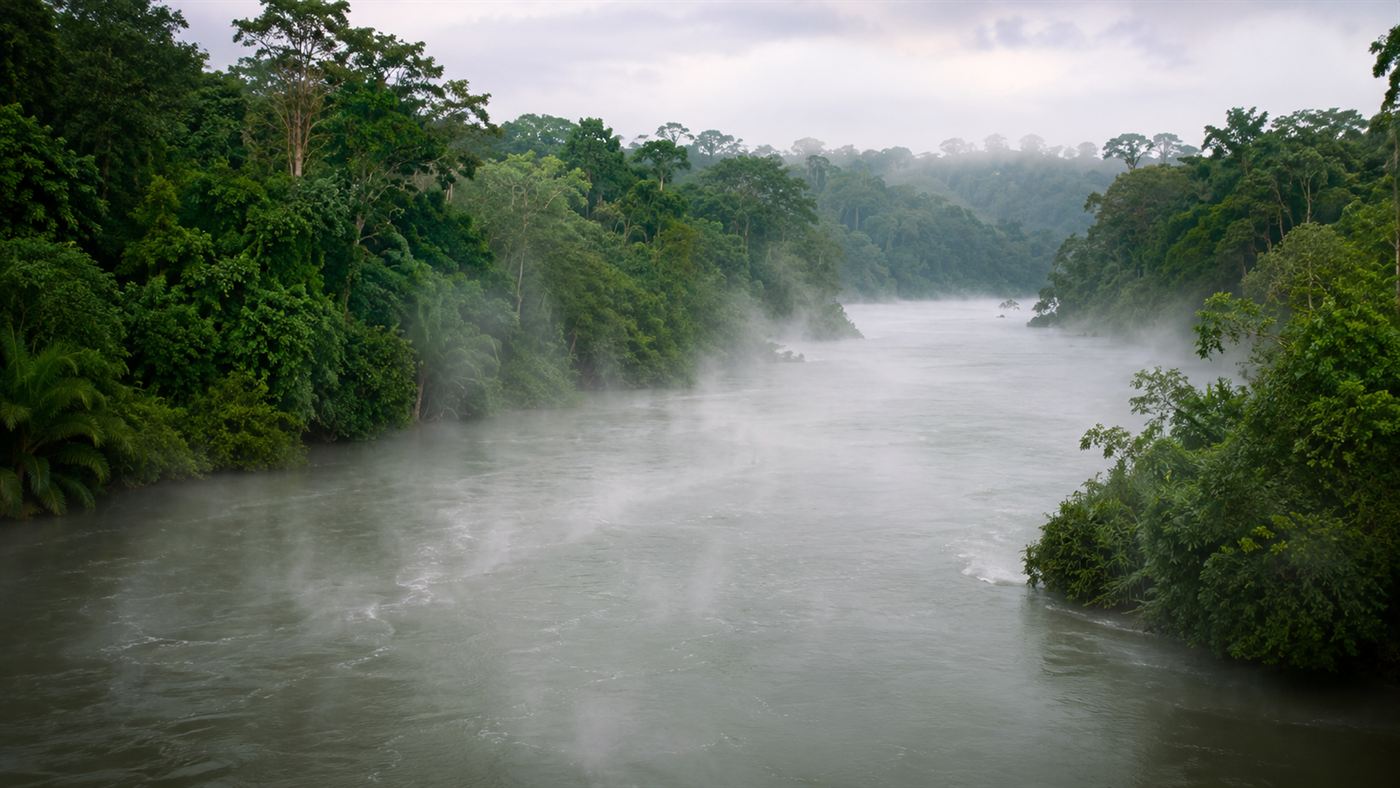
Two million people live beside Lake Kivu, an African lake that could suffocate them all in one night, so Rwanda is defusing the bomb by burning it for electricity
In 1986 a quieter, smaller lake in Cameroon released a cloud of gas that killed 1,746 people while they slept. Lake Kivu holds the same threat on a far larger scale, with two million people on its shores. Rwanda's plan is to slowly drain the danger by turning it into power.
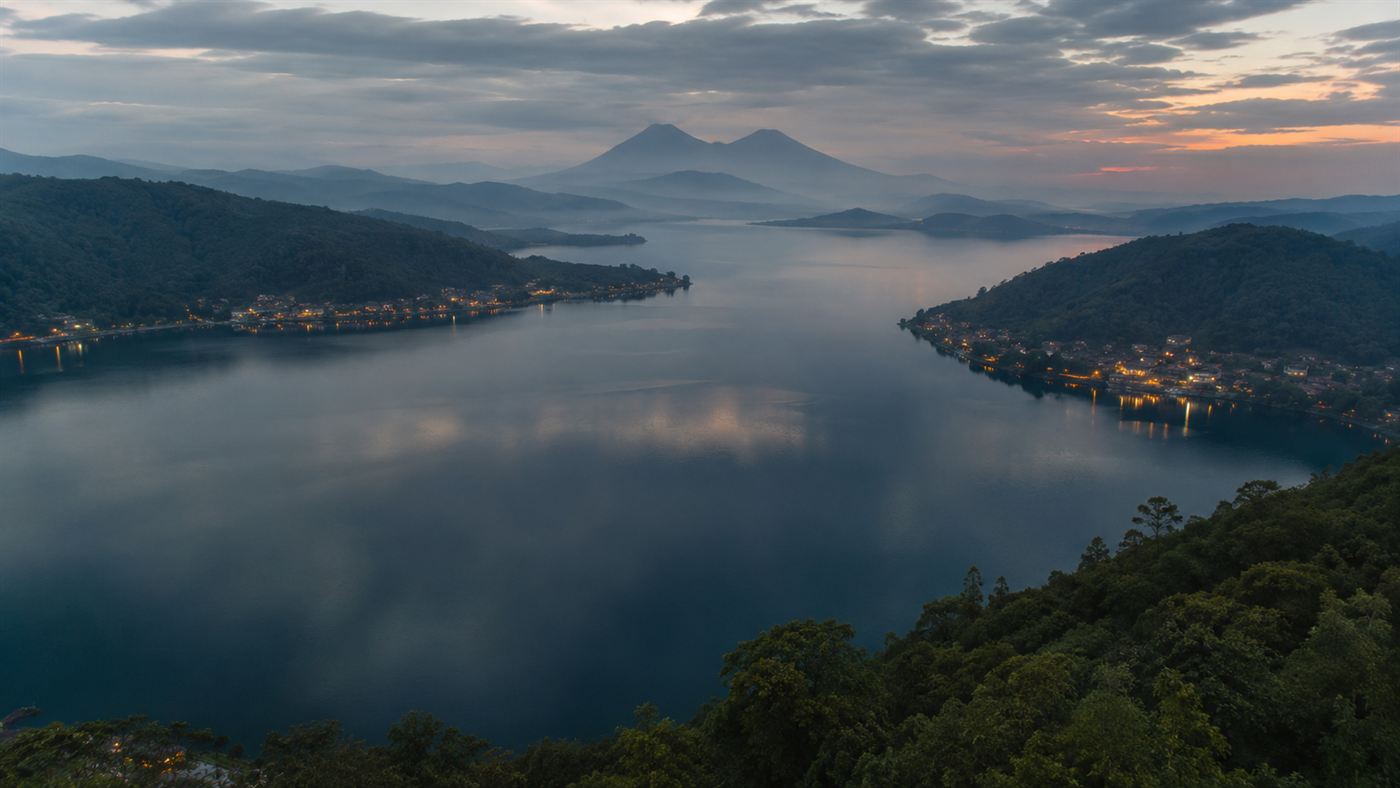
Lake Kivu looks like one of Africa's most beautiful lakes. Hundreds of metres down, it holds a lethal store of gas. Illustration: Watts & Wild.
On the night of August 21, 1986, a lake in Cameroon called Nyos quietly exhaled, and by morning 1,746 people were dead. They had not drowned. As the record of the Lake Nyos disaster details, an invisible cloud of carbon dioxide rose from the lake's depths, rolled down the valleys while families slept, and pushed the breathable air out of every home it reached, killing 1,746 people and some 3,500 head of livestock. Whole villages died in their beds without ever waking. It is also the clearest warning for Lake Kivu, a far larger lake where Rwanda is now turning that same deadly methane into power.
That horror is the reason a much larger lake to the south is watched so nervously. Lake Kivu, on the border between Rwanda and the Democratic Republic of Congo, holds the same kind of deadly gas on a vastly bigger scale, and roughly two million people live around its shores. Rwanda's response is as audacious as the threat. Rather than simply monitor the bomb and hope, the country is slowly defusing it, pumping the gas up and burning it for electricity.
The night a lake killed a village
What happened at Nyos has a name: a limnic eruption. In a few rare, deep lakes, gas builds up in the cold, still water at the bottom and stays dissolved there under the weight of everything above it, like the carbon dioxide trapped in an unopened bottle. Disturb that balance, with a landslide, an earthquake or a shift in temperature, and the gas comes out of solution all at once.
The result is not an explosion of fire but a flood of suffocation. A dense, invisible blanket of carbon dioxide pours out of the water, hugs the ground because it is heavier than air, and flows downhill into whatever is in its path. At Nyos it travelled tens of kilometres. People and animals simply stopped breathing. It is one of the strangest and most silent natural disasters on Earth, and there are only three lakes known to be capable of it.
Why Lake Kivu is the one that keeps scientists awake
Lake Kivu is the largest and most frightening of those three. As Nature has reported in depth, Kivu is far bigger and deeper than Nyos, reaching some 485 metres down, and it is loaded not only with carbon dioxide but with vast amounts of dissolved methane. That extra gas makes it both more dangerous and, strangely, more valuable.
The numbers are hard to hold in your head. National Geographic has described how a full eruption could release the equivalent of several gigatonnes of carbon in a single day, and unlike the remote valleys around Nyos, Kivu's shoreline is crowded. The Congolese city of Goma and the Rwandan town of Rubavu sit right on the water. The lake also lies beside one of Africa's most active volcanoes, Nyiragongo, whose 2021 eruption sent lava toward Goma and reminded everyone what sits next door.
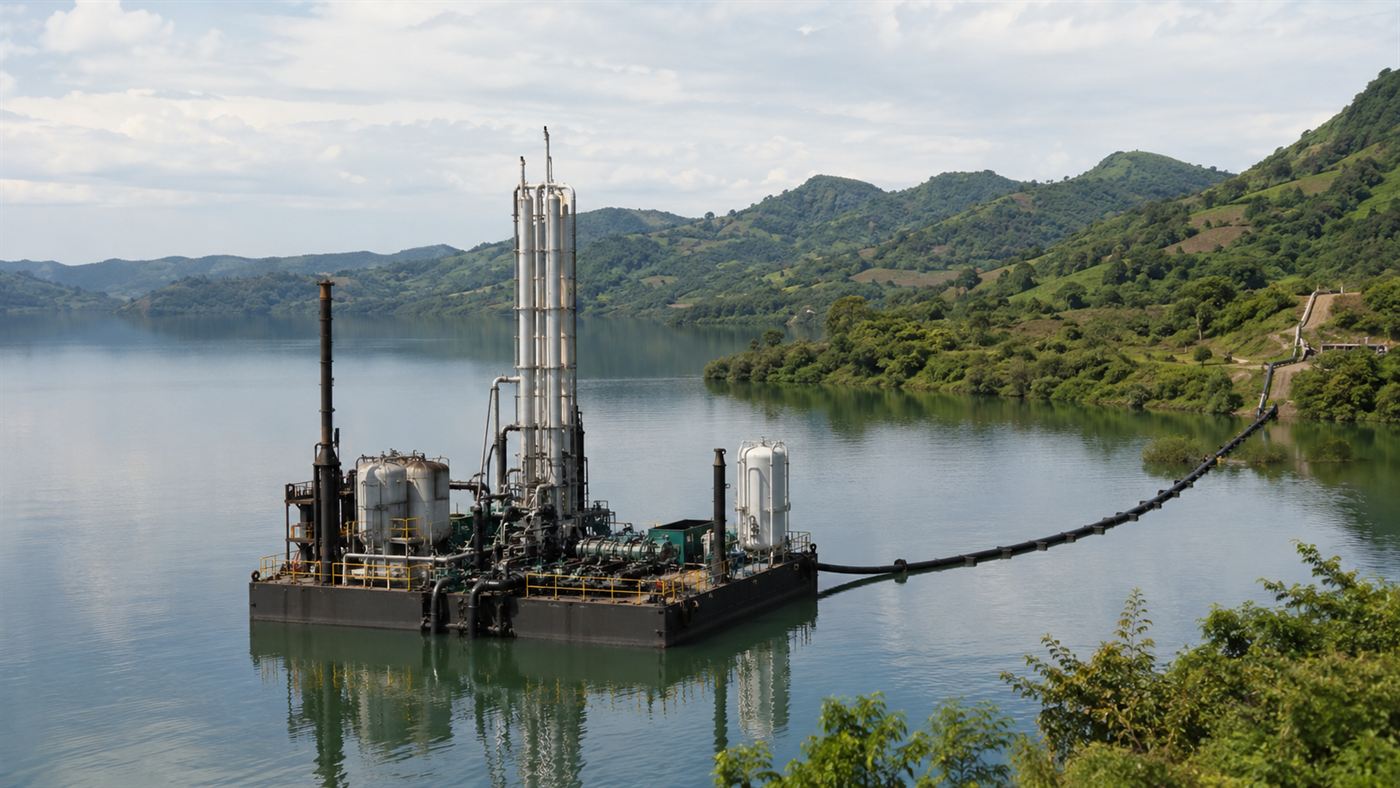
Turning Lake Kivu methane into power
Here is where the story turns from horror to ingenuity. The methane that makes Kivu so dangerous is also fuel. A floating facility can pull the gassy deep water to the surface, let the methane bubble out as the pressure drops, capture it, and pipe it ashore to run generators. Every cubic metre of gas burned for power is a cubic metre that can never erupt.
That is the logic behind KivuWatt, the project that already feeds lake methane into Rwanda's grid. For a country that has long been short of electricity, the lake is a rare piece of homegrown energy, and tapping it does double duty, keeping the lights on while gradually lowering the charge in the lake. It is one of the few places on Earth where the safest thing to do with a hazard is to mine it.
Living on top of it
For the two million people on the shore, none of this is abstract. They fish the lake, farm its banks and raise children within sight of the water, and most could never simply leave. Life carries on over a hazard that has no schedule and gives no warning, which is its own kind of quiet courage.
It also shapes how the lake is used. Fishers and engineers alike have to respect the deep layers that hold the gas, and any large disturbance, natural or human, is treated with care. The lake is beautiful, calm and useful, and it is also the single largest reason the region cannot relax.
The honest catch
The neat version of this story, danger turned into clean power, deserves a hard asterisk. Burning fossil methane is not zero-carbon, and more importantly, the safety case is genuinely contested. Some scientists warn that pulling water and gas from the lake's carefully stratified layers could, if done badly, disturb the very balance that keeps the gas down, nudging Kivu toward the eruption everyone fears rather than away from it.
There is also the problem of pace and politics. Extraction so far removes only a small fraction of the lake's gas over decades, so the threat is being trimmed, not eliminated. The Rwandan side is managed and monitored, but the lake is shared with the Democratic Republic of Congo, a region long strained by conflict, where coordinated safety work is far harder. Lake Kivu is a brilliant idea and an unfinished gamble at the same time, and honest reporting has to hold both of those at once.
A lake that could suffocate two million people in a night is slowly being drained of its danger by the simple act of burning it for power, a fix that might also be the thing that triggers the disaster. Would you keep living on the shore of a lake like Lake Kivu, trusting the engineers to defuse it in time? Tell us what you think in the comments.
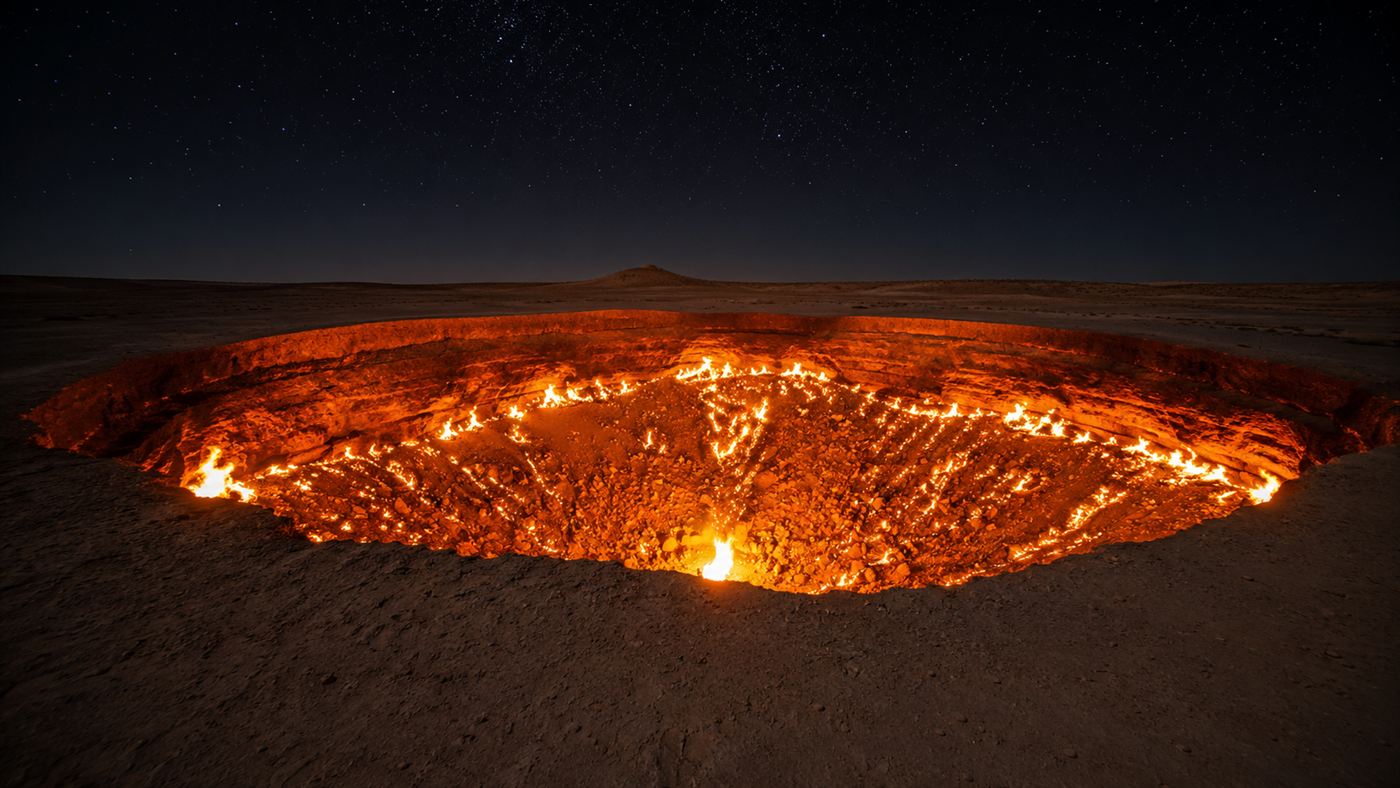
Related reading: The Door to Hell, a fiery gas crater that has burned in the desert since 1971, is finally going out. Also: In 1986 Lake Nyos in Cameroon released a CO2 cloud that killed 1,746 people in their sleep, and the degassing pipes installed since then are slowly defusing the same hazard on a smaller scale.