Tasmanian devils vanished from mainland Australia 3,000 years ago and are dying of a contagious cancer at home, so conservationists bred them back into the wild on the mainland
The Tasmanian devil is famous for its screech and its temper, and infamous now for something stranger: a cancer it gives to other devils by biting their faces. As that disease eats away at its island home, the snarling little marsupial has just been handed a second chance on the mainland.
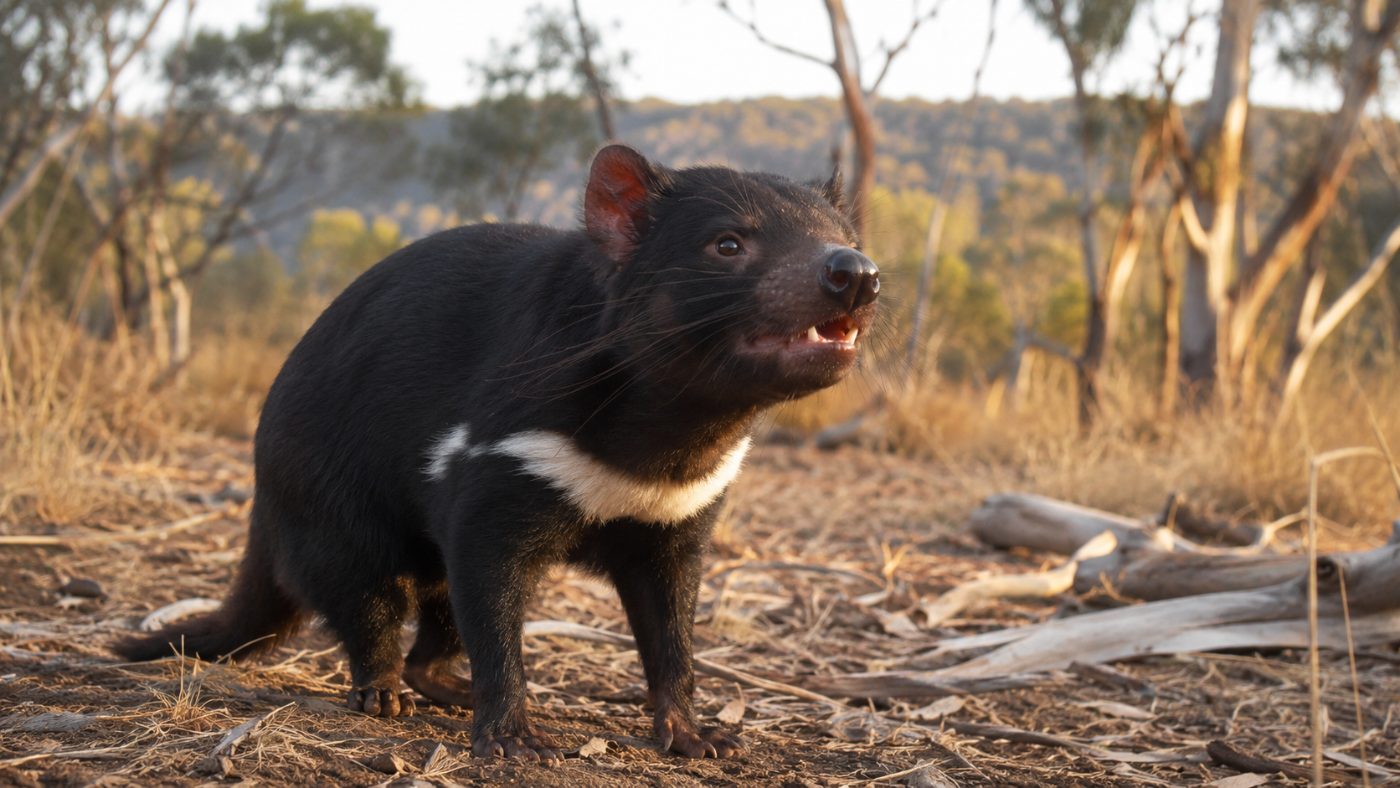
The Tasmanian devil, the world's largest carnivorous marsupial, is back on mainland Australia. Illustration: Watts & Wild.
In 2021, in a fenced sanctuary in the hills of New South Wales, a litter of squirming pink Tasmanian devil joeys was born, and it marked the Tasmanian devil mainland return after three thousand years away. The species had been gone from mainland Australia for roughly three thousand years, pushed out long ago by packs of introduced dingoes, and surviving only across the water on the island of Tasmania. These were the first wild devil joeys born on the mainland in all that time.
The babies were not just a feel-good story; they were an insurance policy. As the conservation group Re:wild announced, the births at the Aussie Ark sanctuary were a milestone in a desperate effort to save the species, because back in Tasmania the devil is being eaten alive by one of the strangest diseases in nature: a cancer that is contagious, passed from animal to animal like an infection.
A cancer that spreads by biting
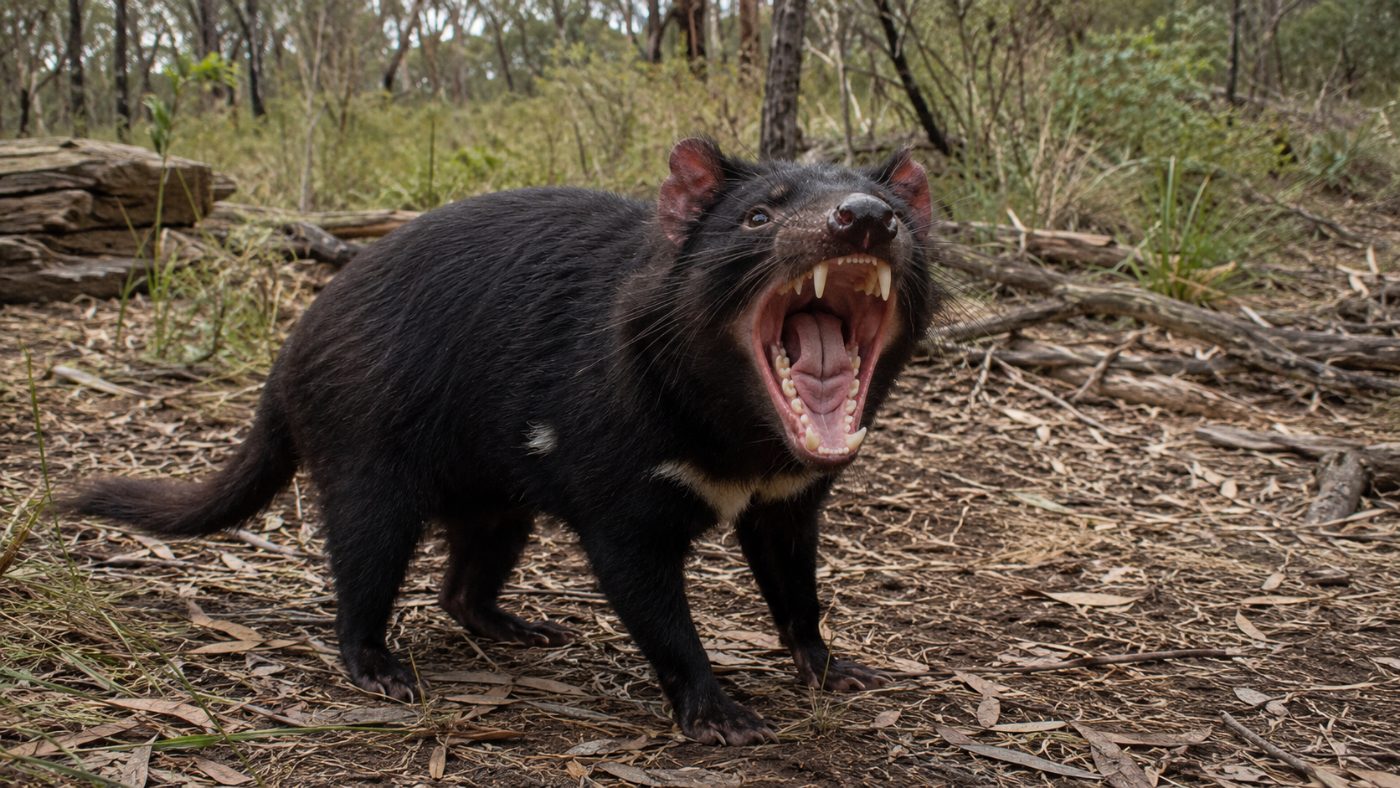
Almost every cancer in the world dies with its host. Devil Facial Tumour Disease does not. First spotted in 1996, it is one of only a tiny handful of known transmissible cancers, a tumour whose own living cells jump from one animal to another. Devils are quarrelsome creatures that bite each other's faces during squabbles over food and mates, and in that moment they pass the cancer mouth to mouth.
The tumours then bloom into grotesque growths around the face and jaw, and most infected devils starve to death within about six months. As Science has reported, the disease has wiped out roughly 80 percent of devils in affected areas, and, as if one transmissible cancer were not strange enough, a second and separate one has since emerged. The cruelty of it is that the illness turns the devil's own snapping nature into the very thing that spreads it.
Why the Tasmanian devil mainland return matters
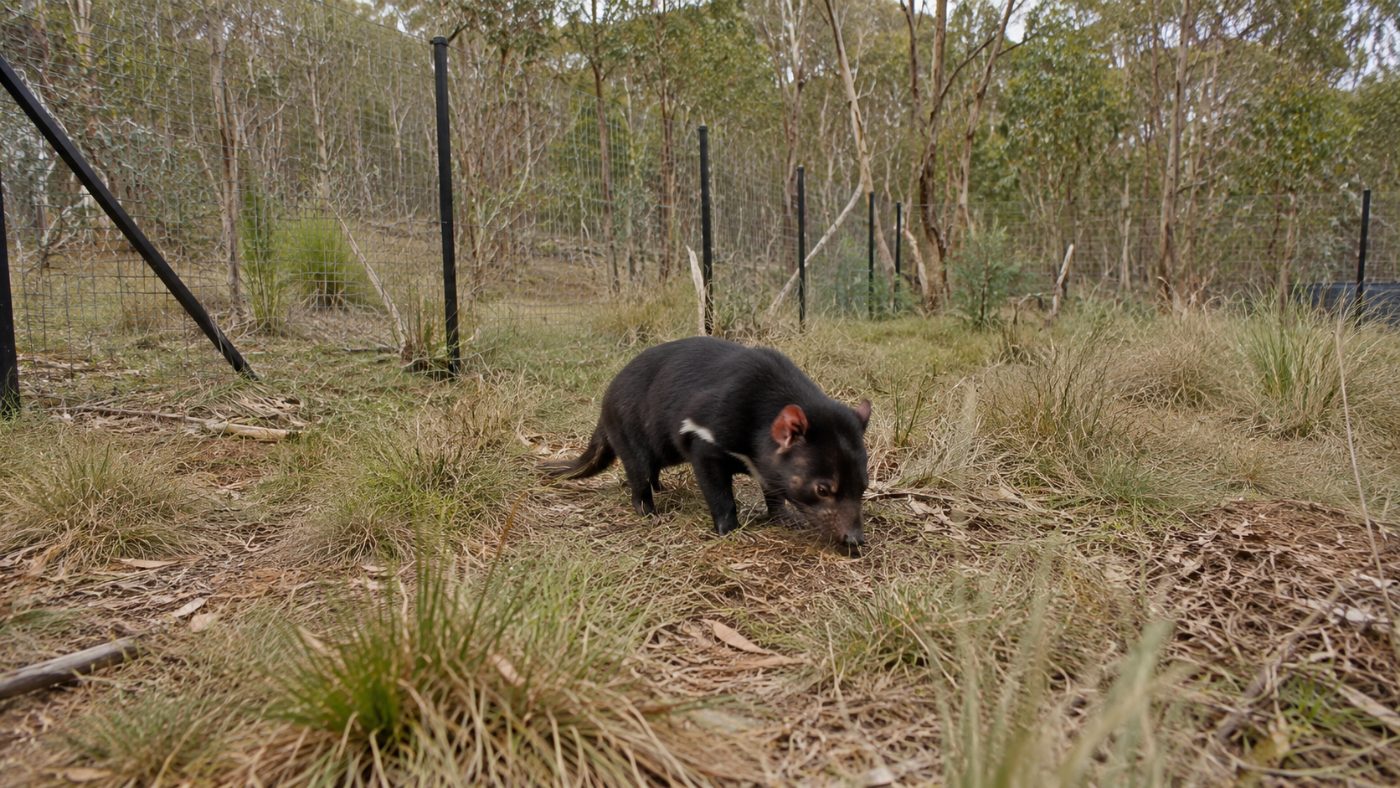
That is where the mainland project comes in. Aussie Ark, once known as Devil Ark, spent years near the Barrington Tops building up a large, healthy, disease-free population of captive devils. Then, in 2020, it let a group of them loose inside a vast predator-proof sanctuary, where the animals had to hunt, mate and raise young entirely on their own. The wild-born joeys of 2021 were the proof that they still could.
The plan has two purposes. The first is an insurance colony, a reservoir of devils safe from the facial cancer in case it ever sweeps the last of Tasmania. The second is a bigger ecological bet: a returning native predator might help hold back the feral cats and foxes that have driven so many of Australia's small mammals to extinction, restoring a missing piece of the continent's machinery.
The honest catch: it is an ark, not a release
It is worth being clear about what has and has not happened. These devils are not roaming free across New South Wales. They live inside a large fenced sanctuary, and letting them loose into the open mainland is a fraught idea, because devils could prey on vulnerable native species and collide with farms. This is a careful, contained rewilding, a controlled experiment rather than a wild homecoming.
The cancer, too, is far from beaten. It still tears through wild devils in Tasmania, the vaccines and treatments being tested remain experimental, and the arrival of that second transmissible tumour shows the threat is still evolving. For all the hope wrapped up in a few mainland joeys, the Tasmanian devil is nowhere near safe.
A glimmer in the gloom
And yet the devil keeps surprising everyone. Many Tasmanian populations that scientists once expected to be gone by now are still hanging on, and researchers have found the animals rapidly evolving genetic resistance to the cancer, with changes appearing in a handful of genes, several of them tied to the immune system. In a few cases tumours have even shrunk and vanished on their own. The species may, in its blunt and bad-tempered way, be learning to fight back.
A snarling little predator is surviving a cancer that should have erased it, while a backup colony quietly breeds on a mainland it lost three thousand years ago. Would you let a fierce native predator loose to repair an ecosystem, even if it ate some of the very animals you were trying to protect? Tell us what you think in the comments.