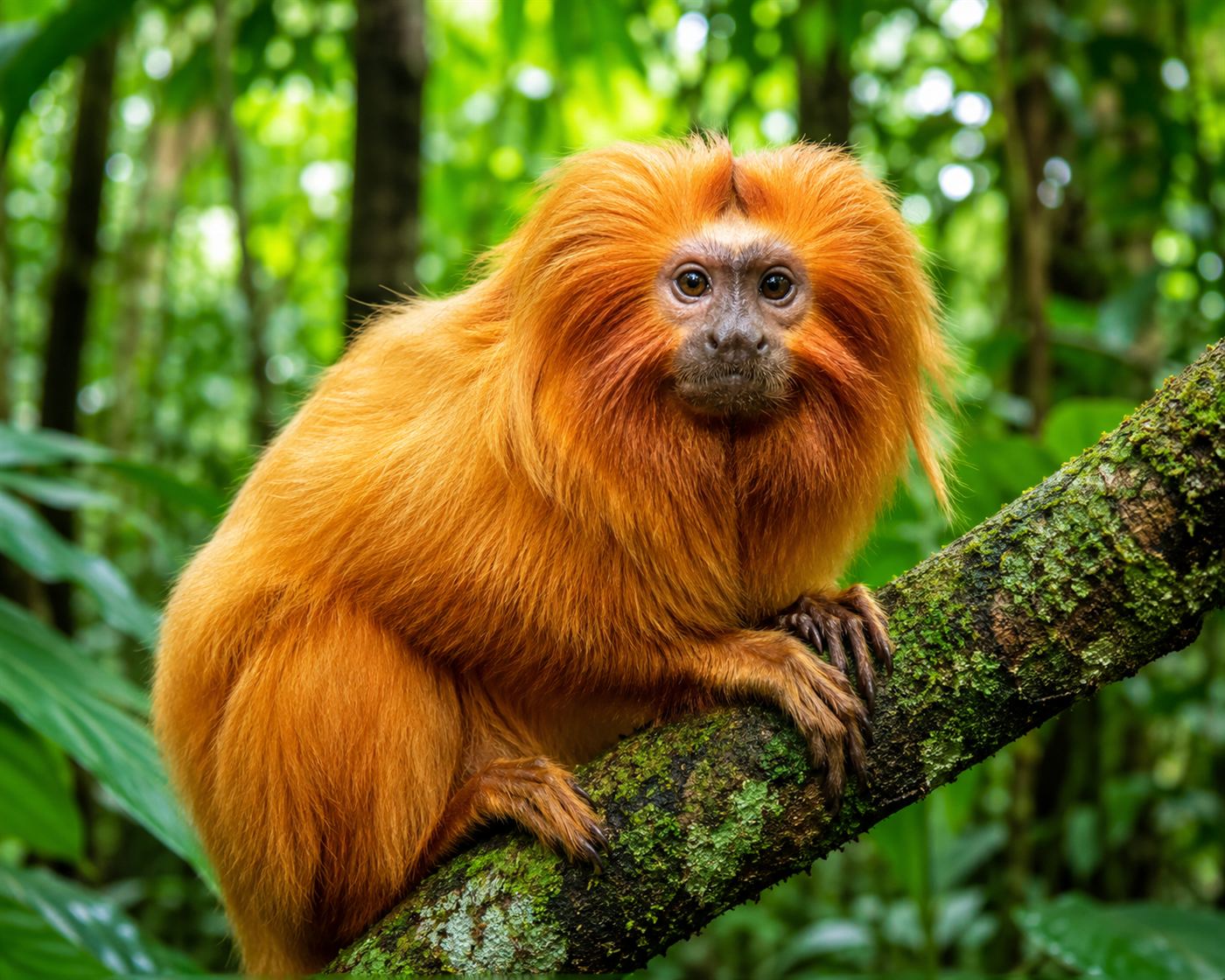
The golden lion tamarin weighs about 600 grams, fits in two cupped hands, and moves through the rainforest canopy with the kind of fluid confidence that looks like it was designed for this specific forest and no other. Which is almost exactly true. The golden lion tamarin recovery is one of conservation's most cited comebacks, and it started from almost nothing. The golden lion tamarin (Leontopithecus rosalia) exists only in Brazil's Atlantic Forest, a coastal rainforest that once stretched along more than 1.5 million square kilometers of the Brazilian coast. By the 1980s that forest had shrunk to about 12 percent of its original area, and the tamarin had shrunk with it.
In 1983 the wild population was counted at between 150 and 200 individuals. The species was one of the most endangered mammals on Earth, surviving in small fragments of the Atlantic Forest in the state of Rio de Janeiro while the forest around it continued to disappear to sugar cane, pasture, and urban sprawl.
The golden lion tamarin fell to 150-200 wild individuals by 1983 after the Atlantic Forest lost about 88 percent of its original cover. A captive breeding program across 140 zoos and a reintroduction effort at Poco das Antas reserve rebuilt the wild population to more than 4,500 by the 2020s, though the species still depends on fragmented forest and ongoing management.
How did the golden lion tamarin come so close to extinction?
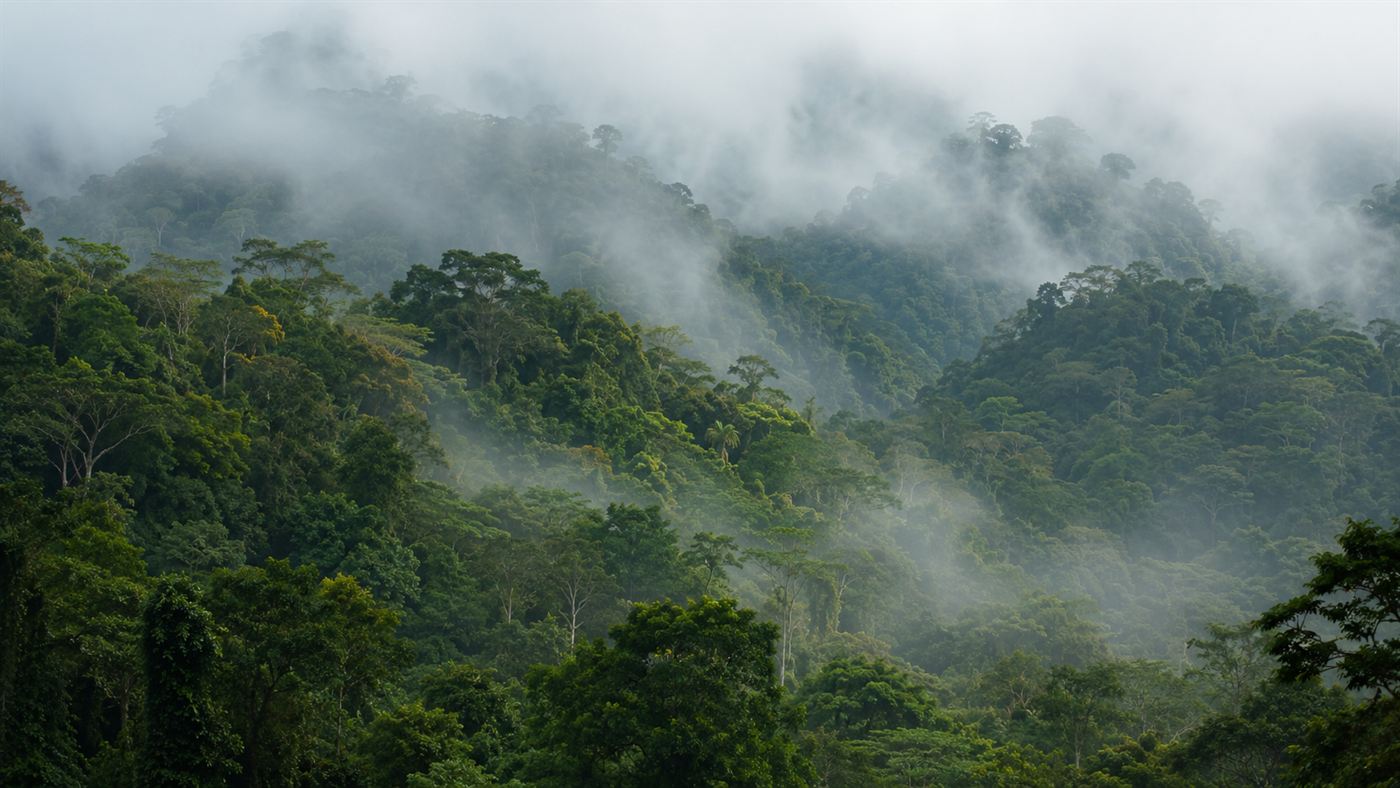
The Atlantic Forest is one of the world's biodiversity hotspots, home to roughly 20,000 plant species and thousands of animal species found nowhere else.
It is also one of the world's most destroyed ecosystems.
Deforestation in Brazil's coastal regions began with the Portuguese colonization in the sixteenth century.
By the twentieth century the expansion of sugar cane, coffee, cattle ranching, and eventually urban sprawl along Brazil's southeastern coast had reduced the Atlantic Forest to isolated fragments.
The golden lion tamarin, which needs old-growth forest with large trees and dense vines to survive, found itself confined to smaller and smaller patches.
The species was also captured for the illegal pet trade throughout the mid-twentieth century.
A tamarin's vivid orange coloring and small size made it attractive to collectors, and thousands were taken from the wild.
By the time the Brazilian biologist Adelmar Faria Coimbra-Filho began documenting the species in the 1960s, the golden lion tamarin was already in serious trouble.
Coimbra-Filho spent years traveling through the remnant forest patches of Rio de Janeiro state, counting what was left and publishing warnings that the species was headed for extinction.
In 1972 he and the American conservationist Russell Mittermeier organized an international conference in Washington that focused world attention on the primate's situation.
The conference marked the beginning of a coordinated international effort that would eventually span more than 140 zoos across 24 countries.
What made the captive breeding program for the golden lion tamarin unusual?
The captive breeding program for the golden lion tamarin, developed primarily by Devra Kleiman at the Smithsonian's National Zoo in Washington, was one of the most ambitious primate conservation efforts ever attempted.
By 1983 there were more golden lion tamarins in captivity across the world's zoos than there were in the wild.
The captive population included animals from the original wild population and animals that had been confiscated from illegal traders over the years.
The Smithsonian coordinated breeding across the global zoo population to manage genetic diversity, pairing animals from different institutions to avoid inbreeding.
This required a level of international coordination among zoos that was almost without precedent at the time.
But breeding golden lion tamarins in captivity revealed a problem that nobody had fully anticipated.
The animals born and raised in zoos were, in a functional sense, completely domesticated.
A tamarin raised in a zoo enclosure had never had to search for food, had never needed to navigate a forest, had never learned to recognize or flee from a hawk or a snake or a cat.
It knew what a keeper looked like, when feeding time was, and where the warm spot in its enclosure sat.
It did not know how to be a tamarin in a forest.
What was "wild school" for a golden lion tamarin?
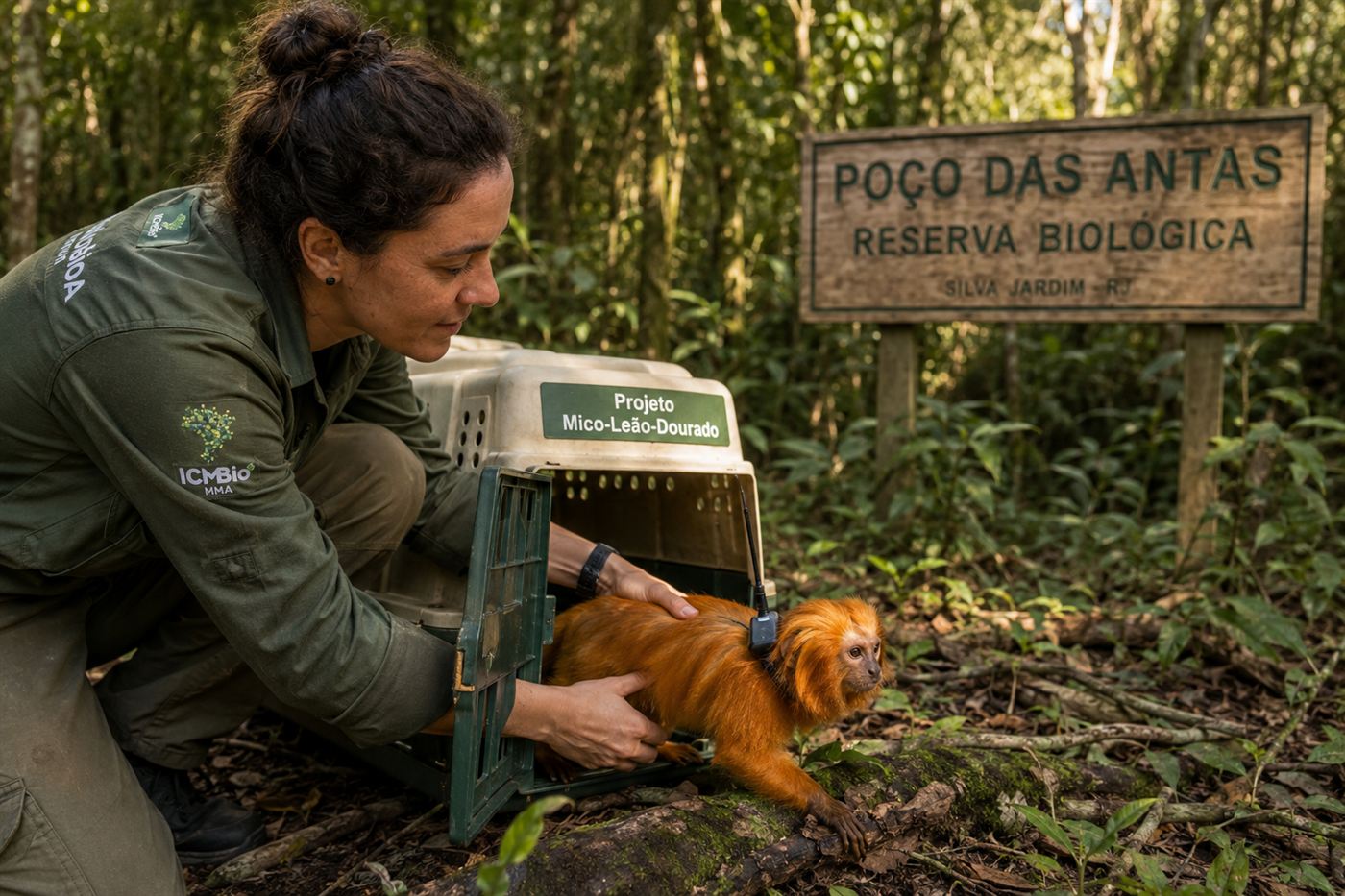
The reintroduction program that began at the Poco das Antas Biological Reserve in Rio de Janeiro state in 1984 quickly confronted this problem.
The first captive-bred tamarins released into the forest were unprepared for almost everything about it.
They fell.
They could not locate food efficiently.
They did not know how to detect or escape predators.
They approached humans with the same comfortable familiarity they had learned in zoos.
The mortality rate in the early releases was high, and it became clear that releasing zoo-bred animals directly into the forest was not going to work.
The team at Poco das Antas, led by Benjamin Beck of the Smithsonian, developed what came to be called pre-release training: a systematic effort to teach captive-bred tamarins the skills they would need to survive in the wild before they were released.
Before departure from the zoo, tamarin families were moved into outdoor naturalistic enclosures where they had to find hidden food, navigate complex three-dimensional spaces, and encounter controlled versions of predator stimuli.
After release, field teams continued to supplement the tamarins' food supply and monitor their survival, gradually reducing support as the animals became more competent.
It was a kind of extended school for a species that had forgotten how to be itself.
The program was expensive, labor-intensive, and often heartbreaking when animals died despite all the preparation.
But it worked.
How many golden lion tamarins are alive today?
The golden lion tamarin reintroduction program is now considered one of the most successful primate recovery efforts in conservation history.
Between 1984 and 2000, approximately 146 golden lion tamarins were released at Poco das Antas.
By 2003, the wild population had grown to roughly 1,000 individuals, with more than 30 percent of the wild population descended from reintroduced animals.
By the early 2020s the wild population stood at approximately 4,500 animals, a number that would have seemed impossible from the vantage point of 1983.
The captive population across the world's zoos, carefully managed for genetic diversity, contains an additional 500 or so animals.
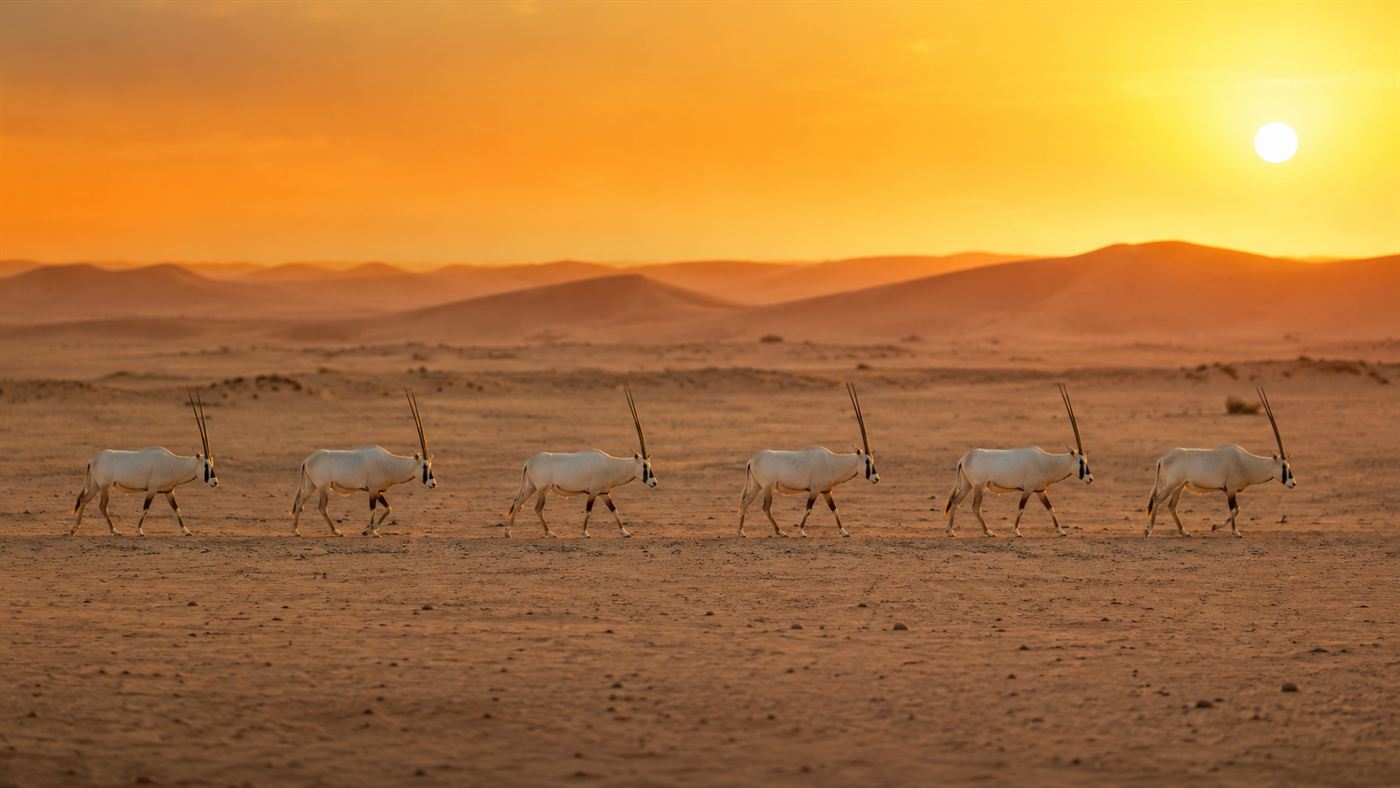
The recovery of the golden lion tamarin is cited alongside the California condor and the Arabian oryx as evidence that captive breeding programs can genuinely reverse species collapse, when the effort is sustained and the science is right.
The program also succeeded in changing the relationship between the golden lion tamarin and the communities living near the remaining Atlantic Forest.
Local landowners who had previously seen the tamarin as irrelevant to their lives were enrolled as partners in forest protection, paid to maintain forest corridors between fragments and to protect tamarin families on their land.
This shift from top-down conservation to community-based partnership is considered one of the program's lasting contributions to the field.
Why does the golden lion tamarin recovery still need managing?
The Atlantic Forest covers roughly 12 to 15 percent of its original area.
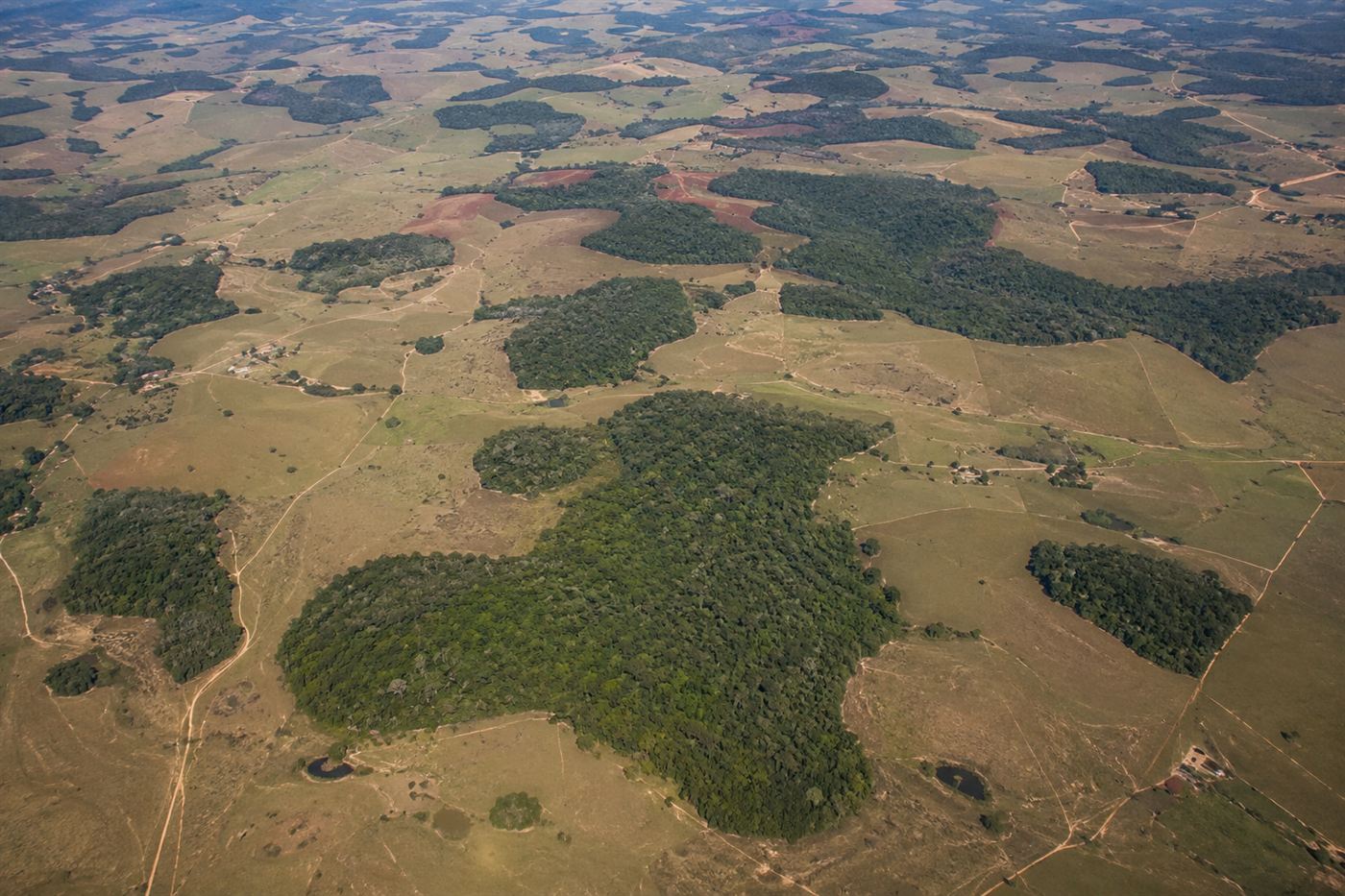
What remains is not a single continuous forest but a mosaic of isolated fragments, many of them too small and too separated from each other for tamarin populations to exchange individuals and maintain genetic diversity on their own.
Golden lion tamarins in different forest fragments cannot reach each other without crossing open farmland, which they rarely do and which exposes them to predators and roads when they try.
The long-term survival of the species depends on connecting those fragments with forest corridors, a process that requires convincing private landowners across a heavily developed landscape to plant and maintain trees.
This work is ongoing, painstaking, and dependent on continued funding and political will.
Climate change adds an additional layer of uncertainty.
The Atlantic Forest is expected to shift under warmer and drier conditions in ways that may reduce the area of habitat suitable for tamarins and alter the food resources they depend on.
The species also carries the genetic legacy of a severe bottleneck.
All living golden lion tamarins descend from a relatively small founder population, and despite the best efforts of zoo breeding programs to manage genetic diversity, the species is less genetically varied than it would have been before the population collapse.
The kakapo in New Zealand faces a similar genetic narrowing after its own bottleneck, and managers of both species must make careful decisions about which animals breed to maximize diversity in each generation.
The honest catch
The recovery of the golden lion tamarin is real and remarkable.
Going from 150 animals in the wild to more than 4,500 in four decades, using a program that involved 140 zoos across 24 countries and required biologists to literally teach animals how to live in a forest, is one of conservation's genuine achievements.
But the species is not secure.
The Atlantic Forest, one of the most biodiverse and most destroyed biomes on Earth, has not stopped shrinking.
The golden lion tamarin's range in Rio de Janeiro state remains fragmented and vulnerable to additional deforestation, illegal clearing, and the slow attrition of climate change.
The population of 4,500 sounds large compared to 150, but it is spread across a small and fragmented landscape and is not yet self-sustaining in the sense that it could survive without active management of habitat corridors, genetic monitoring, and occasional intervention.
The program that saved the tamarin requires people and money to keep running.
The Costa Rica payment-for-ecosystem-services model shows that communities can be paid to maintain forest, but sustaining that commitment across private land in a developing country for decades is not guaranteed.
What the golden lion tamarin's story proves is that species can be pulled back from the edge by determined and creative science, even when the animals themselves have forgotten how to be wild.
What it has not yet proven is that the forest those animals need will still be there in fifty years.
When you look at a golden lion tamarin moving through the canopy with that orange flash of fur, what does the state of the Atlantic Forest around it make you think about the conservation commitments we're actually prepared to keep? Leave a comment below.
Sources