Hunters wiped the Arabian oryx from its last wild territory in 1972, nine survivors sat in a Phoenix zoo, and those nine became the founders of a living species
The Arabian oryx was declared extinct in the wild in 1972, the first large mammal to reach that status in the modern era. A wildlife conservation operation had been quietly running for a decade by then, collecting the animals that hunters were about to eliminate. What happened next, the Arabian oryx recovery, became the template for every captive breeding rescue that followed.
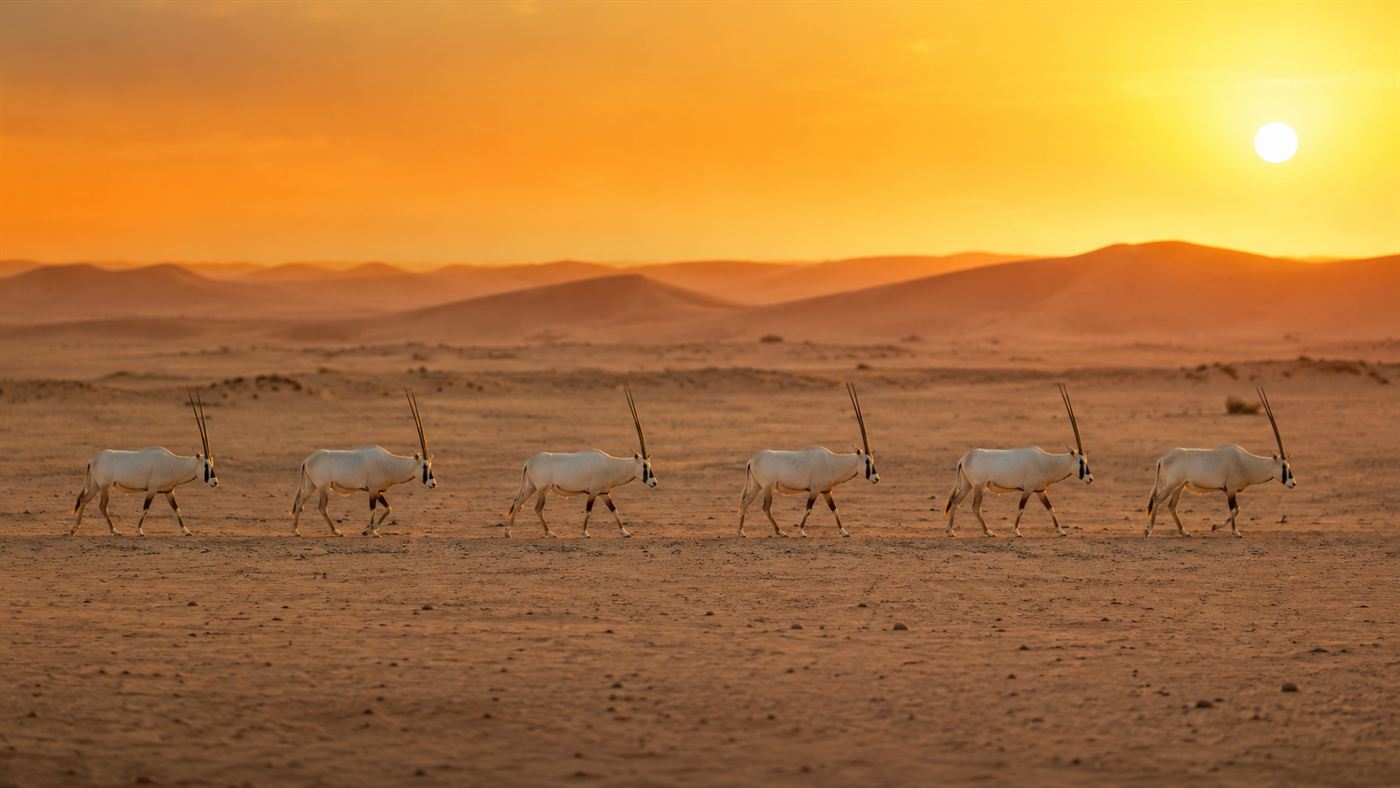
The Arabian oryx once ranged from Egypt to Mesopotamia. By 1972 the last wild herd had been shot. Today more than 1,200 live free across Oman, Saudi Arabia, Jordan, and Israel. Illustration: Watts & Wild.
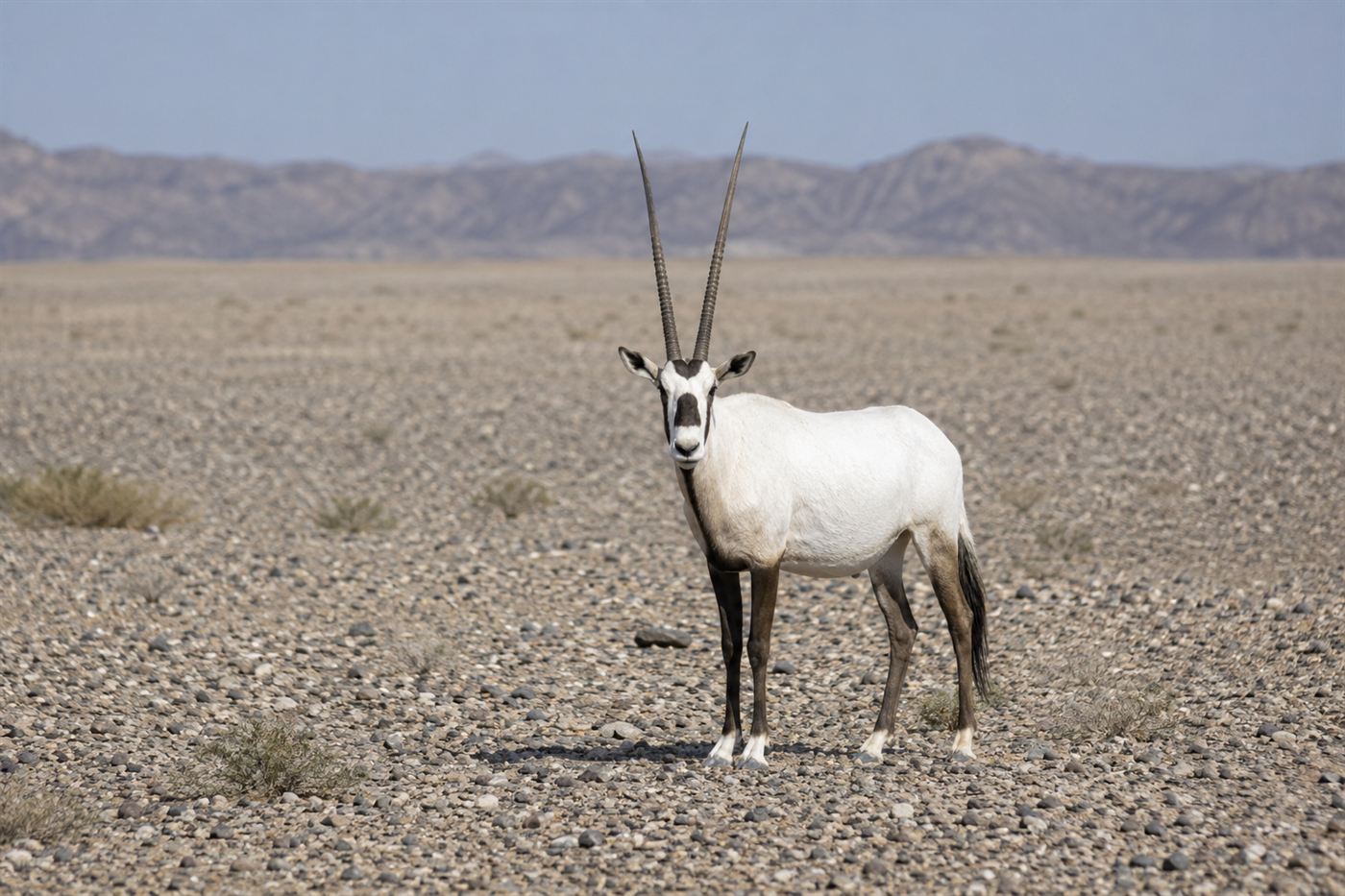
The Arabian oryx is a medium-sized white antelope with two long straight horns, built for the desert: it can go weeks without drinking, it detects rain from dozens of kilometers away and walks toward it, and it copes with temperatures that kill most large animals. For thousands of years it crossed the Arabian Peninsula, the Sinai, and the Levant in herds that nomads tracked with reverence. Some historians believe the oryx viewed from the side, with one horn obscuring the other, gave rise to the unicorn myth.
By the middle of the twentieth century, the combination of firearms, motorized vehicles, and unrestricted hunting had compressed the Arabian oryx into a narrow refuge in southern Oman. In 1960, a convoy of hunters from Qatar shot an entire herd in a single day. In 1962, another convoy killed most of what remained. In January 1972 the last known wild Arabian oryx was shot in the Jiddat al-Harasis, a flat gravel plain in central Oman. The IUCN declared the species extinct in the wild.
The Arabian oryx is a white antelope that was declared extinct in the wild in 1972 after the last herd was eliminated in Oman. Operation Oryx, launched in 1962 by the Flora and Fauna Preservation Society, had already collected nine survivors and moved them to Phoenix Zoo in Arizona. From those nine animals, a wildlife reintroduction program rebuilt the species. Today more than 1,200 Arabian oryxes live free across the Arabian Peninsula.
How did the Arabian oryx go extinct in the wild?
The decline of the Arabian oryx followed a pattern that repeated itself across the twentieth century.
The animal had been hunted for millennia, but hunting on foot or horseback could not extinguish a species.
The introduction of the rifle changed the equation.
Then came the motorized vehicle, and the change became catastrophic.
A Land Rover or a truck could follow the oryx across terrain that no horse could manage.
Hunting parties from Kuwait, Qatar, and Saudi Arabia entered Oman in large convoys in the 1950s and 1960s, sometimes with hundreds of vehicles and automatic weapons.
The January 1960 Qatar convoy is documented in contemporaneous reports as having involved at least 300 vehicles.
It spent three weeks in the field and killed most of the oryx population of the northern Jiddat.
The oryx that remained retreated deeper into the Jiddat al-Harasis, the last place remote and inhospitable enough to offer any cover.
By 1961 there were perhaps 100 Arabian oryxes left in the wild.
By early 1972, based on surveys by the naturalist Ralph Daly, the population was estimated at fewer than 10.
In January 1972 the last confirmed group was shot.
There is no photograph of the last wild Arabian oryx.
There is only the absence of further sightings, and then the IUCN declaration.
What was Operation Oryx and who ran it?
The plan that would eventually save the Arabian oryx had been set in motion before the species disappeared from the wild.
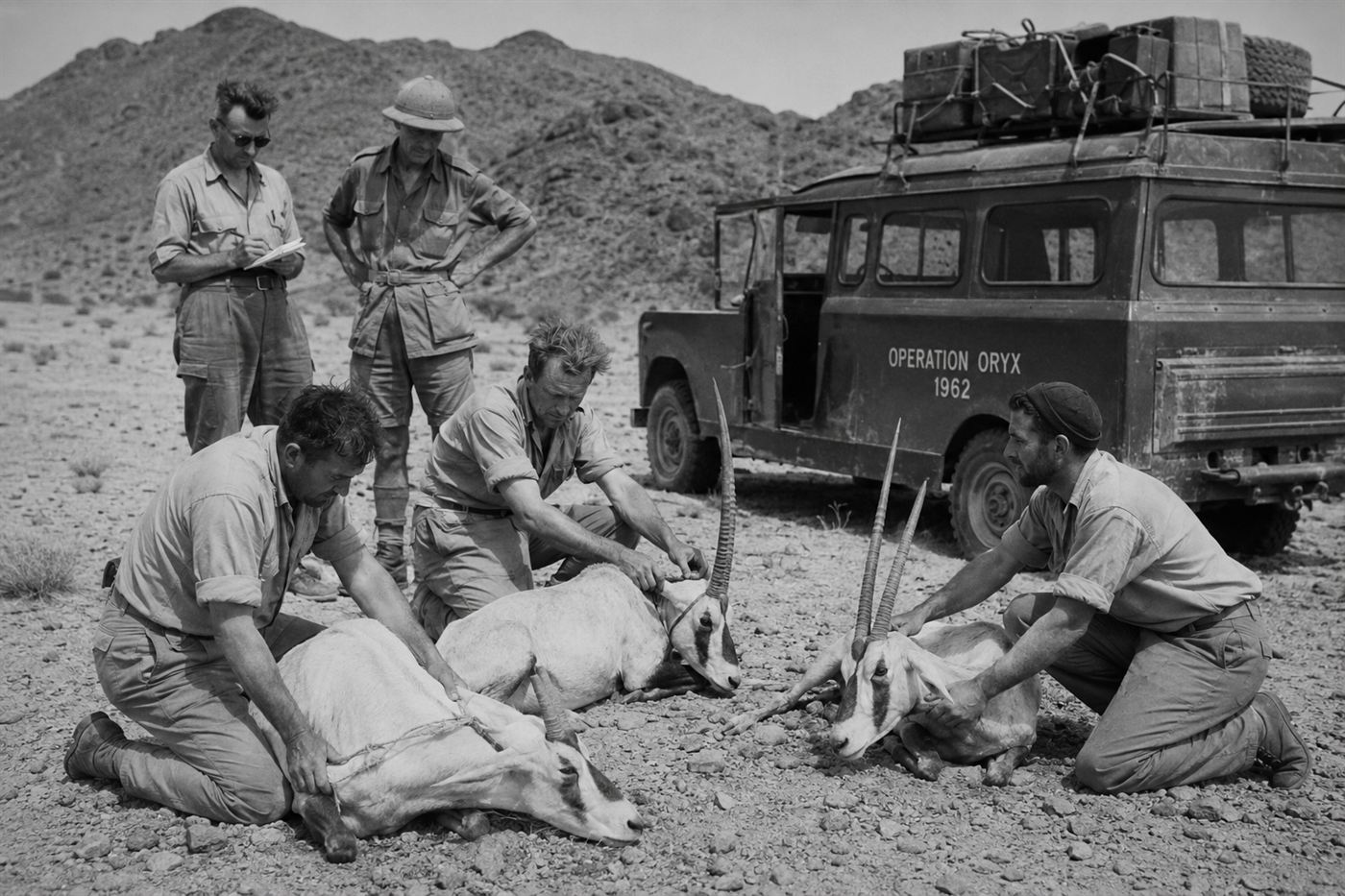
In 1961 the Flora and Fauna Preservation Society, a British wildlife conservation organization, decided that the only way to guarantee the oryx's survival was to get a breeding group into captivity before there were none left to capture.
They asked Major Ian Grimwood, a British game warden with extensive experience in East Africa, to lead the operation in Oman.
Grimwood traveled to the Jiddat in March 1962 with a small team and spent weeks in brutal conditions tracking the remaining animals.
He captured three: two females and a male.
Later in his account of the operation, Grimwood wrote that capturing the last survivors of a species was the most distressing work he had done in his life.
He knew these three might be among the last wild Arabian oryxes on Earth.
The three Omani animals were joined by four others donated by the Saudi government and one from the Ruler of Kuwait, plus an animal from the London Zoo collection.
The nine animals that would become the Operation Oryx founding population arrived at Phoenix Zoo, Arizona, in 1963.
The choice of Phoenix was deliberate.
The Sonoran Desert surrounding the city has summer temperatures and arid conditions not entirely unlike parts of the Arabian Peninsula.
The oryx, the logic ran, might adapt more easily to a desert zoo than to a temperate European facility.
How did nine zoo animals build a living species?
The Operation Oryx founders began breeding at Phoenix Zoo in 1963.
The wildlife conservation program expanded to other institutions over the following years.
San Diego Zoo received animals, as did facilities in Los Angeles and elsewhere.
The captive breeding program was run as a coordinated "World Herd," with the studbook kept by Phoenix Zoo to track genetics and prevent inbreeding across the different collections.
The Arabian oryx proved to be a good breeder in captivity.
By the early 1970s, when the last wild animals were disappearing in Oman, the captive population had grown to several dozen. It is a pattern that has saved other species too, like Pere David's deer, which went extinct in China and survived only in an English park.
By 1980 there were more than 200 in managed care across North America.
The captive breeding program had bought the species the time it needed.
The question was whether there was anywhere left to put them back.
In Oman, the answer came from an unexpected source: the Sultan Qaboos bin Said, who came to power in 1970, made wildlife conservation a part of the country's national identity.
The Jiddat al-Harasis, where the last wild Arabian oryxes had roamed, was gazetted as the Jaaluni Protected Area.
The Harasis people, semi-nomadic herders who had lived alongside the oryx for generations and who considered the animal sacred, were recruited as rangers.
The wildlife reintroduction of the Arabian oryx to Oman began in January 1982.
Four animals were released from a holding pen in the Jaaluni reserve.
They walked out into the flat gravel desert where the last wild oryx had been shot a decade earlier.
What happened when the oryx went back to the desert?
The wildlife reintroduction worked.
The released Arabian oryxes moved into the desert, formed small herds, and began to breed.
More animals were released in subsequent years.
By the mid-1990s the Omani population had grown to around 400 individuals.
Other countries launched their own wildlife reintroduction programs using animals from the World Herd population.
Saudi Arabia established a breeding center at Taif.
Jordan began releasing animals into the Wadi Rum desert, where the animals had not been seen since the early twentieth century.
Israel reintroduced Arabian oryxes to the Negev, using a population managed at the Hai Bar Yotvata reserve near Eilat.
In 2011 the IUCN reclassified the Arabian oryx from Extinct in the Wild to Vulnerable, marking the first time in the history of the Red List that a species had moved from the most severe category of extinction in the wild back to a category where wild populations were deemed self-sustaining.
It was, by the standards of wildlife conservation, a complete reversal.
The pattern established by Operation Oryx became the blueprint for what followed: Carl Jones applied the same logic to the Mauritius kestrel, which had reached four individuals in the wild before a captive breeding and release program brought it back to 350, and the kakapo recovery program in New Zealand now monitors every individual bird with radio transmitters, manages island sanctuaries, and artificially inseminates birds to preserve genetic diversity.
Why did the Arabian oryx recovery almost fail a second time?
The story of the Arabian oryx does not have a clean ending.
By 2007 the Omani wild population had grown to approximately 400 animals.
Then it collapsed again.
Poachers, working on commission for private collectors in Gulf states, entered the Jaaluni reserve and began capturing animals.
The Harasis rangers were overwhelmed.
By 2011, the wild Omani population had fallen from 400 to fewer than 65 individuals.
The Oman government responded by increasing ranger presence, installing camera traps, and cooperating with neighboring states to disrupt the illegal trade.
The Omani population has since partially recovered.
Other wild populations in Saudi Arabia, Jordan, Israel, and the United Arab Emirates continued growing during this period.
The global wild population is now estimated at more than 1,200 individuals.
The IUCN relisted the species as Vulnerable in 2011 and that status has held.
The lesson of the second near-collapse is the same as the first: the biological recovery of a species is only as durable as the political will to protect it.
A wildlife reintroduction can bring animals back.
It cannot remove the demand that drove them to extinction in the first place.
For more on recoveries from the edge, see our Wild section.
The honest catch
The Arabian oryx recovery is real, and the 2011 IUCN reclassification is the most consequential step forward in the history of the Red List.
But the picture is more complicated than the headline numbers suggest.
Most of the world's wild Arabian oryxes live in fenced or semi-fenced protected areas, not in a fully open desert where they control their own movements.
Some wildlife conservation scientists argue that animals managed this closely should be classified differently from truly free-ranging populations.
The genetic base of the entire living species traces back to those nine founders.
Nine individuals is an extremely narrow bottleneck, and the loss of genetic diversity that occurred between 1963 and the gradual growth of the herd has left the species more vulnerable to disease and less adaptable than a species with a healthy genetic pool.
The captive breeding program was meticulous in managing the studbook to avoid close inbreeding, but it could not invent genetic diversity that was no longer there.
The illegal trade in Arabian oryxes for private collectors continues.
Several Gulf states have legal markets for captive oryxes as status symbols, and the line between legal captive animals and illegally captured wild ones is not always enforced.
None of this diminishes what Operation Oryx achieved in 1962 or what Phoenix Zoo built over the following two decades.
It means that conservation is a permanent commitment, not a single intervention.
If the recovery of the Arabian oryx required keeping nine animals alive in a zoo for twenty years before there was anywhere safe to return them, what does that say about how early we need to start before a species reaches the point of no return?
Tell us in the comments.
More from Watts & Wild
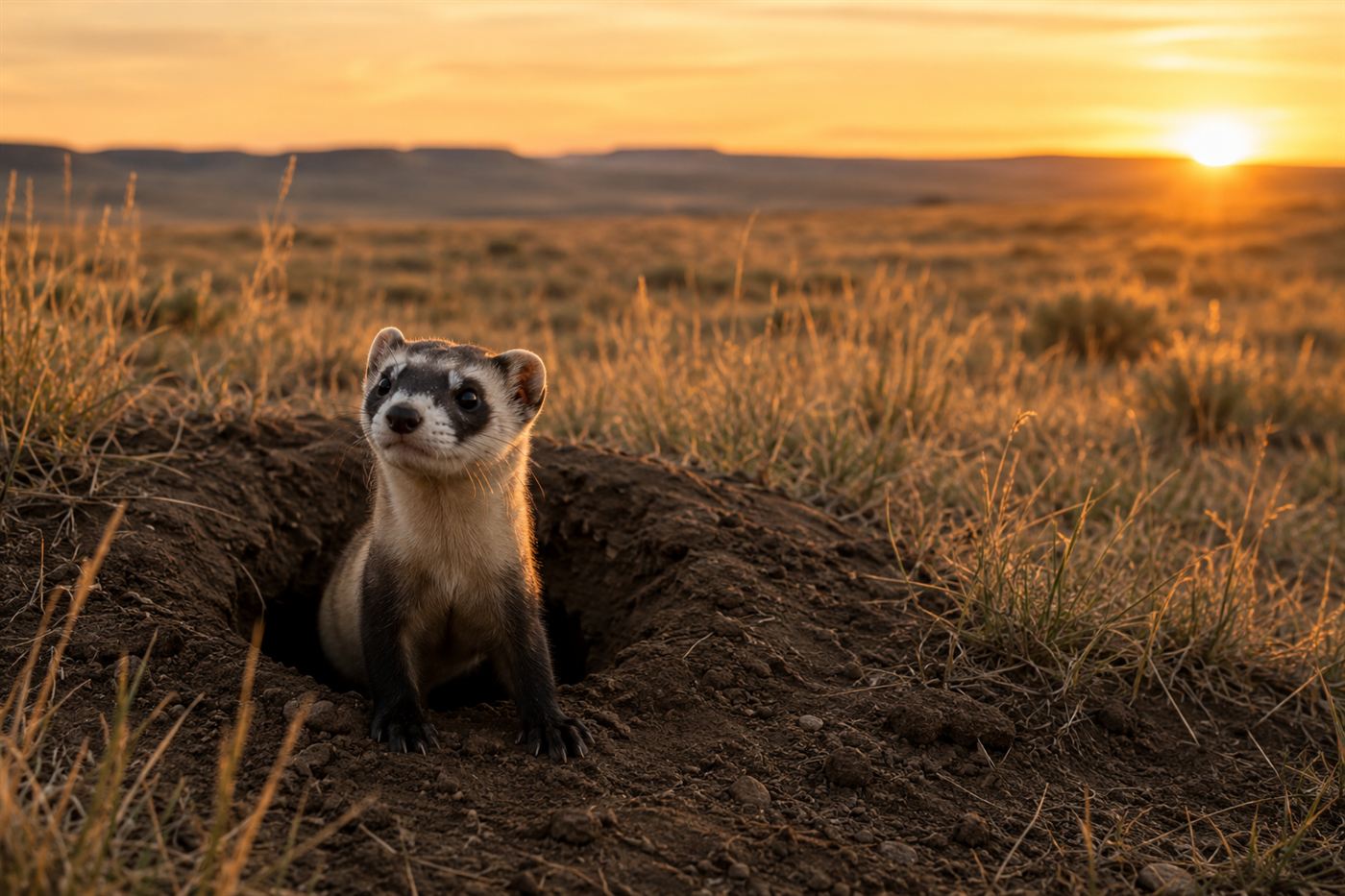 A Wyoming rancher's dog found the last 130 black-footed ferrets alive in 1981, decades after the species was declared extinct
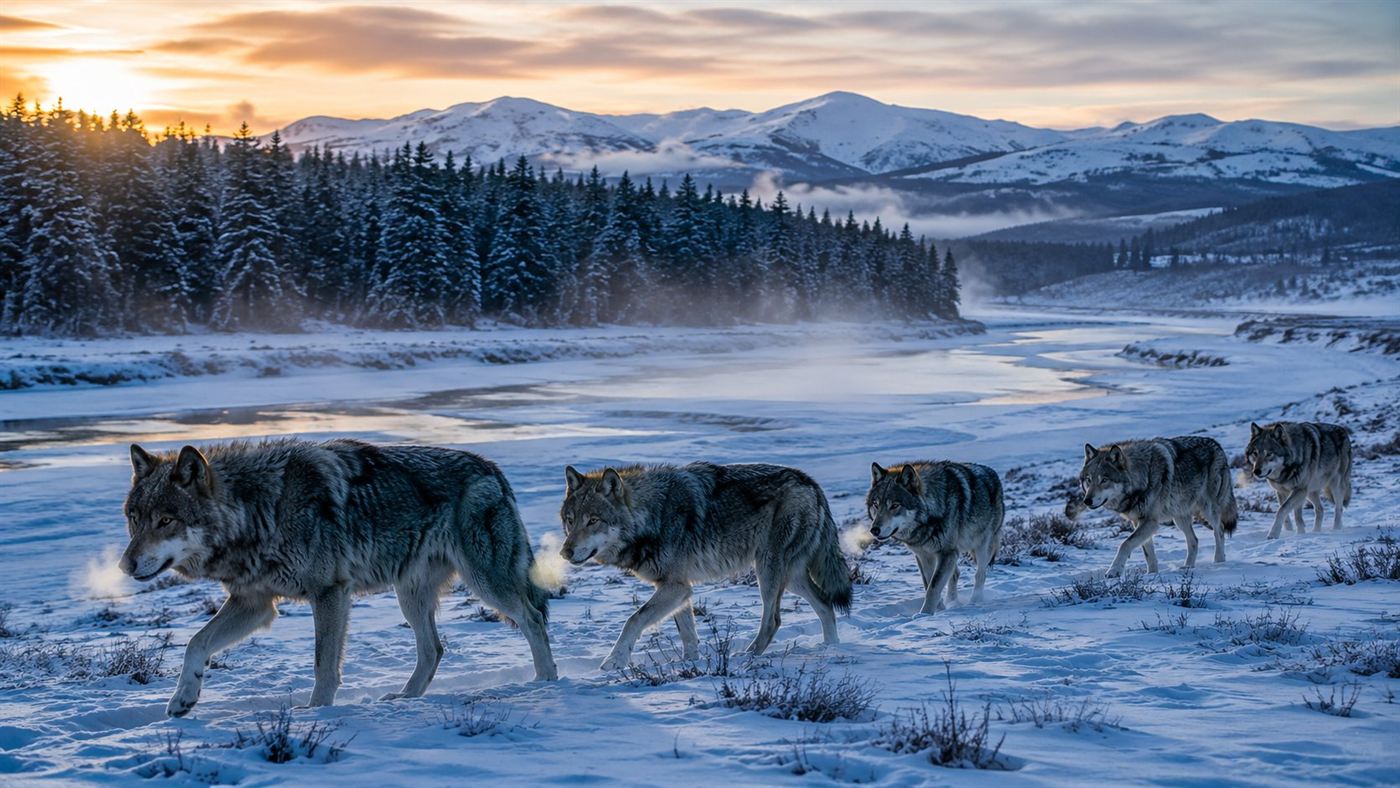 In 1995 fourteen grey wolves were released into Yellowstone after a 70-year absence, and the trophic cascade that followed changed how the rivers of the park ran.
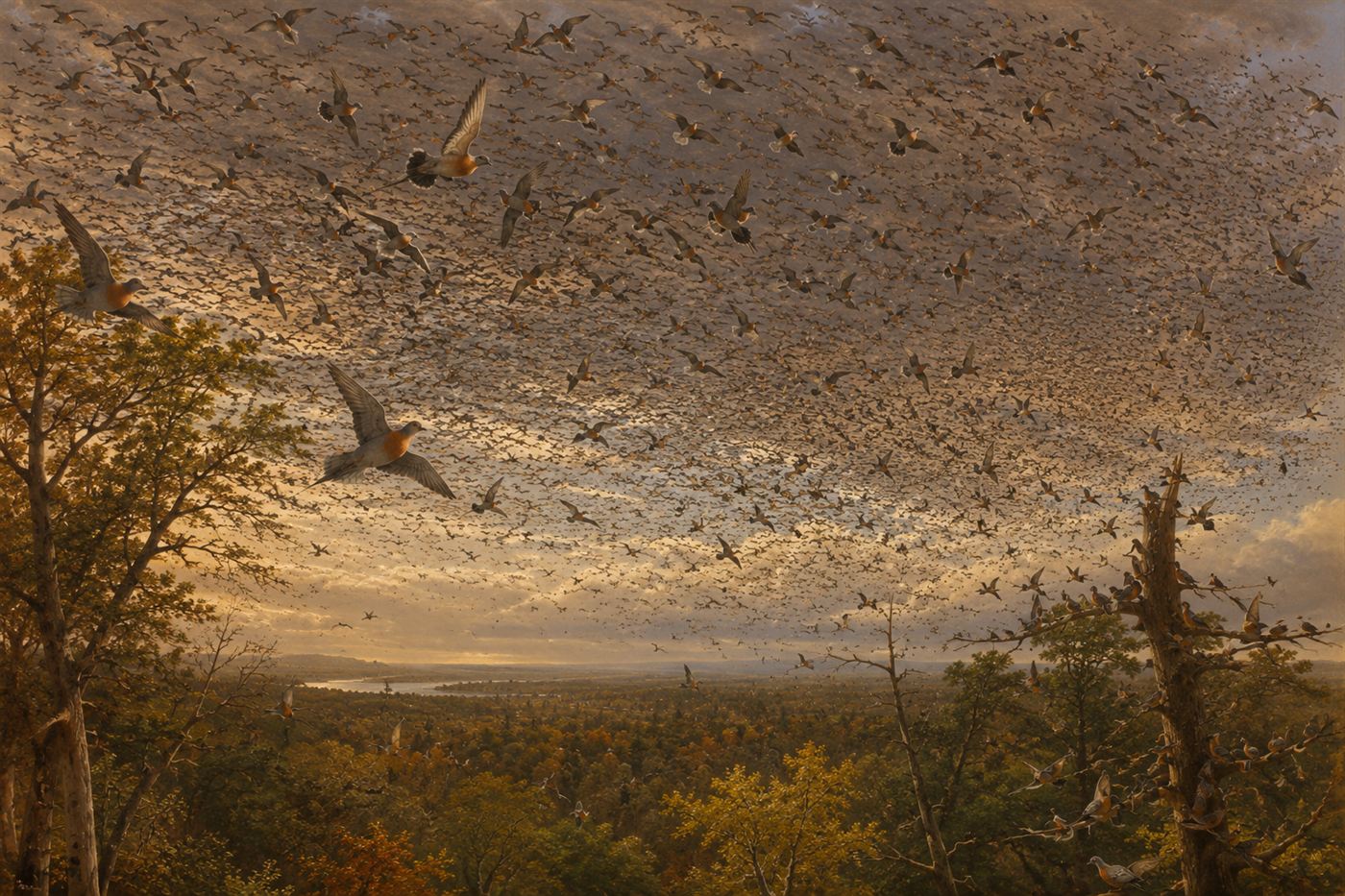 The passenger pigeon went from five billion birds to zero in fifty years. The last one died alone in Cincinnati Zoo in 1914.
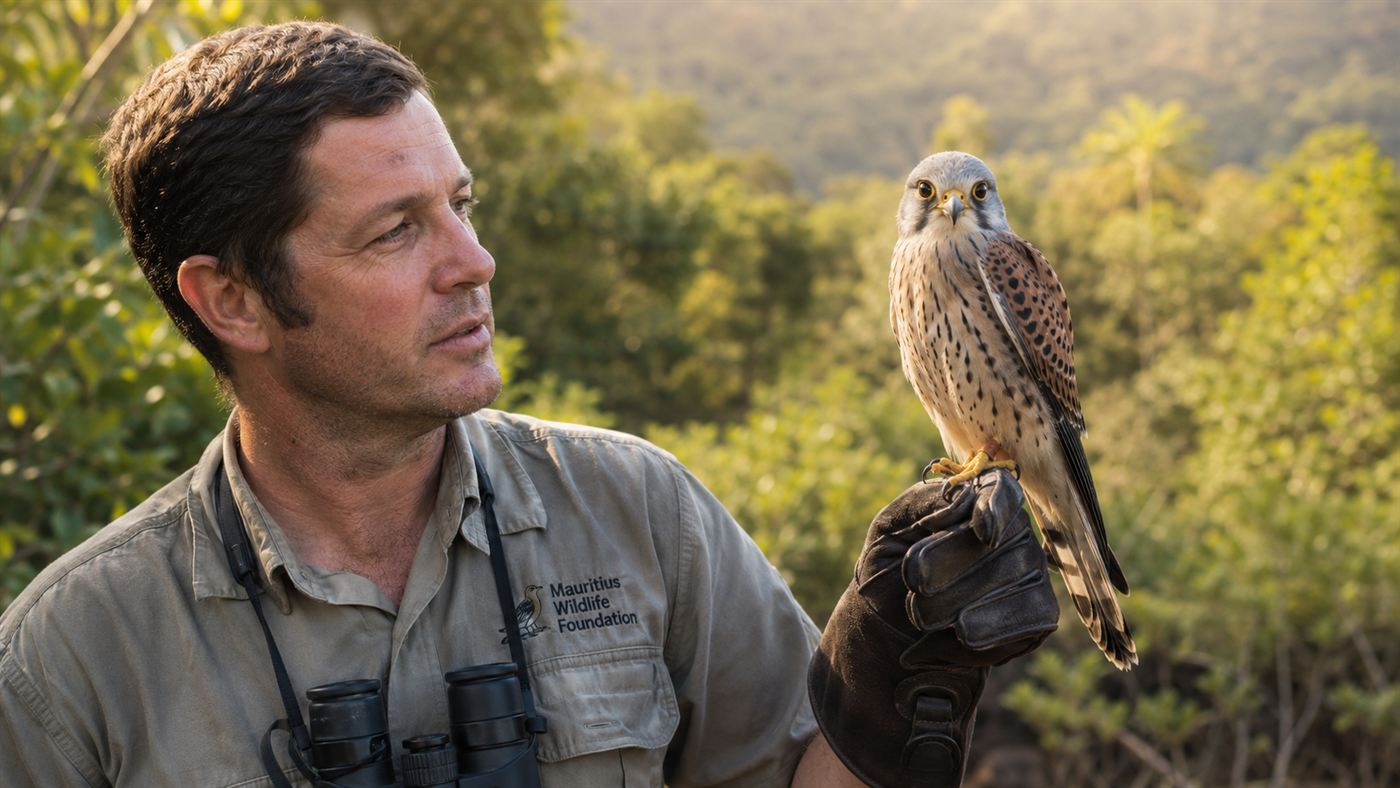 The Welsh ornithologist who spent 45 years turning four Mauritius kestrels into 350
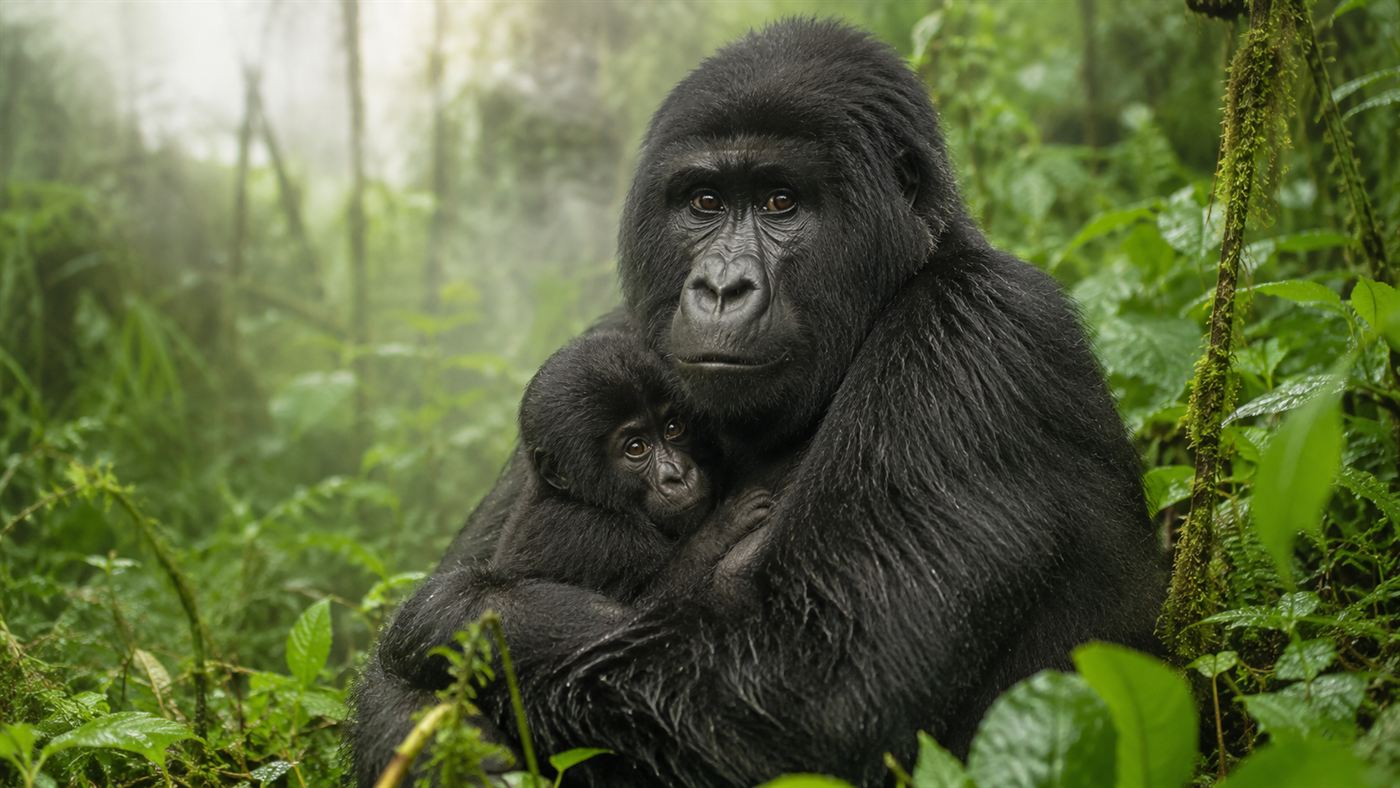 Mountain gorillas fell to 250 in 1981 and crossed a thousand without anyone quite expecting it