A dazzling blue butterfly once lived only in the sand dunes of San Francisco, and the Xerces blue butterfly became the first insect in America that we know humans drove to extinction
It was the color of a summer sky with wings, and it existed nowhere else on the planet. Then a growing city rolled over the only dunes it had ever known. The story of the Xerces blue butterfly is the story of how America first learned that even an insect can be lost forever.
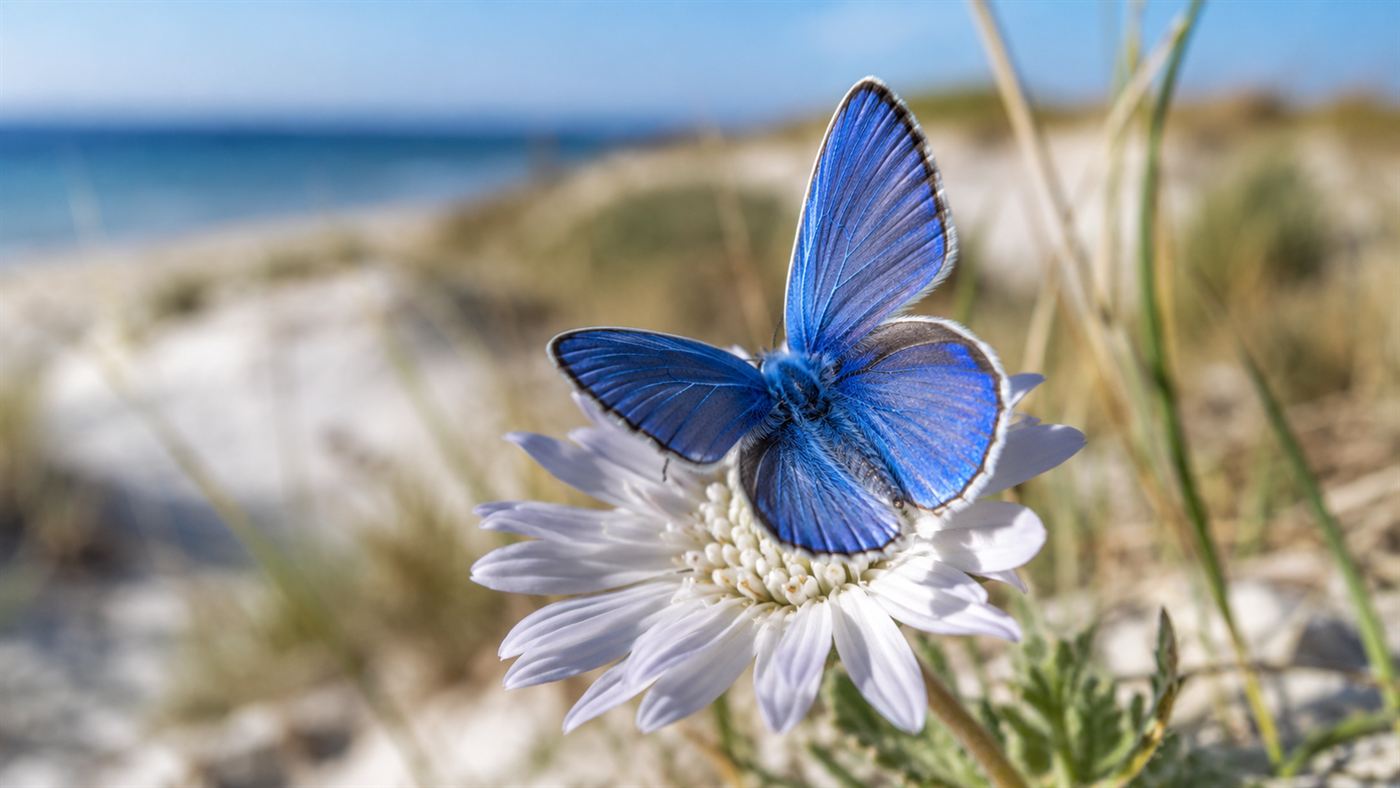
The Xerces blue shimmered with a blue found nowhere else in the world. Illustration: Watts & Wild.
We tend to imagine extinction as something that happens to giants, the mammoth, the dodo, the great whales hunted to the edge. It is harder to picture losing something as small and quiet as a butterfly. Yet a butterfly is exactly where the modern American reckoning with human-caused extinction begins, on a patch of windblown sand at the western edge of a booming city.
The Xerces blue butterfly was tiny, jewel-bright, and utterly local. It lived in the coastal dunes of San Francisco and, as far as anyone knows, nowhere else in the universe. By the middle of the twentieth century it was gone, the first insect in North America known to have been wiped out by people. Its disappearance changed how a whole country thought about the small lives underfoot.
The short version: The Xerces blue was a small blue butterfly found only in San Francisco's coastal dunes. As the city paved those dunes for housing, the plants and ants it depended on vanished, and the butterfly with them. Last seen in 1943, it became the first insect in North America known to be driven extinct by humans, and later gave its name to a leading insect-conservation group.
A blue that lived in one city
The Xerces blue was a small member of the gossamer-winged butterflies, the same delicate family as the common blues you might see flickering over a meadow. But this one was special. The males shimmered with an iridescent blue, and the whole species was confined to the sand dunes of San Francisco's Sunset District and the western edge of the peninsula, a strip of coast it never left.
Like many of its relatives, it lived a life tangled up with others. Its caterpillars fed on specific native dune plants, low-growing lotus and lupine, and struck up a bargain with local ants, which tended the larvae in exchange for a sugary secretion. Take away the dune, and you did not just remove a butterfly. You unravelled a whole small web of plant, insect and ant that had taken thousands of years to weave.
How a city erased a species
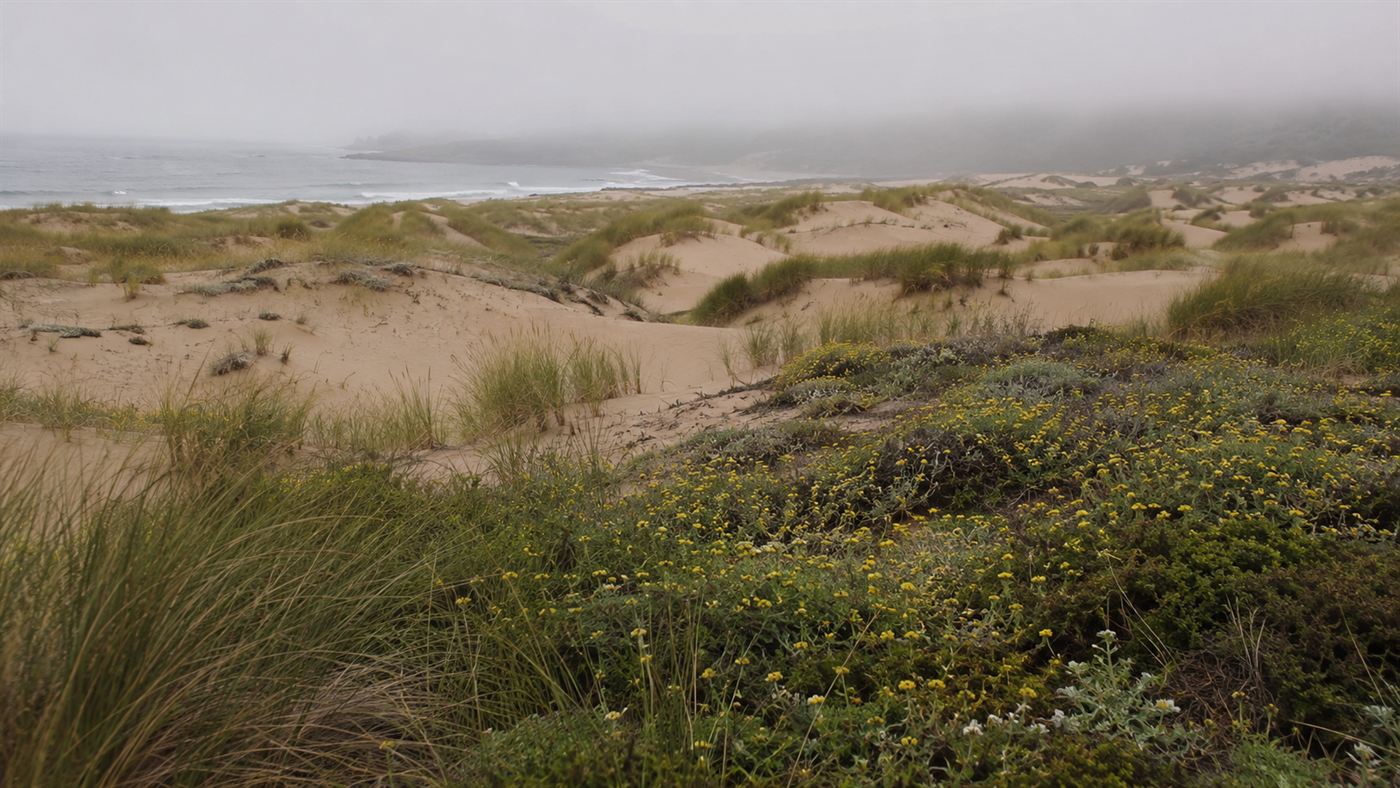
San Francisco in the early twentieth century was growing fast, and the empty-looking dunes on its western flank were seen as land waiting to be used. Street by street, block by block, the sand was flattened, planted over and built upon as the Sunset District filled with houses. The native dune plants disappeared under lawns and pavement, and with them went the ants and the exact conditions the Xerces blue needed to breed.
The butterfly did not vanish in a single dramatic moment. It simply had fewer and fewer places to be, until there were none. Collectors, who had once gathered its bright wings by the dozen, watched the numbers thin year after year. The last confirmed Xerces blue was seen in 1943, on a surviving scrap of dune at the Presidio's Lobos Creek, land that is now part of a national park. After that, no one ever saw a living one again.
What the Xerces blue butterfly taught America
As documented on Wikipedia, the Xerces blue butterfly is regarded as the first insect in North America known to have been driven extinct by human activity. That distinction gave it a weight far beyond its size. It was proof, close to home and impossible to blame on a distant frontier, that ordinary city-building could erase a species that existed nowhere else.
The loss lodged in the mind of a young naturalist named Robert Michael Pyle. In 1971 he founded an organization to defend the small, overlooked creatures the world tended to ignore, and he named it after the vanished butterfly. The Xerces Society became one of the best-known groups fighting to protect insects and their habitats, its very name a permanent reminder of what carelessness had cost. The dead butterfly had become a rallying cry for the living ones.
The DNA that settled a 90-year argument
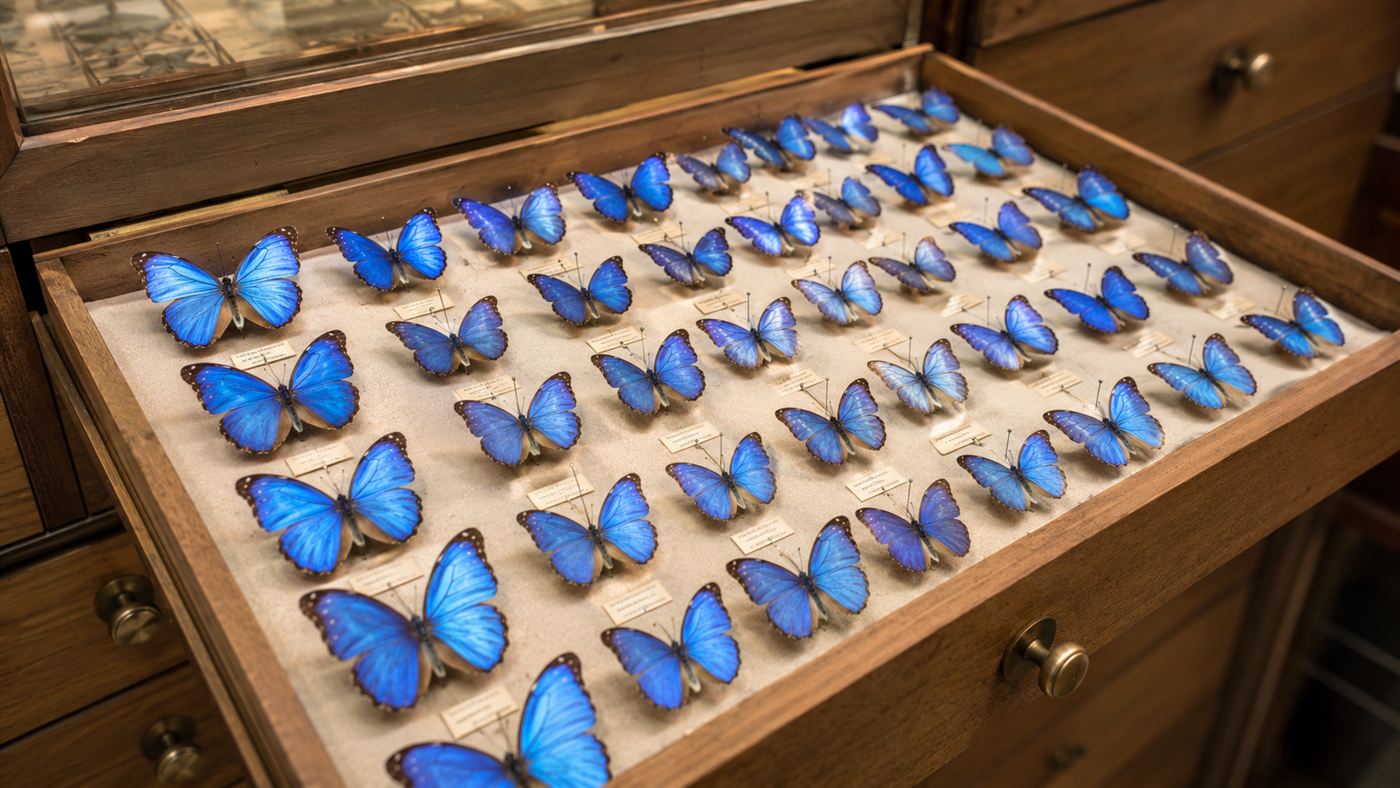
For decades a nagging question shadowed the story. Was the Xerces blue truly its own species, or just a local form of the widespread silvery blue that happened to look distinct? If it was only a variety, its loss would sting less. The specimens sat in museum drawers, beautiful and silent, holding the answer.
As KQED has reported, in 2021 scientists extracted DNA from a roughly 93-year-old museum specimen and confirmed that the Xerces blue was genetically distinct, a real and separate species. It was the answer no one wanted. This was not a lost population that could be found again somewhere else. It was a unique branch of life, and it had been cut off for good.
Filling the big blue shoes
The story has an unexpected new chapter. Over the past few years, conservationists have painstakingly rebuilt patches of native dune at the Presidio, restoring the exact plants the Xerces blue once needed. Then, into that revived habitat, they introduced its closest living relative, the silvery blue, hauled in from populations elsewhere.
As Yale Environment 360 has described, the silvery blue is being used to fill the ecological role the Xerces blue left empty, pollinating and feeding on the same restored dune plants. It is a hopeful sight, blue wings once more flitting over San Francisco sand. But it comes with an honest asterisk, because a stand-in is not the same as a return.
The honest catch
It would be lovely to call this a resurrection, and some headlines do, but that is not what is happening. The silvery blue is a different, living species being used as an ecological substitute. The actual Xerces blue is still extinct and will stay that way. Talk of truly bringing it back through its preserved DNA remains speculative and controversial, and confirming that it was a unique species does nothing to make reviving it possible.
A couple of other honest notes matter too. Calling it the first human-caused insect extinction in America really means the first we documented. Countless small invertebrates have surely blinked out unrecorded, and the Xerces blue is famous largely because collectors happened to catch and keep it. And it is too simple to pin the loss on one city's greed. It was really the product of an age that could not imagine an insect mattering at all. That, in the end, is what the butterfly changed. Its small blue ghost taught us that the tiniest lives can be lost as completely as the largest, and that once they are gone, no restored dune, however lovely, can bring them back.
A butterfly the color of the sky was paved over by a growing city, and taught a country that insects can vanish forever. Does bringing in a close cousin honor the Xerces blue, or does it risk letting us feel we have undone a loss that can never really be undone? Tell us what you think in the comments.
Related reading: the golden lion tamarin, a species pulled back from the very edge in Brazil's Atlantic forest, or the Venus flytrap, a brainless plant that seems to count.
More from Watts & Wild
More in Energy & the Wild →

Maria writes about wildlife, ecology, and the strange places where nature and human history collide. She is based in Brazil.