Climeworks switched on Mammoth, the world's largest carbon-sucking plant designed for 36,000 tonnes a year, but in its first ten months it verifiably removed about 105
In Iceland sits the largest machine humanity has ever built to pull carbon dioxide out of thin air. It was switched on with a 36,000-tonne yearly target and a promise to turn that gas to stone. The verified removal so far is roughly 105 tonnes, less than 1 percent.
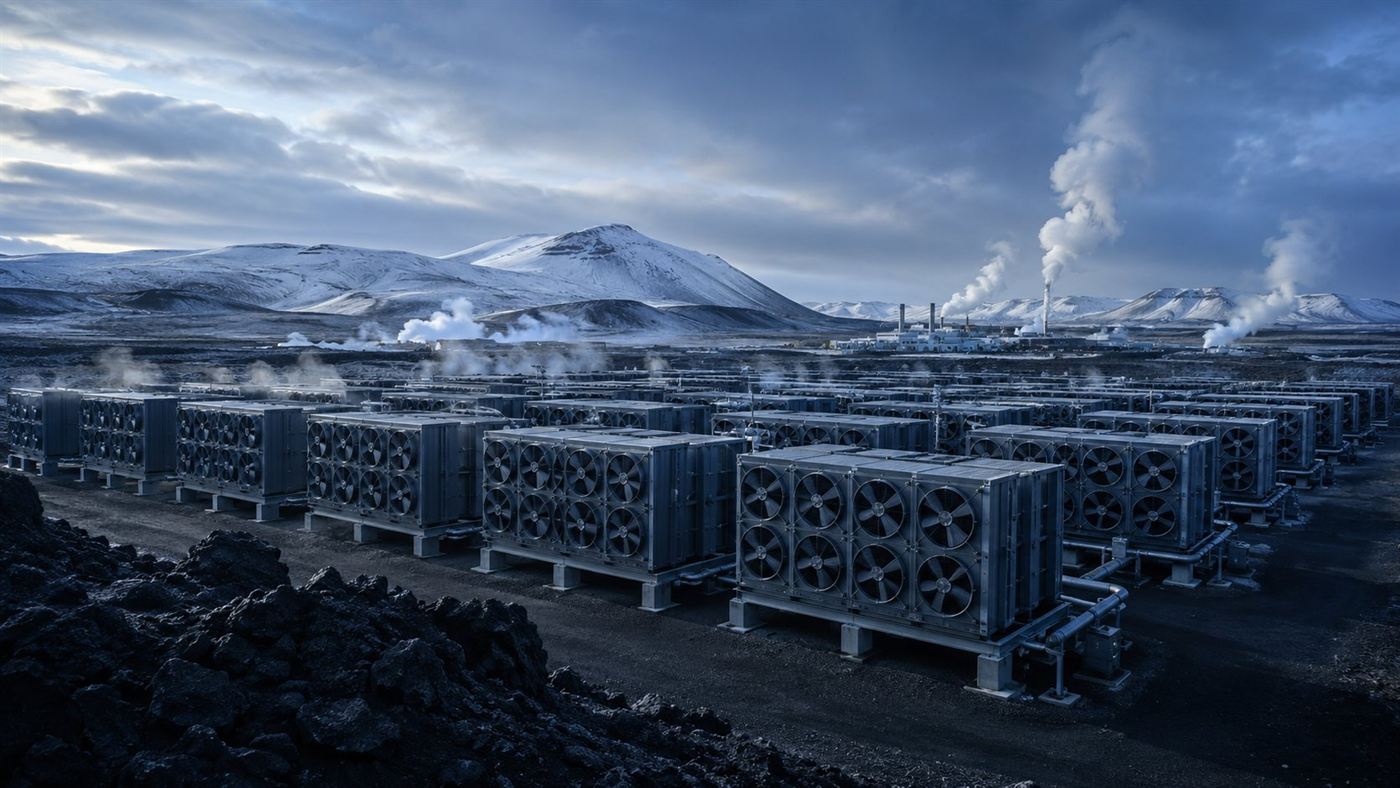
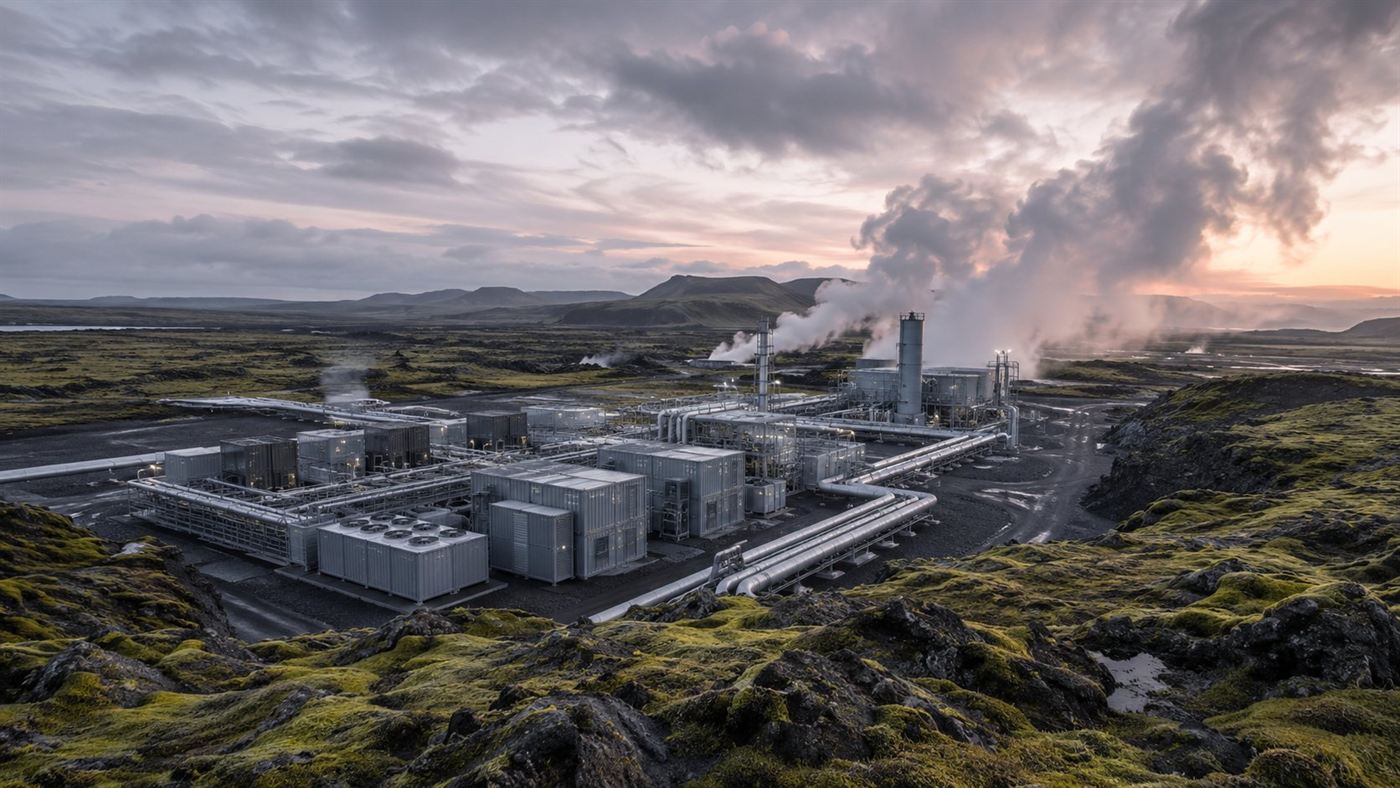
Mammoth, the world's largest direct air capture and storage plant, on the lava fields of Hellisheidi, Iceland. Illustration: Watts & Wild.
For years the dream of cleaning the sky has lived in a single, seductive image: giant fans somewhere cold and remote, quietly inhaling the carbon dioxide we cannot stop emitting and locking it away forever. On 8 May 2024, the Swiss company Climeworks made that image as real as it has ever been, switching on the Climeworks Mammoth carbon capture plant at the Hellisheidi geothermal park near Reykjavik, Iceland, and declaring it the largest direct air capture and storage facility on Earth.
The machine was built to pull up to 36,000 tonnes of CO2 a year from the open air and turn it to stone underground. But now the first hard numbers are in, and they are brutal. According to CNN's report on the opening, Mammoth was designed for as much as 36,000 tonnes a year and mineralises the gas to rock, yet an independent verifier later credited it with only about 105 tonnes of net removal across its first ten months of operation. That is the gap this story is about.
What the Climeworks Mammoth carbon capture plant actually is
Mammoth is not a metaphor, it is a sprawl of steel. Climeworks built it from 72 modular collector containers, boxes packed with fans and chemistry, making it roughly ten times larger than the company's first commercial plant, Orca, which has a design capacity of about 4,000 tonnes a year. The official switch-on, detailed in Climeworks' own press release announcing the world's largest plant at 36,000 tonnes a year of nameplate capacity, framed Mammoth as proof that direct air capture can scale.
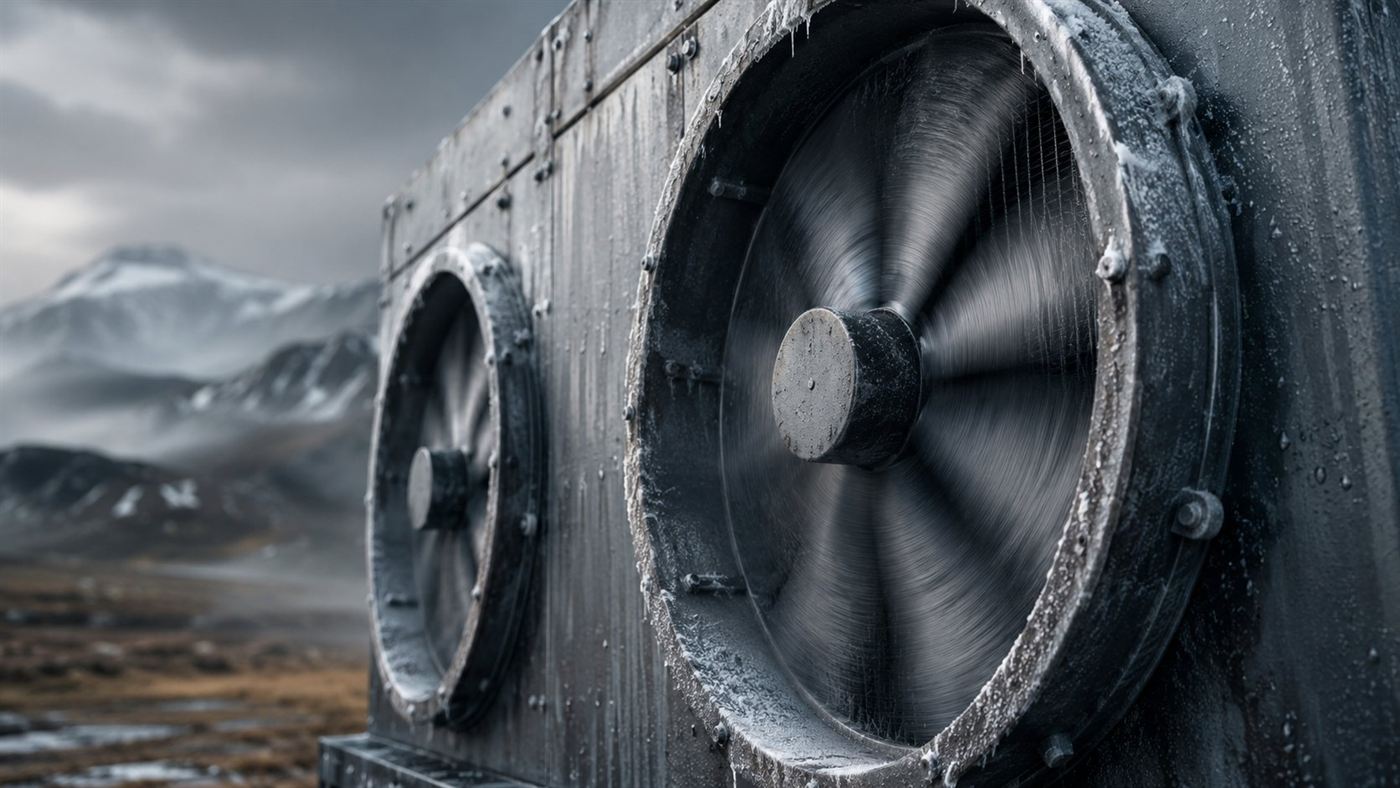
The process itself is simple to describe and punishing to run. Fans draw in ambient air, a solid sorbent material chemically binds the CO2 molecules to its surface, and then heat is applied to release a concentrated stream of pure carbon dioxide. That gas is handed to the Icelandic firm Carbfix, which dissolves it in water and injects it about 1,000 metres deep into basalt rock, where it reacts with the stone and mineralises into solid carbonate over roughly two years.
What makes Iceland the chosen ground is energy. The entire operation is powered by renewable geothermal heat and electricity from Iceland's ON Power, the utility that runs the Hellisheidi park. That matters because capturing CO2 is wildly energy-intensive, and a plant burning fossil power to clean the air would be self-defeating. At launch only 12 of the 72 collector units were live, with the rest being commissioned in stages through 2024.
Turning carbon dioxide into literal stone
The storage half of the system is the part that sounds like science fiction and is not. Carbfix's basalt injection exploits a quirk of Iceland's young volcanic geology, where the porous rock is hungry for the carbon and acidic water Mammoth feeds it. As Euronews Green reported, the captured gas is mineralised into stone at depths near 1,000 metres, which means the carbon is not stored in a leak-prone tank but chemically fused into the bedrock.
That permanence is the genuine selling point. Forests burn and soils release their carbon back, but rock does not casually exhale. If a tonne of CO2 becomes a tonne of stone, it is, for practical human timescales, gone. The science of mineralisation is the strongest card direct air capture holds, and it is why buyers willing to pay a premium for durable removal have gathered around Climeworks rather than cheaper, shakier offsets.
The honest catch: 105 tonnes, not 36,000
Here is where the celebration meets the spreadsheet. The 36,000-tonne figure is a nameplate, a design ceiling, not a measure of what the plant has done. Independent verifier Puro.Earth credited Mammoth with only about 105 tonnes of net CO2 removal in its first ten months, under 1 percent of that headline capacity. As CleanTechnica detailed, that roughly 105-tonne net figure came from Puro.Earth verification and exposed how far the plant runs below its billing.
Climeworks disputes the framing, not the difficulty. The company points to a higher gross figure of around 750 tonnes captured in those first ten months, a number reported in coverage of its troubles by SWI swissinfo.ch, which also noted Mammoth's ramp-up against the 36,000-tonne nameplate. The 105-versus-750 dispute is essentially net against gross, what the plant pulled in minus the emissions of building and running it, and even the optimistic reading is a tiny fraction of the target.
The track record behind it is no kinder. Climeworks' older Orca plant has never reached even 1,000 tonnes of net removal in a single year, and in their early operating years the company's Icelandic facilities captured well under their roughly 1,700 tonnes of annual operational emissions. A carbon-removal business that cannot yet offset its own footprint is a hard pitch to make, and Climeworks is making it anyway.
Why pulling CO2 from air is so brutally hard
The reason for the shortfall is not incompetence, it is chemistry. Carbon dioxide makes up only about 0.04 percent of the air, so a direct air capture plant must process enormous volumes of atmosphere to harvest a meaningful amount, which is why the fans and the heat consume so much energy. Diluteness is the enemy, and it is baked into the physics, not the engineering.
That cost shows up in dollars. Removal at the Orca scale still runs on the order of $1,000 per tonne, a figure cited across the coverage, with Climeworks now targeting roughly $300 to $600 per tonne by 2030. Notably, the original ambition of $100 per tonne has been quietly abandoned. The 2030 target and the cost climbdown were spelled out in Euronews Green's analysis, which put Orca-scale removal above $1,000 a tonne with a $400 to $600 target and questioned whether the whole approach is a misguided experiment.
Scale is the other crushing problem. The International Energy Agency estimates the world will need to remove carbon on the order of tens of billions of tonnes a year, often cited around 32 billion tonnes for pathways that hold warming to 1.5C, against only tens of millions of tonnes captured globally today. Set Mammoth's 36,000 tonnes against global emissions of about 40 billion tonnes a year and it is a rounding error, roughly what humanity emits in under a minute, or about 8,000 cars taken off the road.
The money ran into a wall in 2025
Engineering shortfalls are survivable if the cash keeps flowing. In Climeworks' case it did not. In May 2025 the company announced layoffs of about 20 to 22 percent of its workforce, around 106 of roughly 500 jobs, a brutal signal for a firm that had been the poster child of the carbon-removal industry.
The reasons were as much market as machine. As Bloomberg reported, Climeworks cut about 22 percent of staff amid weak voluntary carbon-credit demand, US climate-funding cuts under the Trump administration, and heavy reliance on a narrow base of buyers led by Microsoft. A business model resting on a handful of corporate customers and government goodwill is fragile, and both legs wobbled at once.
That dependency is the quiet risk inside every glowing headline about direct air capture. The technology works in the literal sense, the gas really does turn to stone, but the economics still need patient buyers willing to pay roughly a thousand dollars to remove a single tonne of an invisible gas. When that willingness softens, plants do not magically get cheaper, they get smaller payrolls.
So is Mammoth a triumph or a warning
It is both, and pretending otherwise is the real trap. Mammoth is a genuine engineering milestone, the largest plant of its kind, powered cleanly, storing carbon permanently in rock, run by a company doing the unglamorous work of proving the concept at scale. That is not nothing, and the people who built it deserve to be taken seriously rather than mocked.
But the honest reading is sobering. Mammoth's 36,000-tonne design capacity is about one-millionth of the world's roughly 40 billion tonnes of annual emissions, and in practice the plant has delivered a small fraction of even that. Direct air capture is, at best, a future complement to cutting emissions at the source, never a substitute, and Mammoth's early shortfall plus the 2025 layoffs show how far the technology sits from mattering at climate scale.
The biggest machine ever built to clean our sky has so far removed about as much carbon as you could fit in a couple of shipping containers, while we pour out 40 billion tonnes a year. It is a real beginning and a hard reality check at the same time. Should the world keep pouring money into direct air capture, or spend every dollar on cutting emissions at the source first? Tell us what you think in the comments.
Related reading: China has begun building a 137 billion dollar megadam in the Himalayas. In the US, Project Cypress is bringing America's first commercial direct air capture online, and a Washington plant is now turning captured CO2 into jet fuel.