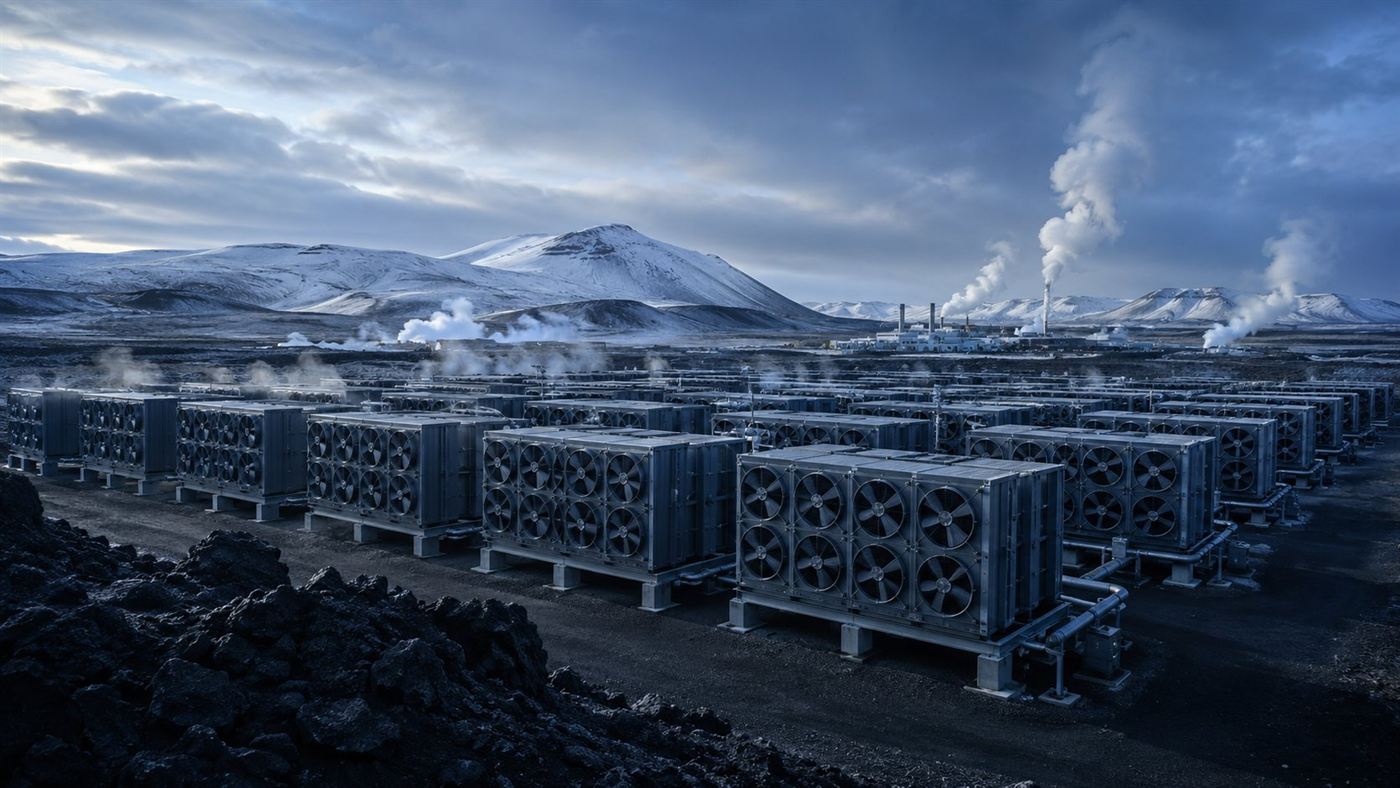
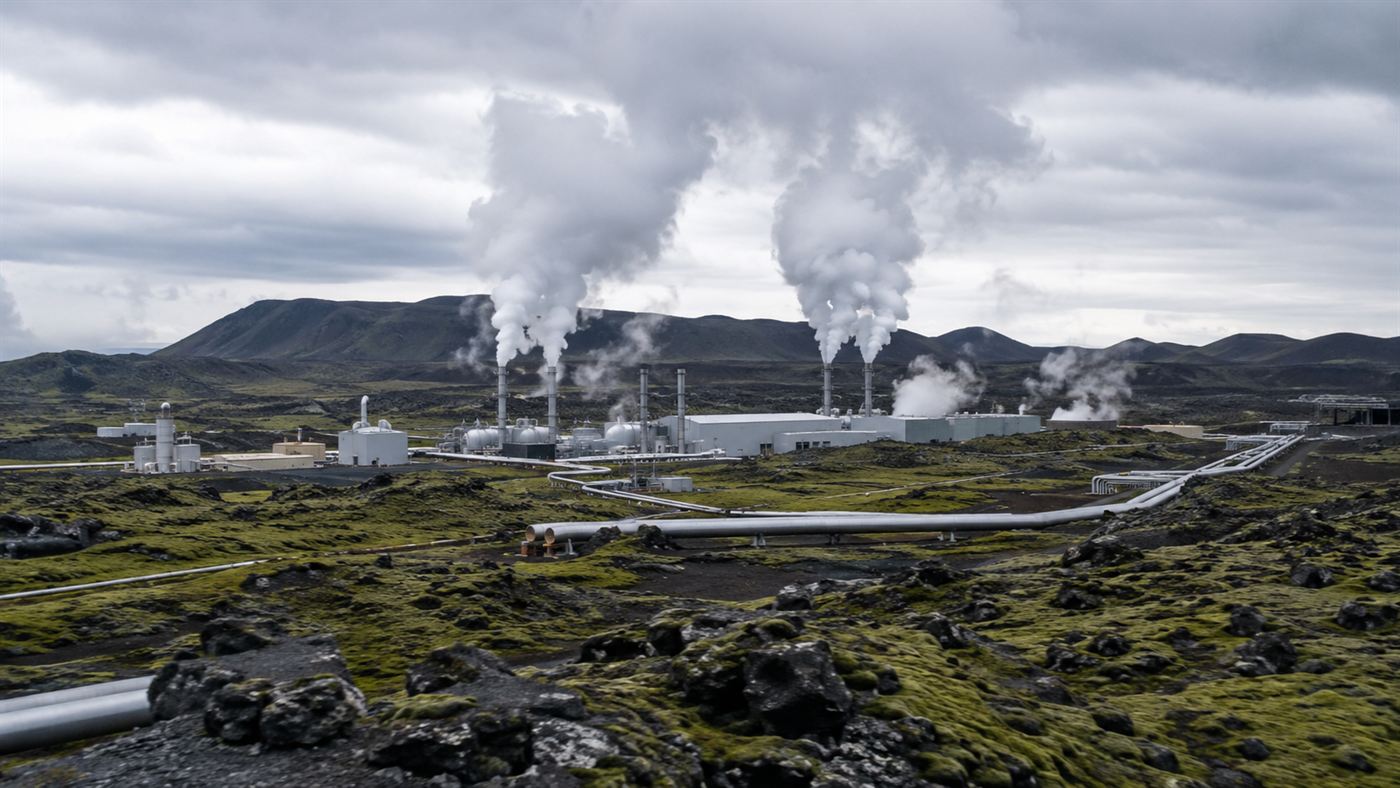
America is switching on its first big machines built to vacuum carbon straight out of the sky
In 2026, in the flat industrial country of Louisiana, the United States is starting up its first commercial-scale attempt at direct air capture, rows of machines designed to do something that still sounds like science fiction: pull carbon dioxide out of open air. The ambition is enormous and the first bite is tiny, and both of those facts matter.
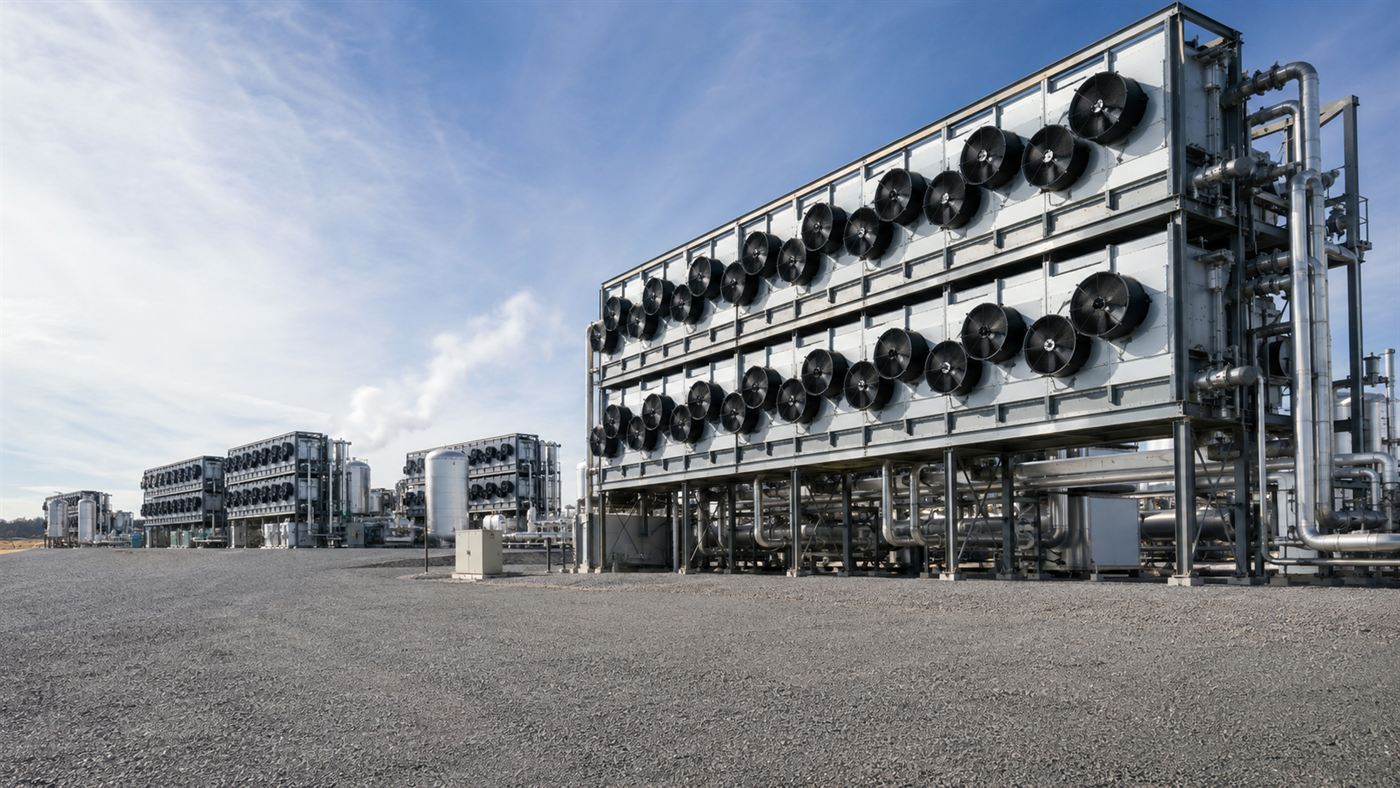
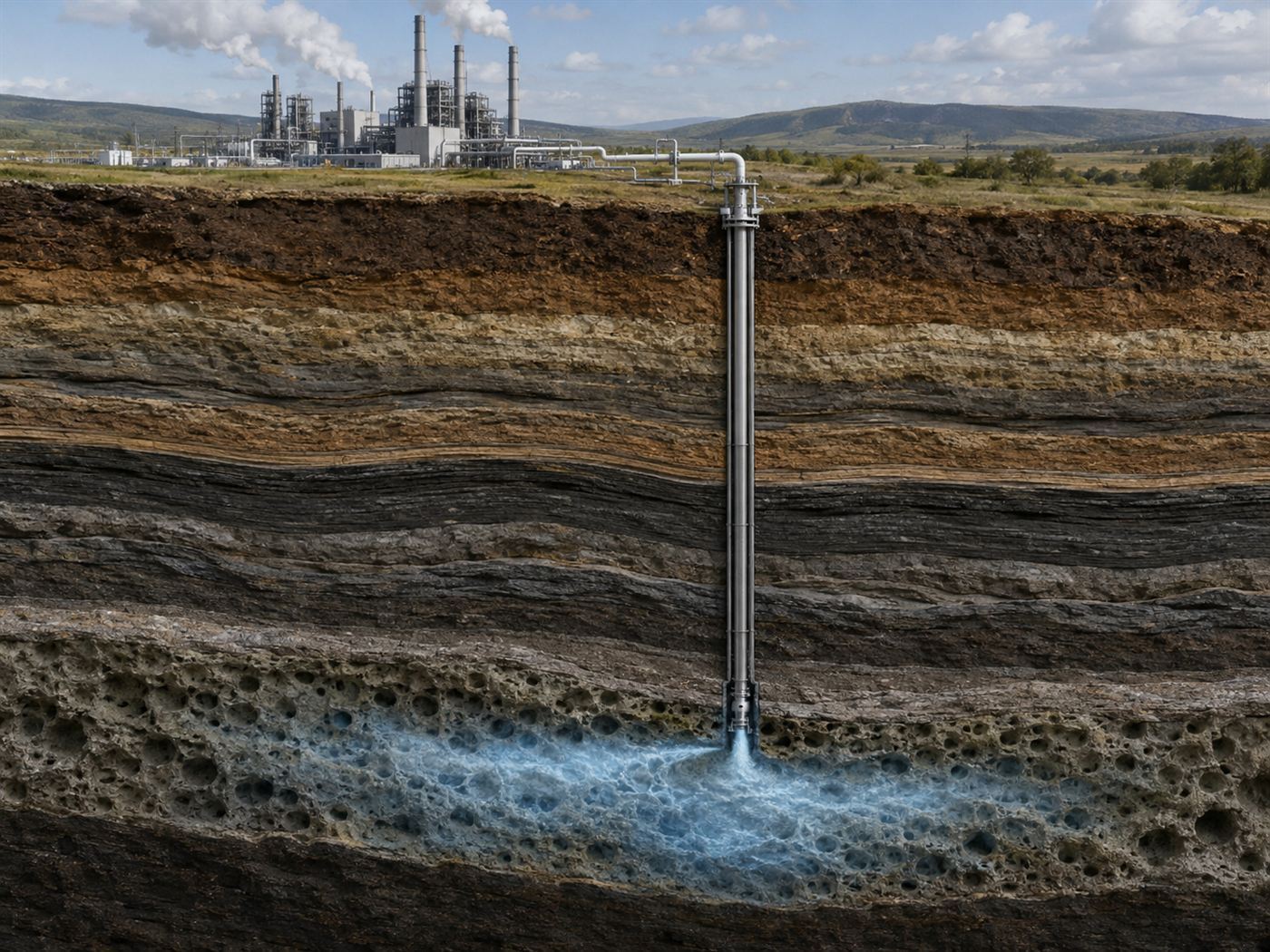
A direct air capture facility works like a giant filter for the whole atmosphere. Illustration: Watts & Wild.
The effort is called Project Cypress, a hub backed by hundreds of millions of dollars in federal funding and built around two different companies, Heirloom and Climeworks, each with its own way of grabbing carbon from the air. The plan for the full hub is to remove more than a million tons of carbon dioxide a year, and the first Heirloom facility is beginning far smaller, in the range of 17,000 tons a year as it comes online.
That gap between the headline million and the opening 17,000 is the whole story in miniature. This is the moment the technology stops being a demonstration and becomes a real, paid-for industry on American soil, and it is also a sharp reminder of how early and how small that industry still is.
The short version is that the country has built its first proper machine for cleaning the sky, and it works, and it is nowhere near big enough yet to matter on its own.
How direct air capture actually works
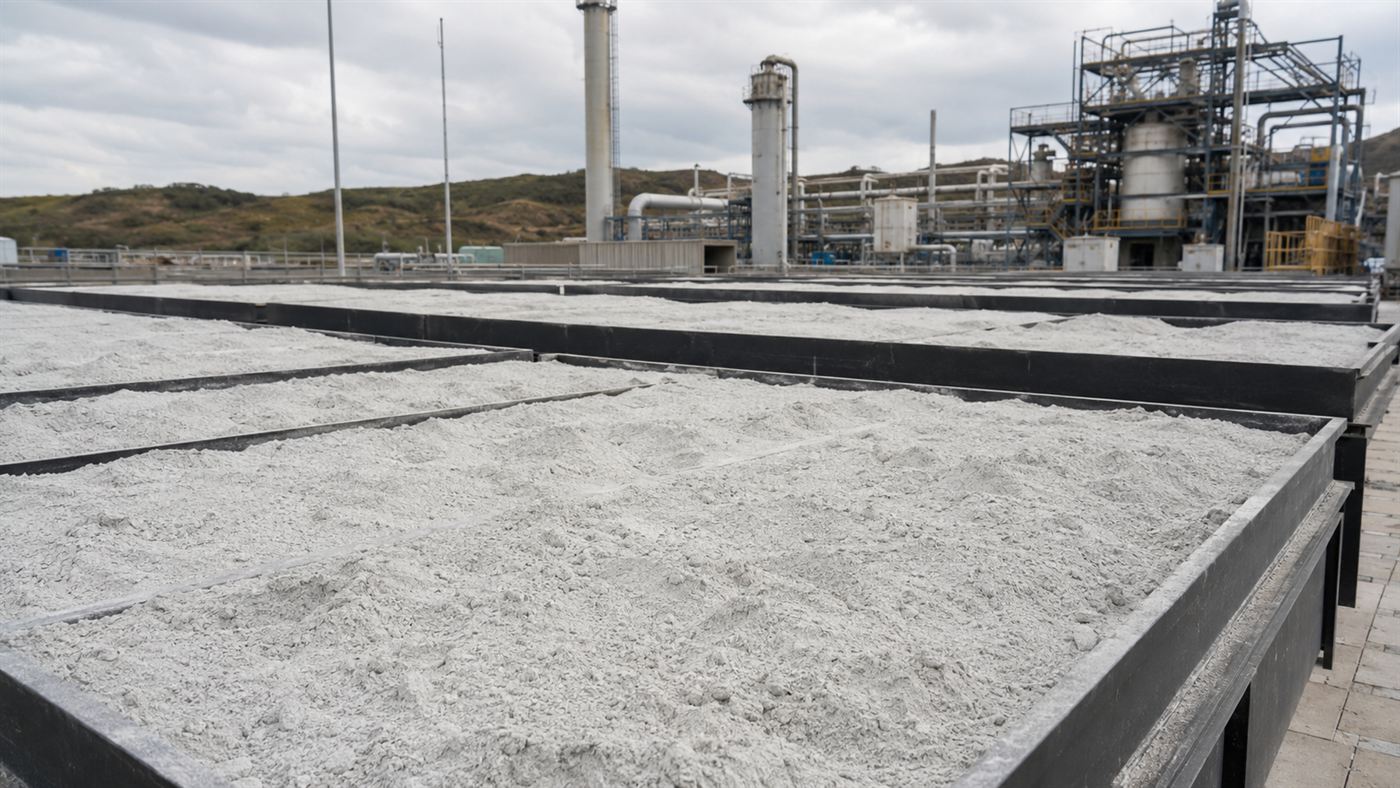
Ordinary air is only about 0.04 percent carbon dioxide, so catching it is like fishing for a specific grain of sand on a windy beach. The two firms at Project Cypress do it differently. Climeworks pushes air through filters that chemically cling to the gas, then heats them to release a pure stream for storage. Heirloom instead spreads out crushed limestone, which naturally drinks carbon from the air over days, then bakes the stone to drive the gas off and reuses it again and again.
Either way, the captured gas is compressed and piped deep underground, where it is meant to stay locked in rock formations for good. Unlike a filter on a factory chimney, which only catches carbon dioxide where it is already concentrated, these machines can be built anywhere and clean up emissions that happened years ago and miles away. They are the cleanup crew for a party that is still going.
Why build it in Louisiana
The location is not an accident. Louisiana sits on thick, porous rock formations that are well suited to storing carbon dioxide underground, and the state has a deep bench of workers and engineers from its oil and gas industry, the very skills that drilling carbon back into the earth requires. What was built to pull fossil fuels up can, with a twist, help put carbon down.
There is money behind it too. Project Cypress grew out of a federal program to seed regional capture hubs, with support running to several hundred million dollars, part of a national bet that this industry needs a public push to get started before private buyers of carbon removal can carry it. A whole new industry rarely stands up without a shove, and that is what the funding is meant to be.
Can it ever be big enough to matter?
This is the fair and hard question. The United States alone puts out roughly five billion tons of carbon dioxide a year. Against that, even a million-ton hub is a rounding error, and the opening 17,000 tons is a whisper. To bend the curve, direct air capture would have to grow thousands of times over, which means far cheaper machines and vast amounts of clean energy to run them.
That last point is the quiet trap. These machines are hungry, and if you run them on fossil power you can spend more carbon than you catch. Project Cypress is designed to run on clean energy for exactly that reason, but it shows why capture can never be a substitute for simply burning less. Pulling a teaspoon of pollution from an ocean of it only helps if you also turn off the tap.
The honest catch
It is easy to sell this as a machine that undoes climate change, and easy to dismiss it as a fig leaf for polluters. The truth sits in the awkward middle. The technology is real, the carbon it removes is real, and for emissions that are genuinely hard to erase, from cement, from aviation, a way to claw some carbon back may prove valuable. Those are honest points in its favour.
But the catch deserves to be said plainly. At today's scale and cost, direct air capture removes a vanishing fraction of what we emit, and its greatest danger is not technical but psychological, the comfortable idea that a machine will fix this later so we need not change now. The cleanup crew is not a reason to keep making the mess. Project Cypress is a genuine step, worth taking and worth watching. It is a tool, one small tool, and it works best in the hands of people who are also, urgently, putting the fire out at the source.
Sources: Project Cypress project overview, Heirloom Carbon, and the US Department of Energy.
America has finally built a machine to breathe in our carbon, and it barely makes a dent, yet. Is capturing carbon from the air a smart insurance policy, or a distraction from cutting emissions in the first place? Tell us what you think in the comments.
Related reading: Mammoth, the giant Icelandic plant that inhales carbon from the air. See also the Carbfix process that turns captured carbon into solid stone, and the sea otters that quietly guard some of the ocean's best carbon stores.