America just opened its first commercial plant that makes jet fuel out of carbon dioxide and water
A factory in Washington State has started doing something that sounds like alchemy. It takes carbon dioxide, water and electricity, and out the other end comes jet fuel, the real thing, ready to burn in an ordinary engine. In June 2026 it became America's first commercial plant to do this, a chemistry set the size of a factory.
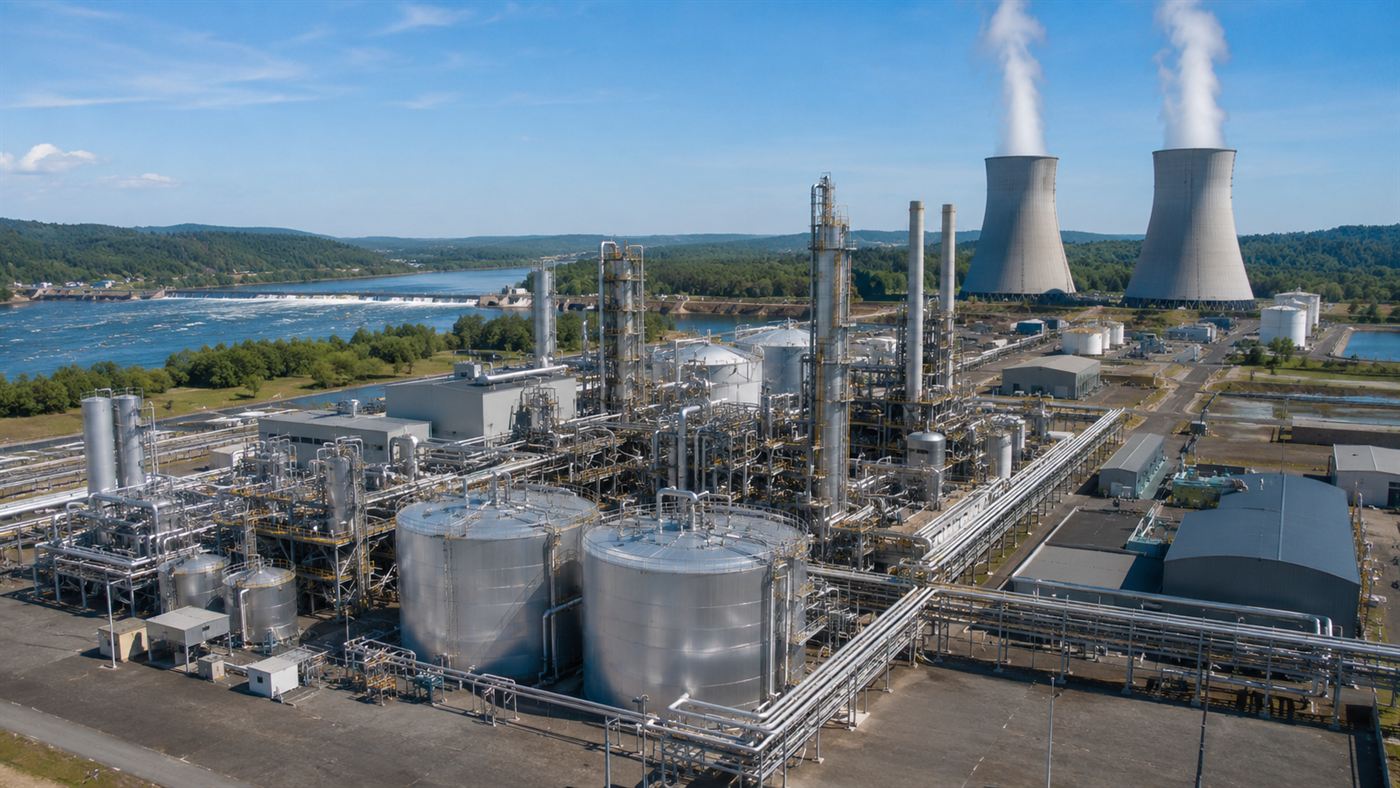
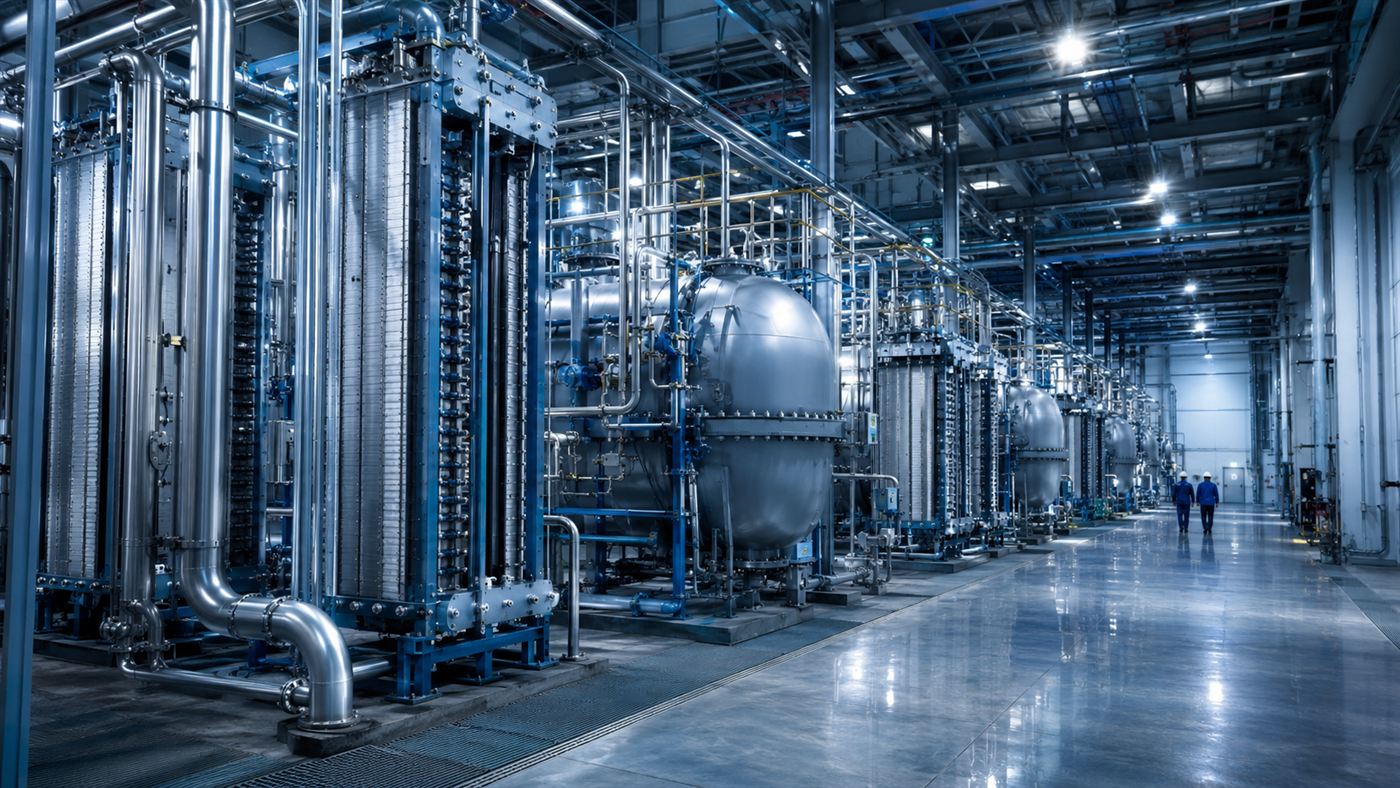
AirPlant One in Moses Lake, Washington, where captured gas and water are turned into fuel for planes. Illustration: Watts & Wild.
The short version is this. On June 10, 2026, the company Twelve held a ribbon-cutting for AirPlant One in Moses Lake, Washington, the first commercial-scale plant in the United States to make jet fuel from captured carbon dioxide, water and renewable power. The fuel is chemically the same kerosene airlines already burn, but its carbon comes from the air and industry rather than freshly pumped oil.
Twelve calls its product E-Jet fuel, and the process behind it is called power-to-liquid. Renewable electricity splits water to free hydrogen, which is then combined with captured carbon dioxide and rebuilt into the long hydrocarbon molecules that make up ordinary aviation kerosene. No crude oil is drilled and no farmland is turned over to fuel crops.
It is a genuine milestone for a hard-to-fix corner of the climate problem. But the size of it is where the story gets honest.
How you make jet fuel out of thin air
The trick is to run the fossil story backwards. Normally we dig up ancient carbon, burn it and release carbon dioxide into the sky. A power-to-liquid plant grabs carbon dioxide that already exists, strips hydrogen out of water, and stitches the two together into fuel using a lot of clean electricity. Burn that fuel and you release only the carbon you first captured, so nothing new is added to the atmosphere.
At AirPlant One the details are all-American and rather neat. The plant sits on fourteen acres of repurposed industrial land, runs on hydropower from the Columbia River, and takes its carbon dioxide from nearby ethanol producers. The result is a fuel that can drop straight into existing planes and pipelines. The catch is that electricity is the hidden ingredient in every gallon, and it takes an enormous amount of it.
Why aviation is so hard to clean up
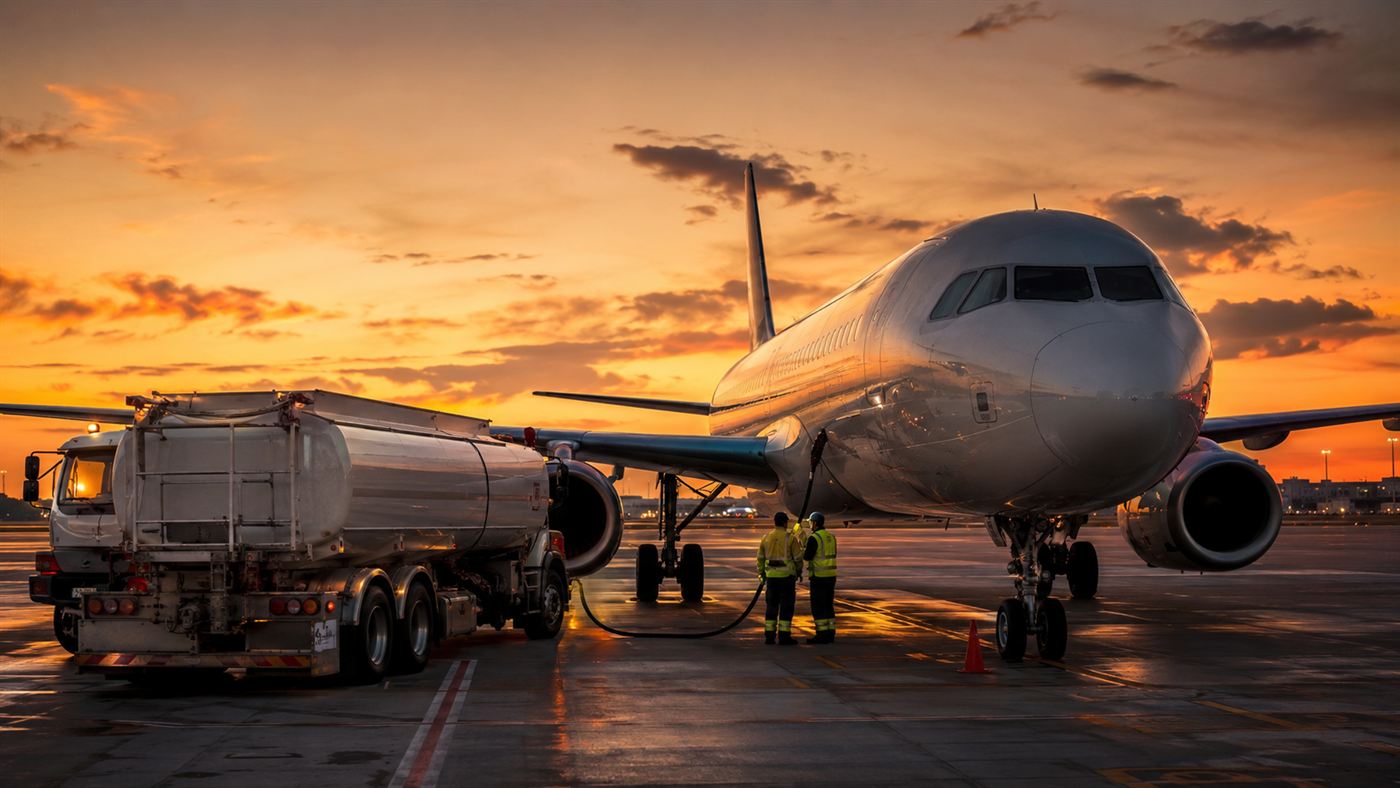
Aviation is one of the toughest industries to decarbonise, and the reason is physics. A battery good enough to lift a full airliner across an ocean would be far too heavy to get off the ground, which is why electric planes so far are small, short-range trainers. Long-haul flight needs the extraordinary energy packed into liquid fuel, and for now nothing beats a tank of kerosene for that.
That is why a fuel like this matters. If you cannot electrify the plane, you can try to clean the fuel instead, making the same energy-dense liquid without pulling new carbon out of the ground. It sidesteps the weight problem entirely, which is why so many in the industry see power-to-liquid as one of the few credible paths to lower-emission long-haul aviation.
So can this really clean up aviation?
Here honesty has to take the wheel. AirPlant One is designed to make about 50,000 gallons of fuel a year. That sounds like a lot until you learn that US airlines burn well over a billion gallons in a single week. The plant's entire annual output would not fill the tanks for one busy afternoon at a major hub. It is, for now, a drop in a very large bucket.
Big names have signed on to help it grow, with Alaska Airlines taking the fuel and Microsoft backing it through a separate accounting arrangement, and Twelve plans much larger plants to come. But the plant that opened in June is a demonstration that the process works at commercial quality, not a dent in emissions yet. It is proof that it can be done, not proof that it is done.
The honest catch
The promise here is real and worth taking seriously. A way to keep flying without endlessly digging up new carbon would be a genuine prize, and doing it with a fuel that needs no new planes is exactly the kind of practical step the energy transition runs on. This is a real plant making real fuel, not a slideshow.
But the honest reading keeps two facts in view. First, the hard part was never the science, it was the scale, and scaling from fifty thousand gallons to billions will take vast amounts of cheap clean power and years of building. Second, the climate benefit is only as clean as the electricity and the carbon behind it; run this on a dirty grid and the whole point collapses. The alchemy is real. Whether it ever grows big enough to matter is the question the next decade has to answer.
Sources: GreenAir News, gasworld, and Trellis.
A plant that turns waste gas and water into fuel for planes is either the future of flying or a very expensive science project. Would you pay a little more for a ticket flown on fuel made from captured carbon, or does the tiny scale make you doubt it will ever add up? Tell us what you think in the comments.
Related reading: why battery-powered planes are stuck flying short and small. See also the giant machines sucking carbon dioxide straight out of the sky, and the Swedish plant making steel with hydrogen instead of coal. See also China's first megawatt hydrogen aircraft engine, the other route to cleaner flight.