Peter O'Grady spent 36 years running Britain's last coal station; he was also the one who clicked it off at 15:35 on September 30, 2024, ending 142 years of coal power
A plant manager who joined Ratcliffe-on-Soar in Nottinghamshire in 1988, just three years after Britain's miners lost their defining battle, never expected the industry to outlast his career. On September 30, 2024, he sat at a control panel and switched off Britain's last coal power station, making the country the first major economy to end coal power entirely.
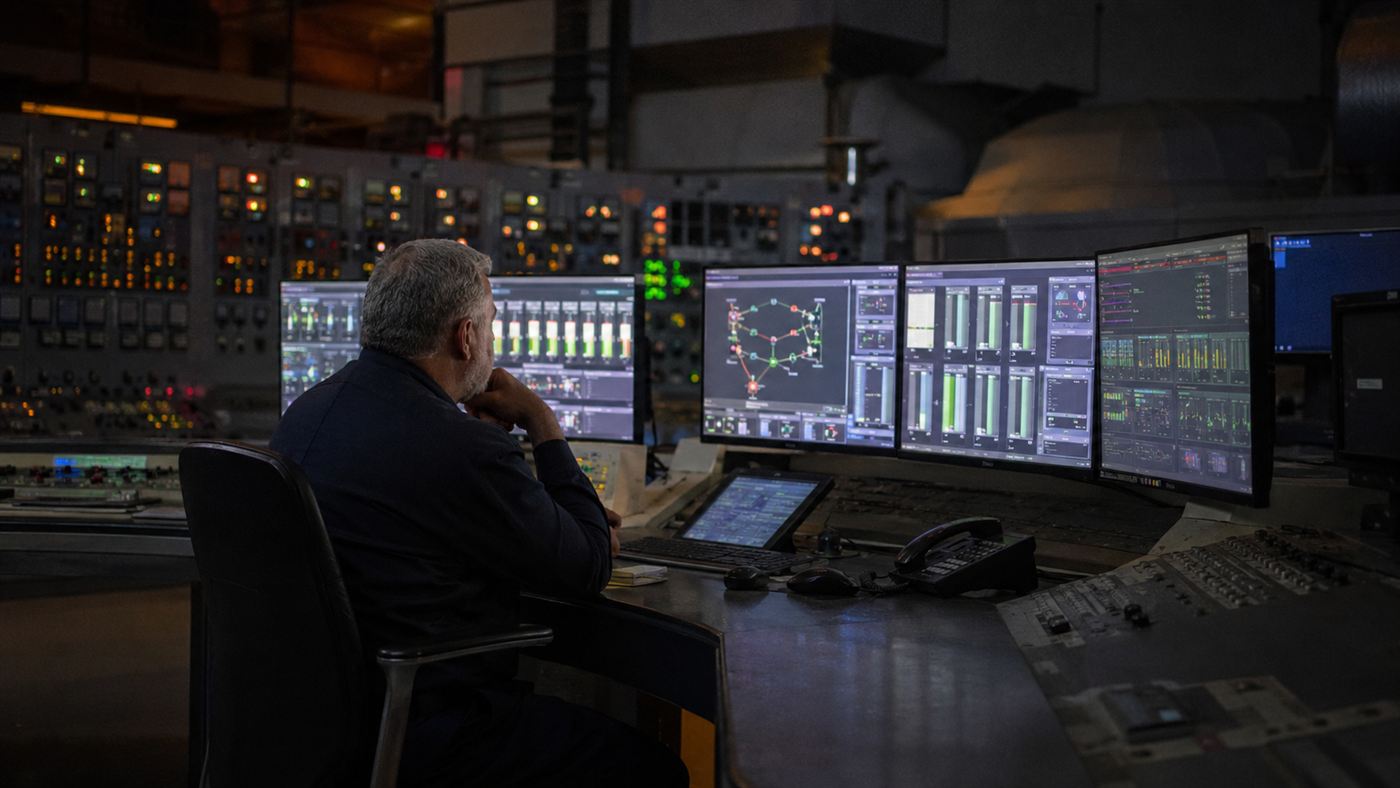
Peter O'Grady, plant manager at Ratcliffe-on-Soar, spent 36 years keeping Britain's last coal station running. On September 30, 2024, he was the one who switched it off. Illustration: Watts & Wild.
At 15:35 on September 30, 2024, Peter O'Grady clicked a computer mouse at the control room of Ratcliffe-on-Soar power station in Nottinghamshire, and the last coal-fired generating unit in Britain went offline. The action took a second. The chapter it closed had run for 142 years.
O'Grady had joined the station in 1988, when coal still powered roughly two-thirds of every British kilowatt-hour. For 36 years he had worked his way through the plant's hierarchy, learning the personality of every unit and turbine, every quirk of the fuel handling system. "When I began my career 36 years ago," he said on the day of closure, "none of us imagined a future without coal generation in our lifetimes." Standing in the Trent Valley, in the heart of what had once been one of England's most productive coalfields, that statement carried a particular weight.
The coalfield that kept working
The 1984 miners' strike split Britain, but it split Nottinghamshire harder than almost anywhere else. When Arthur Scargill called the walkout over plans to close more than 20 pits, miners across Yorkshire, Wales, Scotland and the Northeast put down their tools. In Nottinghamshire, 73 percent voted against joining.
The logic was not cowardice; it was calculation. Many Nottinghamshire miners believed that staying at work would demonstrate coal's viability and give the industry a stronger negotiating position. They were pragmatists who thought the confrontational approach would end badly. They were not wrong about that. What they were wrong about was their own safety.
The British government proceeded with pit closures regardless. The Nottinghamshire collieries closed through the late 1980s and 1990s, one by one, for the same economic reasons that had driven the original closure plan. Miners who had crossed the picket line found themselves out of work just the same as those who had struck for a year. Their children, the generation that grew up watching the headgear come down and the winding towers demolished, found jobs at the power stations built to burn the coal their parents had mined.
How Britain's last coal power station outlasted its own fuel supply
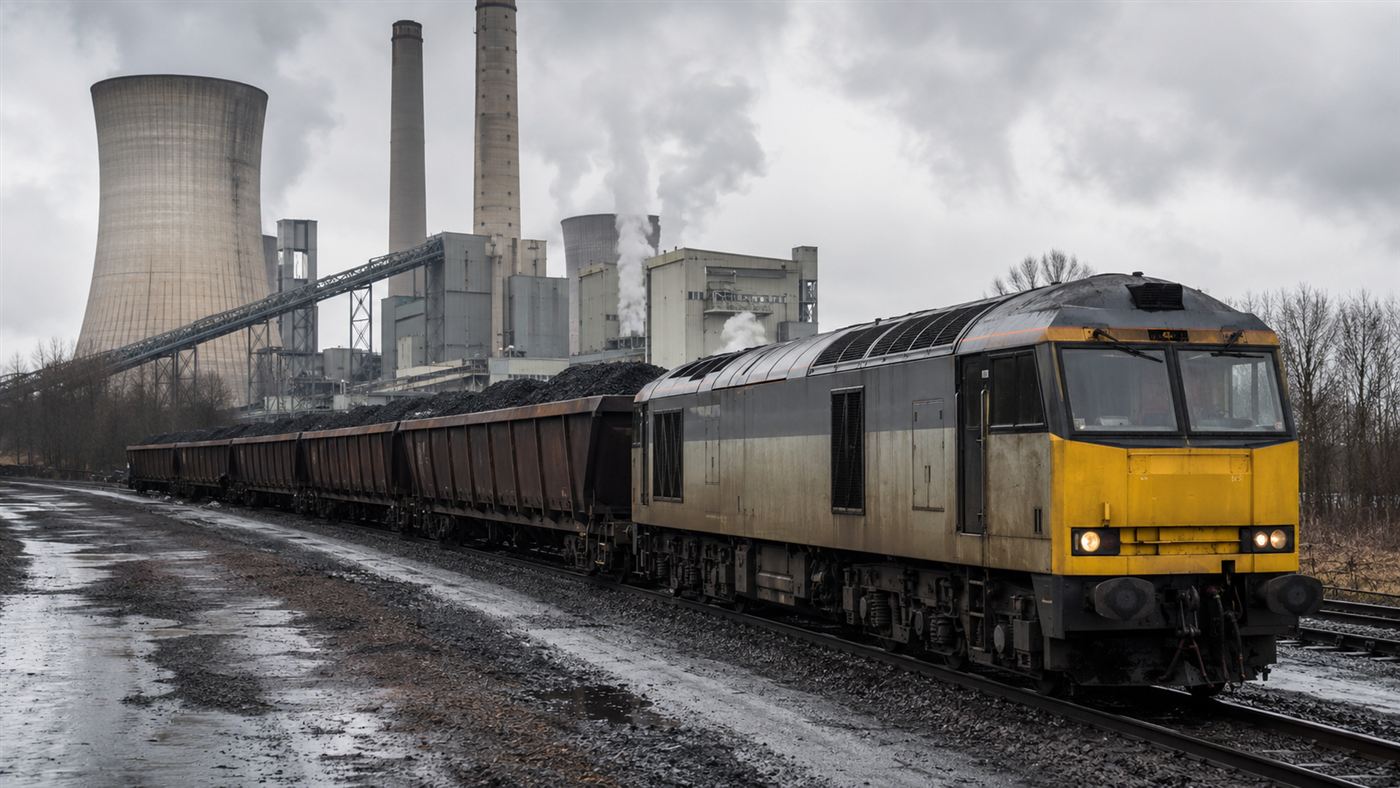
Ratcliffe-on-Soar had opened in the 1960s specifically to burn local Nottinghamshire coal. When the nearby collieries closed, the station had to reach further and further for its fuel. By its final years, the coal arriving at the station's sidings was coming from Colombia, the United States and Australia, shipped across oceans to feed furnaces in the English Midlands.
The last delivery arrived in June 2024: 1,650 tonnes from Immingham port on the Humber, delivered aboard a locomotive the railway had named Ratcliffe Power Station for the occasion. It was a modest tribute, but someone had thought to mark it. The coal was stored, burned through the summer, and by September the silos were running down.
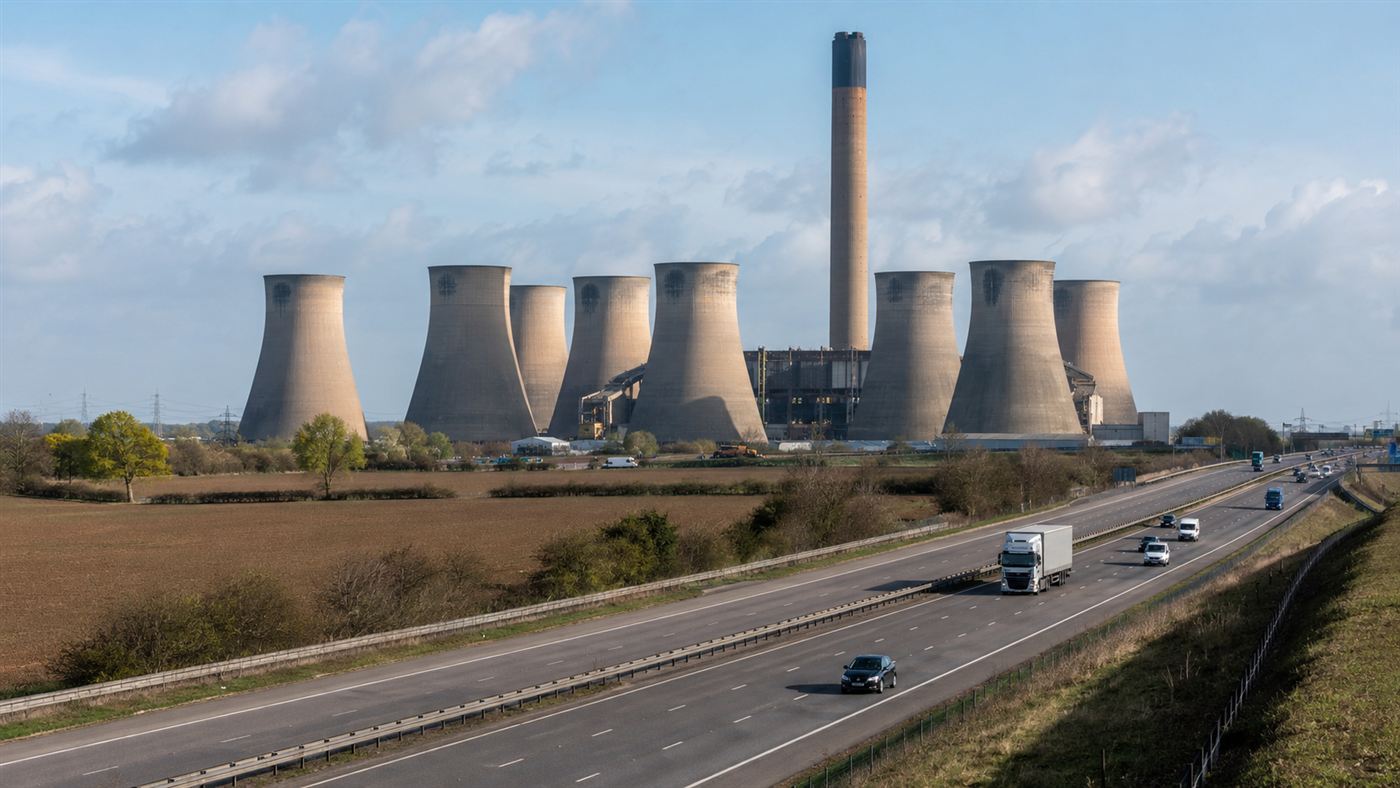
There is something worth pausing over in that ending. The station had been built to burn one specific thing from one specific place. The thing ran out first. By the time O'Grady sat down for the final shift, Ratcliffe had outlasted not just its local supply chain but the entire British coal mining industry that had given it a reason to exist.
From two-thirds to zero in one working life
In 1990, coal provided between 65 and 80 percent of Britain's electricity. The "dash for gas" through the 1990s cut that roughly in half, as cheap North Sea gas made coal look expensive and gas plants could be built far faster than any alternative. Then the economics turned against coal again.
As Carbon Brief's analysis of the UK coal phase-out documents, coal fell from 39 percent of the electricity mix in 2012 to around 7 percent by 2017. Britain's carbon floor price, introduced in 2013, made coal more expensive still. Offshore and onshore wind built out rapidly through the decade that followed. By 2023, coal was at just 1 percent, running only in the coldest weeks when gas prices spiked and grid managers needed every megawatt they could find.
The figures describe a collapse that happened within a single professional lifetime. When O'Grady joined Ratcliffe, two out of every three kilowatt-hours came from coal. In his final year, it was rounding to zero. Across those 36 years, Britain had burned 4.6 billion tonnes of coal in total since 1882, releasing roughly 10.4 billion tonnes of carbon dioxide.
The click at 15:35
The control room on September 30 looked much like any industrial facility that had been carefully maintained across six decades: screens, instrument panels, the quiet hum of systems running long enough to feel permanent. The final shutdown of Unit 4 at 15:35 was technically identical to the thousands of ramp-down procedures O'Grady had overseen before. He clicked a computer, not a dramatic lever.
PBS News reported that O'Grady described the day as deeply emotional, with mixed feelings running alongside the professional composure required to take a live generating unit offline safely. He had spent more than half of his life in that building. Everyone in the room understood exactly what the click meant.
Britain became, that afternoon, the first major G7 economy to operate a national grid with no coal generation whatsoever. A country that had powered the industrial revolution on coal, that had sent coal technology to every continent, had reached the point where the man who maintained the last piece of that system was also the one who turned it off.
What comes next for the site
The plans for the Ratcliffe land have been developing for years. Rushcliffe Borough Council has granted planning permission for a zero-carbon technology and energy hub, with projected figures of 7,000 to 8,000 jobs and £513 million in annual economic output for the East Midlands. Battery storage, low-carbon hydrogen and advanced manufacturing are the stated anchors.
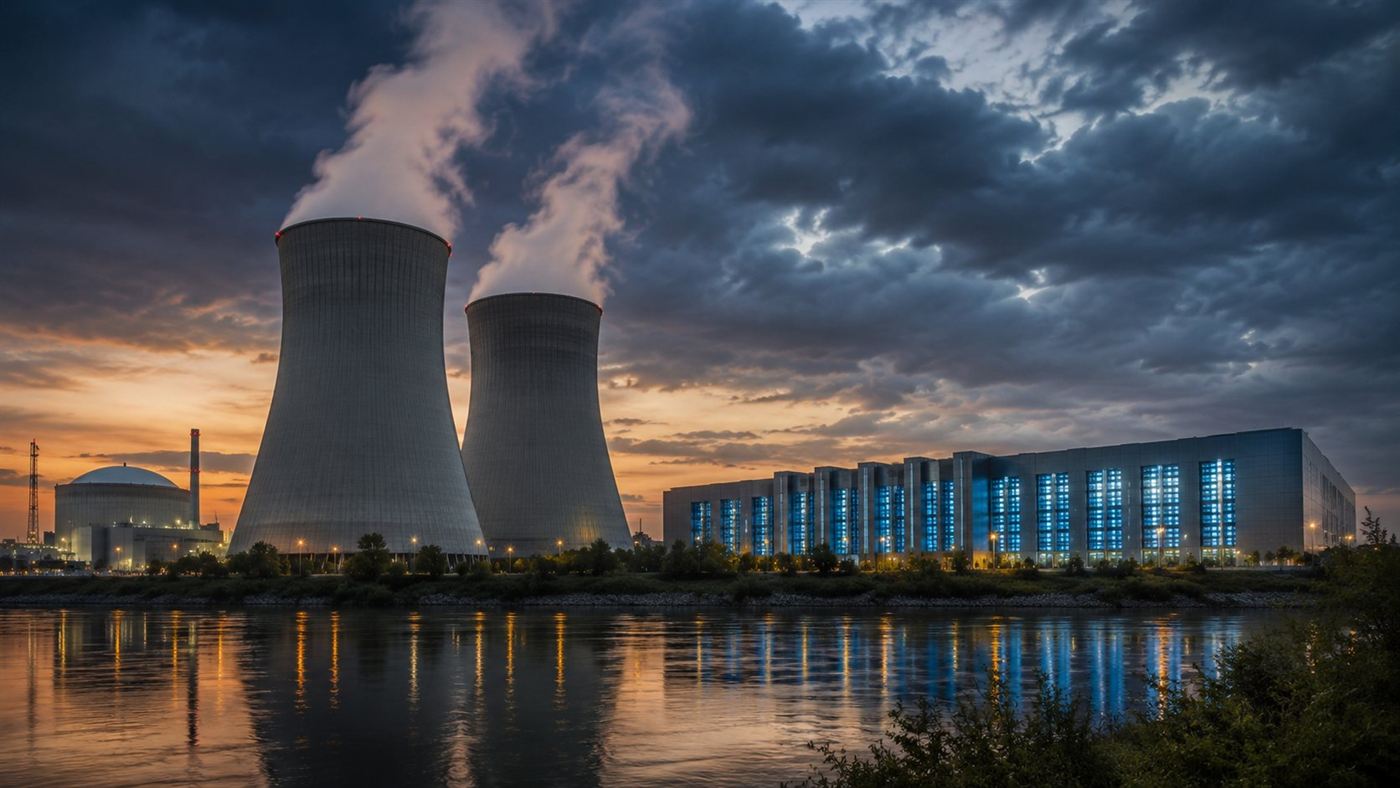
The eight cooling towers and the 199-metre chimney will be demolished. The 400-hectare site will be remade around a different kind of industry. The 170 workers who remained at the station on its final day are mostly staying through a two-year decommissioning process. Some took retirement the week generation stopped.
The honest catch
Ratcliffe closing did not end Britain's dependence on fossil fuels for electricity. Natural gas still provides a significant share of the grid on cold, still days when wind turbines are idle and solar panels dark. The coal chapter is closed. The fossil chapter is not.
The harder version of the same question is about communities. Carbon Brief's historical analysis describes the post-1984 era as a "failed just transition," decades in which coal mining communities were left economically stranded when the pits closed, without adequate support or replacement investment. The energy hub planned for the Ratcliffe site carries numbers that look different, but the jobs that matter are the ones that actually reach the families of the workers who gave two generations to that stretch of Nottinghamshire. Whether they will is not yet answered.
Peter O'Grady took a computer mouse and clicked. One hundred and forty-two years ended in Nottinghamshire, in the coalfield that had tried to cooperate its way to survival in 1984 and found, in the end, that pragmatism was not a guarantee. The cooling towers are coming down. The energy hub is a blueprint. The story of what happens to the people is still being written.
Britain phased out coal through carbon taxes and economics, not through a plan built around the communities that worked in the industry. Does that make the achievement less real, or just incomplete? Tell us what you think in the comments.