Burmese pythons escaped from the pet trade into the Everglades and quietly ate their way through 99% of its mammals, and we still can't stop them
It is one of the eeriest things visitors to the Everglades now notice: the silence. Where raccoons once raided campsites and rabbits crossed the trails, there is often nothing. In barely two decades, a giant snake that began as somebody's exotic pet has hollowed out one of America's great wildernesses, and almost nothing humans try can stop it.
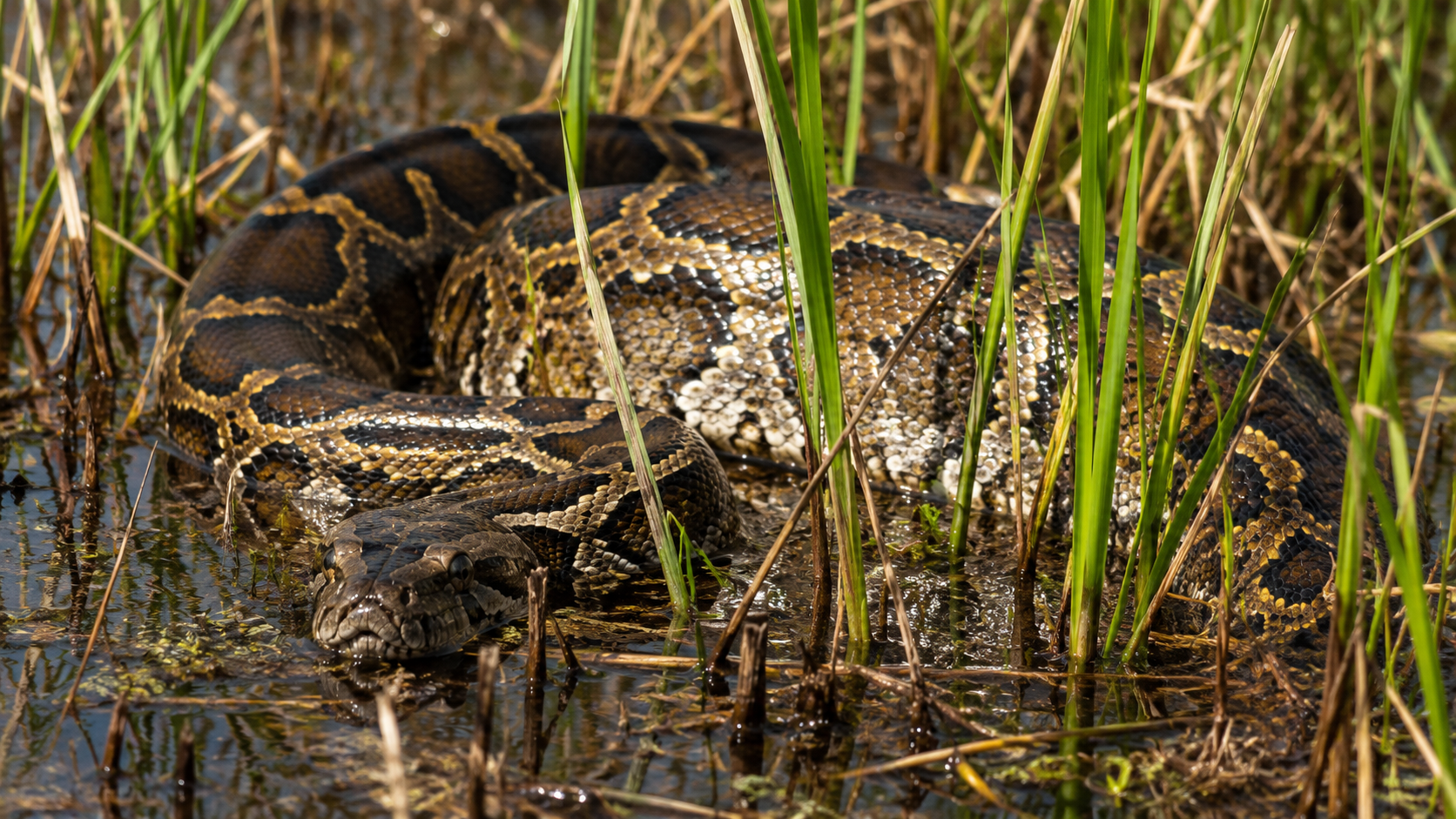
A Burmese python in the sawgrass, an apex predator the Everglades never evolved to fight. Illustration: Watts & Wild.
The invasion of Burmese pythons into the Florida Everglades is one of the most dramatic, and most humbling, invasive-species stories anywhere on Earth. These are not small snakes. Native to the jungles of Southeast Asia, they can grow well past five metres and weigh as much as a person, and in the warm, watery wilderness of south Florida they found something close to paradise: endless cover, a mild climate, and prey that had never in its evolutionary history seen anything like them.
The result has been a slow-motion catastrophe that we are only now fully measuring.
How did Burmese pythons get into the Everglades?
The pythons did not swim or fly to Florida. We brought them. During the exotic-pet boom, enormous numbers of Burmese pythons were imported into the United States, with well over a hundred thousand arriving across a few decades. Sold as cute hatchlings, they grow into unmanageable giants, and many owners did the worst possible thing and simply let them go in the nearest swamp.
A popular version of the story pins it all on Hurricane Andrew in 1992, which smashed a reptile breeding facility near Miami and supposedly freed hundreds of snakes at once. The truth is more mundane and more damning: the established population is mostly the legacy of countless released and escaped pets, not one dramatic storm. Once a breeding population took hold in the vast, hard-to-search Everglades, it was effectively impossible to dislodge.
A national park emptied of its mammals
The toll on native wildlife is genuinely staggering. A landmark study comparing animal counts before and after the pythons spread found collapses that beggar belief. In the heart of the python range, raccoon sightings fell by around 99%, opossums by about 99%, and bobcats by roughly 88%, while marsh rabbits, cottontails and foxes effectively vanished altogether.
This is what it looks like when you drop a brand-new apex predator into an ecosystem with no defences against it. The pythons eat almost anything warm-blooded, from small rodents to wading birds to deer, and they have even been found to have swallowed full-grown alligators. An entire web of life that took millennia to assemble has been quietly unravelling inside a national park, one meal at a time.
Why we can't catch them
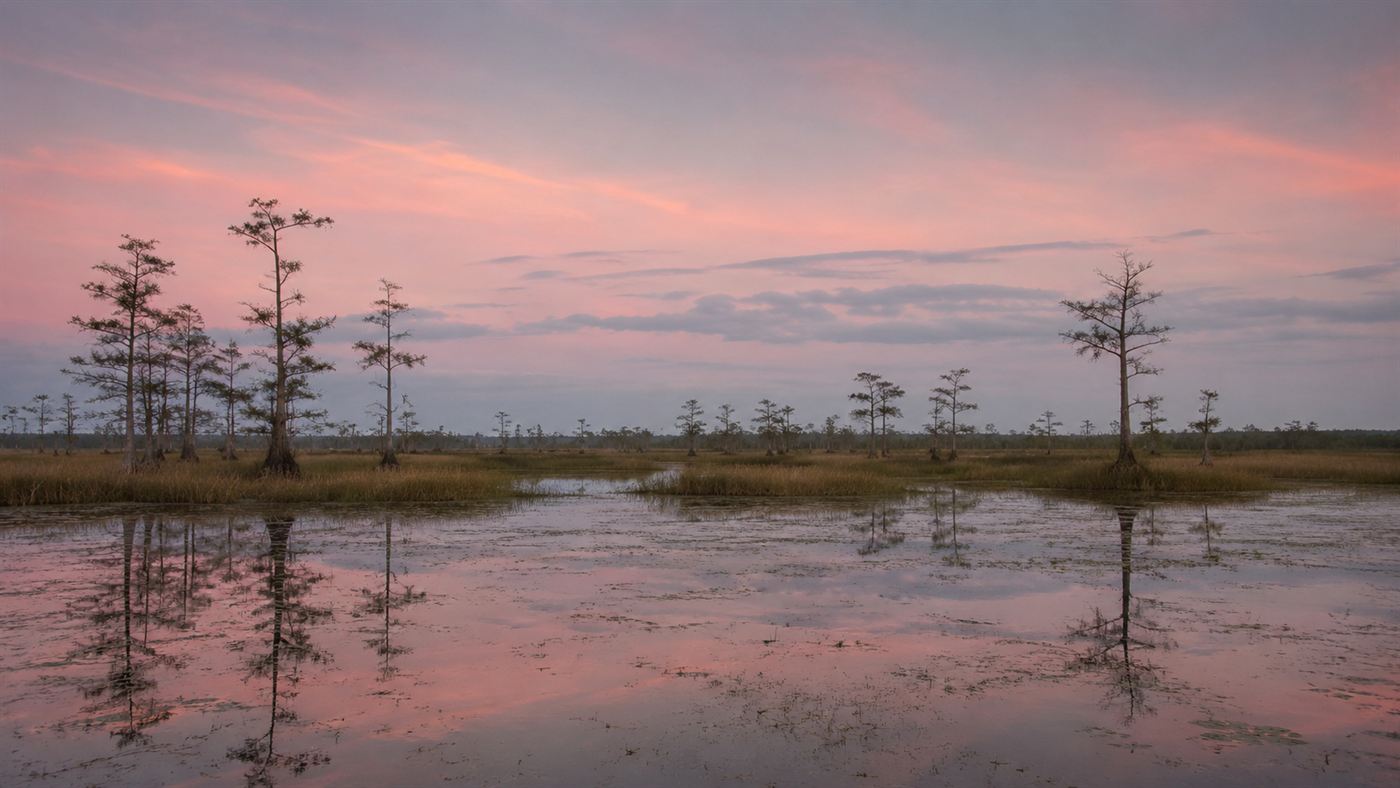
You might think a five-metre snake would be easy to find. It is the opposite. Burmese pythons are masters of camouflage, their blotched skin melting into the sawgrass and mud so completely that an experienced searcher can walk within a metre of one and never see it. With an estimated tens of thousands of them, perhaps far more, spread across thousands of square kilometres of swamp, simply locating them is the central, maddening problem.
Florida has thrown everything at it. The state runs the Python Challenge, a public hunting competition that draws over a thousand mostly amateur hunters, and yet a typical contest removes only around a hundred snakes. One celebrated hunt pulled nearly 300 pythons out of the Everglades in ten days, and biologists admitted it had barely made a dent in the population. Scientists also fit "scout" snakes with radio tags to lead them to others, but the maths remains brutally lopsided.
The snake hunters flown in from India
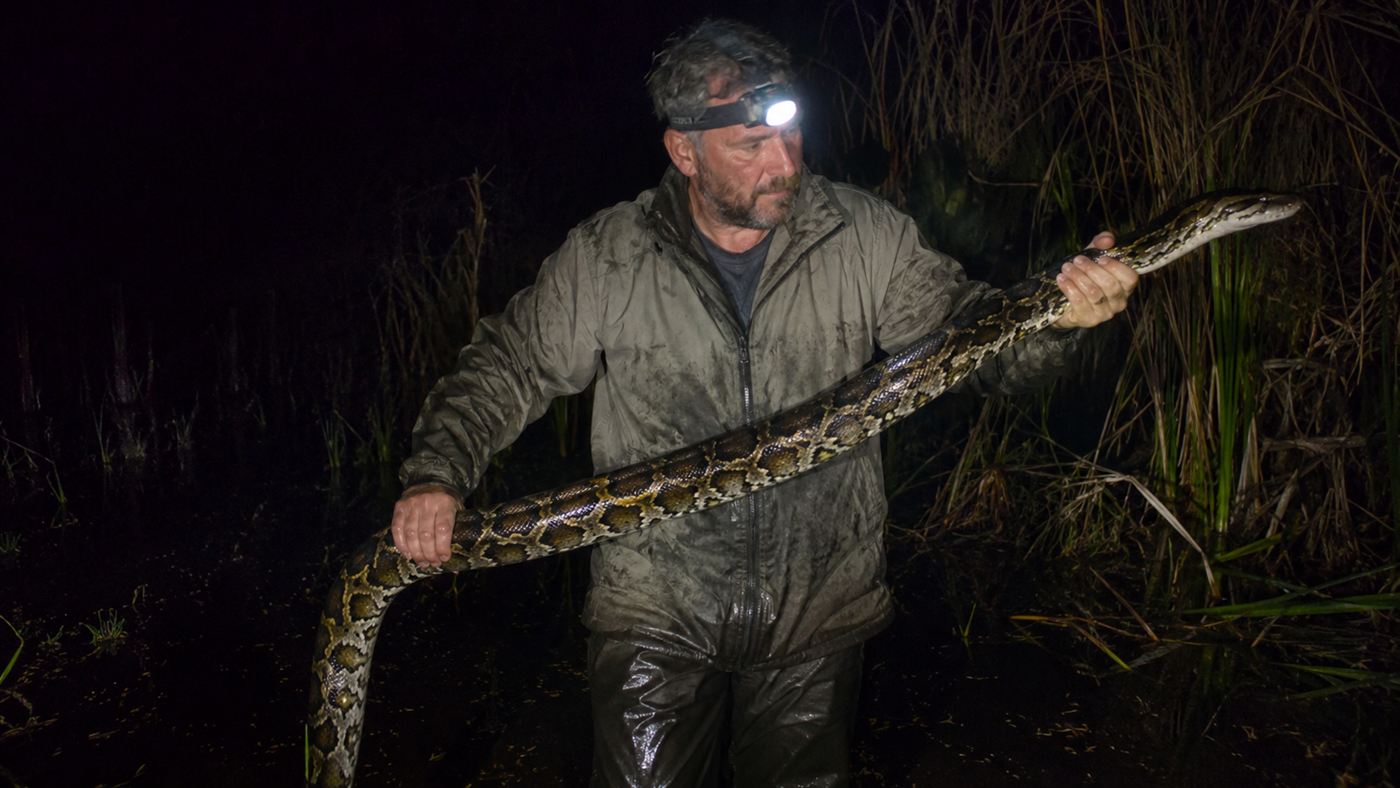
In an almost cinematic twist, one of the most effective weapons turned out to be not technology, but ancient skill. In 2017, Florida brought in two members of the Irula, a tribal people from southern India world-renowned for their almost supernatural ability to track and catch snakes by reading the faintest signs in the dirt.
The results were startling. Working with University of Florida biologists, the two Irula trackers, Masi Sadaiyan and Vadivel Gopal, caught more than a dozen pythons in their first couple of weeks, including a 16-foot female that had eluded everyone else. It was a humbling lesson: against one of the world's most high-tech conservation problems, the sharpest tool was a tracking tradition older than any laboratory.
The honest catch
A few of the wildest claims deserve trimming. The exact number of pythons is genuinely unknown, with serious estimates ranging anywhere from tens of thousands to hundreds of thousands, so anyone quoting a precise figure is guessing. The dramatic Hurricane Andrew origin story, while not impossible, is more legend than the main cause, which was the slow drip of the pet trade.
And it is worth remembering where the blame really sits. The python is not a villain; it is a superbly adapted animal doing exactly what it evolved to do, dropped into a place it was never meant to be by human carelessness. The tragedy of the Everglades is not a story about a monster snake. It is a story about what happens when we treat living things as disposable novelties.
Why the Burmese pythons still matter
The python invasion has become the textbook warning for the global exotic-pet trade, a vivid demonstration that a creature bought on a whim can, multiplied across thousands of careless owners, bring down an entire ecosystem. It has reshaped how authorities think about which animals should ever be allowed across a border.
Its deepest lesson is about how fragile and irreversible this kind of damage can be. It took only a couple of decades and a few thousand abandoned pets to gut a wilderness that had thrived for thousands of years, and there may now be no way to fully put it back. The Everglades will likely never be entirely free of pythons; the best anyone hopes for is to hold the line, snake by snake, forever.
A few thousand abandoned pets emptied a national park of its wildlife, and no amount of hunting can fully undo it. When an invasive species can never truly be removed, how much should we keep spending to fight a war we may not be able to win? Tell us what you think in the comments.
Related reading: Against another invasive menace, the flesh-eating screwworm, science actually found a way to win, by flooding the wild with sterile flies. See also the northern snakehead, the air-breathing Frankenfish that no amount of poison could keep out of the Potomac.