Doctors laughed at his idea about ulcers, so he drank a glass of bacteria to prove them wrong
For most of the twentieth century, doctors were certain that stomach ulcers came from stress and too much acid, and they treated millions of patients accordingly. One young Australian doctor was convinced they were all wrong, and he could not get anyone to listen. So Barry Marshall did something almost no scientist would dare: he swallowed the bacteria he believed were the real cause.
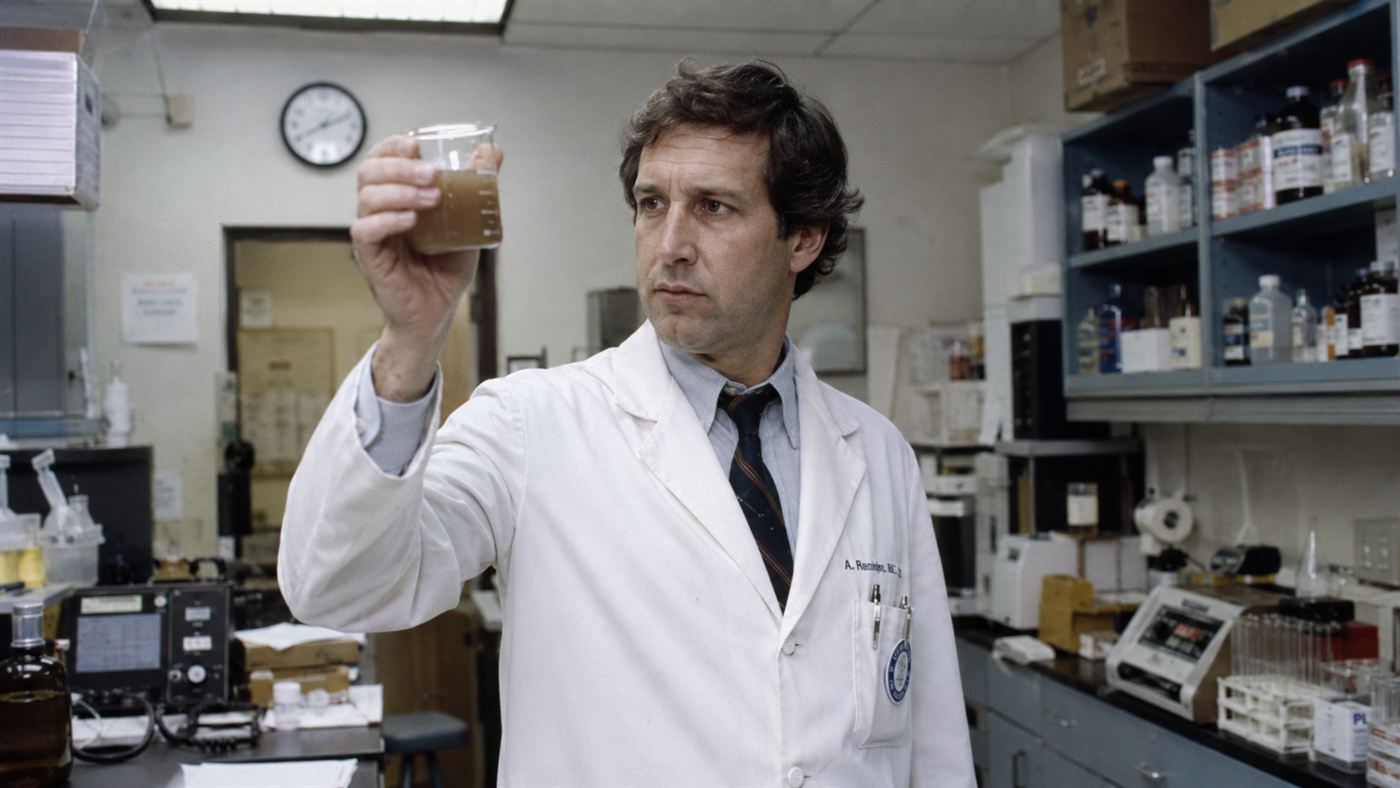
When the evidence would not convince his colleagues, Marshall turned his own body into the experiment. Illustration: Watts & Wild.
It is one of the great stories of stubbornness in modern medicine. Barry Marshall was right about something enormous, the world refused to believe him, and rather than wait years for opinion to shift, he proved it on himself in a matter of days. The gamble paid off in the most spectacular way, ending in a Nobel Prize and a revolution in how a common, miserable disease is treated.
It is also a reminder of how fiercely even good scientists can cling to a comfortable wrong answer.
A disease everyone misunderstood
Peptic ulcers, painful sores in the lining of the stomach or gut, were once a lifelong sentence. The accepted wisdom was that they were caused by stress, spicy food and excess stomach acid, so patients were told to relax, change their diet and take acid-reducing drugs, often for the rest of their lives. In severe cases, surgeons cut out parts of the stomach.
It was a huge and lucrative field of medicine, built entirely on the idea that ulcers were a plumbing problem of acid and nerves. The trouble was that the treatments rarely cured anyone; they just held the misery at bay. Something important was being missed.
The idea no one would believe
In the early 1980s, working in Australia, Barry Marshall and the pathologist Robin Warren noticed a curious thing: the stomachs of ulcer patients were teeming with a particular spiral-shaped bacterium. They proposed that this germ, later named Helicobacter pylori, was the true cause of most ulcers, which would mean the disease was an infection that antibiotics could simply cure.
The medical establishment dismissed the idea almost out of hand. Everyone knew, they said, that no bacterium could possibly survive in the savage acid of the human stomach, so the germ had to be harmless and beside the point. Marshall's papers were rejected, his talks met with polite scorn, and a discovery that could help millions sat ignored. He grew increasingly frustrated, and increasingly certain he was right.
Why Barry Marshall drank a glass of bacteria
Unable to test the idea on patients for ethical reasons, and unwilling to wait, Marshall chose the one person he could experiment on without anyone's permission: himself. One morning in 1984 he had his lab technician scrape a thriving culture of Helicobacter pylori into a small beaker of broth, and he drank the cloudy liquid down in one go.
It was a genuinely reckless thing to do. He had no idea how ill he might become, whether the infection could be cleared, or what damage it might cause. But he reasoned that if the bacteria really were harmless, as his critics insisted, nothing would happen, and if they made him sick, that was exactly the point he was trying to make.

Sick in days, cured in a week
The bacteria did not disappoint. Within a few days Marshall felt nauseous, developed bad breath and began to vomit, and tests confirmed that the lining of his stomach was now inflamed with the very gastritis that precedes an ulcer. His own body had become living proof that the supposedly harmless germ could attack a healthy stomach, just as he had argued all along.
Having made his point, he took a course of antibiotics and cleared the infection, curing himself. The experiment was crude, even dangerous, but it was vivid and impossible to wave away. Slowly, then quickly, the medical world came round, and the treatment of ulcers was transformed from a lifetime of pills and surgery into a short, cheap course of drugs that actually cures.
What did Barry Marshall prove?
He proved that most stomach ulcers are an infectious disease, not a punishment for a stressful life, and that they can be cured rather than merely managed. In 2005, Marshall and Warren were awarded the Nobel Prize in Medicine for the discovery, a vindication that arrived two decades after he had gulped down his beaker of germs.
The wider lesson outlived even the medical one. Marshall's story is now taught as a warning about how confidently the experts can be wrong, and how much courage it can take to overturn a belief that everyone treats as obvious. Sometimes the hardest part of a discovery is not making it, but getting anyone to believe it.
What really causes stomach ulcers?
To be fair to the whole picture, Marshall did not show that every ulcer is caused by bacteria. Today doctors recognise two main culprits, infection with Helicobacter pylori and the long-term use of anti-inflammatory painkillers like aspirin and ibuprofen, while stress and diet are seen as things that can worsen symptoms rather than create the sore.
His self-experiment, dramatic as it was, was also just one piece of a larger body of careful evidence he and Warren had gathered, and he developed gastritis rather than a full-blown ulcer. None of that dims the achievement. A man so sure of an unpopular truth that he was willing to poison himself to prove it changed medicine for the better, and spared countless people a lifetime of needless suffering.
A doctor so certain the experts were wrong that he drank a glass of bacteria, got sick on purpose, and won a Nobel Prize for it is hard to forget. Would you trust a scientist willing to poison themselves to prove a point, or is that exactly the kind of obsession real breakthroughs need? Tell us what you think in the comments.
Related reading: Clair Patterson, who dated the Earth and then took on an entire industry over lead poisoning, or Ignaz Semmelweis, mocked to death for discovering that handwashing saves lives, or the mirror box that eases phantom limb pain by fooling the brain. See also a 2026 study overturning what doctors thought caused a common stroke.