Amputees can feel agonizing pain in a hand that is no longer there, and a neuroscientist found he could ease the phantom limb with nothing more than a cheap mirror
How do you treat pain in a part of the body that does not exist? For most of medical history the answer was that you could not. Then a scientist realised the problem was not in the missing arm at all, but in the brain, and that a simple mirror might reach it. The phantom limb met its match.
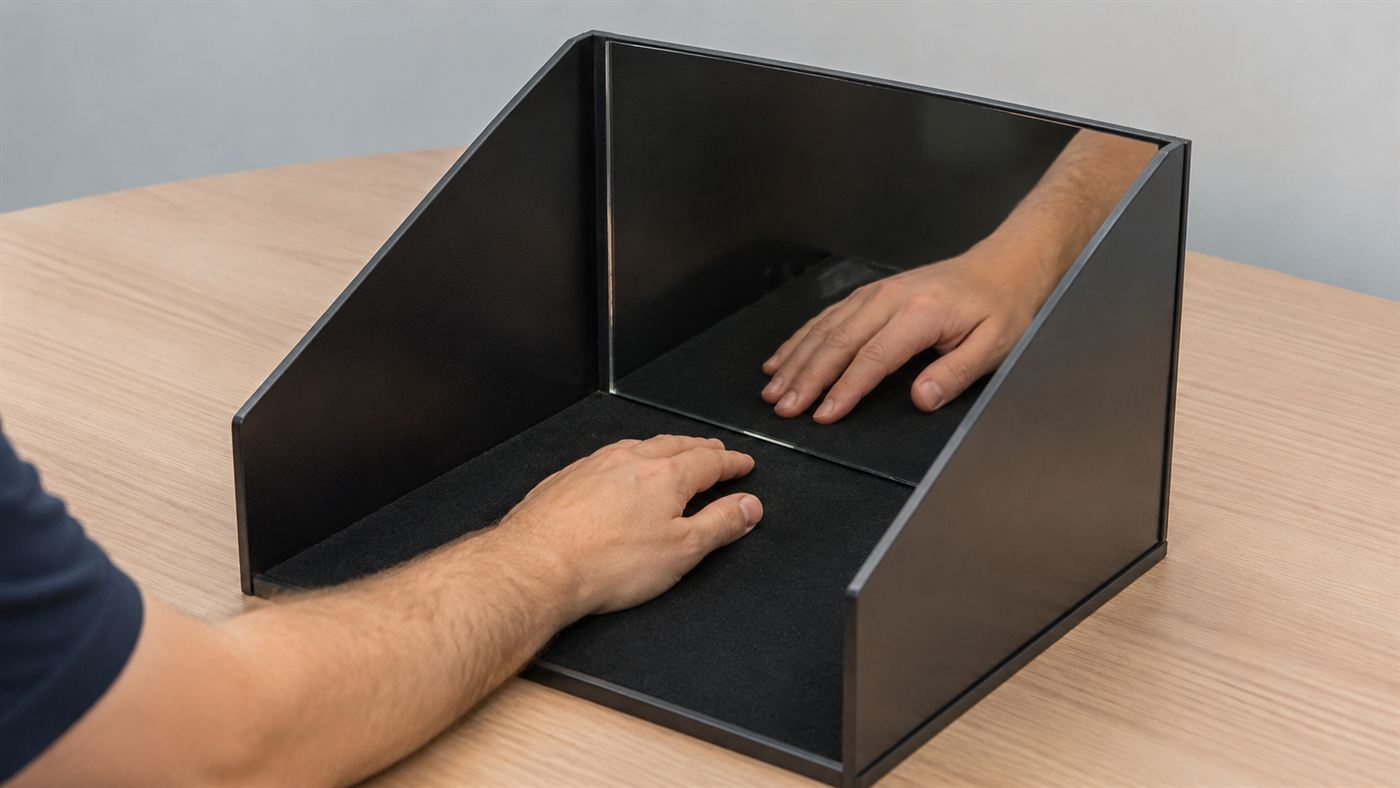
A mirror box, the deceptively simple device used against phantom limb pain. Illustration: Watts & Wild.
The phantom limb is one of the strangest experiences the human body produces. After an arm or a leg is amputated, most people do not feel it vanish. They feel it stay. The limb is still vividly there, they can sense its position, try to move it, feel it tingle, and, cruelly, feel it hurt. Phantom limb pain can be excruciating and unrelenting, and for a very long time medicine had almost nothing to offer against it.
The breakthrough came from realising that everyone had been looking in the wrong place. As described in the record of mirror therapy, the neuroscientist V.S. Ramachandran developed a mirror box to treat phantom limb pain by targeting the brain rather than the limb. His solution was so cheap and so simple that it sounds like a magic trick, and in a sense it is one, played on the brain itself.
The short version: Many amputees suffer real pain in a limb that is gone, often feeling it locked in a painful, clenched position. Neuroscientist V.S. Ramachandran showed this phantom limb pain comes from the brain, whose body map is reshaped after amputation. His mirror box reflects the intact limb into the phantom's place, tricking the brain into seeing and moving the missing limb, which for many people eases the pain, though how well it works is still debated.
Pain in a limb that is gone
To grasp why phantom pain is so hard to treat, picture one of its common forms. An amputee feels their missing hand clenched into a tight fist, the fingernails digging into a palm that no longer exists, and no matter how hard they try, they cannot open it. The hand is not there to relax, and no painkiller or surgery can reach a fist made only of sensation. This is the trap the amputee is caught in.
For most of history, doctors treated phantom pain as either imaginary or hopeless, and patients were often left to simply endure it. Some of the pain was blamed on the raw, severed nerve endings in the stump, and surgeons sometimes cut further up the limb to try to remove the source, only for the phantom, and the pain, to return. The problem clearly lay somewhere the scalpel could not follow.
The pain is in the brain, not the arm
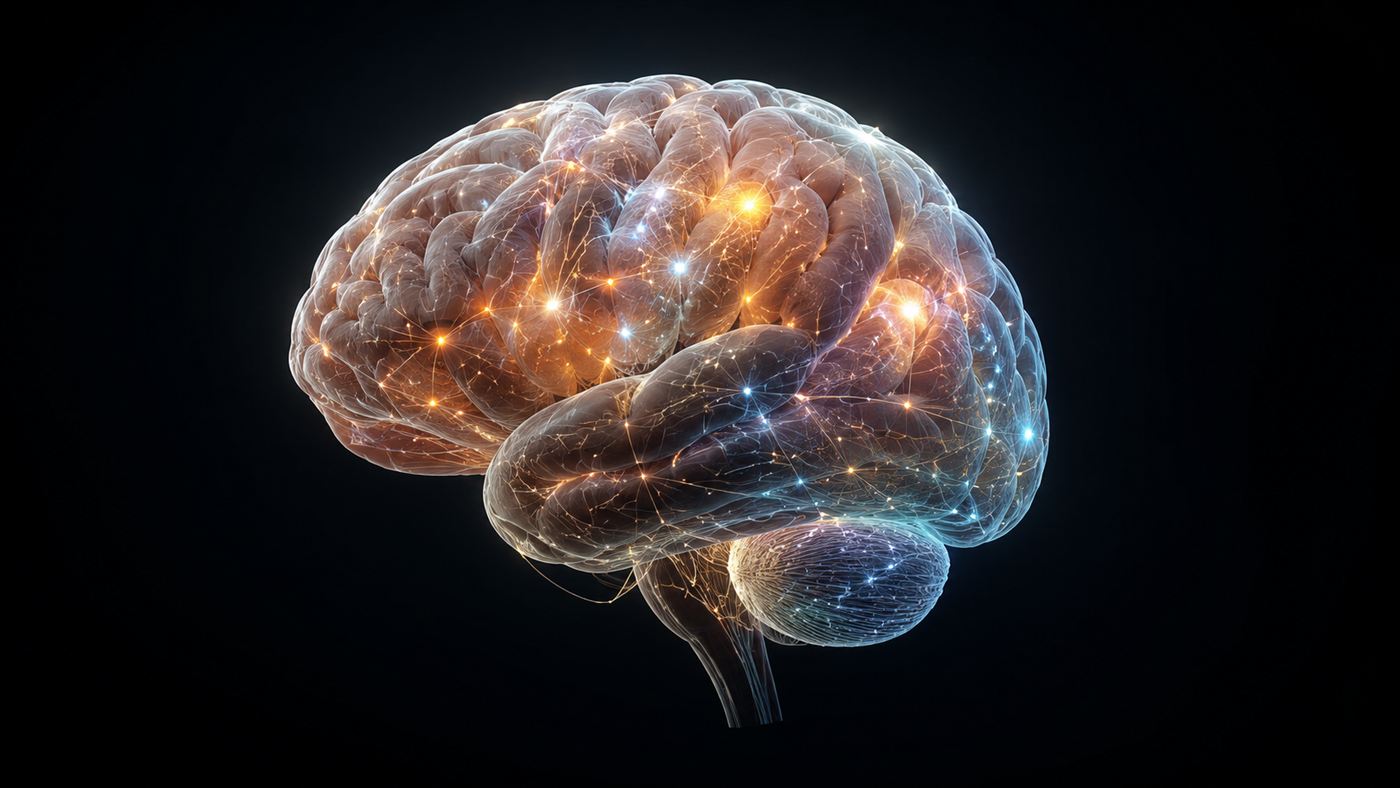
Ramachandran's insight was that the phantom lives in the brain. The body is represented in the brain by a kind of map, with a patch of cortex devoted to the hand, another to the face, and so on. When a hand is amputated, the patch that used to serve it falls silent, and its neighbours begin to encroach on the vacant territory in a striking display of brain plasticity.
He proved this with a beautifully simple test. The cortical area for the face sits right next to the area for the hand, so Ramachandran stroked the faces of amputees and found that they felt the touch not only on their cheek but in their phantom fingers. The brain's wiring had been rerouted so that the face was now, in part, feeding the vanished hand. The phantom was not a memory or a delusion, it was a living map in the brain that had been left dangling when the limb was cut away.
A brain that learned to be stuck
Why should the phantom feel frozen and painful? Ramachandran proposed an idea he called learned paralysis. In many patients, the real limb had been paralysed or immobilised for a while before it was removed, perhaps in a sling or crushed in an accident. During that time, every command the brain sent to move it came back with the same answer: nothing happened.
Repeated over and over, that failure gets burned into the brain's circuitry, until the brain concludes, at a deep level, that this limb simply cannot move. Then the limb is amputated, but the lesson remains. The phantom is stuck in whatever position it was in, because the brain has learned it is paralysed, and a limb clenched tight and unable to release is a recipe for constant pain. The brain had trapped itself.
The mirror that moves a phantom limb
If the trap was built by feedback, Ramachandran reasoned, maybe new feedback could spring it. His device was almost comically basic: a cardboard box with a vertical mirror inside. The patient places their intact hand on one side of the mirror and their stump on the other, then looks into the mirror at an angle so that the reflection of the good hand appears exactly where the missing one should be.
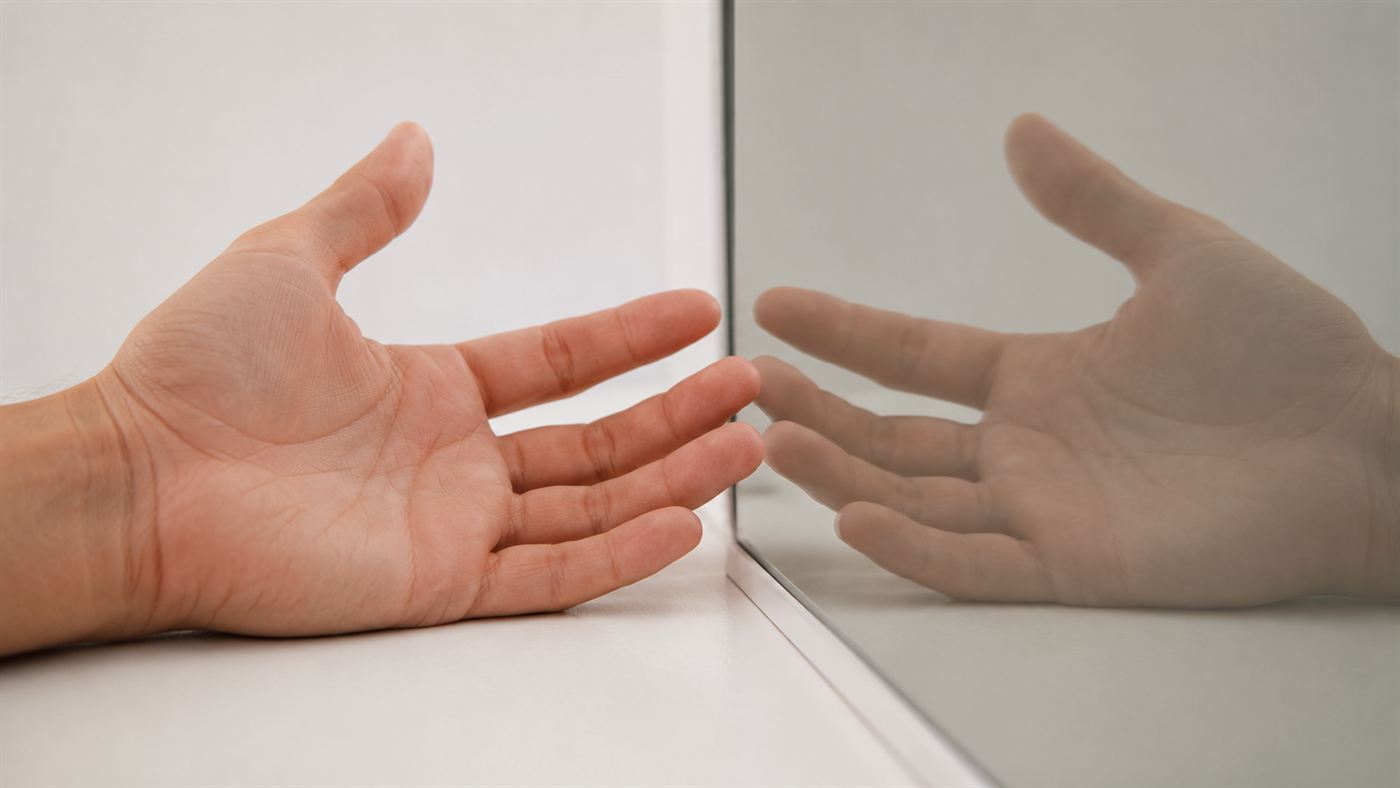
Suddenly, the amputee seems to see two whole hands. As reported in a trial in the New England Journal of Medicine, having patients watch the mirror image of their intact limb move can reduce phantom limb pain. When the patient moves the real hand while watching, the brain receives vivid visual proof that the phantom limb is moving too. For many people, the frozen fist finally unclenches, and the pain drains away. In some of Ramachandran's cases the phantom itself faded, which he wryly called the first successful amputation of a phantom limb. This is mirror therapy, and it costs almost nothing.
What a mirror teaches us about the mind
The mirror box is powerful not only because it can relieve suffering but because of what it reveals. It shows that the body you feel yourself to have is not a simple fact reported by your nerves, but a model constructed by your brain, one that can be edited, fooled and retrained through the senses, especially vision. Show the brain a convincing enough picture, and it will update its sense of the body accordingly.
That principle has spread well beyond amputees. Versions of mirror therapy, and its digital descendants in virtual reality, are now used to help people recovering from strokes move paralysed limbs again, and to treat other baffling pain conditions where the brain's body map has gone awry. A humble mirror opened a door onto how flexible, and how deceivable, our sense of our own bodies really is.
The honest catch
The story is inspiring, so it needs a careful dose of honesty. Ramachandran's early results were dramatic but came from small numbers of patients, and mirror therapy does not work for everyone. The evidence since has been genuinely mixed: some controlled trials show clear benefit, while a recent systematic review of randomized, placebo-controlled trials found no convincing evidence that mirror therapy reliably reduces phantom limb pain. It is a promising, low-cost, low-risk option, not a guaranteed cure.
The underlying theories, cortical remapping and learned paralysis, are also leading models rather than settled facts, and researchers still argue over exactly why phantoms hurt and why mirrors sometimes help. But even with all those caveats, the core discovery stands and is profound. Ramachandran took a torment that medicine had written off as untreatable, traced it to the brain, and reached it with an illusion. Whatever the trial statistics eventually say, he changed how we think about pain, the body and the strange, editable map of ourselves that we carry inside our heads.
A mirror reached a pain that drugs and surgery could not, by fooling the brain that makes it. Does the mirror box prove that much of what we feel is a story the brain tells itself, and could be rewritten, or are we too quick to believe a trick that does not help everyone? Tell us what you think in the comments.
Related reading: The doctor who swallowed bacteria to overturn what medicine believed about the body, or the placebo effect, where belief alone can ease real pain.
More from Watts & Wild
More in Science & Tech →



Maria writes about wildlife, ecology, and the strange places where nature and human history collide. She is based in Brazil.