She was cloned from a single adult cell, and the world feared she had been born old
In the summer of 1996, in a quiet research barn near Edinburgh, a lamb was born that should not have been possible. She had no father, and in a sense no mother either, only a single cell taken from a grown ewe and coaxed into building a whole new animal from scratch. When the world finally learned her name, it could not decide whether to be amazed or afraid.
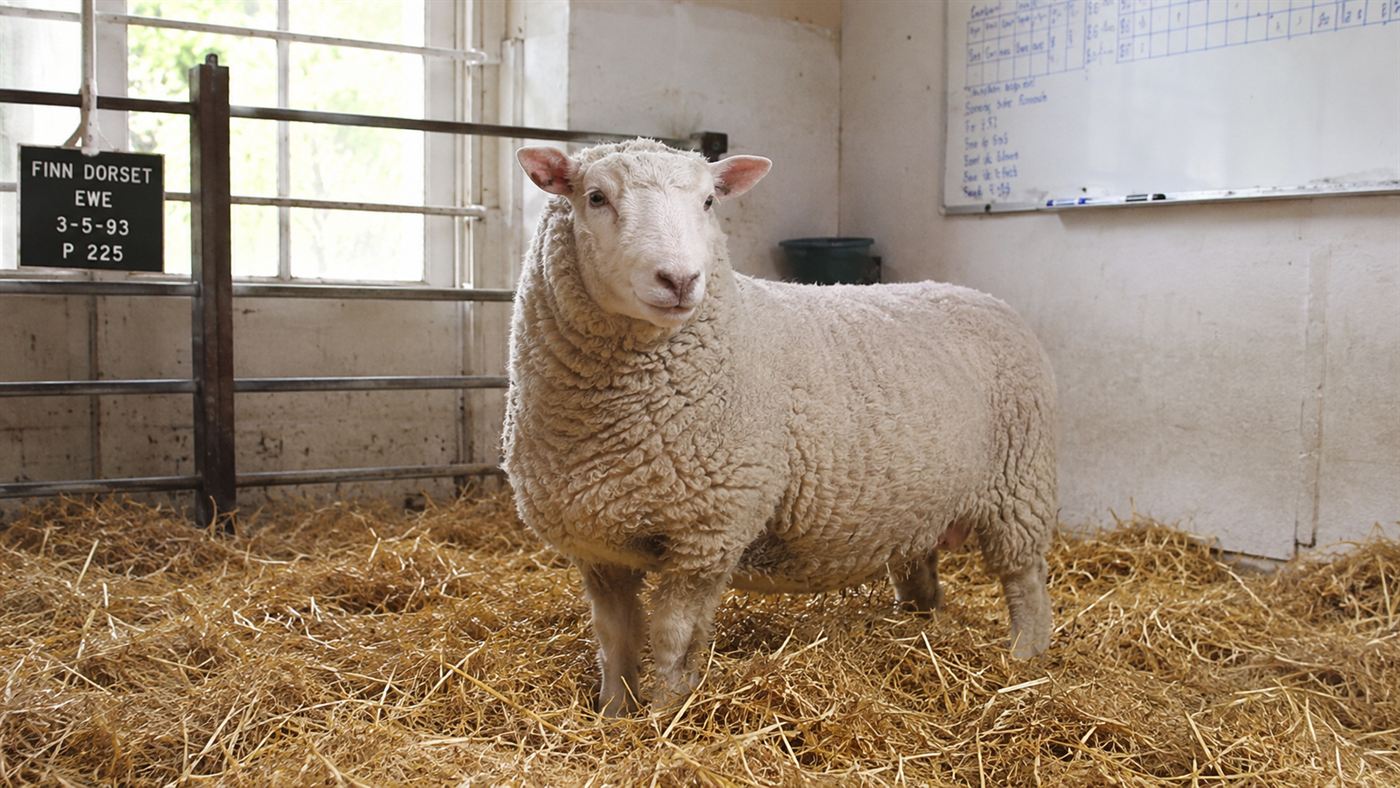
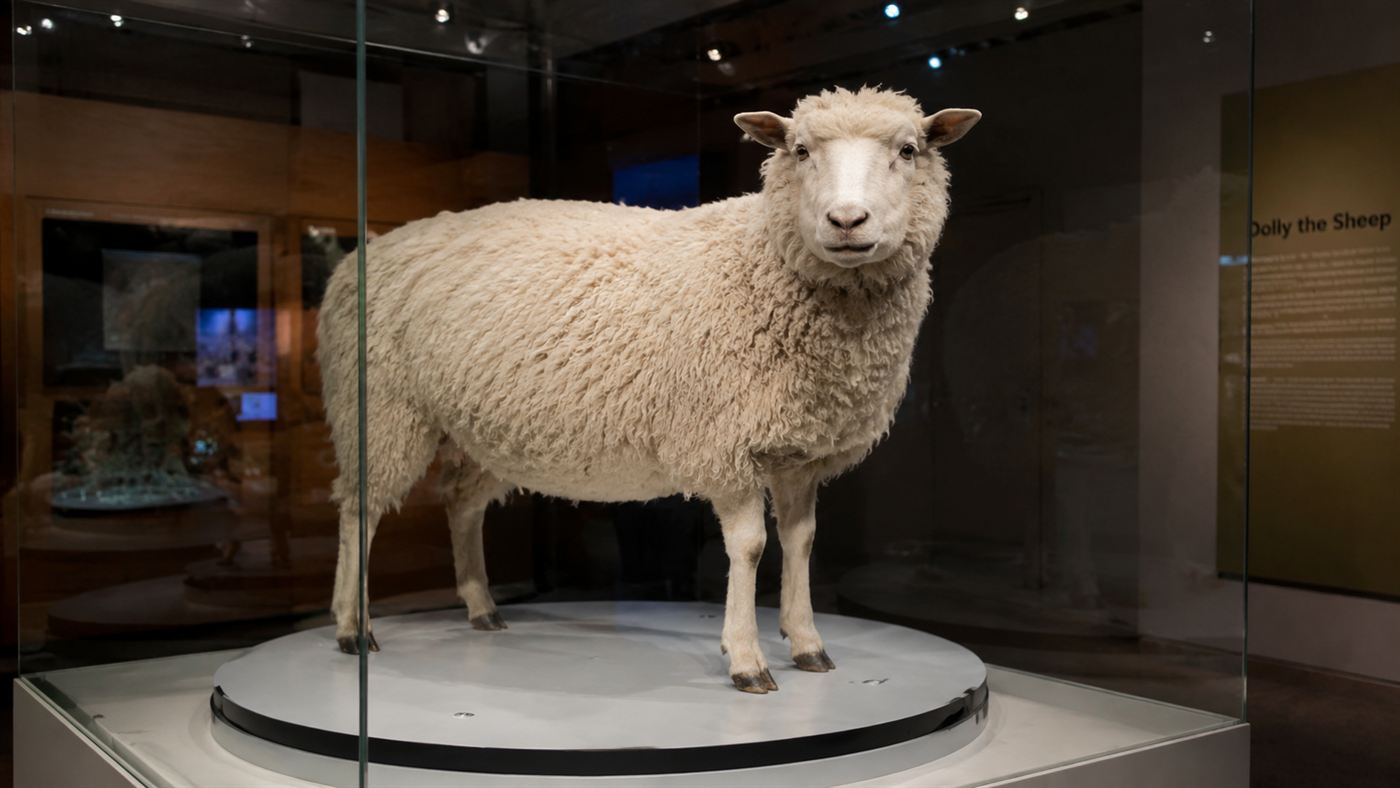
Dolly looked like any other Finn Dorset ewe, which was rather the point. Illustration: Watts & Wild.
Dolly the sheep was the first mammal ever cloned from an adult cell, born on 5 July 1996 at the Roslin Institute in Scotland, the work of biologists Ian Wilmut, Keith Campbell and their team. To look at, she was an entirely ordinary white sheep. What made her extraordinary was that her entire genetic blueprint had been copied from one cell of another, fully grown animal.
For most of a year, almost no one knew she existed. When her birth was finally announced in early 1997, it set off one of the biggest science storms of the century, because if you could copy a sheep this way, the obvious and unsettling question was what else you could copy.
A copy made from one cell
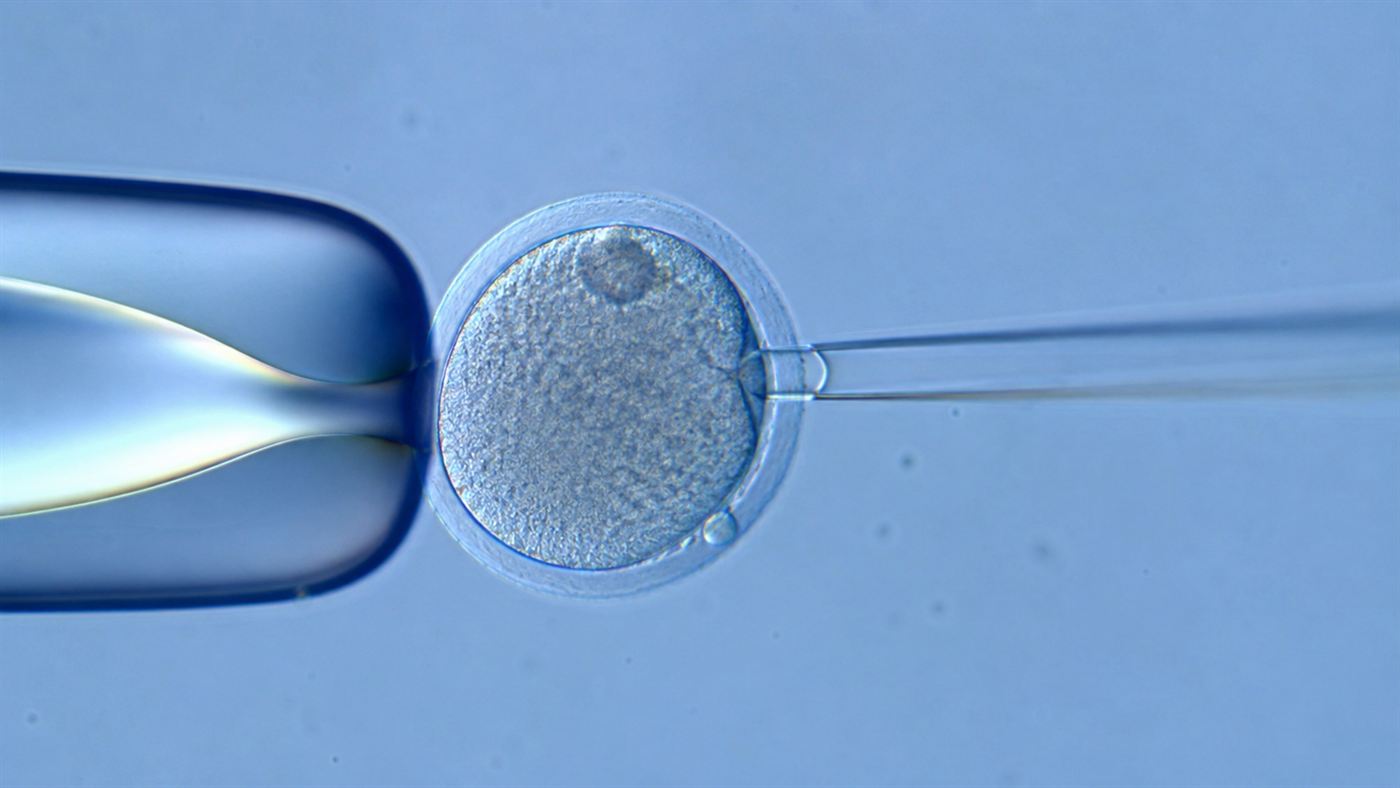
The method behind Dolly is called somatic cell nuclear transfer, and the idea is deceptively simple. The scientists took the nucleus, the part of a cell that holds its DNA, from the udder cell of an adult ewe. They removed the nucleus from a donor egg and slipped the adult nucleus inside, then used a pulse of electricity to make the egg begin dividing as if it had just been fertilised. The resulting embryo was carried by a surrogate mother, and it grew into a genetic copy of the sheep the udder cell came from.
It almost never worked. It took 277 attempts to get a single healthy lamb, a reminder that this was a brute-force triumph as much as an elegant one. But that one success overturned a belief biologists had held for decades, that once a cell had committed to being skin or udder or blood, there was no going back. Dolly proved an adult cell could be wound all the way back to the beginning.
Why they called her Dolly
The name has become almost as famous as the science. Because the cell used to create her had come from a mammary gland, the team named the lamb after the country singer Dolly Parton. It was a cheeky joke that stuck, and it helped turn a dense piece of laboratory genetics into a household name overnight.
That fame cut both ways. Dolly became a symbol of hope for medicine and a lightning rod for fear, her woolly face attached to every anxious headline about designer babies and armies of human clones. Governments rushed to ban human cloning, and a sheep in a Scottish field found herself at the centre of a global argument about how far science should go.
The fear that Dolly the sheep was born old
One worry clung to Dolly more than any other. She had been made from the cell of a six-year-old ewe, so people asked an uneasy question: was she really a newborn, or had she somehow inherited the age of the cell she came from? When scientists found that the protective caps on the ends of her chromosomes were shorter than expected for a young animal, the fear seemed to have teeth.
The worry deepened as she grew. Dolly developed arthritis while still fairly young, and when she was put down in 2003 at the age of six and a half, only about half the lifespan a sheep might hope for, it looked to many like proof that a clone was doomed to age too fast. The cheerful story of the miracle lamb seemed to be ending as a cautionary tale.
What actually killed her
The reality was less dramatic and a good deal more reassuring. Dolly was euthanised because she had a lung disease called Jaagsiekte, a contagious cancer caused by a virus that is common in sheep, especially those kept indoors as she was. It had nothing to do with cloning; she had simply caught an ordinary sheep illness from her flock.
As for the dreaded premature ageing, later work quietly dismantled it. Researchers who examined her preserved skeleton, and who studied a group of other cloned sheep, found that Dolly's arthritis was no worse than you would expect in any sheep her age, and that the clones grew old in good health. The frightening idea that cloning leaves an animal born old turned out, on the evidence, to be wrong.
The honest catch
Dolly's legacy needs a clear head. Cloning a mammal remained extremely difficult and inefficient, those 277 tries were not a fluke of bad luck but a sign of how hard the process is, and it has never become the routine copying machine the headlines once feared. The real prize was not a future full of clones, but the proof that an adult cell could be reprogrammed at all.
That single idea rippled out into modern biology, helping inspire the stem-cell research that now lets scientists turn ordinary cells into almost any tissue, with real promise for treating disease. Dolly herself lived a fairly normal sheep's life, raised lambs the old-fashioned way, and died of a common infection rather than a curse. The most famous animal in the history of genetics was, in the end, just a sheep, and that was exactly the point.
A single udder cell became a whole sheep, terrified the world, and quietly rewrote biology before dying of an ordinary illness. Did Dolly open a door we should be glad we walked through, or one we are still nervous about? Tell us what you think in the comments.
Related reading: Henrietta Lacks, whose cells were taken without consent and became the most important in medicine. See also how a gene-edited pig kidney kept a woman alive for a record 130 days.