For decades doctors blamed plaque for a lacunar stroke, and a 2026 study says the real cause is different
One of the most common kinds of stroke has been quietly misunderstood, according to new research. For years a lacunar stroke was pinned on fatty gunk clogging the arteries, the same villain behind heart attacks. A 2026 study suggests the truth is stranger and closer to home, and that the plumbing was the problem, not a blockage in it.

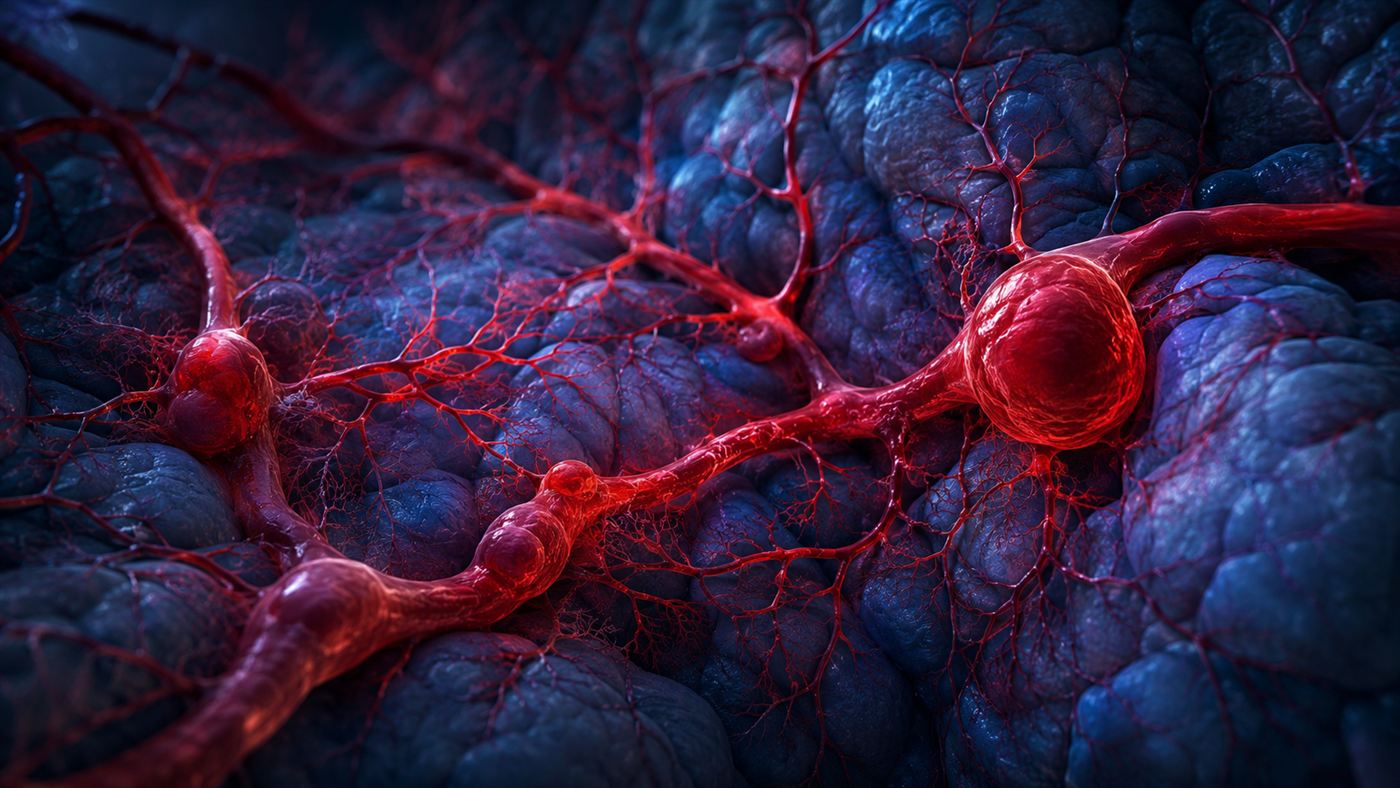
On an MRI, this common stroke leaves tiny deep marks, and their real cause has been in doubt. Illustration: Watts & Wild.
The short version is this. In a study published in the journal Circulation on July 3, 2026, researchers at the University of Edinburgh reported that a lacunar stroke, one of the most common types, is most strongly linked not to fatty plaque but to the enlargement and damage of the tiny blood vessels deep inside the brain. It is a quiet but important rewrite of a diagnosis that has quietly shaped treatment for generations.
A lacunar stroke happens when those minute vessels, buried far below the surface of the brain, fail and starve a small patch of tissue. Individually the damage is small, but it is a major cause of disability and is closely tied to later cognitive decline and dementia. For a long time the assumption was simple: the little arteries were being narrowed by the same fatty build-up that clogs the bigger ones near the heart.
This new work says that assumption was pointing in the wrong direction.
What the lacunar stroke study actually found
The team, led by Professor Joanna Wardlaw of the University of Edinburgh, followed 229 people who had suffered either a lacunar stroke or a milder non-lacunar one. Each was given clinical and cognitive tests and detailed MRI brain scans, both soon after the event and again a year later, so the researchers could watch how the small vessels behaved over time.
The pattern that emerged surprised them. The strongest signal was not fatty narrowing but the opposite kind of change, small arteries that had become enlarged and widened and misshapen. People whose deep vessels showed this enlargement were more than four times as likely to have had a lacunar stroke. The damage was coming from the vessels themselves going wrong, not from a greasy plug arriving from elsewhere.
Why does the usual treatment fall short?
This is where the finding stops being academic and starts to matter for real patients. The standard defence against a stroke of this kind has long been antiplatelet drugs like aspirin, which work by stopping clots from forming on fatty deposits in the arteries. If the real trouble is not a clot on a fatty blockage but the small vessels of the brain quietly failing, then the drugs were aimed at the wrong target.
That mismatch may explain a frustrating clinical fact. In this very study, more than one in four participants went on to have further silent strokes over the year, despite receiving the usual preventive treatment. When a therapy keeps missing, it is often a clue about who is failed by today's medicine, and here the clue points squarely at the brain's own tiny vessels rather than the arteries doctors have long watched.

What could change for patients now
If small-vessel disease, and not fatty plaque, is the engine of this stroke, then the search for better treatment has to move to a new address. Instead of only thinning the blood, the goal becomes protecting and steadying the fragile little vessels themselves. That is exactly the direction a trial called LACI-3 is now taking, testing two existing drugs, cilostazol and isosorbide mononitrate, to see if they can shield brain tissue and cut the rate of repeat strokes.
None of this is a cure waiting on the shelf. But it is the kind of shift that, over years, quietly changes medicine, moving the target from the wrong culprit to the right one so that the next generation of drugs is designed for the disease people actually have.
The honest catch
A result like this deserves both excitement and restraint. This was a carefully run study, but a focused one, following 229 patients rather than tens of thousands, and an association between enlarged vessels and stroke is a powerful clue rather than final proof that one causes the other. Medicine has been fooled before by strong links that later softened, and a single cohort, however good, is a beginning.
Yet the direction is compelling, and it comes from one of the most respected groups in the field. The honest way to hold it is as a serious course correction rather than a revolution overnight. If it holds up, a great many people currently taking pills aimed at the wrong problem could one day be offered something built for the real one, and that is a quietly hopeful thing to take from a story about a stroke.
Sources: ScienceDaily on the study, and the paper in Circulation.
A single scan of the deep brain may be worth more than a lifetime of blaming the wrong culprit. Would you want to know whether the standard pills actually match your kind of stroke, or is that a question you would rather leave to the doctors? Tell us what you think in the comments.
Related reading: the doctor who swallowed bacteria to prove that ulcers were not caused by stress. See also the brain implants letting paralysed people move again, and the woman who can smell Parkinson's disease years before diagnosis.