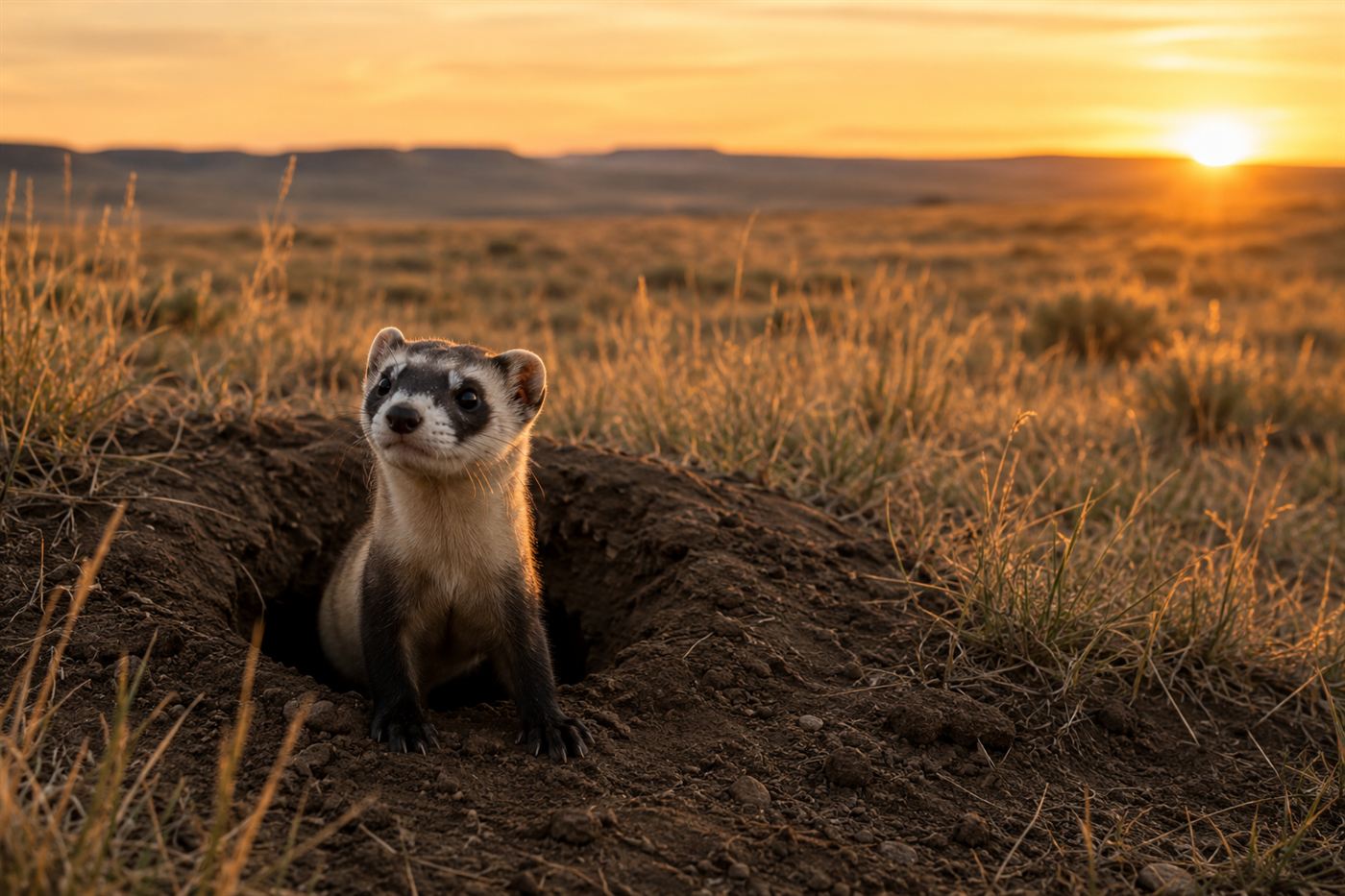
The black-footed ferret is the only ferret native to North America, and for most of the twentieth century it was being driven toward oblivion by the very people who owned the land it lived on. Prairie dog colonies, the ferret's almost exclusive food source and the ready-made burrow system it sheltered in, had been systematically poisoned across the Great Plains since the 1910s. By 1979 biologists had not confirmed a single living black-footed ferret anywhere in the United States, and the species was officially declared extinct, setting the stage for what became the most dramatic black-footed ferret recovery in conservation history.
Then John Hogg's dog dragged one home to a ranch in Meeteetse, Wyoming, and nothing was ever the same again.
The black-footed ferret was declared extinct in 1979 after prairie dog poisoning across the Great Plains stripped away its food supply. A chance discovery of 130 animals in Wyoming in 1981 led to an emergency captive breeding program after sylvatic plague and canine distemper reduced the colony to 18 survivors. By 2026 roughly 300 to 500 black-footed ferrets live wild across more than 30 reintroduction sites in the United States, Canada, and Mexico.
When did the black-footed ferret go extinct?
The answer is complicated, because the black-footed ferret went extinct twice.
The first time, scientists were sure they had lost it for good.
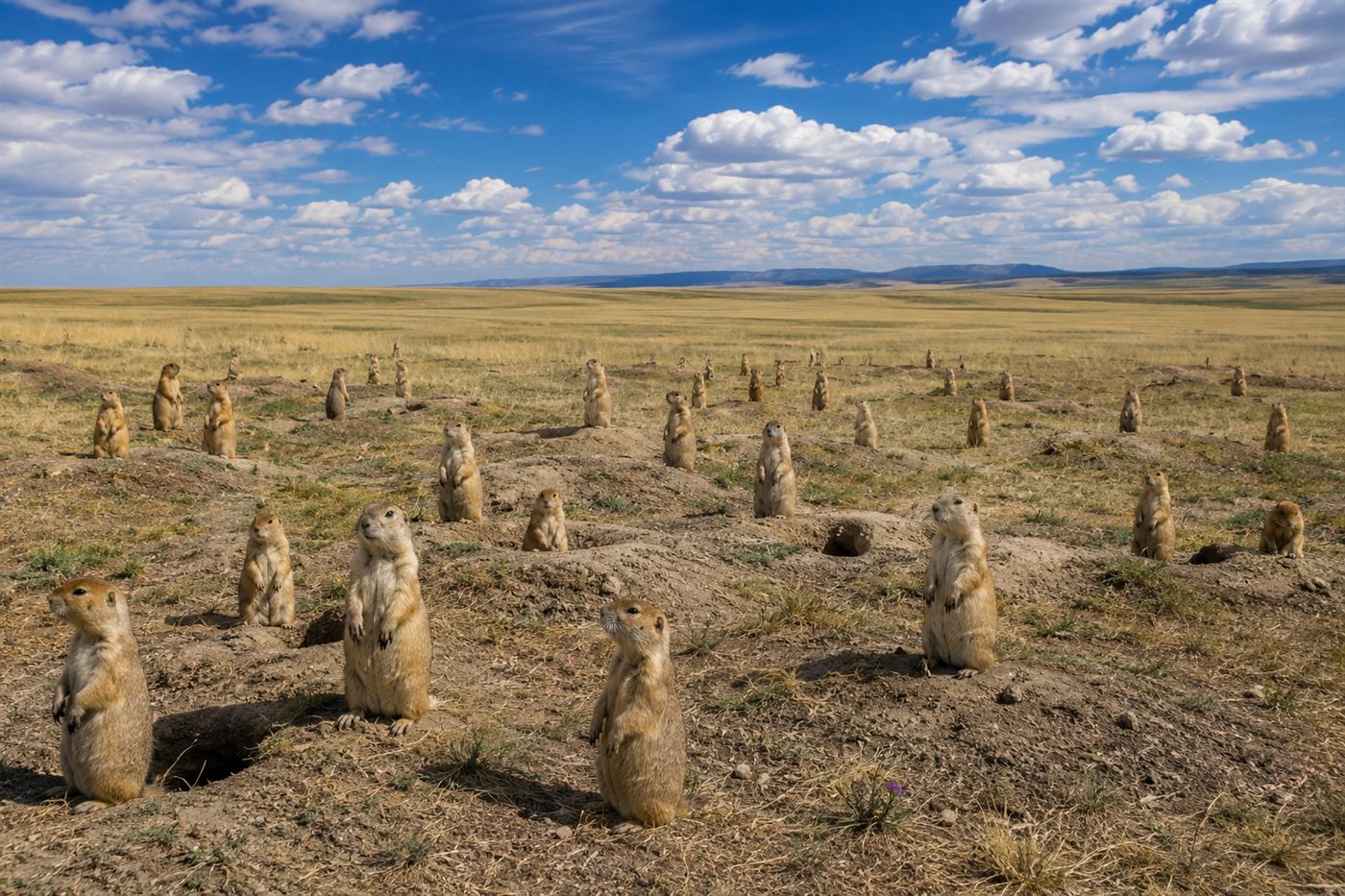
The ferret's entire existence depended on the prairie dog, a colonial ground squirrel that once covered an estimated 250 million acres of the Great Plains, the same grassland where the American bison was hunted from tens of millions to a few hundred.
Prairie dogs were the black-footed ferret's prey, its shelter, and its anchor to the landscape.
A single adult ferret eats roughly 100 prairie dogs per year and raises its young inside their abandoned burrows.
Starting in the early twentieth century, the US government and ranchers launched a systematic poisoning campaign against prairie dog towns, viewing them as competitors for cattle grazing across the Great Plains.
By the mid-1900s an estimated 95 percent of prairie dog habitat had been destroyed or poisoned.
The black-footed ferret followed their colonies into collapse.
The last confirmed black-footed ferret in the wild before 1981 was a single animal seen in South Dakota in 1974.
In 1979, with no confirmed sightings for five years, the US Fish and Wildlife Service declared the black-footed ferret extinct in the wild.
The ranch dog that saved a species
On the night of September 26, 1981, a dog belonging to rancher John Hogg returned to his farm near Meeteetse, Wyoming, carrying a dead animal nobody in the family could identify.
Lucille Hogg brought the small creature to taxidermist Larry Larom, a curator at the Buffalo Bill Historical Center in Cody, Wyoming.
Larom identified it immediately as a black-footed ferret.
Wildlife biologists were called in, and within weeks a survey team located a living colony of more than 130 black-footed ferrets on and around the Hogg ranch, sheltering inside an extensive prairie dog town.
The discovery made international news.
For four years, from 1981 to 1985, biologists monitored the Meeteetse colony as closely as they dared without disturbing it.
At its peak the population reached around 129 known individuals.
The twist in this story is the one detail that never stops landing hard: the dog that revealed the last wild black-footed ferret colony was the same animal that killed the specimen that triggered the search.
Without that unlucky ferret being dragged home to the Hogg family porch, the colony might have survived undetected until sylvatic plague wiped it out with no survivors captured at all.
How sylvatic plague nearly finished what poisoning started
Sylvatic plague is a flea-borne bacterial disease caused by Yersinia pestis, the same organism responsible for bubonic plague in humans.
It was introduced to North America from Asia in the early 1900s and spread rapidly across the continent's rodent populations.
Prairie dogs have virtually no immunity to sylvatic plague, and a single outbreak can wipe out an entire town within weeks.
For the black-footed ferret, which depends entirely on prairie dogs to survive, sylvatic plague is doubly lethal: it removes the food supply and kills the ferrets directly through infected flea bites.
In 1985, sylvatic plague swept through the Meeteetse prairie dog towns.
Canine distemper, another introduced disease to which black-footed ferrets have no natural resistance, hit the colony at almost the same time.
The combined effect was catastrophic.
By 1986, biologists watching the colony with growing alarm counted fewer than a dozen animals.
The decision was made to capture every black-footed ferret that could be found.
By 1987, only 18 black-footed ferrets had been taken into captivity.
Those 18 animals represent the entire genetic bottleneck through which every living black-footed ferret has since passed.
Captive breeding and the black-footed ferret recovery
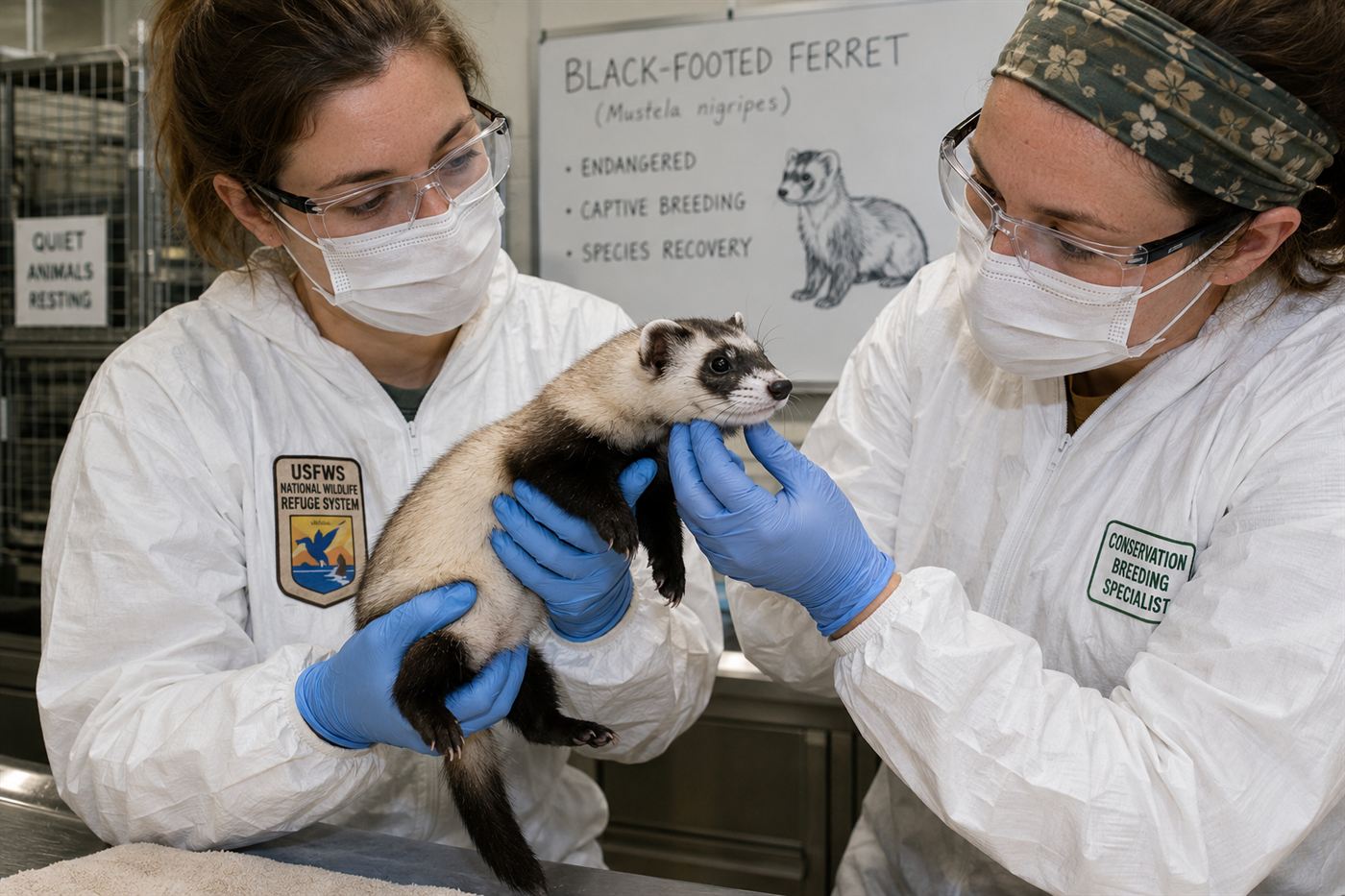
The captive breeding program for the black-footed ferret had to be built almost from scratch, because nobody had ever successfully bred the species in captivity at any scale before.
The US Fish and Wildlife Service established the National Black-Footed Ferret Conservation Center in Wellington, Colorado, as the primary hub for the recovery effort.
Partner facilities including zoos in Phoenix, Louisville, Toronto, and Colorado Springs took breeding pairs, spreading the genetic risk in case disease hit one facility.
By 1991, the captive breeding population had grown enough to attempt the first reintroduction.
Forty-nine black-footed ferrets were released at Shirley Basin in Wyoming, chosen for its large and intact prairie dog complex.
The first reintroductions failed more than they succeeded.
Sylvatic plague followed the black-footed ferrets into site after site, collapsing the prairie dog towns supposed to sustain them.
Wildlife managers eventually turned to plague-killing oral vaccines for prairie dogs and insecticide dusting of burrow entrances, a labor-intensive process that has to be repeated across thousands of acres every few years.
The approach worked well enough to keep populations alive at multiple sites, though never at the densities that once made the species common across the Wild expanses of the central continent.
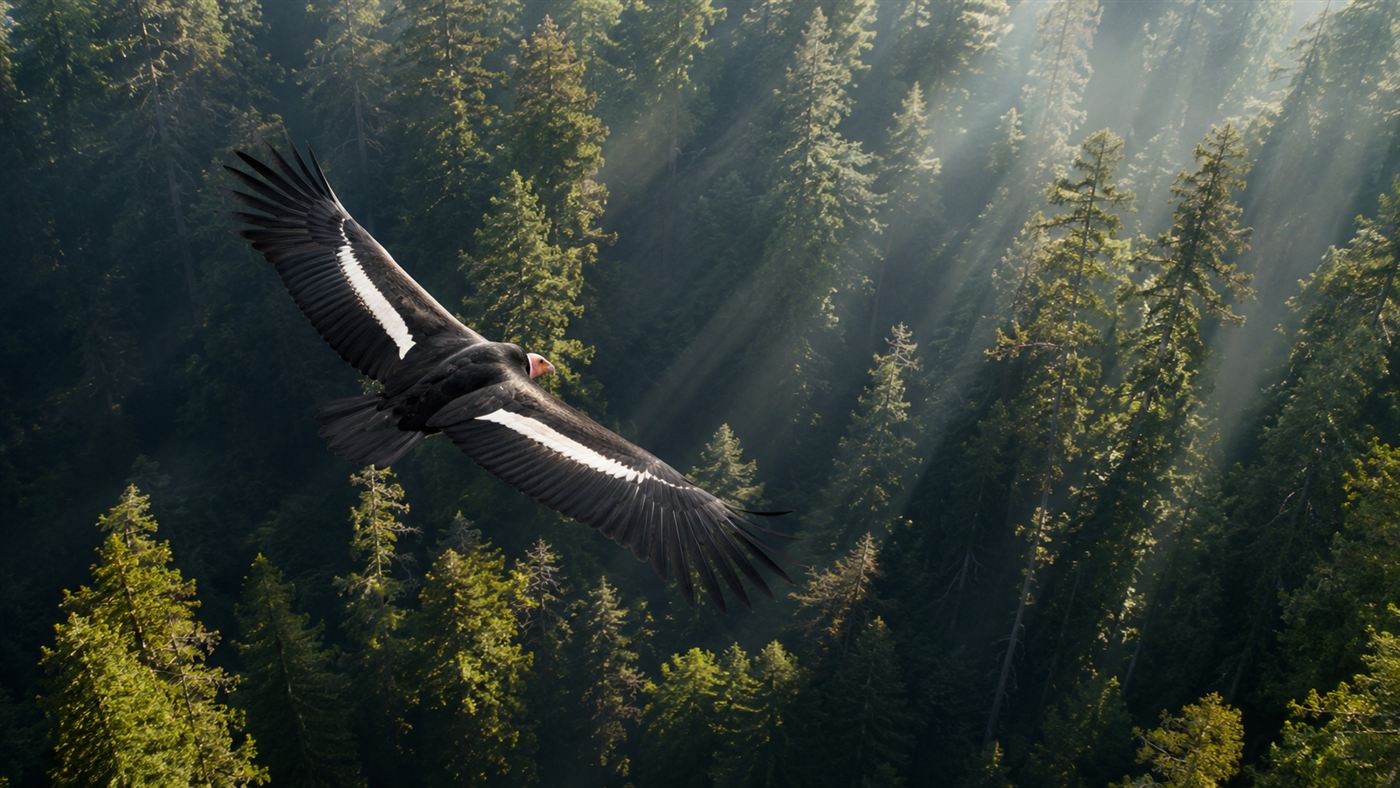
For context on just how difficult captive breeding recovery programs can be, the California condor program faced similar all-or-nothing moments and eventually crossed a thousand birds after decades of intensive effort.
How many black-footed ferrets are there now?
As of 2026, the best estimates place the wild population of black-footed ferrets between 300 and 500 individuals, distributed across more than 30 reintroduction sites in the United States, Canada, and Mexico.
That sounds like progress, and it is.
But the black-footed ferret historically numbered in the hundreds of thousands before the prairie dog poisoning campaigns began.
The current wild population represents a small fraction of what the Great Plains ecosystem once supported.
The species remains listed as Endangered by the International Union for Conservation of Nature.
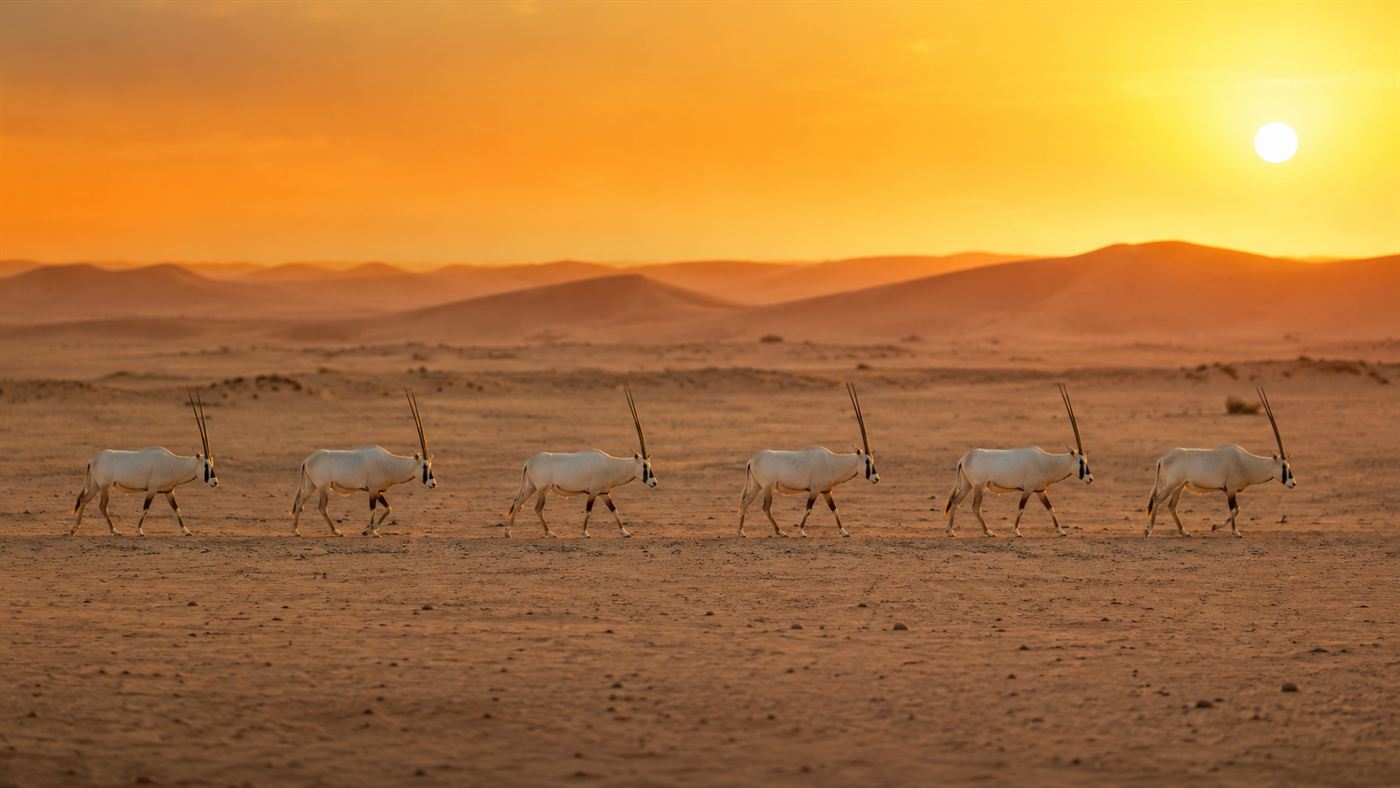
Unlike the Arabian oryx, which was downlisted to Vulnerable after wild populations recovered past a sustainable threshold, the black-footed ferret has not yet crossed the bar required to change its conservation status.
The core reason is the prairie dog itself.
Prairie dog populations across the Great Plains are still suppressed far below their historical range, and sylvatic plague continues to erupt unpredictably at reintroduction sites.
Without a healthy foundation of prairie dog towns, each black-footed ferret reintroduction site is effectively a managed reserve rather than a self-sustaining wild population.
Elizabeth Ann and the first cloned American endangered species
On December 10, 2020, a black-footed ferret named Elizabeth Ann was born at a US Fish and Wildlife Service facility in Fort Collins, Colorado.
She was a clone, created from cells taken from a ferret named Willa that had died in 1988.
Willa's tissue had been preserved at the San Diego Zoo's Frozen Zoo, a cryogenic repository of genetic material from hundreds of rare species, for more than three decades.
Elizabeth Ann became the first endangered species native to the United States ever to be cloned.
The significance goes beyond the novelty.
Because Willa died before the captive breeding program was established from those original 18 survivors, her genome contains genetic diversity that no living black-footed ferret carries.
Introducing that diversity into the captive breeding population could reduce the inbreeding depression that accumulates when every animal is descended from the same 18 founders over 35 years.
A second clone from Willa's cells, named Antonia, was born in 2021.
As of 2026, neither Elizabeth Ann nor Antonia has produced offspring that survived to reproductive age, and the unique genetics they carry have not yet entered the breeding population.
The ambition mirrors work being done for the northern white rhino, where assisted reproduction techniques represent the last attempt to save a subspecies with no living males.
The honest catch
The black-footed ferret story is often told as a triumph, and the recovery from 18 captive individuals to several hundred wild animals genuinely is one.
But the honest version includes what has not happened.
Three hundred to 500 black-footed ferrets sounds like success until you compare it to the hundreds of thousands that once roamed the Great Plains.
The species is still Endangered, still entirely dependent on intensive human management, and still vulnerable to a single bad sylvatic plague season at any reintroduction site.
Prairie dog poisoning remains legal on private land in most Great Plains states, which means the foundation the black-footed ferret stands on can still be pulled out from under it.
Elizabeth Ann, the cloned ferret who was supposed to inject new genetic diversity into the captive breeding program, has not yet contributed offspring to the population.
The Meeteetse colony that started all of this, the one John Hogg's dog revealed in 1981, no longer supports any black-footed ferrets.
Sylvatic plague wiped out the prairie dog town that sustained them, and the site has never been successfully re-established.
The black-footed ferret came back from 18 animals, which is extraordinary.
Getting to a truly self-sustaining wild population will require restoring something even harder to recover than the ferret itself: the vast prairie dog landscape the Great Plains used to be.
What do you think it would take to restore the prairie dog at the scale the black-footed ferret actually needs? Leave a comment below.
Sources