A Chinese deer went extinct at home and survived only because an English duke had quietly gathered the last few in his park, then it was shipped back a century later
The story of Pere David's deer is one of the strangest survival tales in the natural world. This odd-looking marsh deer, known in China as the milu, was wiped out in its homeland and ought to have disappeared forever. Instead it clung on, of all places, in the parkland of an English stately home, before making an improbable journey back to where it began.
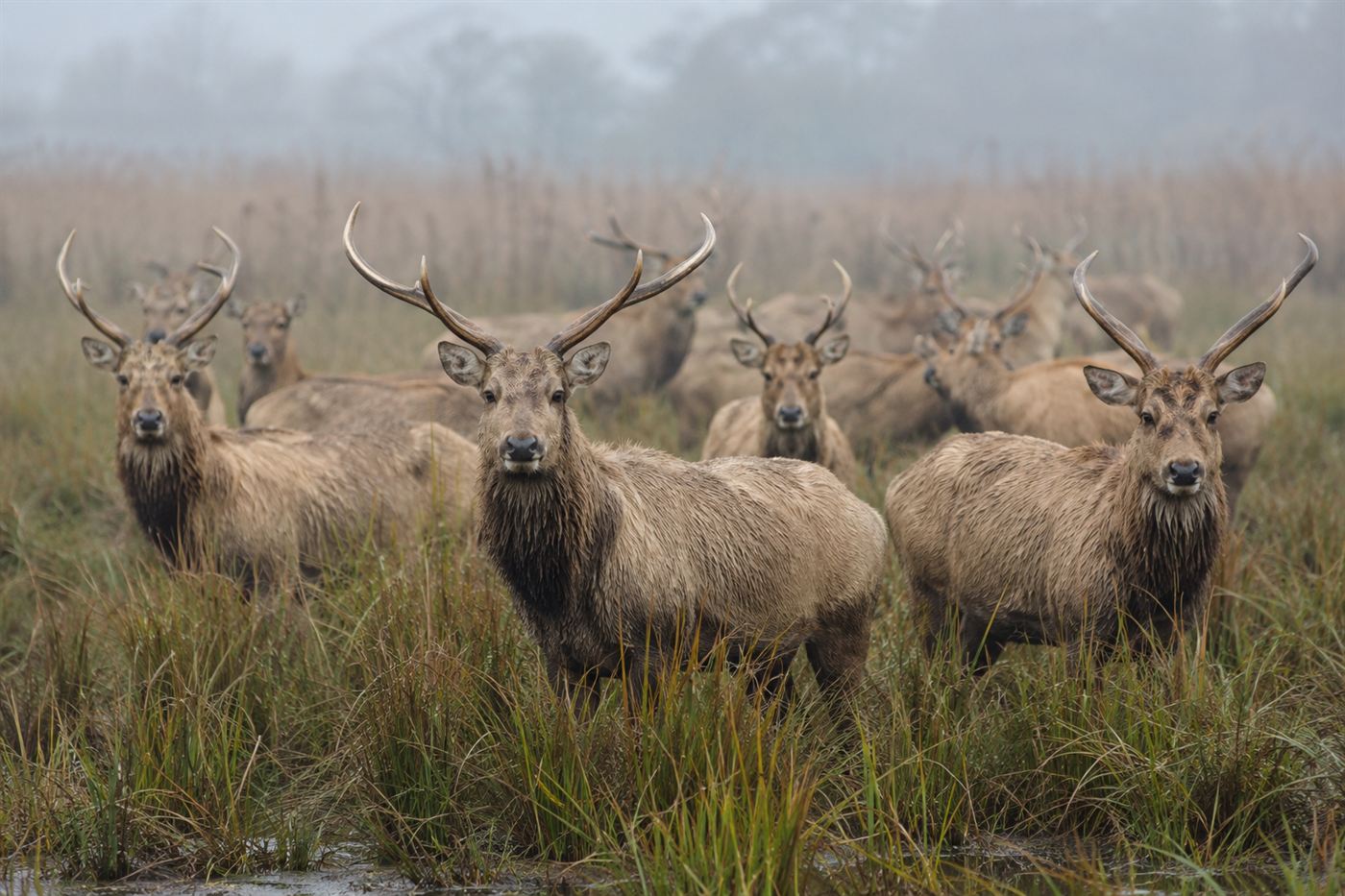
Pere David's deer, the milu, a wetland deer that survived only in captivity. Illustration: Watts & Wild.
The animal itself is a curiosity before you even get to its history. The Chinese call it the milu, but it has an older nickname, sibuxiang, meaning the four unlikes, because it seems stitched together from the wrong parts: a face a little like a horse, antlers like a deer but branching backwards, hooves like a cow and a tail like a donkey. It is a large deer built for wetlands, happy wading and swimming in the marshes that once covered much of eastern China.
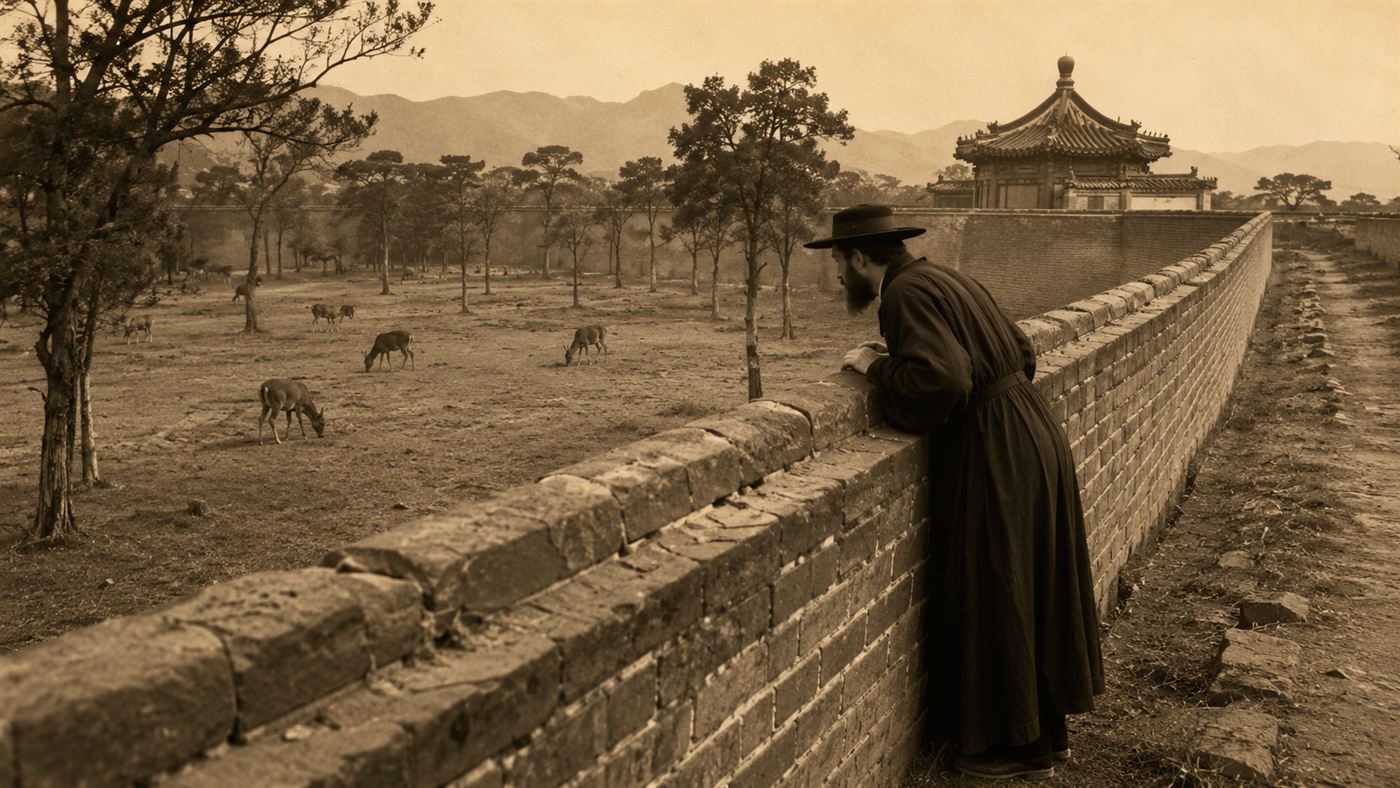
Those wetlands were drained and farmed over the centuries, and the milu was squeezed out of the wild long ago. By the 1800s the only herd left anywhere in the world lived inside the walls of the Imperial Hunting Park south of Beijing, a private royal reserve where the deer were protected for the emperor and almost nobody else ever saw them.
How Pere David's deer got its name
That is where a curious Frenchman comes in. Armand David, known as Pere David, was a Catholic missionary and a passionate naturalist who travelled in China in the 1860s collecting plants and animals for science. As Wikipedia records, peering over the wall of the imperial park in 1865 he spotted a herd of deer unlike anything described in the West, and he managed to obtain specimens and send them back to Europe.
European museums and zoos were fascinated, and a number of the deer were acquired by collections across the continent in the following years. That scattering of animals into European parks, a piece of Victorian specimen-collecting that can look uncomfortable today, turned out to be the only reason the species exists at all. The deer that bears his name, Pere David's deer, was about to lose its last foothold in its own country.
Wiped out in China
The end came quickly and brutally. In 1894 a great flood of the Yongding river broke the wall of the imperial park, and many deer escaped or drowned, with hungry people in the famine-struck countryside reportedly hunting the survivors for food. The herd was already shattered when the final blow fell during the chaos of the Boxer Rebellion around 1900, as foreign troops occupying Beijing killed and ate most of what remained.
Within a few years the milu was gone from China entirely, extinct in the very land where it had lived for millennia. Had the species existed only there, it would simply have ended, one more animal lost to flood, famine and war. But thanks to Pere David and the Victorian appetite for exotic creatures, a scattered handful still survived thousands of miles away.
Saved by an English duke
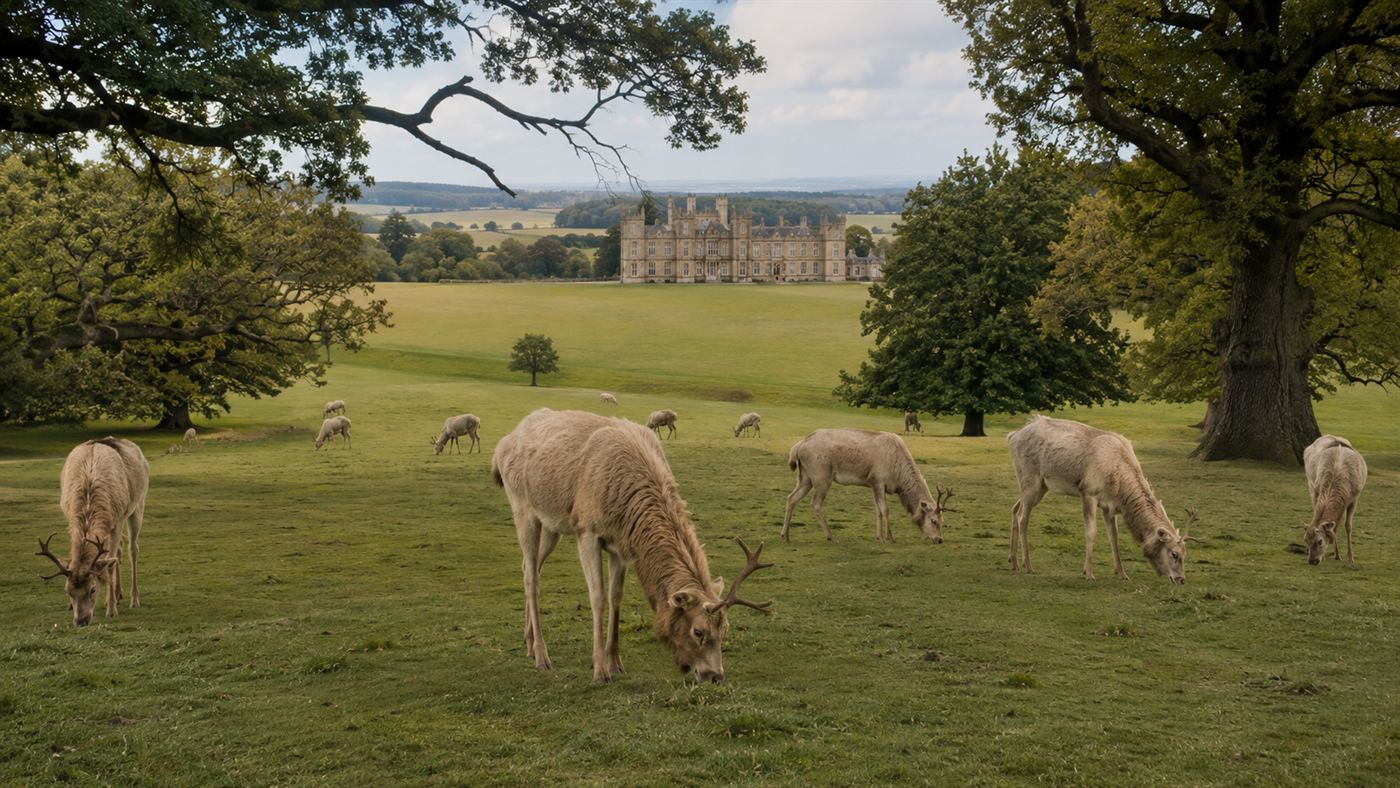
The rescue is owed to one determined aristocrat. Herbrand Russell, the 11th Duke of Bedford, set about buying up the last Pere David's deer from the zoos of Europe, where the small, isolated groups were struggling, and bringing them together into a single herd on his estate at Woburn Abbey in England. As Britannica recounts, by the early 1900s he had gathered the survivors, perhaps only around eighteen breeding animals, onto the parkland at Woburn.
It was a gamble on a tiny, inbred population, but it worked. Sheltered in the green acres of Woburn, with careful management across the difficult years of two world wars, the herd slowly grew from those few founders into hundreds, and breeding groups were eventually sent out to other parks and zoos to spread the risk. An English deer park had become the entire global ark for a Chinese species.
The honest catch
The deer's return is genuinely moving: as the Zoological Society of London notes, in the 1980s descendants of the Woburn herd were shipped back to China and released into reserves, including a new park on the site of the old imperial hunting ground near Beijing. The milu now numbers in the thousands there once more. But it is worth being clear-eyed about what that recovery is and is not.
Every Pere David's deer alive today descends from that tiny Woburn founding group, which means the species carries an extreme genetic bottleneck and very little diversity, a vulnerability that careful management cannot fully erase. The animals live mostly in fenced reserves rather than truly wild marshes, so the species is back in China but not yet genuinely wild and free. And there is an uncomfortable irony threaded through it all: a Chinese animal owes its survival to the very era of European collecting that stripped so much from the rest of the world.
Why a stitched-together deer still matters
For all the caveats, the milu is one of the great proofs that extinct in the wild does not always mean gone for good. A species erased from its homeland was kept alive, almost by accident, in an English park, and then deliberately carried home again. Few conservation stories travel quite so far, in distance or in luck.
The deer that the emperor hid, the missionary noticed and the duke rescued is now grazing once more in the marshes south of Beijing, a living loop closed after a hundred-year detour. The next time someone says a vanished animal is beyond saving, Pere David's deer stands in the wetlands as a strange, four-unlikes reminder that the story is not always over.
A Chinese deer was wiped out at home and saved only by chance in an English park, then carried back a century later. Does a species rescued by the same collecting that emptied the wild count as a happy ending? Tell us in the comments.
Related reading: The desert antelope hunted to extinction in the wild and bred back from a handful of zoo animals.