Jadav Payeng spent 40 years turning a bare sandbar in Assam into a jungle of tigers and rhinos, then fire tore through 5,000 saplings of his newest forest days after Christmas
Jadav Payeng, the Forest Man of India, planted a tree a day on a dead strip of river sand until it became a forest with wild tigers, rhinos and elephants. On December 28, 2025, fire ripped through the new forest he and his daughter had been growing beside it.
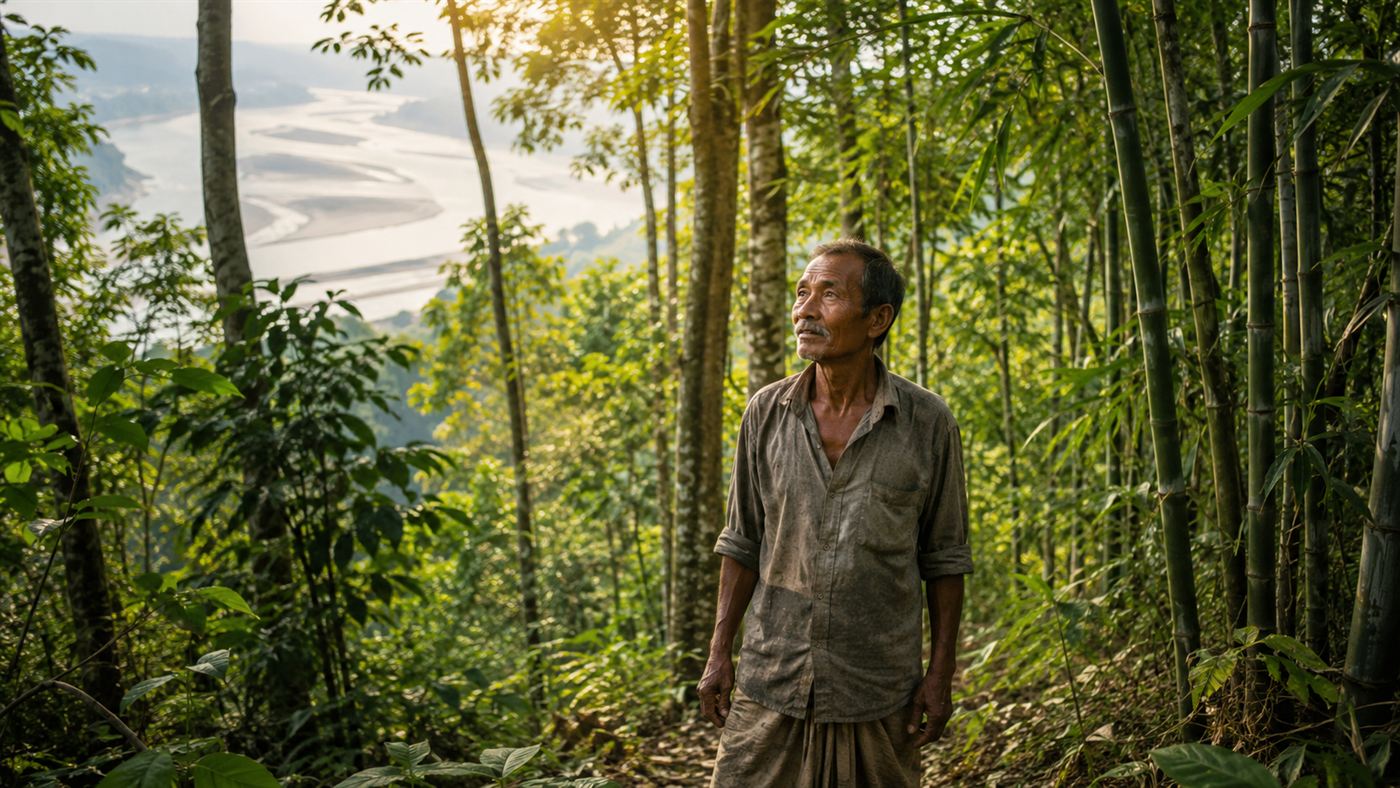
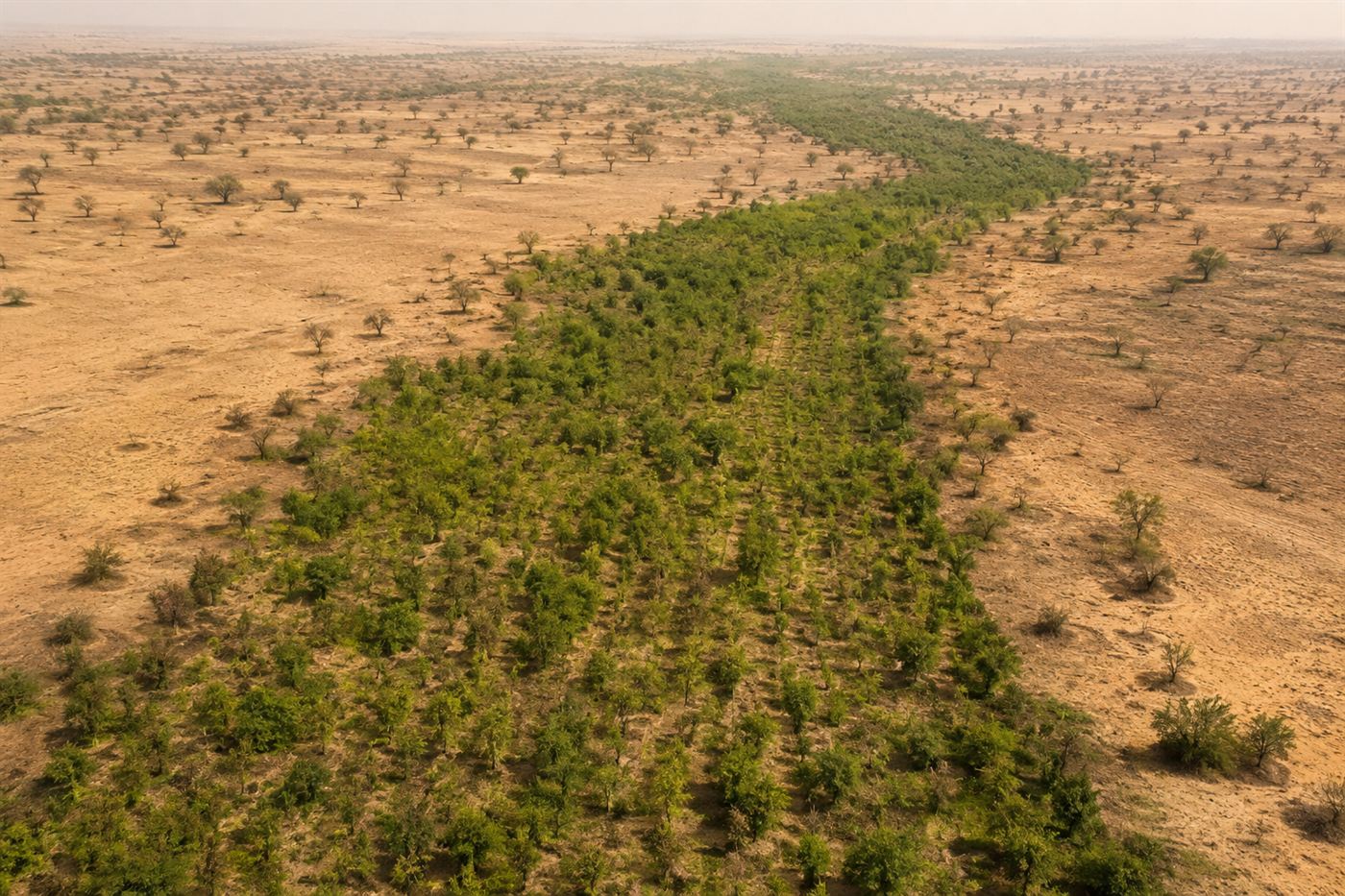
Where there was once only sand, there is now a hand-planted jungle in Assam. Illustration: Watts & Wild.
Jadav Payeng was a teenager when he watched a riverbank turn into a graveyard. After the Brahmaputra flooded and then pulled back in 1979, hundreds of snakes were left stranded on a bare sandbar in Assam and cooked to death in the open sun, with not a single tree to shade them. As One Earth recounts, that scene of dead snakes on hot sand is what set him off, and he began planting one sapling a day in the barren soil. He never really stopped.
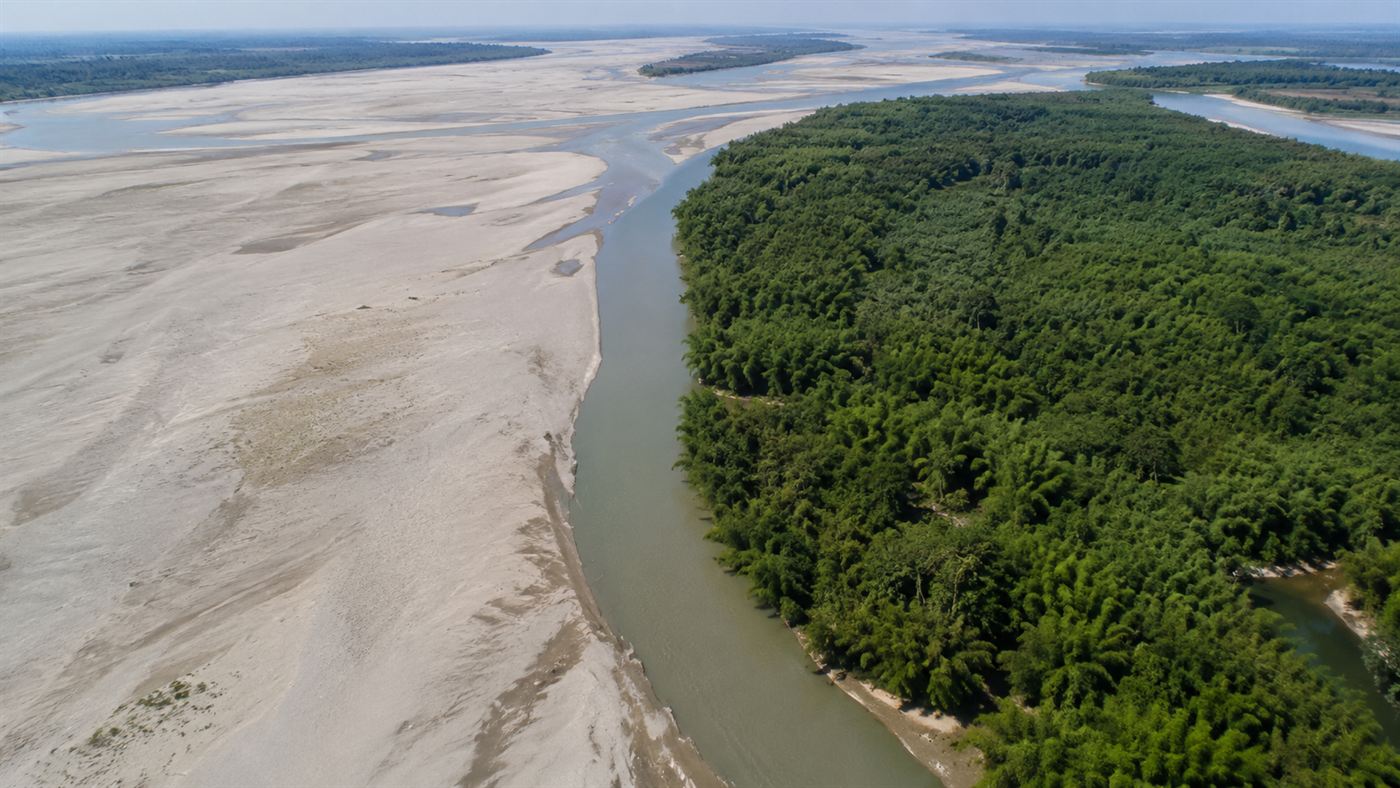
More than four decades later, that habit has a name and a map. The dead sand is now Molai Forest, a green block of roughly 550 hectares, about 1,360 acres, larger than New York's Central Park, grown almost entirely by one pair of hands. So when smoke rose over it on December 28, 2025, the news landed hard. Across a narrow stream from the famous forest, Payeng and his daughter had been raising a new one since 2021. In a single morning, fire tore through nearly 5,000 of their young saplings, and many people nearby refuse to believe it was an accident.
A boy, a heatwave, and a beach full of dead snakes
The origin story is almost too neat to be true, except that it is. In 1979 the river dumped a load of snakes onto a treeless sandbar near his home, and the reptiles died in the heat because there was no shade and no roots to hold the soil together. Payeng, still a teenager, asked the local forest department to plant trees there. He was told, more or less, that nothing would grow on bare sand and that he was welcome to try it himself.
So he did. He started with bamboo, the toughest pioneer he could find, carrying water across the sandbar by hand and shielding each seedling from the sun. When he worried the soil had no life in it, he is said to have introduced red ants to turn and enrich it. There was no budget, no NGO, no plan written down anywhere. There was a young man, a stretch of sand the river kept trying to wash away, and a refusal to let it stay empty.
How you grow a forest one day at a time
What makes Payeng's forest different from a thousand failed planting schemes is dull and unglamorous: he stayed. A sapling in the ground is not a forest. It is a bet that someone will protect it from floods, grazing and fire for the ten or twenty years it takes to stand on its own. Most planting projects hand out seedlings and walk away. Payeng walked the same paths every day for decades, replacing what died and letting what lived spread its own seed.
Slowly the bamboo gave cover, the cover trapped moisture, and hardier trees took hold behind it: valcol, arjun, ejar, koroi, the red-flowered goldmohur. Bamboo alone now blankets more than 300 hectares. The forest grew dense enough to change the local weather under its own canopy, holding the sandbar together against a river famous for swallowing land whole. Ask him how long he plans to keep going and the answer, quoted again and again, is blunt. In his own words to One Earth, "I'll plant till my last breath."
The jungle came, and then the animals came too
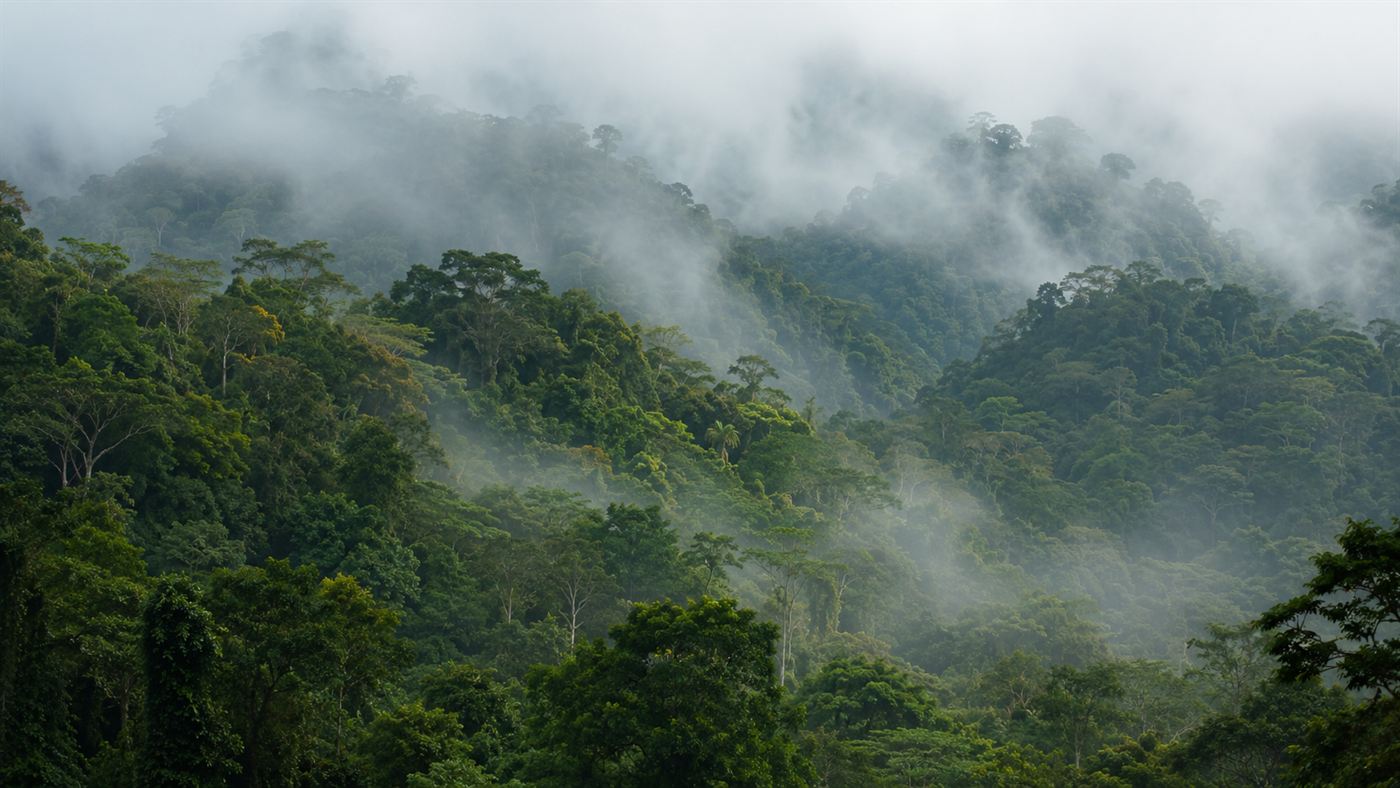
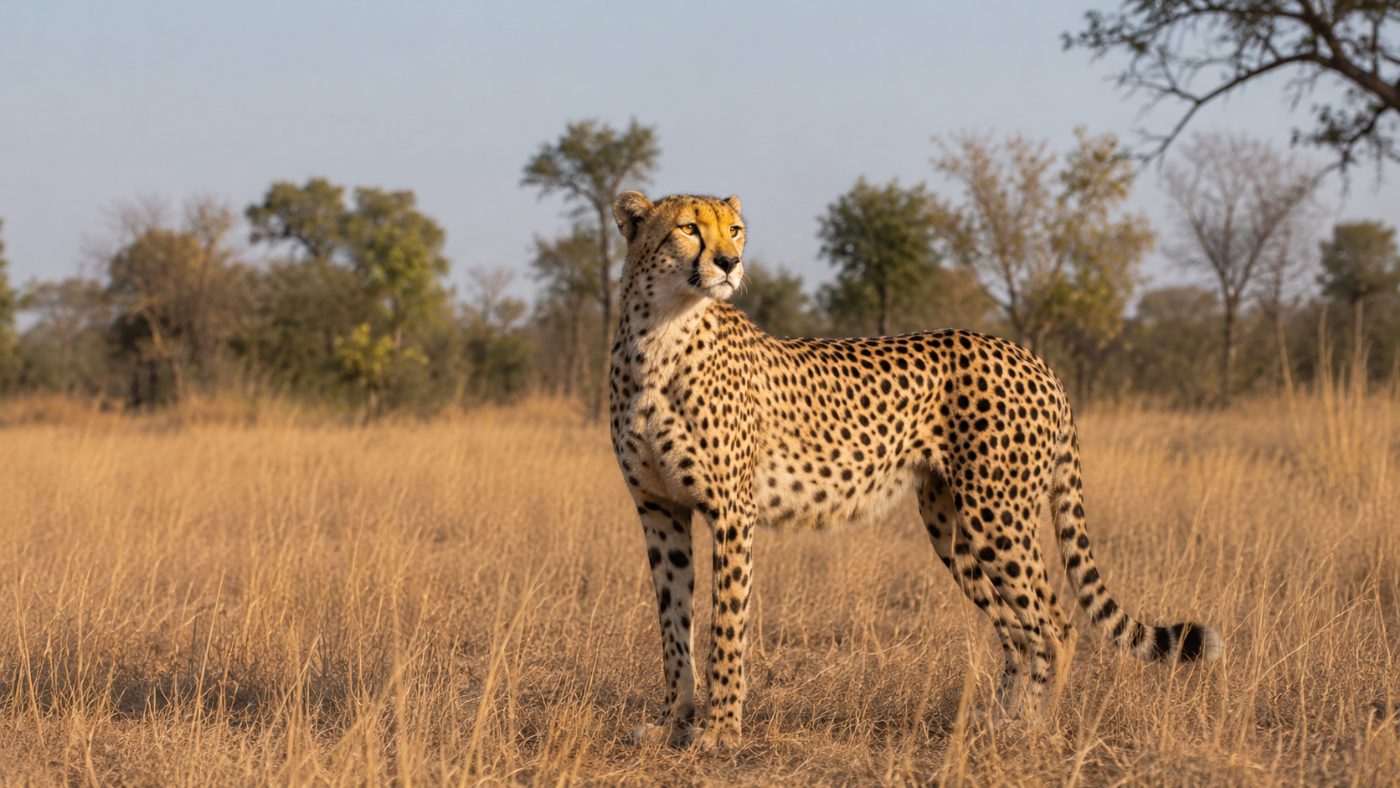
Build the trees and the wildlife arrives on its own. Molai Forest is now home to Bengal tigers, a population of Indian one-horned rhinos, around a hundred deer, monkeys, rabbits, vultures and a long list of birds. A herd of roughly a hundred wild elephants visits for about three months a year, and calves have been born inside the forest he made. A patch of sand that could not keep a snake alive in 1979 now feeds some of the largest animals in Asia.
That success carries its own danger. Tigers and rhinos draw poachers, and a forest full of elephants on the edge of farmland means crops get trampled and tempers run hot. Payeng has spent years acting as a reluctant peacemaker, arguing that the elephants raid fields only because their real habitats elsewhere have been cleared. The forest that saved the land also turned its maker into a full-time mediator between his neighbours and the animals he invited in.
How the world finally noticed the Forest Man of India
For almost thirty years, almost nobody outside the area knew the forest existed. That changed around 2008, when a local photojournalist stumbled onto this impossible jungle in the middle of the river and started telling people about the man who had grown it. The story spread fast once it got out.
As documented in the public record of his life, Jawaharlal Nehru University named him the "Forest Man of India" in 2012, India awarded him the Padma Shri in 2015, and the filmmaker William Douglas McMaster's documentary "Forest Man" won best documentary at the Cannes leg of its festival run in 2014. Honorary doctorates followed, including one from Assam Agricultural University in 2025. He kept living simply, farming, tending cattle, and walking into his forest with a bundle of seedlings, the recognition changing his fame far more than his routine.
Then, days after Christmas, came the smoke
Payeng had never stopped planting. Since 2021 he and his daughter Munmun, helped by some seventy local people, had been growing a second forest on another patch of ground across a small stream from the original. It was young, just four years of careful work, the saplings still short enough to step over. It was exactly the stage at which a forest is most fragile.
On the morning of December 28, 2025, it burned. According to Pratidin Time, fire destroyed nearly five bighas of the new forest, around an acre and a half, reducing more than 5,000 saplings to ash along with birds, nests, eggs and small animals, and many locals suspect it was deliberately set rather than an accident. The same report noted that the state's forest minister called the family that evening and promised action against the sand mining that has been eating into the area. For a man who measures his life in trees planted, watching 5,000 of them turn to charcoal in a single morning is a particular kind of cruelty.
The honest catch
It would be easy to turn this into a tidy fable about one hero fixing the planet, and that is the part worth resisting. Molai Forest is extraordinary, but at 550 hectares it is a rounding error against the millions of hectares India and the world lose every decade. One determined man with a bag of seedlings is not a climate policy, and pretending otherwise lets the people who clear forests off the hook.
There is a sharper lesson hiding in the story, though. The reason Payeng's forest is real, when so many headline-grabbing planting drives quietly become "phantom forests" of dead sticks, is that he protected and tended it for forty years instead of planting once for the photo. That is also why the December fire stings so much. It shows how thin the margin is. Four decades of patience built the first forest, and a single morning was enough to gut four years of the second. He is 66 now, and he is starting that newest patch again from bare ground. The same tension runs through Wangari Maathai's Green Belt Movement in Kenya, where the trees that survive matter far more than the millions merely planted.
A teenager who could not stand the sight of dead snakes on hot sand spent the next forty years answering with a forest, and someone tried to burn the sequel before it could grow up. If protecting a single tended forest for decades beats scattering a million saplings nobody comes back for, why do we keep funding the second kind? Tell us what you think in the comments.
Related reading: Africa's Great Green Wall was meant to be one 8,000 kilometre line of trees across the Sahel, until it quietly turned into something smarter.