To hold back the Sahara, Africa is growing a wall of trees 8,000 kilometres long across 11 countries, and the strange twist is that it only started working once people stopped trying to build a literal wall
Just south of the Sahara runs a vast dry belt called the Sahel, where the desert has been creeping into farmland, drying up wells and pushing people from their homes. To fight back, African nations launched one of the most ambitious environmental projects ever attempted: a Great Green Wall of trees, 8,000 kilometres long, meant to run clear across the continent. The wall has not gone as planned, and the reason why turns out to be the most interesting part.
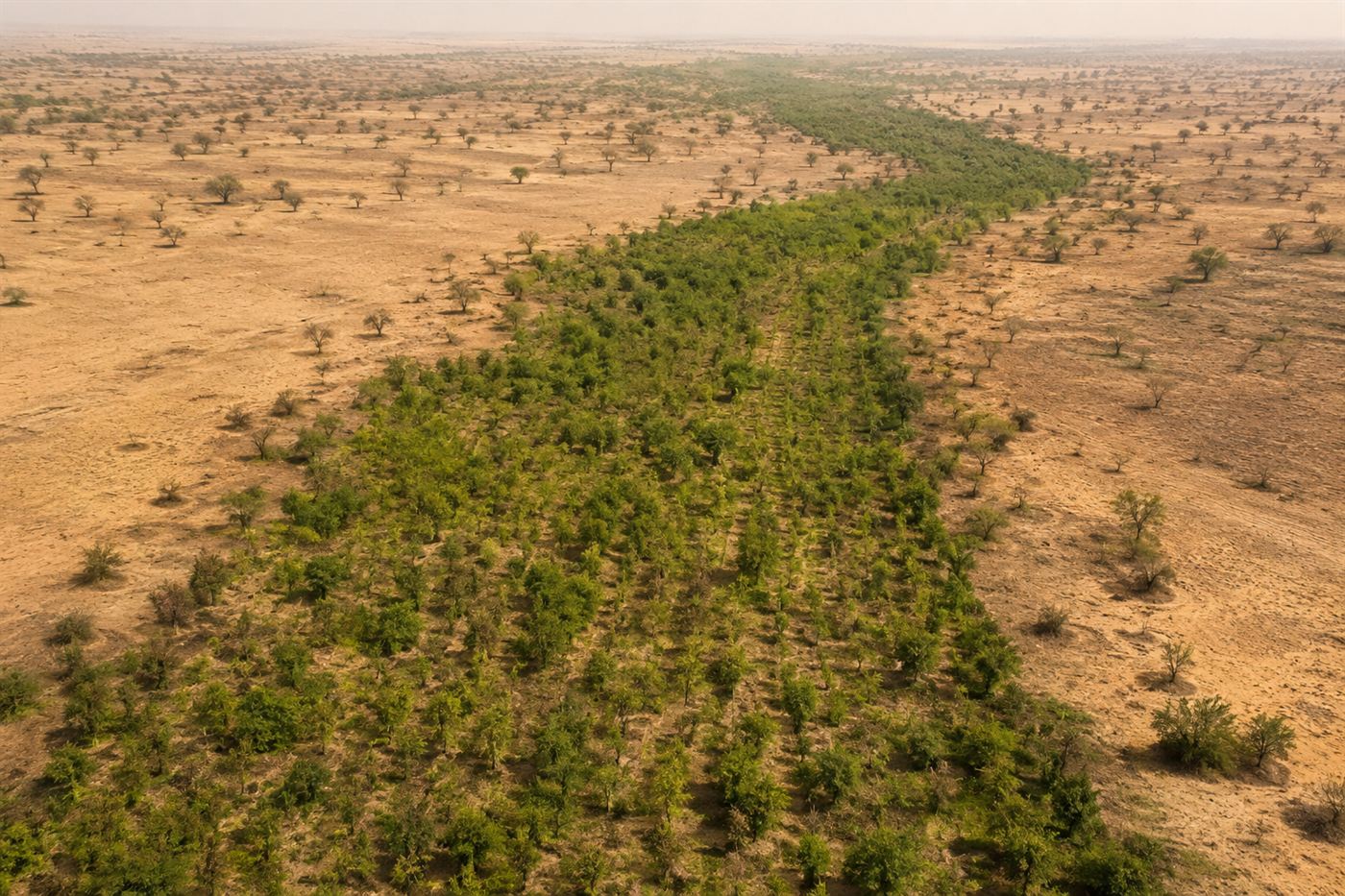
The dream: a continuous green band of trees holding the line against the desert. Illustration: Watts & Wild.
The idea, launched by the African Union in 2007, has the kind of simplicity that makes it instantly graspable. Draw a line on the map from Dakar on the Atlantic coast to Djibouti on the Red Sea, and along that line, across 11 countries, plant a band of trees thick enough to stop the Sahara marching any further south. A living wall against an advancing desert.
It is a gorgeous image, and for years it was sold exactly like that: a green Great Wall of Africa, visible from space, a single heroic strip of forest. The trouble is that nature, and the Sahel, do not work the way a tidy line on a map suggests, and the project spent its first decade learning that the hard way.
Why the Sahel needs a wall at all
To understand the urgency you have to picture the Sahel itself. It is the transition zone between the sand of the Sahara and the wetter savanna further south, a band of dry grassland and farmland that tens of millions of people depend on. Decades of drought, overuse and a warming climate have been stripping that land bare, turning workable soil into dust. That advancing desert is the same force that once left a single acacia, the famous Tree of Tenere, standing alone for 400 kilometres.
When the land dies, everything unravels with it. Crops fail, livestock starve, families that farmed for generations are forced to move, and competition over the little fertile ground that remains feeds conflict. The Great Green Wall was never only about trees. It was pitched as a fix for hunger, migration and instability all at once, with restored land as the foundation under all of it.
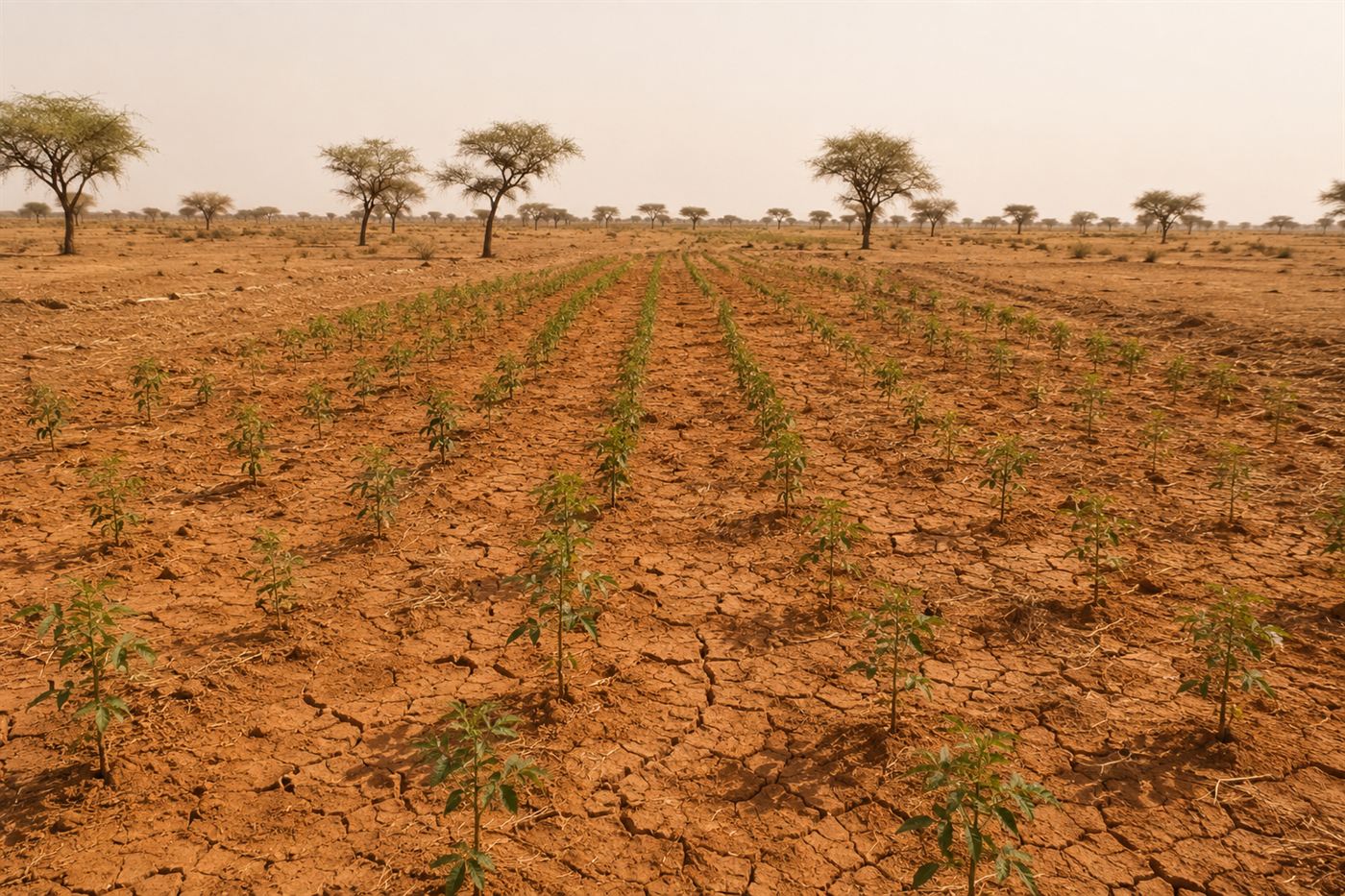
The wall that would not grow
The first approach was the obvious one: plant trees, millions of them, in long lines through the dryland. In many places it failed badly. Saplings dropped into parched ground with no one to tend them, no reliable water and no stake for the local community simply died, sometimes by the great majority, once the planting projects and their funding moved on. You cannot bully a forest into existing on land that cannot yet support it.
That early disappointment gave the whole project a reputation as a noble flop, and plenty of coverage has framed it that way. But while the literal wall was struggling, people working on the ground were discovering that a different, humbler approach was quietly doing what all those planted seedlings could not.
The Great Green Wall idea that actually worked
The breakthrough was to stop thinking of it as a wall to be built and start thinking of it as land to be revived. Instead of trucking in saplings, farmers were encouraged to protect and nurture the trees and roots already trying to grow on their own land, a cheap, low-tech practice that lets degraded ground regreen itself. As Mongabay has reported, these farmer-led methods have brought millions of trees back across the Sahel, far more cheaply and durably than top-down planting ever did.
So the Great Green Wall has quietly become something other than its name. As the project is now described, it is no longer a single strip of planted forest but a mosaic of restored land, farms and managed natural regrowth spread across the region. The wall, it turns out, works best when it is not a wall at all, but a patchwork the people who live there actually want and maintain.
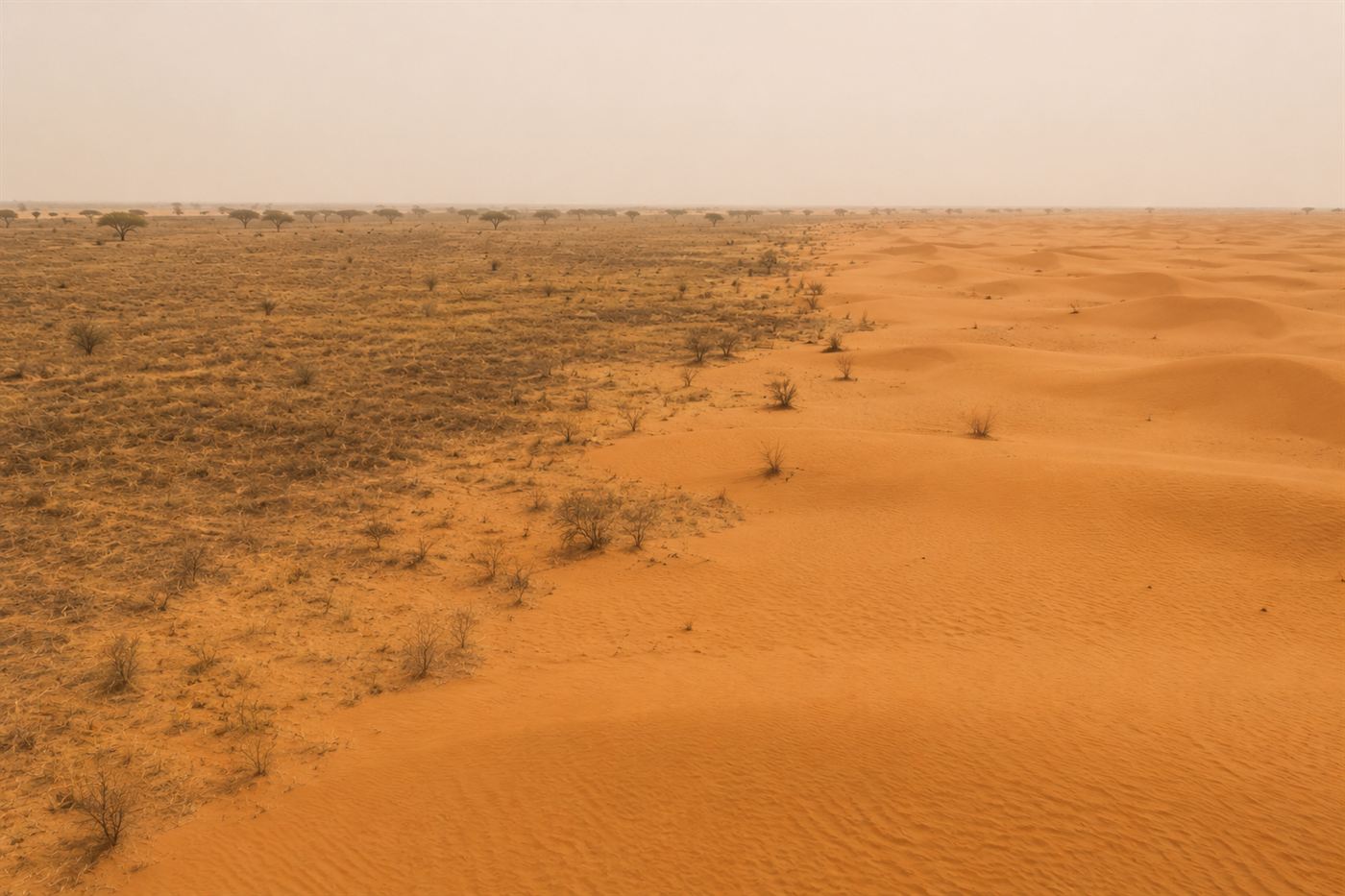
The honest catch
None of this means the job is close to done; it is not. Nearly two decades after launch, the initiative is estimated to be only around 30 percent of the way to its target of restoring 100 million hectares by 2030, and most analysts think that deadline will slip. The obstacles are heavy: chronic underfunding, money that is promised by wealthy nations but moves painfully slowly to the villages that need it, and worsening conflict and insecurity across parts of the Sahel that can make the work dangerous or impossible.
It is also fair to say the headline figures, an 8,000 kilometre wall, 100 million hectares, 10 million jobs, are aspirations, not achievements. Progress is real but patchy, strong in some countries and stalled in others. The honest picture is neither the triumphant green wall of the brochures nor the total failure of the cynics, but a hard, uneven, partly working effort somewhere in between.
Why a half-built wall still matters
Even unfinished, the Great Green Wall has taught the world something valuable about fixing broken land. The lesson is that you cannot impose a forest from above; you have to work with the people who live on the ground and with the way the land already wants to recover. The places where the Sahel has gone green again are the places where that lesson was learned.
And the stakes could hardly be higher. If even a large part of this band of land can be brought back to life, it would pull carbon from the air, grow food for some of the most food-insecure people on the planet, and give millions a reason to stay on land that is currently pushing them away. A wall of trees that learned it had to become something wiser than a wall may end up being one of the most important things humanity tries this century.
An 8,000 kilometre wall of trees sounds heroic, but the Sahel only started turning green when the grand plan gave way to small, local, farmer-led fixes. Is the slow, messy, bottom-up version the real success story here, or proof that the original dream of a Great Green Wall was always the wrong idea? Tell us what you think in the comments.