Sarah Winchester spent 38 years and a rifle fortune building a mansion that never stopped growing, with staircases to nowhere and doors that open onto thin air
For nearly four decades the hammers never fell silent. In a quiet corner of California, a grieving widow with one of the largest fortunes in America kept builders working day and night, year after year, on a house that sprouted rooms like a living thing. By the time she died it had over 160 of them, and a reputation as the strangest home in the country.
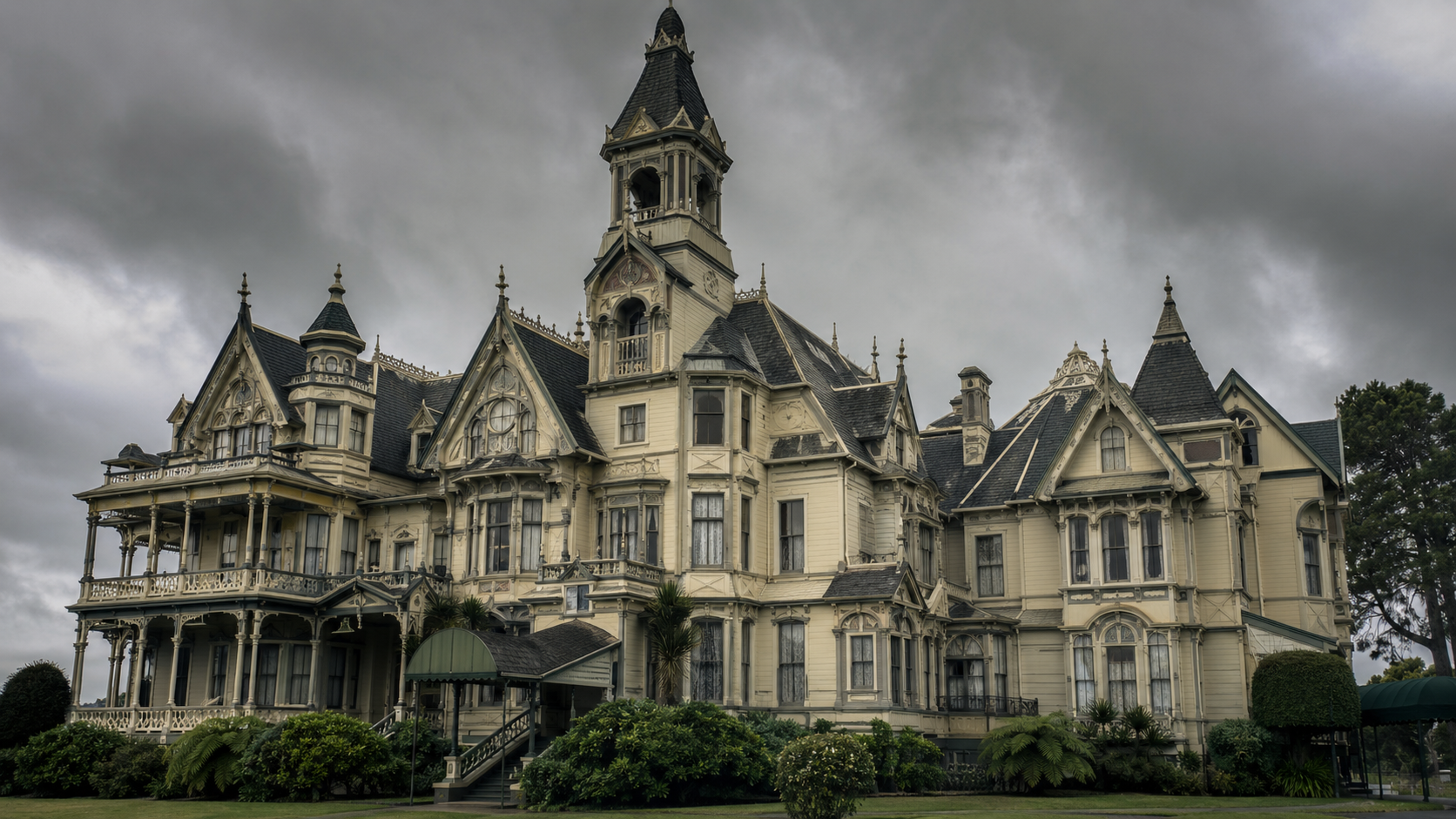
A mansion that grew for 38 years and never seemed to be finished. Illustration: Watts & Wild.
The Winchester Mystery House in San Jose is one of those places where the legend and the building have grown so entangled that it is hard to tell where one ends and the other begins. It is a genuine architectural oddity, a vast Victorian maze of stairways that climb into ceilings, doors that open onto two-storey drops, and windows set into interior walls. And wrapped around it is a ghost story that has drawn visitors for a century.
The woman at the centre of it was Sarah Winchester, and her story begins not with spirits but with one of the most famous guns ever made.
What is the Winchester Mystery House?
Sarah Winchester was the widow of William Wirt Winchester, son of the man who built the Winchester Repeating Arms Company, maker of "the gun that won the West." When William died of tuberculosis in 1881, Sarah inherited an immense fortune, reportedly around $20 million, plus a large stake in the company that gave her an income of roughly a thousand dollars a day, an almost unimaginable sum at the time.
A few years later she moved west, bought a modest eight-room farmhouse in the Santa Clara Valley, and began to build. She never really stopped. Construction continued in shifts for roughly 38 years, until the morning she died in her sleep in 1922.
A fortune built on the rifle
To understand the house you have to understand the weight Sarah was carrying. She had already lost her only child, an infant daughter, years before, and then her husband. She was a wealthy, intelligent woman left utterly alone, and the source of all that wealth was a weapon that had killed an enormous number of people across the American frontier and beyond.
That uncomfortable fact sits underneath everything. Every nail driven into the endless house was paid for by the rifle, and the legend that grew up around Sarah turned that guilt into the engine of the whole story.
Building without end
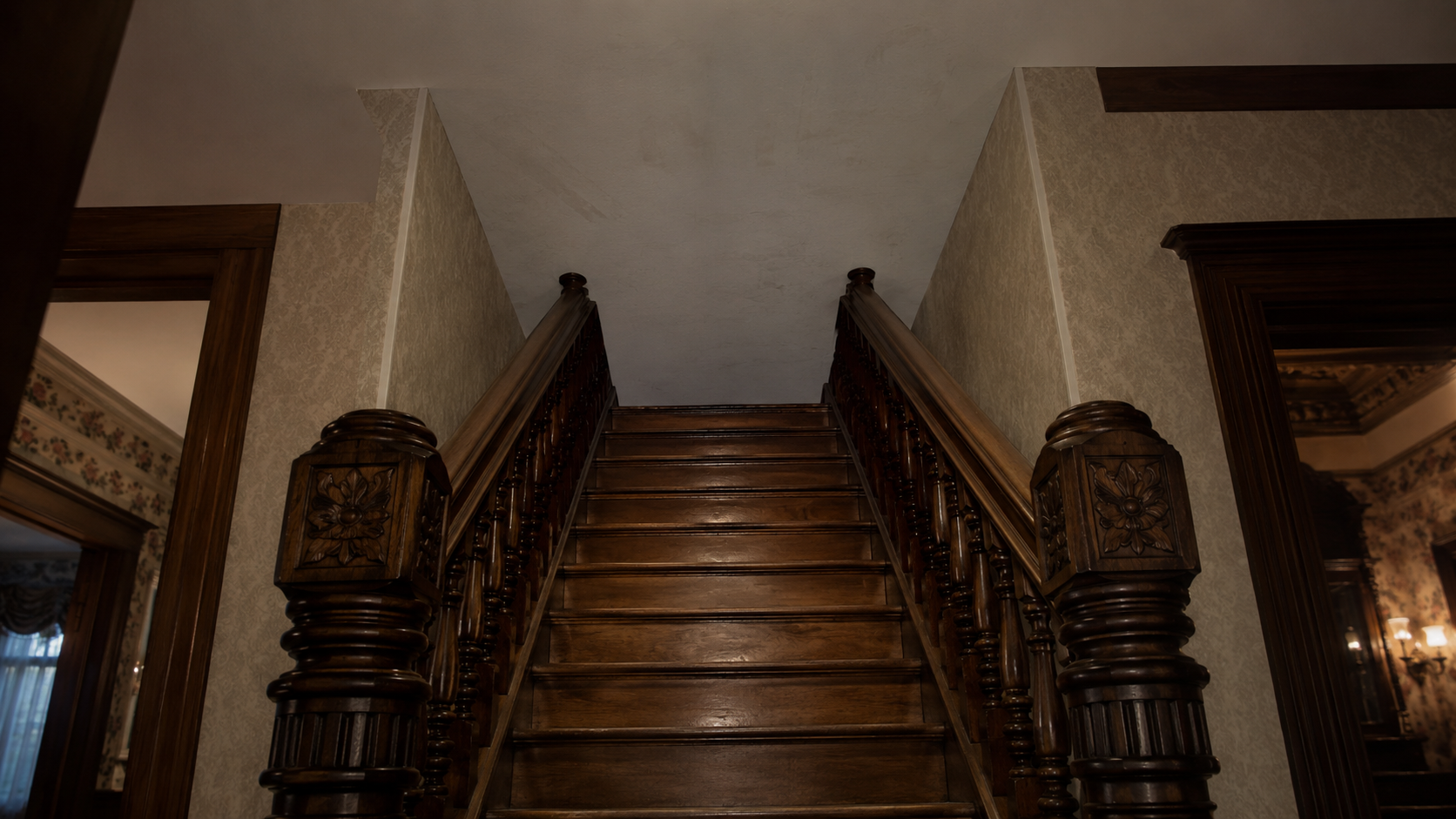
The result of four decades of unplanned building is genuinely disorienting. The mansion ended up with more than 160 rooms, including some 40 bedrooms, around 10,000 window panes, two basements, and a tangle of secret passages and back stairs. There was no master architect and no overall plan; rooms were built, torn out and built again as Sarah sketched ideas and the carpenters followed.
Then there are the famous impossibilities. One door on an upper floor opens straight out onto a long drop into the garden. A staircase rises only to dead-end flat against a ceiling. Cupboards open to reveal nothing but wall, while a costly stained-glass window was set where no daylight could ever reach it. It is the kind of place that feels designed to get you lost, and for generations people assumed it was.
Did ghosts really build the house?
This is where the legend takes over. The story, told on every tour, is that after her losses Sarah visited a spiritualist medium in Boston, who told her that her family was being hunted by the vengeful ghosts of everyone the Winchester rifle had killed. The only way to stay alive, the medium supposedly said, was to move west and build a house for those spirits, and to never, ever stop building.
The bizarre features then get folded into the tale: the stairs to nowhere and doors to nothing were meant to confuse the ghosts, the endless construction to keep them at bay. It is a wonderful story. But there is almost no solid evidence that the séance, the curse, or the ghost-confusing design ever actually happened. Much of it seems to have been shaped after Sarah's death, as the house was opened to the paying public.
The honest catch
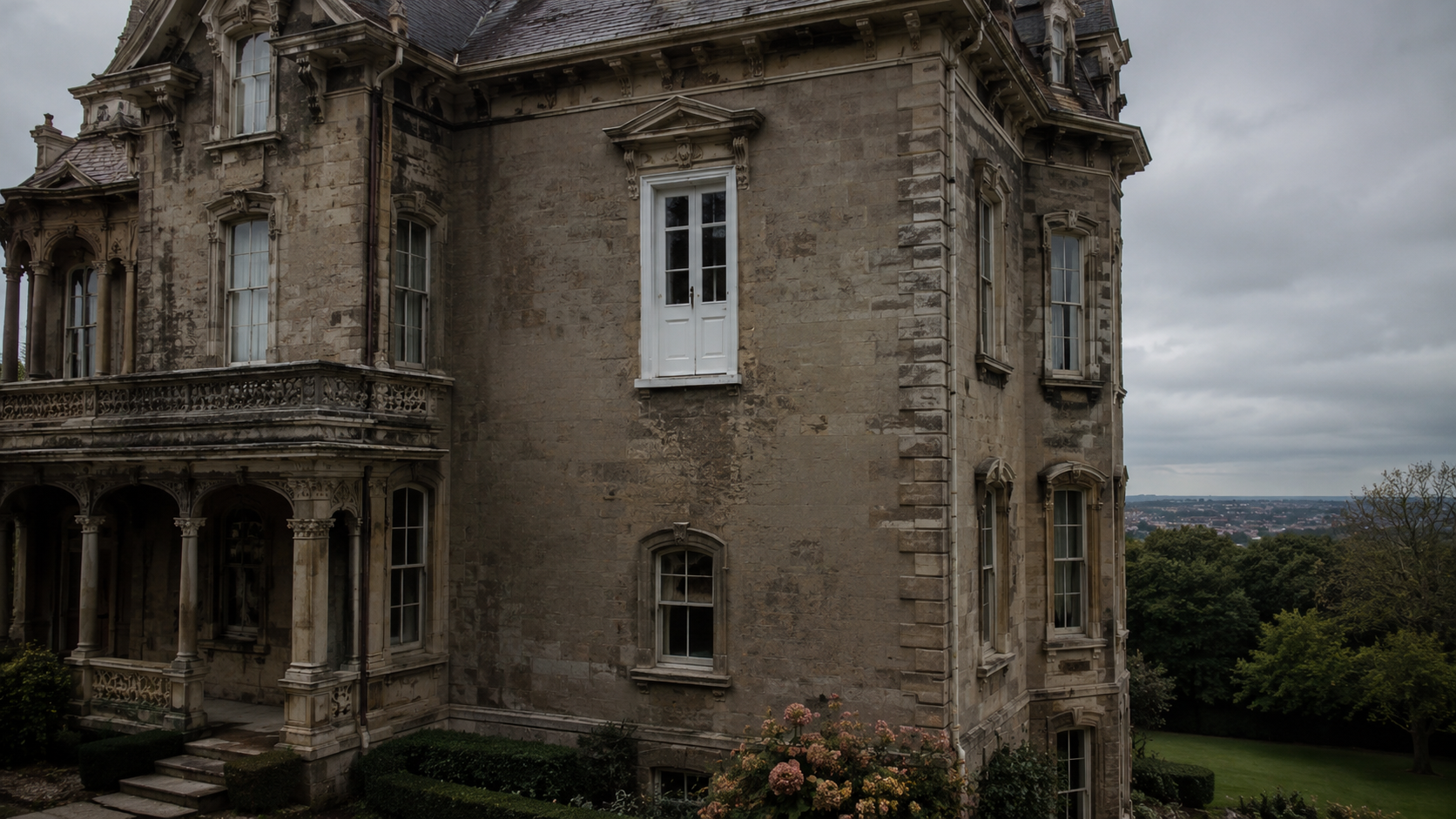
The grounded explanations are less spooky but more interesting. Many of the "doors to nowhere" exist because the great 1906 San Francisco earthquake badly damaged the house; upper floors and balconies were wrecked and never rebuilt, leaving doors and stairs that once led somewhere stranded in mid-air. Sarah also suffered from severe rheumatoid arthritis, and some of the odd, shallow-stepped staircases appear to have been built to let her climb more easily, not to puzzle spirits.
And rather than a madwoman, Sarah may have been something closer to a self-taught architect and a quietly generous employer. One persuasive theory is that she kept building simply because she could afford to, because designing fascinated her, and because the constant work kept dozens of local craftsmen in steady jobs during hard times. The truth is a portrait of grief and eccentricity, not necessarily of terror.
Why the Winchester Mystery House still fascinates
Whatever drove her, the house Sarah Winchester left behind is a one-of-a-kind monument, now a protected landmark that draws crowds who come as much for the puzzle as for the supposed phantoms. It survived the earthquake, survived the decades, and still confounds the people who walk its corridors.
In the end its real fascination may be simpler than any ghost. It is the physical shape of one woman's grief and wealth, a 38-year question with no answer, built in wood and glass by a person who had every reason to want to keep the silence at bay. The spirits make a better tour. The human story is the one that lasts.
A grieving heiress built for 38 years straight, and we decided it had to be ghosts rather than grief. Why are we so much quicker to believe in a haunting than in a sad, brilliant, lonely woman who simply liked to build? Tell us what you think in the comments.
Related reading: A New York skyscraper was secretly at risk of toppling in a strong wind, and its own engineer had to quietly fix it. See also the rooster that lived 18 months after losing its head and toured the country as Mike the Headless Chicken.