John Harrison spent forty years solving the longitude problem with a clock, and the scientific establishment spent forty years refusing to pay him for it
In the 1700s, not knowing your position at sea was getting sailors killed by the thousand. The greatest minds in Europe were sure the answer lay in the stars. A self-taught carpenter from Yorkshire was sure it lay in a clock. He was right, they were wrong, and the people in charge made him fight for his reward until he was nearly dead.
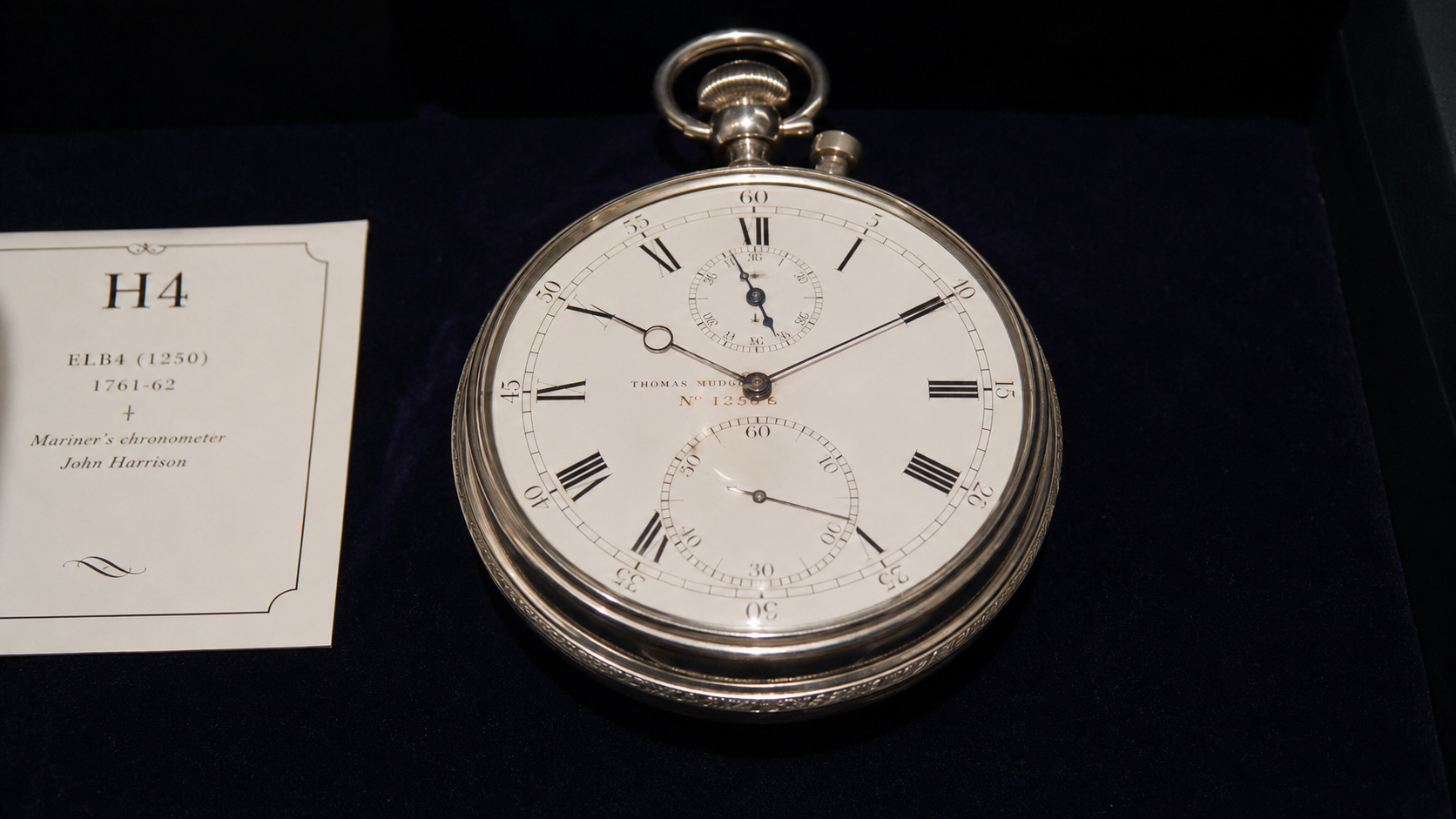
Harrison's H4, the pocket-watch-sized clock that solved a problem astronomers could not. Illustration: Watts & Wild.
The John Harrison longitude saga is one of the great underdog stories in the history of science, and it turns on something we now take completely for granted: knowing exactly what time it is. For most of seafaring history, a ship could measure how far north or south it was with ease, but how far east or west remained a deadly guess.
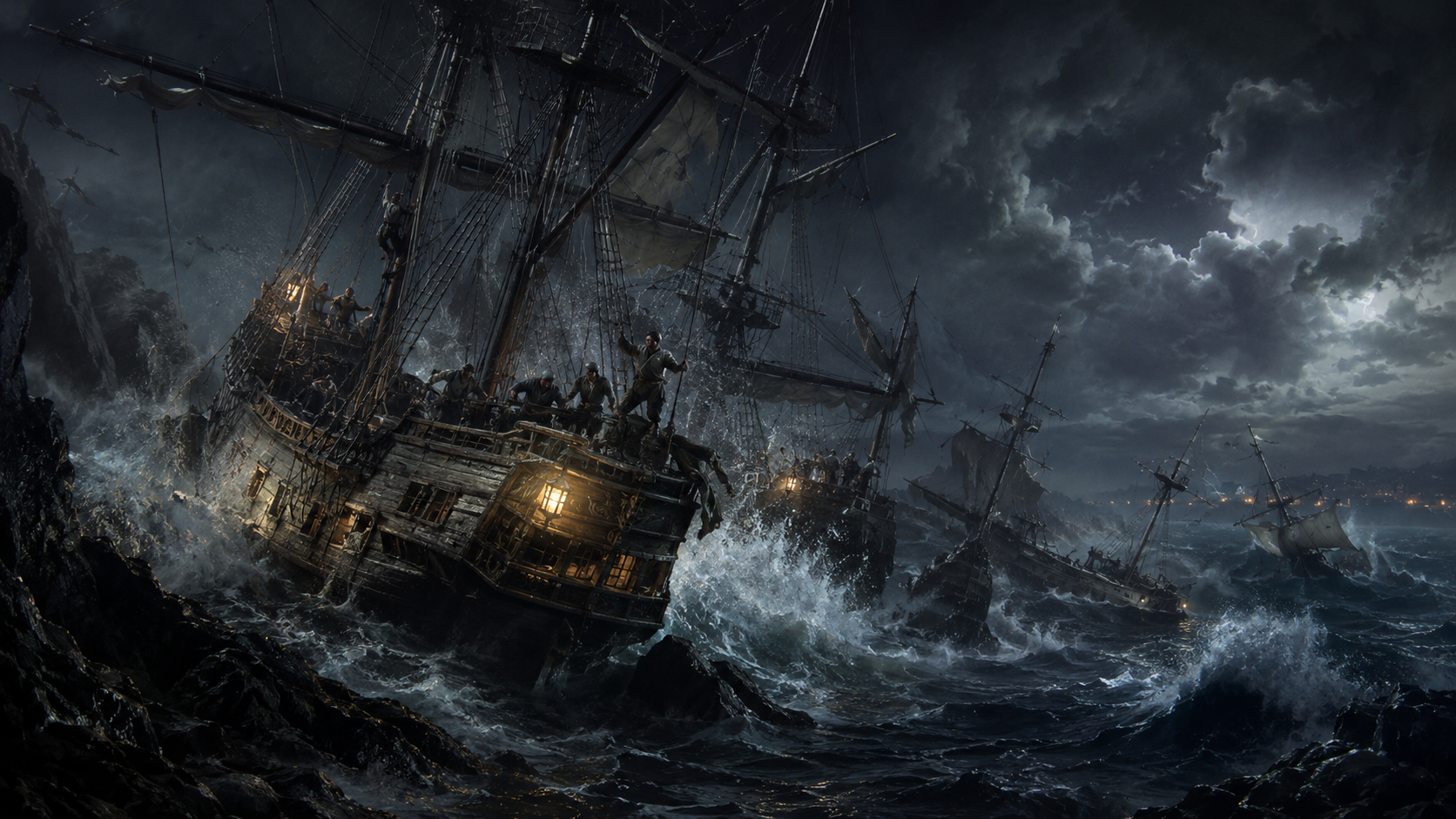
That guess had a body count. In 1707 a British fleet returning home misjudged its position in fog and smashed onto the rocks of the Scilly Isles, and around 1,400 to 2,000 sailors drowned in a single night. The disaster horrified the nation and forced the government to act.
What was the longitude problem?
The trick to longitude is time. Because the Earth turns a full circle every 24 hours, every hour of time difference equals fifteen degrees of longitude. If a sailor knew the exact time back at a home port and compared it to local noon where the ship was, the gap would tell him precisely how far east or west he had travelled.
The problem was keeping that home time. No clock on Earth could stay accurate aboard a ship, where the deck pitched constantly, the temperature swung wildly, and salt air corroded everything. Pendulum clocks were hopeless at sea. So in 1714 the British Parliament passed the Longitude Act, dangling a fortune of up to £20,000, the equivalent of millions today, for anyone who could crack it.
A clock against the stars
Most of the scientific world, including the heirs of Isaac Newton, assumed the solution would come from astronomy: charting the moon against the stars to read time off the sky. It was elegant, learned, and fiendishly complicated, requiring clear weather and hours of calculation. John Harrison had a different idea, one that the experts found almost insulting in its simplicity. Build a better clock.
Harrison was not a scientist or an aristocrat. He was a self-taught joiner and clockmaker from Lincolnshire who had built his first clock, almost entirely out of wood, before he was twenty. The man who would out-think Europe's astronomers had no university training and no powerful friends, just an obsessive, almost superhuman gift for precision machinery.
Why the John Harrison longitude clocks worked
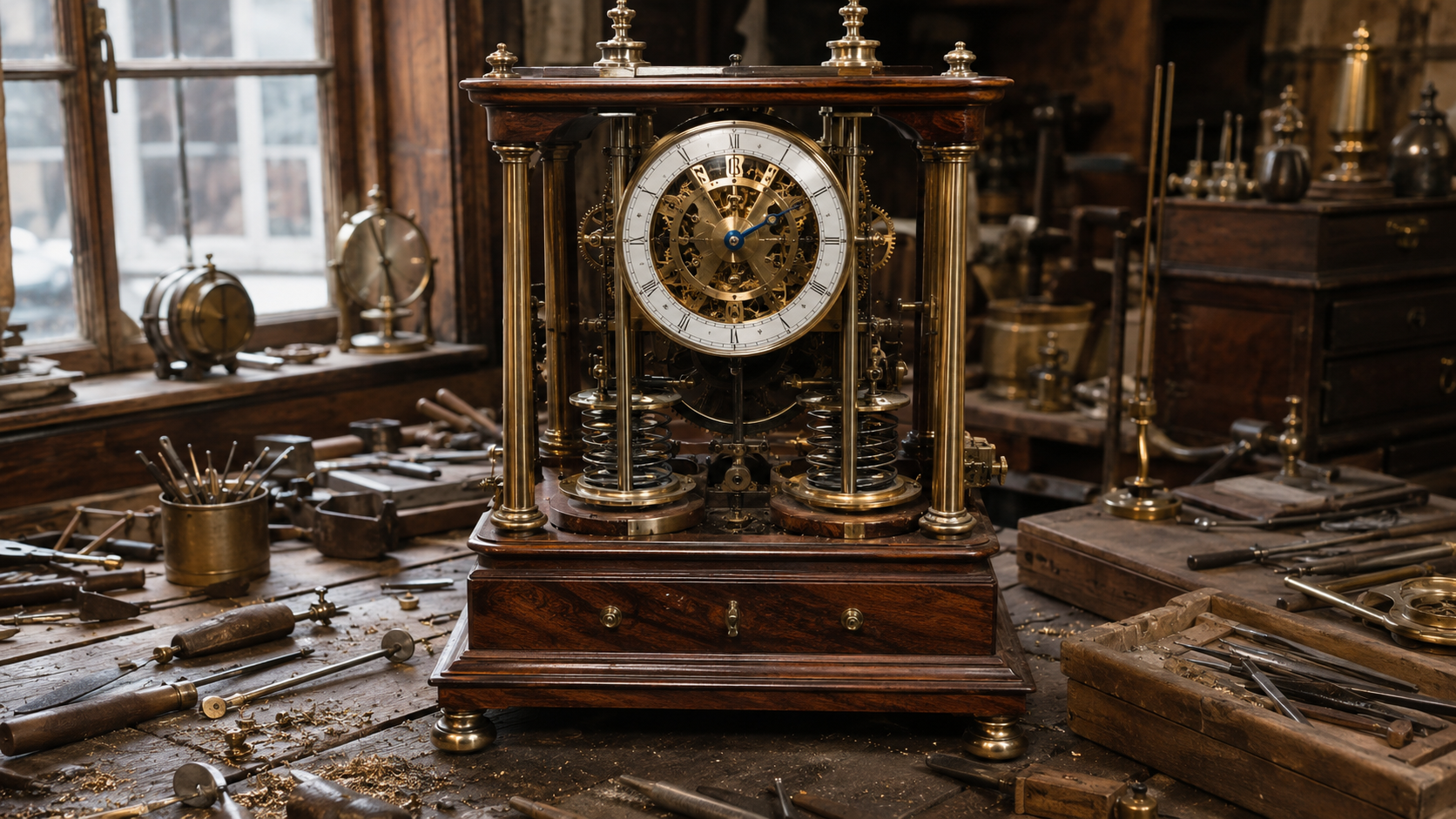
Starting in the 1730s, Harrison built a series of sea clocks, known today as H1, H2 and H3, each a marvel of brass and ingenuity. He invented mechanisms that cancelled out the rolling of the ship and others that automatically compensated for heat and cold, so the clock kept time whether it was freezing or sweltering. These were huge, gleaming machines, and they worked far better than anything before them.
Then he made his real leap. Instead of a bigger clock, he built a smaller one. His masterpiece, H4, was about the size of a large pocket watch, just five inches across, and it kept time with an accuracy nobody had thought possible at sea. On a test voyage to Jamaica in 1761, after weeks of ocean, H4 had drifted by only a handful of seconds, comfortably good enough to win the prize several times over.
Did Harrison ever get his prize?
This is where the story turns bitter. The Board of Longitude, heavily influenced by astronomers who backed the rival star-charting method, simply would not accept that a clockmaker had won. They dismissed H4's triumph as luck, demanded another trial, then another, and insisted Harrison hand over his clocks and explain every secret of their making.
One of his chief doubters was the Astronomer Royal, Nevil Maskelyne, a champion of the lunar method who was also one of the judges, a conflict of interest that would be a scandal today. Harrison, by now an old man, watched the people meant to reward him move the goalposts again and again for decades. In the end it took the personal intervention of King George III, who tested a Harrison watch himself and reportedly fumed on his behalf, to break the deadlock. In 1773 Parliament granted him £8,750. He died three years later, in 1776, never formally awarded the prize he had so clearly earned.
The honest catch
The clean version of this tale, brilliant outsider versus jealous snobs, is mostly true but worth softening at the edges. The astronomical lunar-distance method was not a foolish dead end; it genuinely worked and was widely used by navigators for years, partly because early chronometers were ruinously expensive to make. For a while the two methods were used side by side, with sailors checking one against the other.
It is also fair to say the Board was not pure villainy. Asking a prize-winner to prove a result could be repeated, rather than achieved once by chance, is reasonable. But the sheer length of the ordeal, and the obvious bias of judges with a stake in the rival method, turned reasonable caution into something that looks a lot like injustice. Harrison was right, and being right took him almost his entire life to prove.
Why the longitude problem still matters
Within a few decades of Harrison's death, the marine chronometer had become standard kit on ships around the world. It was a chronometer that carried Charles Darwin's HMS Beagle accurately around the globe. For nearly two centuries, every safe ocean crossing leaned on the descendants of his five-inch watch.
And the core idea never left us. The satellites of GPS in your phone are, at heart, doing exactly what Harrison did: telling you where you are by keeping fantastically precise time. Every time a map app drops a pin on your exact location, it is finishing the job that a Yorkshire carpenter started, and that the experts of his day were so sure he would fail.
A self-taught carpenter solved the deadliest problem at sea with a clock, and the experts made him fight for his prize until he was eighty. How many other people have been right far too early, and simply worn out before the world admitted it? Tell us what you think in the comments.
Related reading: A 2,000-year-old Greek shipwreck gave up a geared bronze computer that should not have existed for another fourteen centuries. See also Le Gentil, who spent 11 years chasing the transit of Venus and missed it twice.