The Venus flytrap has no brain, no nerves and no muscles, yet it can count the touches of an insect's legs and decide, in a fraction of a second, whether to snap shut
It is the most famous plant in the world that behaves like an animal, and the closer you look, the stranger it gets. The Venus flytrap does not just eat bugs. It keeps a tally, waiting for a second touch before it strikes, as if it were quietly counting.
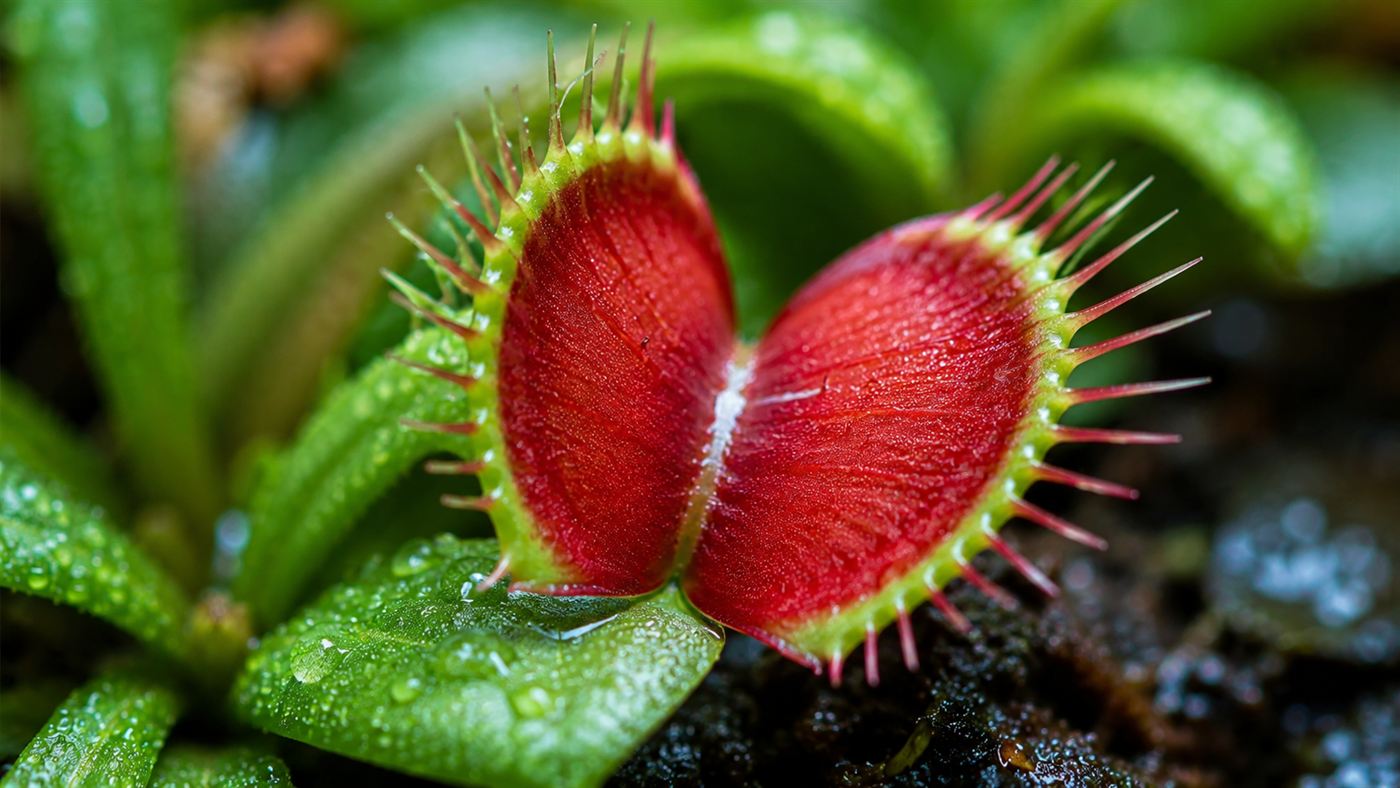
The open trap is a modified leaf, lined with teeth and waiting for a second touch. Illustration: Watts & Wild.
Plants are supposed to be the calm, passive backdrop of the living world. They grow toward light, they drink from the soil, and they do not move fast or make decisions. The Venus flytrap breaks nearly all of those rules at once, and it does so with a kind of quiet cunning that has fascinated scientists since Charles Darwin called it one of the most wonderful plants in the world.
What makes the Venus flytrap truly astonishing is not simply that it snaps shut on flies. It is that it appears to count. It waits for the right signal, ignores false alarms, and even seems to keep tallying after the trap closes, all without a single nerve or brain cell. To understand how a plant pulls that off, you have to look at the strange machinery hidden inside those spiny green jaws.
The short version: The Venus flytrap is a carnivorous plant whose trap only snaps shut after its trigger hairs are touched twice within about 20 seconds, so it does not waste energy on raindrops. After closing, it counts roughly five more touches before it begins digesting, confirming it has caught live prey. It grows wild in just one small region of the Carolinas.
A plant that eats animals
The Venus flytrap is a carnivorous plant, and it turned to eating meat out of necessity. It grows in wet, boggy ground so poor in nutrients that most plants would struggle there, especially lacking nitrogen. Rather than starve, it evolved a way to get that nitrogen from a different source, the bodies of insects and spiders that wander across its leaves.
Each trap is a modified leaf, split into two hinged lobes fringed with stiff spikes that mesh together like the bars of a cage. The inner surfaces often blush a rich red and give off a sweet nectar to lure prey in. Importantly, the plant has not stopped being a plant. It still stands in the sun and photosynthesizes like any other green leaf. The trapping is a supplement, a clever way to season poor soil with a little fresh meat.
The snap that beats the blink
When the trap fires, it is one of the fastest movements in the entire plant kingdom. The two lobes swing shut in around a tenth of a second, quicker than you can blink, fast enough to catch a fly mid-step. And it does this with no muscles at all, because plants do not have any.
The secret is water pressure and geometry. The open lobes are held in a tense, slightly curved shape, like a soft contact lens flexed the wrong way. When the plant gets its signal, it rapidly changes the pressure in its cells, and the lobes flip from curving outward to curving inward all at once, snapping closed in a burst of stored elastic energy. It is less like a muscle flexing and more like a mousetrap springing, a mechanism loaded and waiting to release.
How the Venus flytrap counts
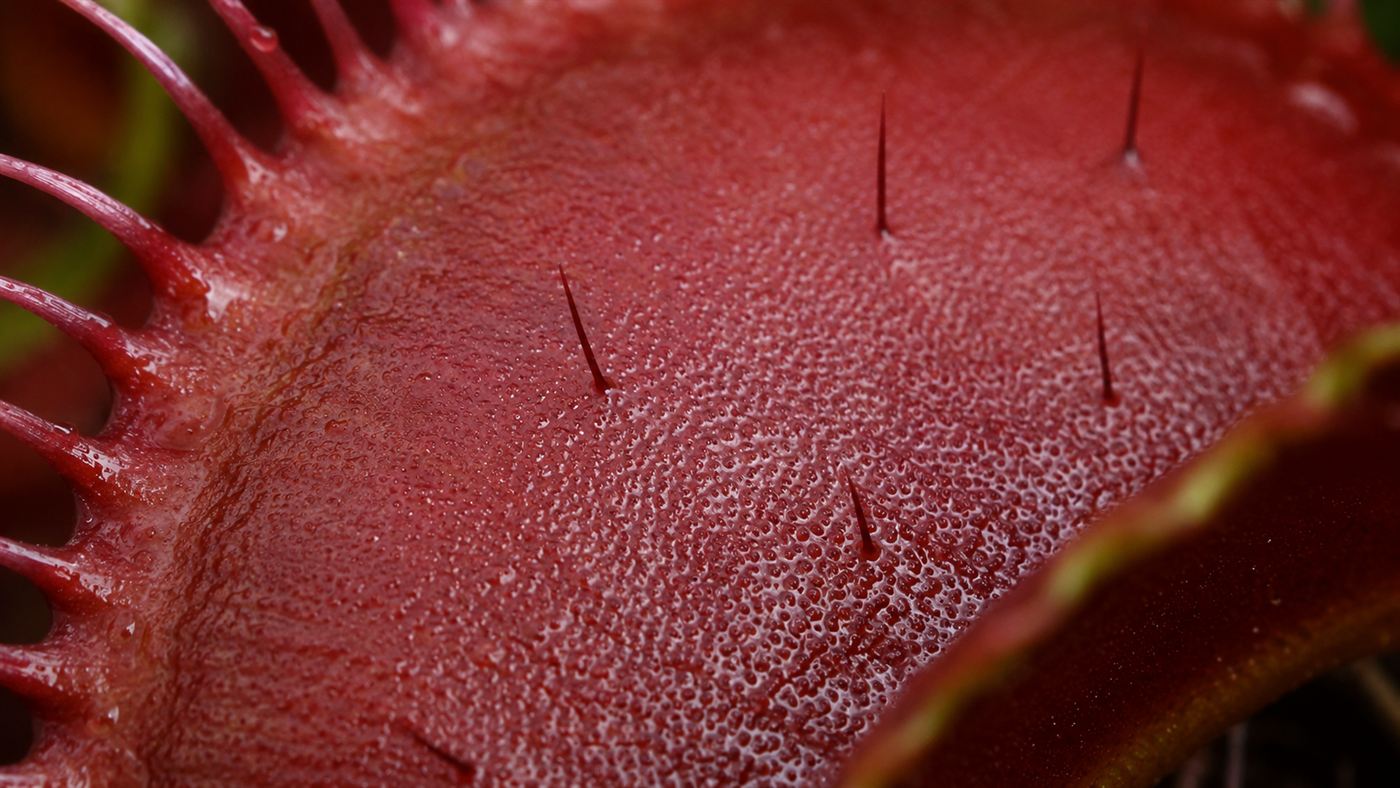
Here is where the plant does something that feels almost impossible. On the inner surface of each lobe stand a few tiny, stiff trigger hairs. Brush just one of them a single time, and nothing happens. The trap stays open, unbothered. It is only when a trigger hair is touched twice within about twenty seconds that the trap slams shut.
As the Royal Botanic Gardens, Kew explains, each touch generates a tiny electrical signal, and it takes two of them in quick succession to spring the trap. That waiting for a second touch is the plant's way of telling a living, moving insect from a dead leaf or a falling raindrop. It is, in effect, counting to two before it commits, and refusing to waste a strike on a false alarm.
Counting to five to eat
The counting does not stop when the trap closes. A shut trap is not yet a meal, and the plant still has to make sure it has actually caught something worth eating before it pours out precious digestive enzymes. So it keeps tallying. As the trapped insect struggles, it keeps brushing the trigger hairs, and each new touch adds to the count.
After roughly five stimulations, the plant switches on its digestive machinery, flooding the sealed trap with enzymes to dissolve its catch, and the more the prey struggles, the more enzymes it produces. In other words, the flytrap uses one number to decide whether to snap and a higher number to decide whether to dine. Each touch leaves a brief chemical trace inside the plant that slowly fades, a fleeting kind of short-term memory that lets it add the signals up over time.
A marvel that lives in one small place
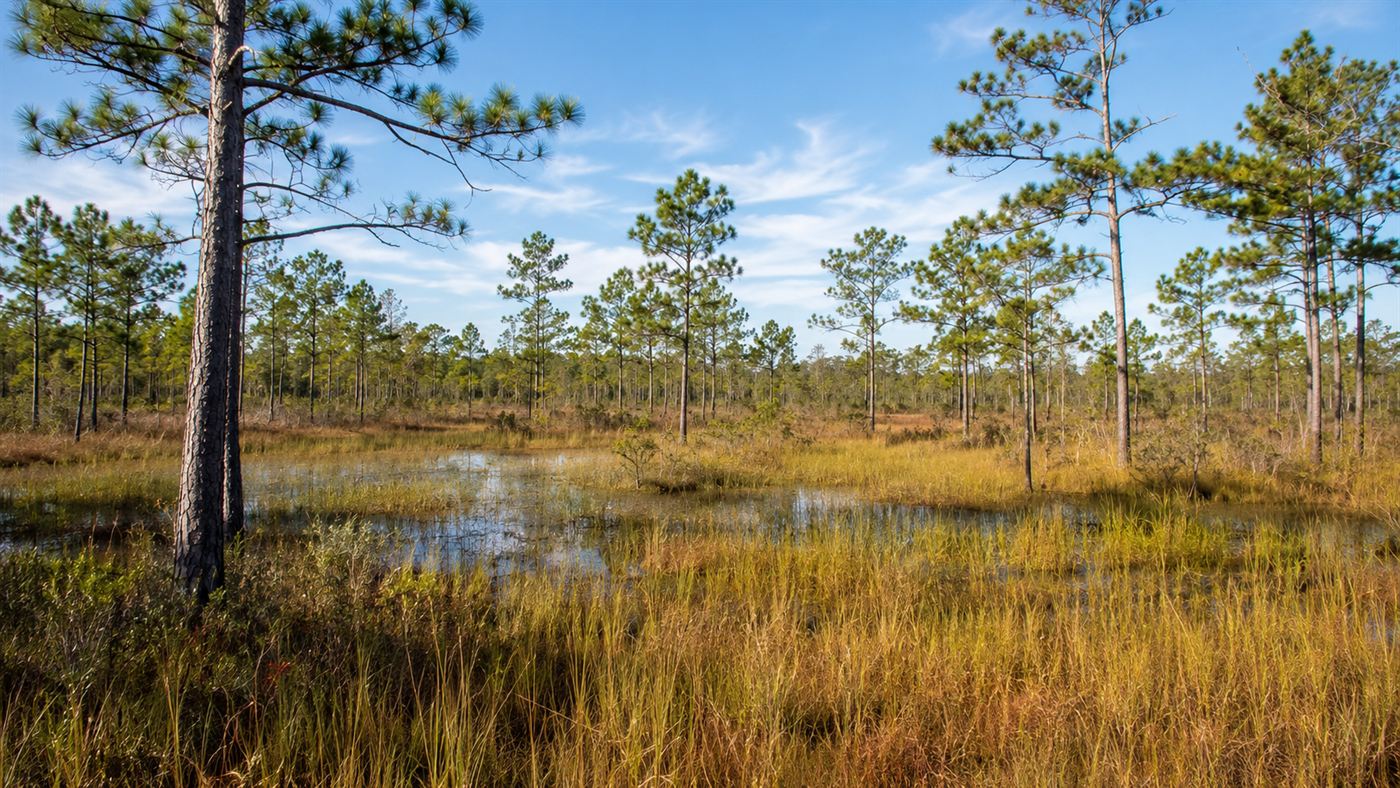
For all its worldwide fame, the wild Venus flytrap is a deeply local creature. As North Carolina State University notes, it grows naturally in only a small area, mostly within about 75 miles of Wilmington, North Carolina, plus a sliver of South Carolina, and nowhere else on the planet. The plant depends on the region's wet pine savannas, and on the periodic wildfires that clear away taller plants which would otherwise shade it out.
That tiny range makes it vulnerable. Wild flytraps are declining because of habitat loss, the suppression of the fires they need, and outright poaching, as people dig up wild plants to sell. The problem grew serious enough that in 2014 North Carolina made poaching Venus flytraps a felony. It is a strange twist for a plant sold by the million in garden centers, that its true wild home is a small, threatened patch of American bog.
The honest catch
It is irresistible to say the Venus flytrap thinks, but that is not quite right, and the truth is more interesting than the myth. The plant has no brain and no intelligence. Its counting is a beautiful piece of electrical and chemical signaling, action potentials firing along its tissues and a calcium trace that builds up and fades, not a mind making decisions. Calling it clever is a useful shorthand, but it is still just chemistry and physics doing something remarkable.
There are practical honest notes too. Each trap can only close a limited number of times, perhaps a handful, before it wears out and dies, which is exactly why all that careful counting matters so much. And the houseplant paradox is real. Buying a nursery-grown flytrap is harmless and does nothing to hurt the wild ones, but poaching does, and most flytraps bought on a whim die on windowsills anyway, because people do not realize they need a winter dormancy, mineral-free water, poor soil and plenty of direct sun. The plant that counts is tougher and stranger than the gift-shop novelty suggests, and it deserves to be met on its own remarkable terms.
A plant with no brain waits for a second touch, counts to five, and springs faster than you can blink. Does the Venus flytrap's counting deserve to be called a kind of decision-making, or is that just us seeing a mind where there is only elegant chemistry? Tell us what you think in the comments.
Related reading: the Xerces blue butterfly, another small American wonder we nearly lost, or the Franklin tree, extinct in the wild yet still blooming in gardens. See also how kudzu became the vine that never really ate the South.
More from Watts & Wild
More in Energy & the Wild →

Maria writes about wildlife, ecology, and the strange places where nature and human history collide. She is based in Brazil.