The superb lyrebird can imitate chainsaws, camera shutters and the calls of twenty other birds so perfectly that even the birds it copies cannot tell the difference
The superb lyrebird is the greatest impressionist in nature. A male can reproduce the song of twenty other birds, the whir of a camera, the snarl of a chainsaw and a car alarm, and he does it all to win a mate, with a voice so exact that the real birds answer back.
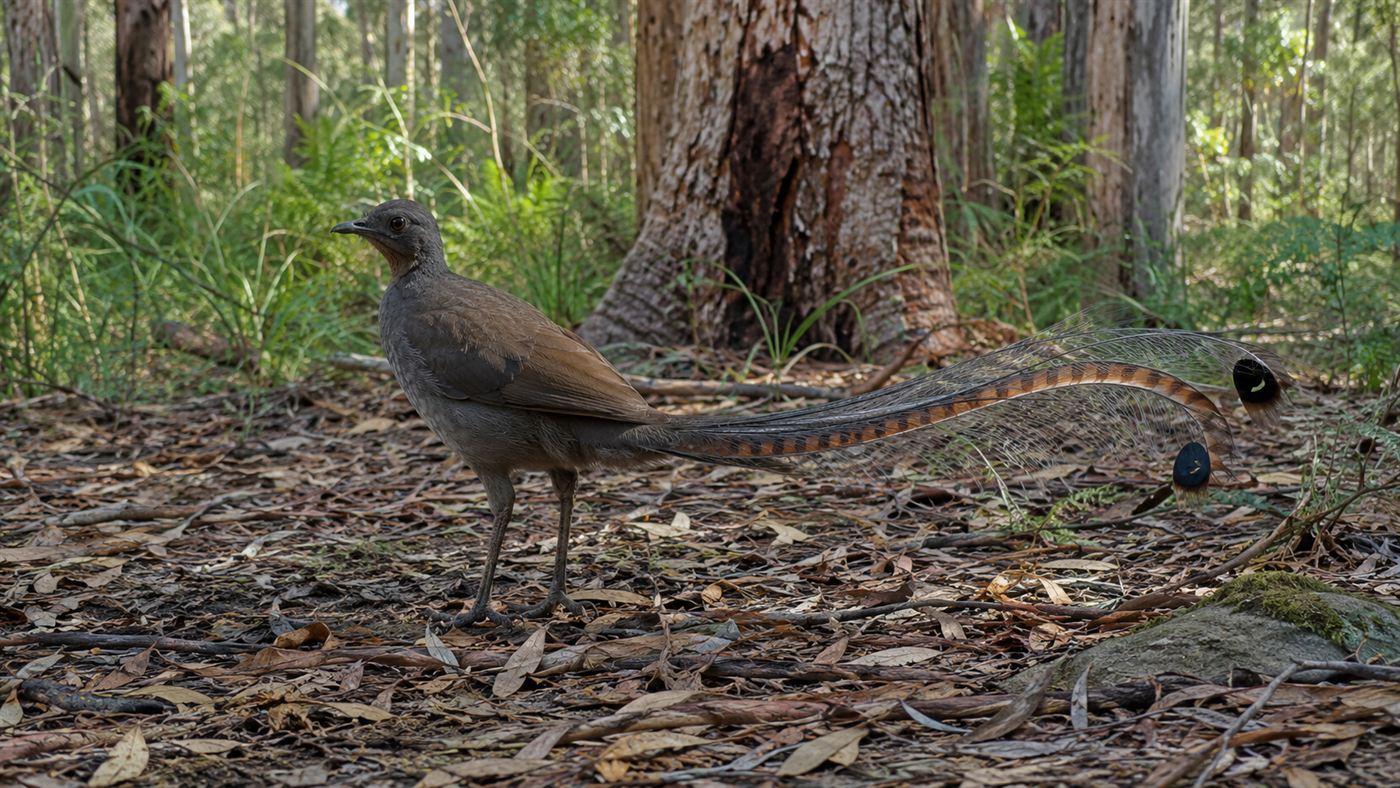
The superb lyrebird, nature's most accomplished vocal mimic. Illustration: Watts & Wild.
The lyrebird is, by a wide margin, the finest mimic in the animal world. A large, rather plain brown bird that scratches about on the floor of the forests of southeastern Australia, it gives no hint, until it opens its beak, that it carries one of the most astonishing voices on the planet. When it sings, it does not really sing its own song at all. It performs the entire soundscape around it, one borrowed noise after another, stitched together into a single seamless stream.
And the imitations are not rough approximations. As documented, lyrebirds reproduce the songs of other birds with such fidelity that the originals are fooled; when researchers played lyrebird copies to the birds being imitated, those birds reacted as though a rival of their own species had spoken. To human ears, a lyrebird doing a chainsaw or a camera is uncanny. To the forest, a lyrebird doing a kookaburra simply is a kookaburra. Australia is full of such marvels, including the platypus, a mammal that lays eggs and hunts by sensing electricity.
What sounds can a lyrebird make? The superb lyrebird of Australia can imitate the songs of more than twenty other bird species, as well as mechanical sounds it has heard, such as chainsaws, camera shutters and car alarms. Its mimicry is so accurate that the birds it copies often respond as if to their own kind.
The lyrebird, the greatest mimic in nature
The range of a lyrebird is genuinely hard to believe. A male's repertoire is built mostly from the calls of other forest birds, more than twenty species in a good singer, and he can also reproduce the chatter of a whole flock at once. Beyond birds, lyrebirds have been recorded imitating other animals entirely, and, most famously, the sounds of human machinery: camera shutters firing, car alarms, mill whistles, crosscut saws and chainsaws.
What makes it remarkable is not just the variety but the precision. The bird does not merely suggest these sounds; it renders them closely enough to deceive. That a single throat can hold the calls of twenty other species, switch between them instantly, and reproduce each well enough to fool the species itself is something close to a miracle of biology.
How one bird makes so many sounds
The secret lies in an organ birds have and we do not, the syrinx. While we make sound with a voice box at the top of the windpipe, a bird's syrinx sits lower down, where the windpipe splits in two toward the lungs, and it can be controlled on each side almost independently. In effect a songbird has two voices at once, and can blend or alternate them with extraordinary speed and control.
The lyrebird pairs this versatile instrument with a remarkable ear and memory. Like other songbirds it is a vocal learner, picking up the sounds of its surroundings and storing them, and it simply happens to be better at it than anything else alive. Whatever the forest offers, a kookaburra, a parrot, a logging crew, becomes raw material for its performance, learned by listening and reproduced at will.
A song to win a mate
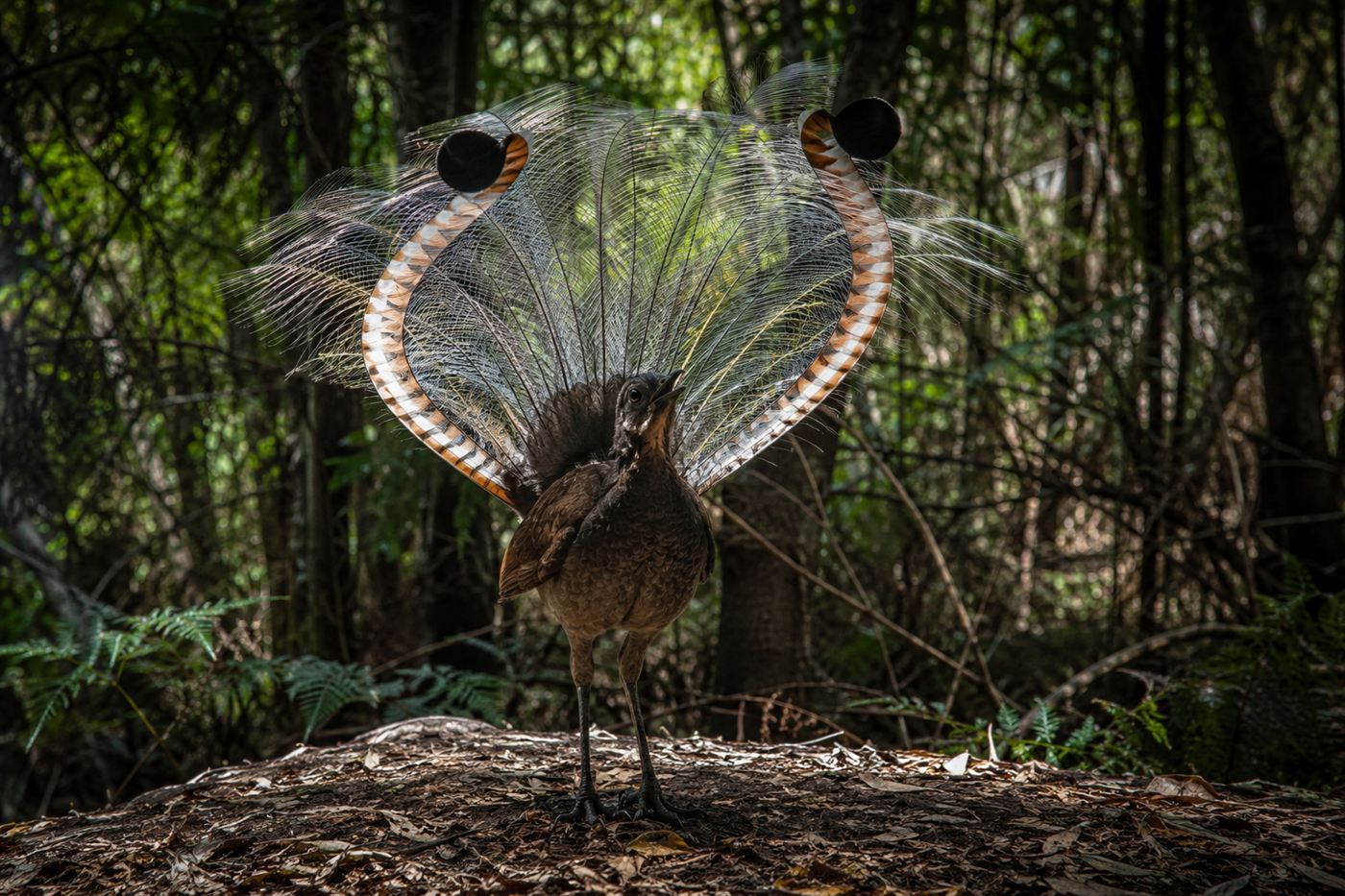
All this virtuosity has a purpose, and it is courtship. A male lyrebird clears a small mound on the forest floor as a stage, draws his spectacular lyre-shaped tail forward over his head until it falls around him like a lacy silver veil, and shimmers it while he sings. The song he pours out is mostly mimicry, a long, dense medley of every sound he has mastered, and his copying peaks in the breeding season when there are females to impress.
The better and broader his impressions, the more attractive he is thought to be, which gives the bird a powerful reason to keep collecting and perfecting sounds throughout its life. Females, it turns out, are skilled mimics too, copying many species in their own right, but it is the displaying male, singing the forest back to itself from his little stage, that has made the lyrebird famous.
Chook, the zoo bird who learned the builders
Some of the most charming evidence of lyrebird talent comes not from the wild but from captivity. A celebrated lyrebird named Chook lived at Adelaide Zoo, hand-raised from a chick, and his repertoire was a portrait of the human world around him. He was famous for the sounds of hammers, drills and saws, which he is said to have picked up while a new enclosure was being built nearby, and he could also produce a car alarm and a human voice cheerfully saying "hello, Chook". He lived to the remarkable age of 32, an entire human-tinged songbook in feathers.
The clip that fooled the world
For millions of people, the lyrebird arrived in their lives through a single piece of film. A celebrated BBC sequence narrated by David Attenborough showed a wild male reeling off camera shutters, a car alarm and the unmistakable rising whine of a chainsaw, and it became one of the most shared nature clips ever made. For a generation it defined the bird: the creature that could do a power tool. That clip did more than any textbook to make the lyrebird a household name.
The honest catch
It is worth tempering the legend a little. The viral image of lyrebirds constantly imitating chainsaws and cameras oversells how common that is in the wild. The overwhelming majority of a wild lyrebird's mimicry is of other birds, not machines, and the dramatic human-sound impressions tend to come from captive or human-habituated individuals like Chook, or from birds living close to people. How often truly wild lyrebirds copy machinery, and why, is still debated by scientists.
But the core wonder survives every caveat. Whether it is copying a chainsaw or a flock of parrots, the lyrebird really can reproduce sounds with enough accuracy to deceive the things it imitates, and it really does build its courtship out of borrowed voices. It is a small brown bird on a forest floor that has turned listening into an art form, and become, in the process, the finest impersonator nature has ever produced.
A plain brown bird that can perform a chainsaw, a camera and twenty other birds well enough to fool them, all to win a mate. What is the most surprising sound you have ever heard an animal imitate? Tell us in the comments.
Related reading: The bowerbird, another Australian showman that tricks the eye to win a mate.