These tiny ants were farming fungus 50 million years before humans planted a thing
Long before any person sowed a seed, the leafcutter ants of the American tropics were already farming a single underground fungus. They march home under scraps of leaf many times their own size, yet they never eat a bite of them, feeding the leafcutter ants fungus that feeds the whole colony in return.
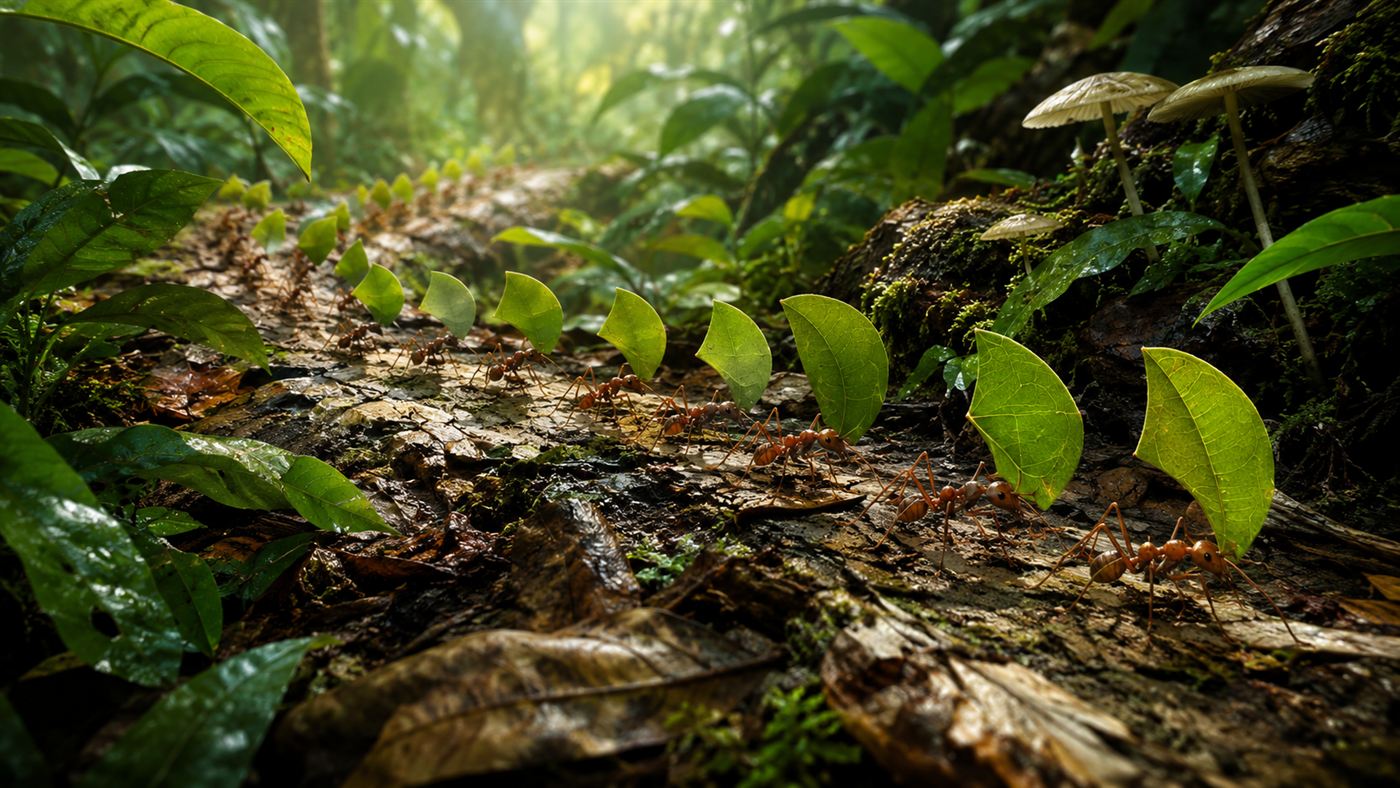
A column of leafcutter ants ferries fresh leaf back to the nest. Illustration: Watts & Wild.
Walk through a tropical forest in the Americas and you may meet a thin green river flowing across the path.
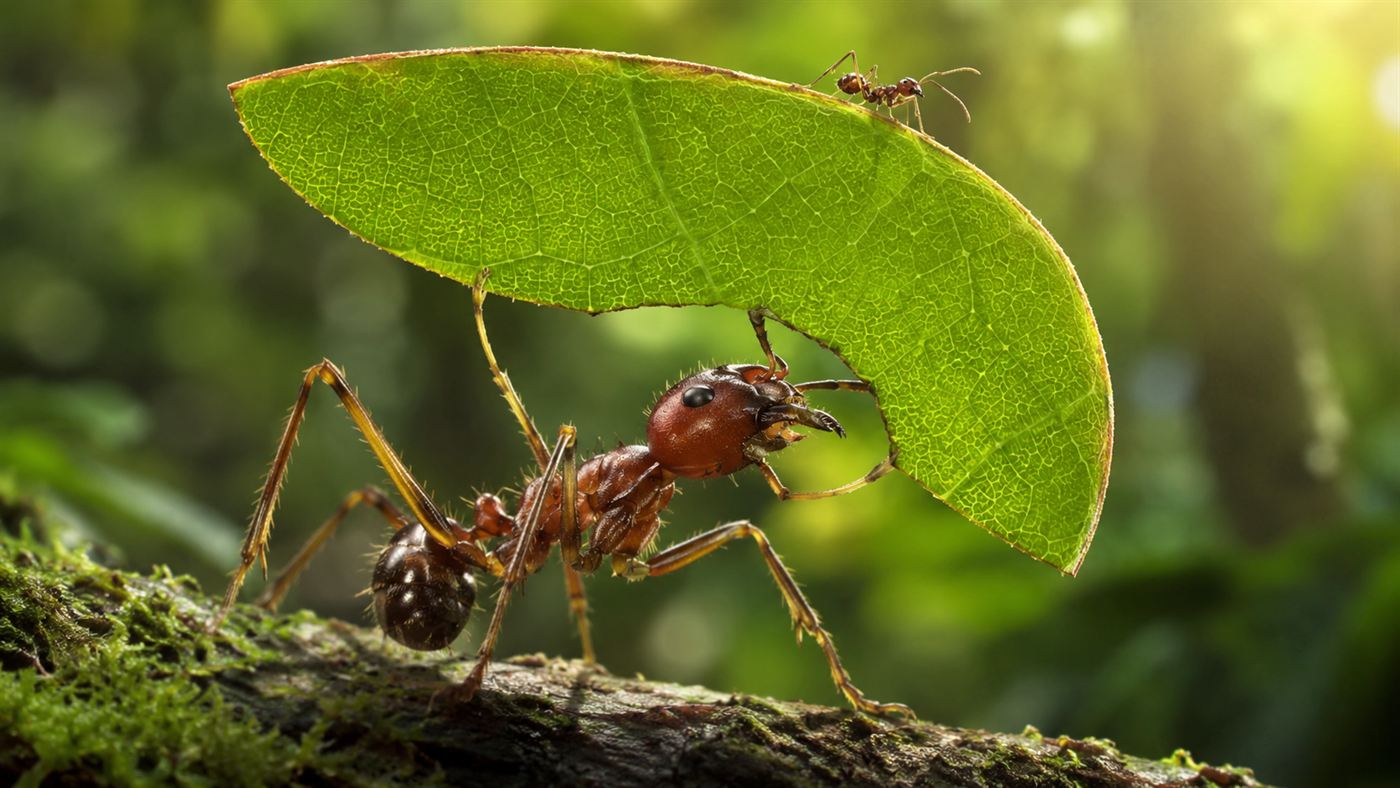
Look closer, and the river is an endless line of ants, each holding a cut piece of leaf aloft like a tiny green sail.
What do leafcutter ants do with the leaves? Leafcutter ants do not eat the leaves they cut. They carry the fragments underground and use them as compost to grow a special fungus, and it is that fungus, not the leaves, that the colony eats.
The ants that do not eat leaves
Leafcutter ants live across Central and South America and into the warm southern edge of the United States.
A single forager can carry a piece of leaf many times its own body weight, holding it overhead on the long march home.
Those green columns can strip a tree of much of its foliage in a night, which makes the ants one of the great plant-eaters of the tropics.
Yet not one of those leaves is a meal.
Every fragment is raw material, hauled below ground to feed something else entirely.
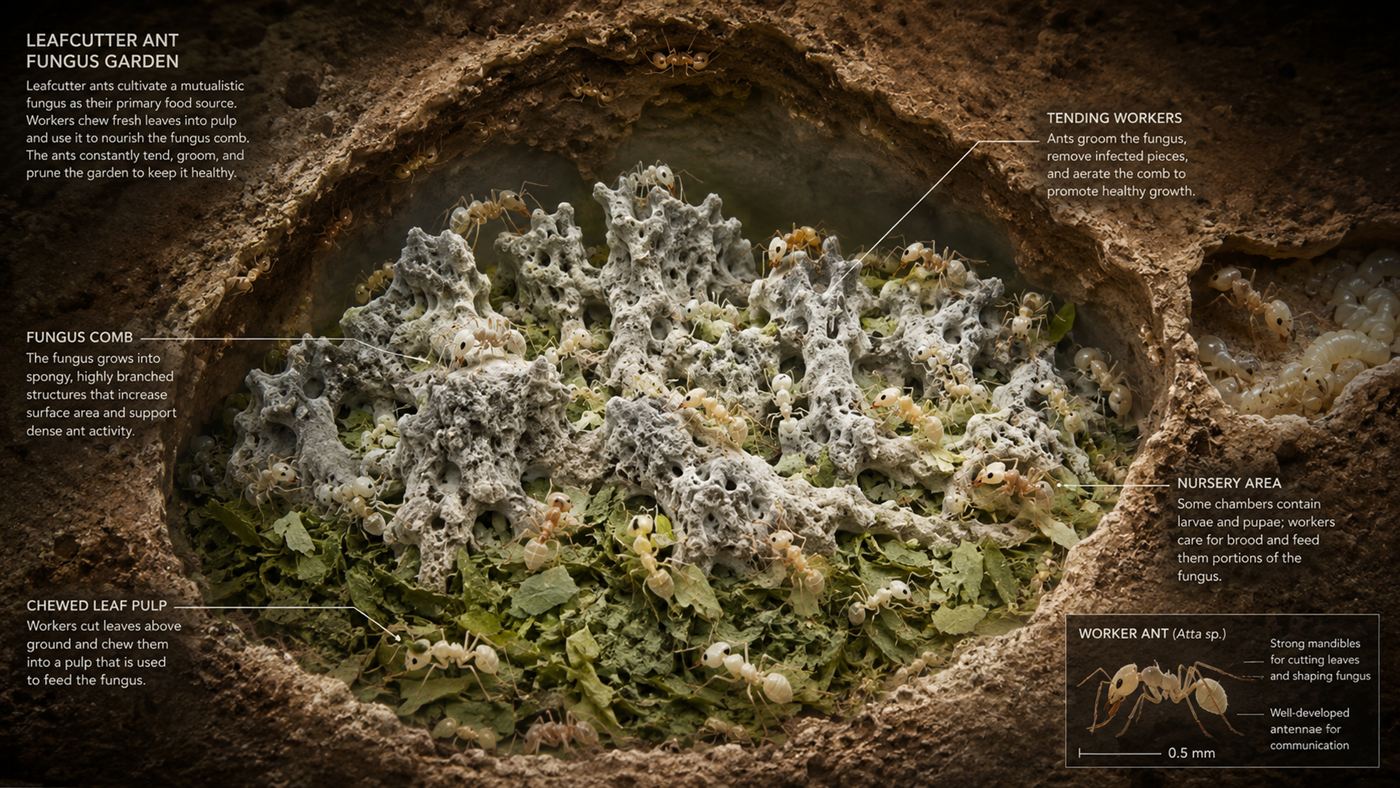
The leafcutter ants fungus farm beneath the forest floor
Down in the nest, the cut leaves become compost for a crop.
The ants cultivate a fungus that grows on the chewed leaf pulp, tending it like a gardener tends a bed.
The fungus produces tiny swollen tips packed with nutrients, and those are what the colony actually harvests and eats.
Worker ants weed the garden, prune it and even dose the new leaf material with their own secretions to keep the crop healthy.
Neither partner can really thrive without the other, so the ants and their fungus are bound together for life.
Agriculture older than humanity
The most humbling part is just how old this arrangement is.
The partnership between these ants and their fungus is thought to stretch back some fifty to sixty million years.
Humans, by comparison, only took up farming around ten thousand years ago.
That means a small insect was running a settled, single-crop farm tens of millions of years before our own ancestors planted anything.
They even kept their harvest underground in climate-controlled rooms, an idea we would not borrow until much later.
An underground city of millions
A mature leafcutter ant colony is less a nest than a buried metropolis.
The largest colonies can hold several million ants sorted into castes by size and job.
Big-jawed soldiers guard the trails, mid-sized workers cut and carry, and the smallest of all tend the delicate fungus.
To build it, the ants excavate vast networks of chambers and shift many tonnes of soil, threaded with shafts that let stale air out and fresh air in.
It is a working farm, a nursery and a ventilated city, all run by insects a few millimetres long.
Their own living pharmacy
A single-crop farm has the same weakness ours does, which is disease.
A specialised mould constantly threatens to invade the gardens and wipe out the fungus the ants depend on.
To fight it, many leafcutter ants carry helpful bacteria on their bodies that produce natural antibiotics against the mould.
In effect the colony walks around wearing its own pharmacy, dosing the crop to keep the parasite in check.
It is a three-way alliance of ant, fungus and microbe that took shape long before anyone thought to bottle a medicine.
The honest catch
For all the wonder, it is worth staying grounded.
To a farmer, leafcutter ants are a costly pest, capable of stripping crops and orchards and doing serious economic damage across the region.
The neat story of ants using antibiotics is real but messier in detail, since the bacteria make many compounds and the relationship is not a tidy designed pharmacy.
None of this is planned, of course, and the farming is instinct shaped by deep evolutionary time rather than any clever decision.
Even so, the basic fact holds, that a colony of small insects has been quietly farming a single crop for longer than primates have existed.
Leafcutter ants are a reminder that some of nature's most advanced ideas were perfected by its smallest engineers. Not every ant and fungus get along so well, though: in the same forests, the zombie ant fungus turns carpenter ants into puppets.
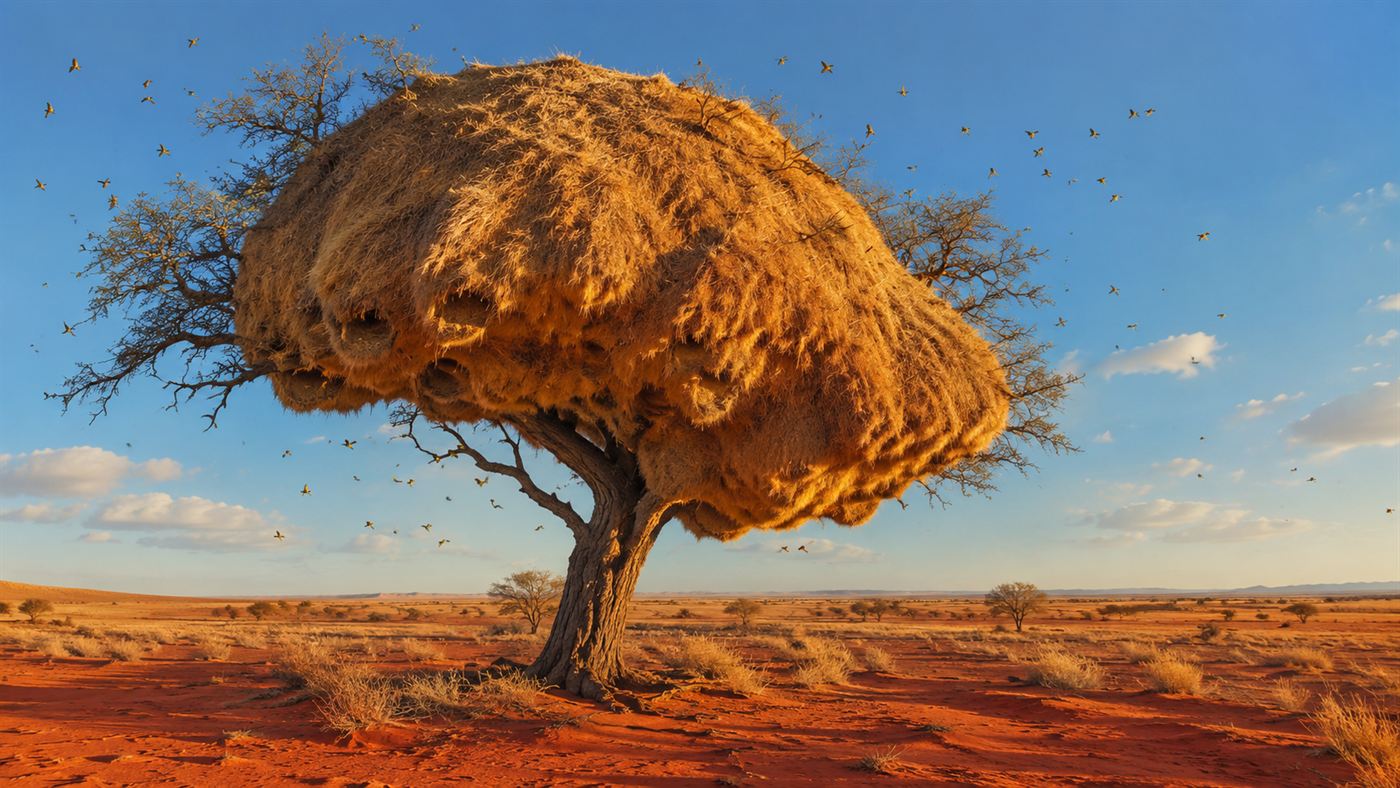
They belong with the other tiny architects and builders that shame our sense of who invented what, from the birds that raise grass apartment blocks in the desert to the termites whose mounds taught us to cool buildings without air conditioning.
If an ant could invent farming, livestock and medicine tens of millions of years before we did, how much of what we call human ingenuity was simply waiting in the soil all along, and what else are the insects quietly doing better than us? Tell us in the comments.