The US government paid Southern farmers to plant kudzu to save their soil, it became the vine that ate the South, and then scientists found the legend was far bigger than the plant
For a while, kudzu was a hero, a tough green vine the government begged farmers to plant. Then it became the monster of a thousand Southern photographs, swallowing barns and forests whole. The twist is that the monster was mostly in our heads.
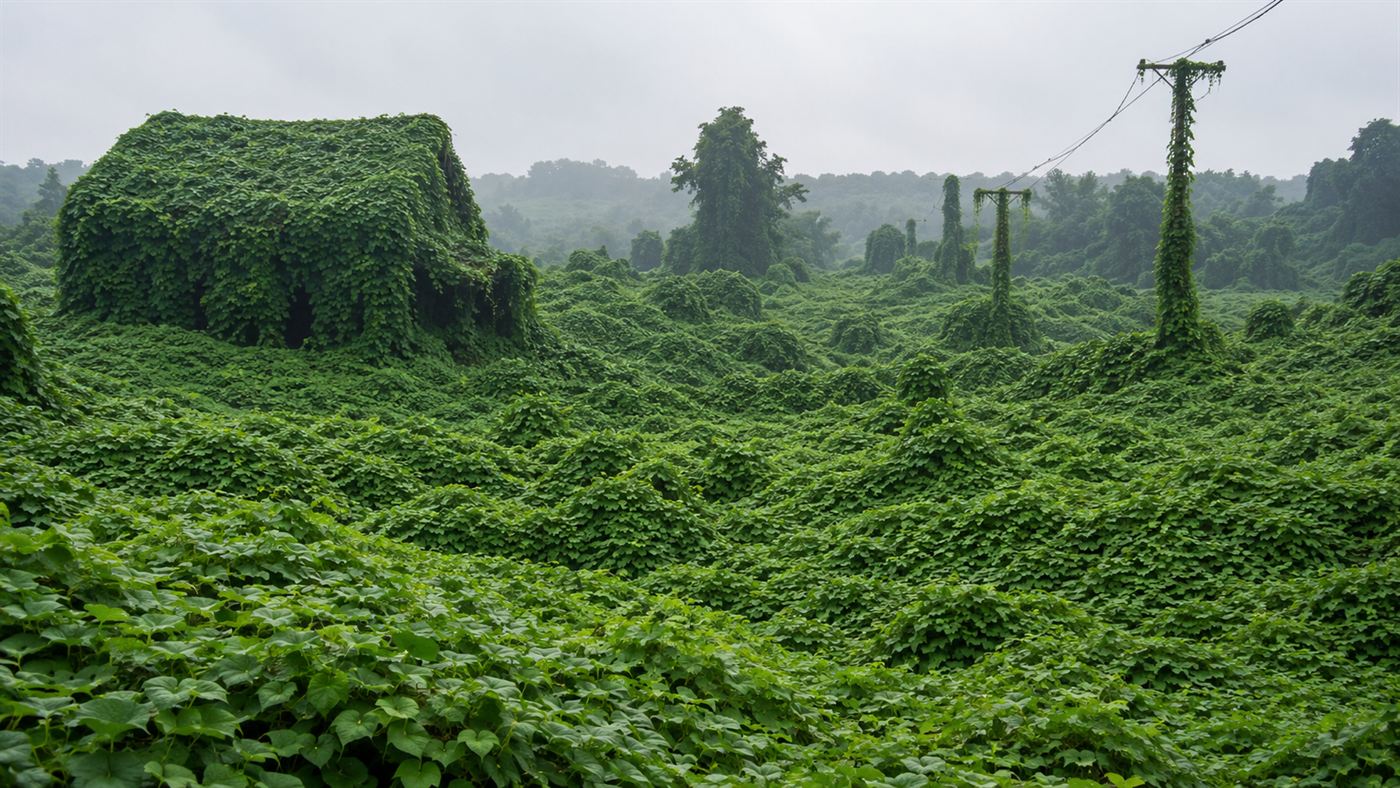
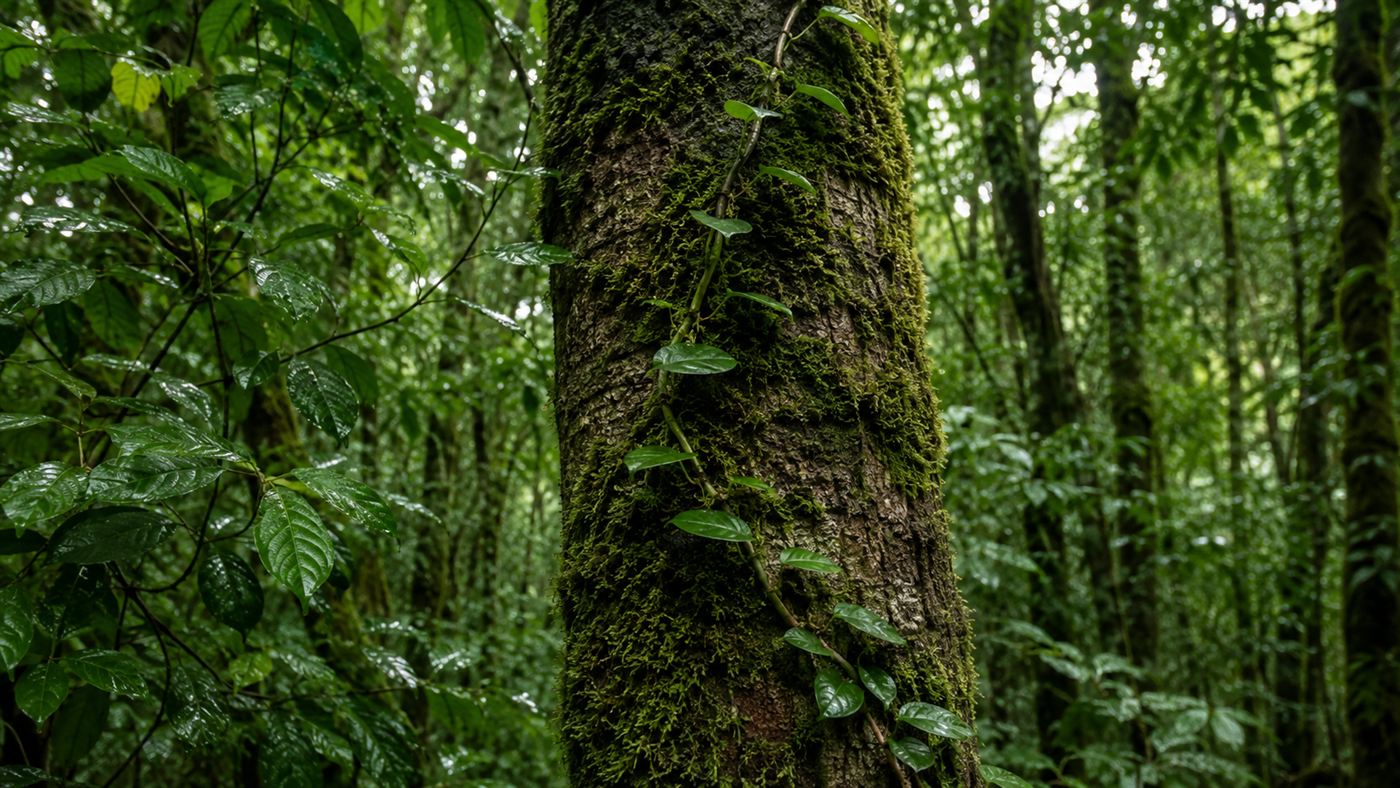
Kudzu drapes a Southern roadside into ghostly green shapes, the image that built its legend. Illustration: Watts & Wild.
Drive through the American South in summer and you will see it: whole hillsides, dead trees and abandoned buildings drowned under a rolling green blanket of leaves. That blanket is kudzu, and for the better part of a century it has been the region's favorite botanical villain, the plant that supposedly crept across the land while everyone slept. It is a great story. It is also, in its most famous form, not quite true.
The strangest part of this history is that Americans did it to themselves on purpose. As the naturalist Bill Finch wrote in Smithsonian, kudzu was once a celebrated miracle plant, pushed hard by the US government to heal the eroded farmland of the South. Only later did it turn into the green menace of legend, and only recently have scientists realized that the legend outgrew the vine.
The short version: kudzu is an Asian vine that the US government promoted in the 1930s to stop soil erosion, planting tens of millions of them across the South. It grew fast and smothered roadsides, earning the nickname the vine that ate the South. But careful surveys show it covers a fraction of the land people believe, so its fearsome reputation is largely a myth.
Why was kudzu planted in the United States?
The plant did not sneak in. It arrived openly in 1876 as a charming ornamental at the Philadelphia Centennial Exposition, prized for its sweet-smelling flowers and fast shade, and Southern gardeners happily grew it over their porches. For decades it was a guest, not an invader.
Its promotion turned serious during the Dust Bowl era, when eroding soil was a national emergency. The newly created Soil Conservation Service saw in the vine a cheap, fast-growing fix that could hold hillsides together and add nitrogen to worn-out land. The government gave away roughly 85 million of them, the Civilian Conservation Corps planted it along slopes and railway cuts, and farmers were paid as much as 8 dollars an acre to blanket their fields in it. For a poor, eroded region, it looked like a gift.
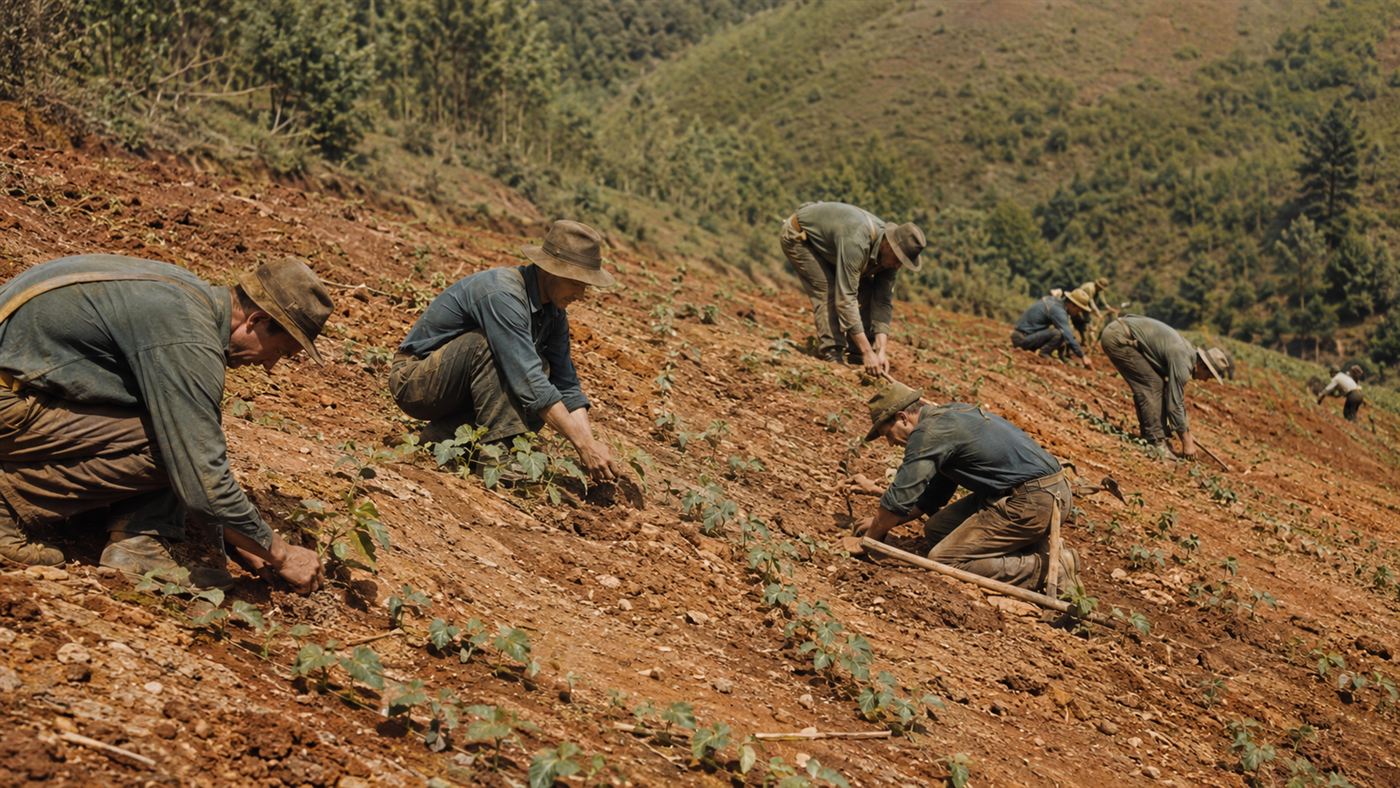
The evangelist and the boom
Every craze needs a preacher, and the vine found one in Channing Cope, an Atlanta newspaper columnist who fell so hard for it that he broadcast its praises from his Georgia farm. Channing Cope founded the Kudzu Club of America and urged listeners to plant it everywhere, calling it the miracle vine that would save the South's soil and feed its livestock.
For a while the enthusiasm made sense. It really did grow with astonishing speed, up to a foot a day in high summer, and it really did hold loose soil in place. By the mid-1940s something like three million acres had been planted. The problem was the same trait everyone had praised: once established, the vine did not know when to stop. It began climbing everything in reach, useful or not.
How kudzu became the vine that ate the South
By the 1950s the mood had flipped. Foresters and highway engineers who once recommended kudzu were now fighting it, as it swarmed up power poles, buried young trees, and reclaimed the very roadsides it had been planted to stabilize. In 1953 the same Soil Conservation Service that had championed it quietly dropped the vine from its list of approved cover plants, and decades later it was formally labeled a noxious weed.
What cemented the legend was the look of the thing. It grows most aggressively in full sun, which means it thrives exactly where we see it most, along highways and field edges, draping everything into eerie green sculptures. Those roadside walls of vine, photographed endlessly, made it look as though an unstoppable invasive species was quietly consuming the entire region. The phrase the vine that ate the South wrote itself.
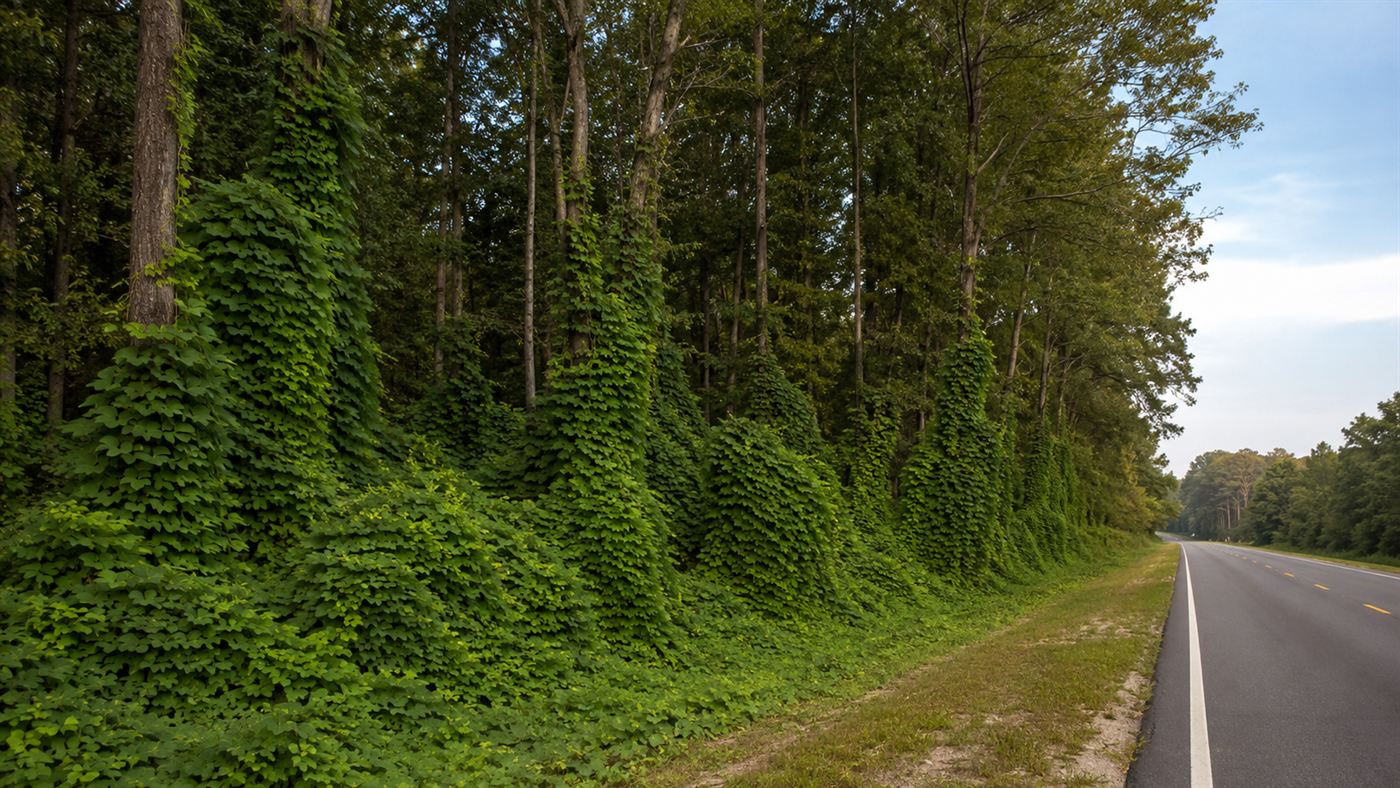
Did kudzu really eat the South?
Here is where the story turns. When researchers actually measured kudzu's range rather than repeating the folklore, the numbers came up startlingly small. Popular accounts, and even some government pages, claim it covers 7 to 9 million acres. But according to the reporting Finch cited, US Forest Service sampling found kudzu on roughly 227,000 acres of forest, about one-tenth of one percent of the South's 200 million acres of woodland.
The famous nine-million-acre figure, it turned out, seems to have been lifted from a small garden-club pamphlet and repeated for decades without anyone checking. The vine spreads slowly, only a couple of thousand acres a year, and several less photogenic invasive species quietly smother far more Southern forest than it does. The vine that ate the South, it turns out, has been mostly nibbling the edges.
The honest catch
Debunking the legend does not make kudzu harmless, and it would be wrong to swing too far the other way. Where it does take hold, it is a genuine nuisance, capable of smothering roadside trees, downing power lines under its weight, and shrugging off all but the most stubborn control efforts. For a landowner fighting it, kudzu is very real.
The deeper point is about attention. Because kudzu is so visible and has such a catchy name, it soaks up worry and money that might do more good aimed at quieter, faster-spreading invaders like privet or cogongrass. The kudzu saga is really a lesson in how a good story can outrun the facts, and how the plants we fear are not always the ones doing the most damage. Sometimes the scariest-looking monster is the one we invented.
A plant the government begged people to grow became a monster in the popular imagination, and then turned out to be far smaller than its own legend. How many other things do we fear mostly because we see them from the highway? Tell us what you think in the comments.
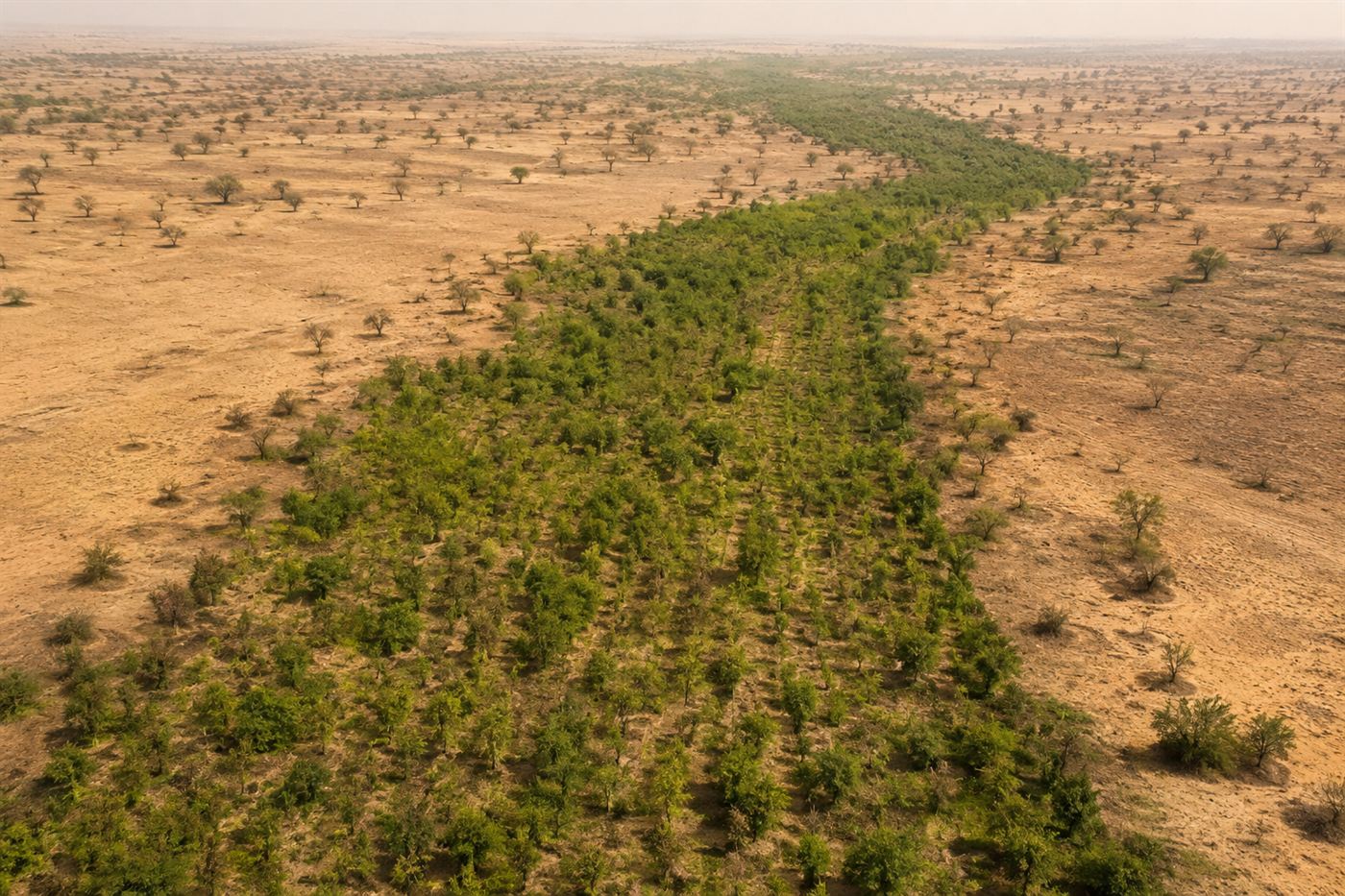
Related reading: how a Chilean vine called boquila can copy the leaves of other plants, and how the government once planted trees to hold back a desert in the Great Green Wall of Africa.