One artist bought the exclusive right to the blackest colour ever made, so a rival invented the pinkest pink and banned him from buying it
Vantablack is so dark that your eyes refuse to read it. Coat a crumpled object in it and the folds vanish, leaving what looks like a flat hole punched into the world. It was built for stealth jets and space telescopes, but the strangest chapter of its story is a feud between two artists that turned the science of darkness into open war.
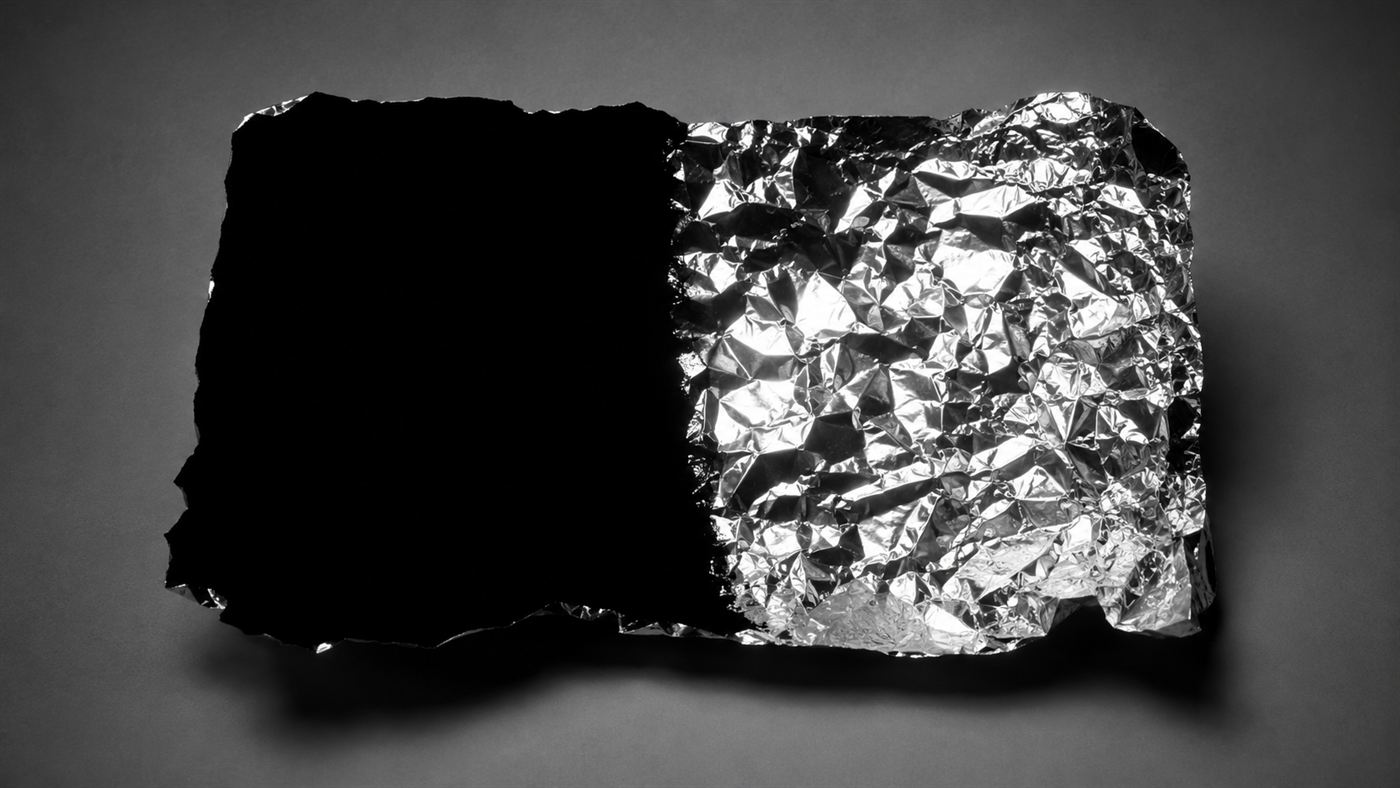
Coated in the blackest black, a wrinkled surface loses all its depth and reads as a void. Illustration: Watts & Wild.
When the British firm Surrey NanoSystems unveiled Vantablack in 2014, the headline number sounded almost made up: the material absorbed roughly 99.96% of visible light. To understand what that means, look at the deepest shadow in your room. That shadow is still bouncing far more light back at you than a sheet of this stuff would. It is less a colour than the absence of one.
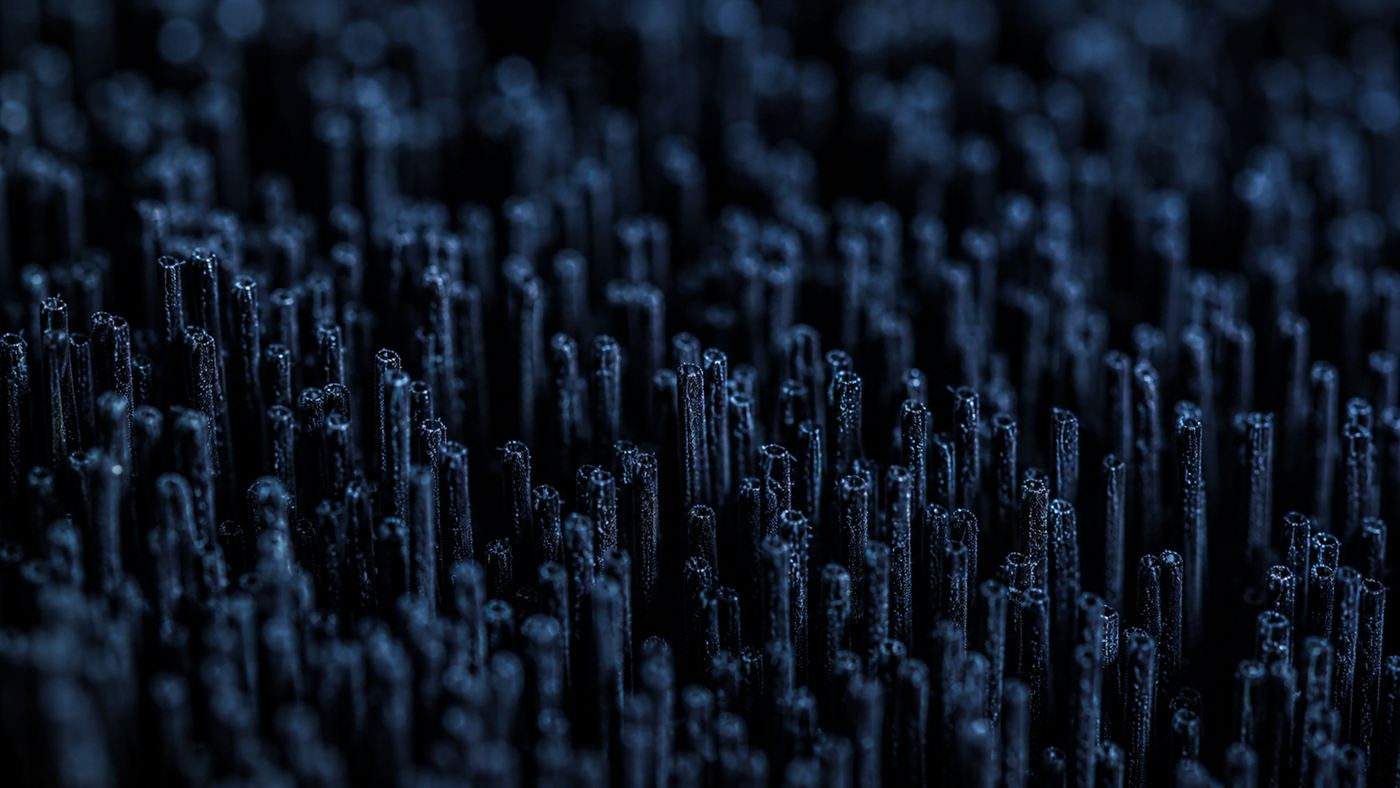
The name is an acronym, Vertically Aligned NanoTube Arrays, and it describes exactly how the trick works. The surface is not a pigment at all but a dense field of carbon tubes thousands of times thinner than a human hair, grown standing on end like a microscopic black forest.
How Vantablack swallows the light
When a ray of light hits the coating, it does not bounce straight back the way it would off ordinary paint. Instead it slips down between the nanotubes and gets trapped, ricocheting from tube to tube and losing a little energy each time until almost nothing is left to escape. The light is not reflected, it is quietly converted to heat and erased.
That is why it was invented for serious machines rather than galleries. A surface this black is priceless inside a telescope or a star tracker, where a single stray reflection can drown out the faint signal you are hunting for. Painted around a sensor, it mops up the scattered light and lets the instrument see what it could not see before, which is why versions of it have flown on satellites.
How one artist locked up a colour
Then the art world noticed. The sculptor Anish Kapoor, the man behind Chicago's mirror-bean Cloud Gate, saw what a true void could do as a material, and in 2016 his studio struck a deal with Surrey NanoSystems for the exclusive right to use Vantablack in art. From that point on, no other artist on Earth could legally work with the blackest black.
The reaction was fury. As CNN has reported, many artists felt a colour had been privatised and taken from the rest of them, and the loudest of those voices belonged to a British painter named Stuart Semple. To him it was simple: nobody should be able to own black.
The pinkest pink and a middle finger
Semple's revenge was a small act of genius. In late 2016 he released what he called the "World's Pinkest Pink," a screaming fluorescent powder, and put it on sale to absolutely everyone for a few pounds a jar, with one condition. To buy it, you had to tick a box swearing you were not Anish Kapoor and that the pigment would never end up in his hands.
Kapoor's answer became one of the internet's great art-world moments. He got hold of the pink anyway, dipped his middle finger in it, and posted the photo with a caption that did not need words. The richest darkness in physics had collided with a five-pound jar of pink, and the pink was winning the public.
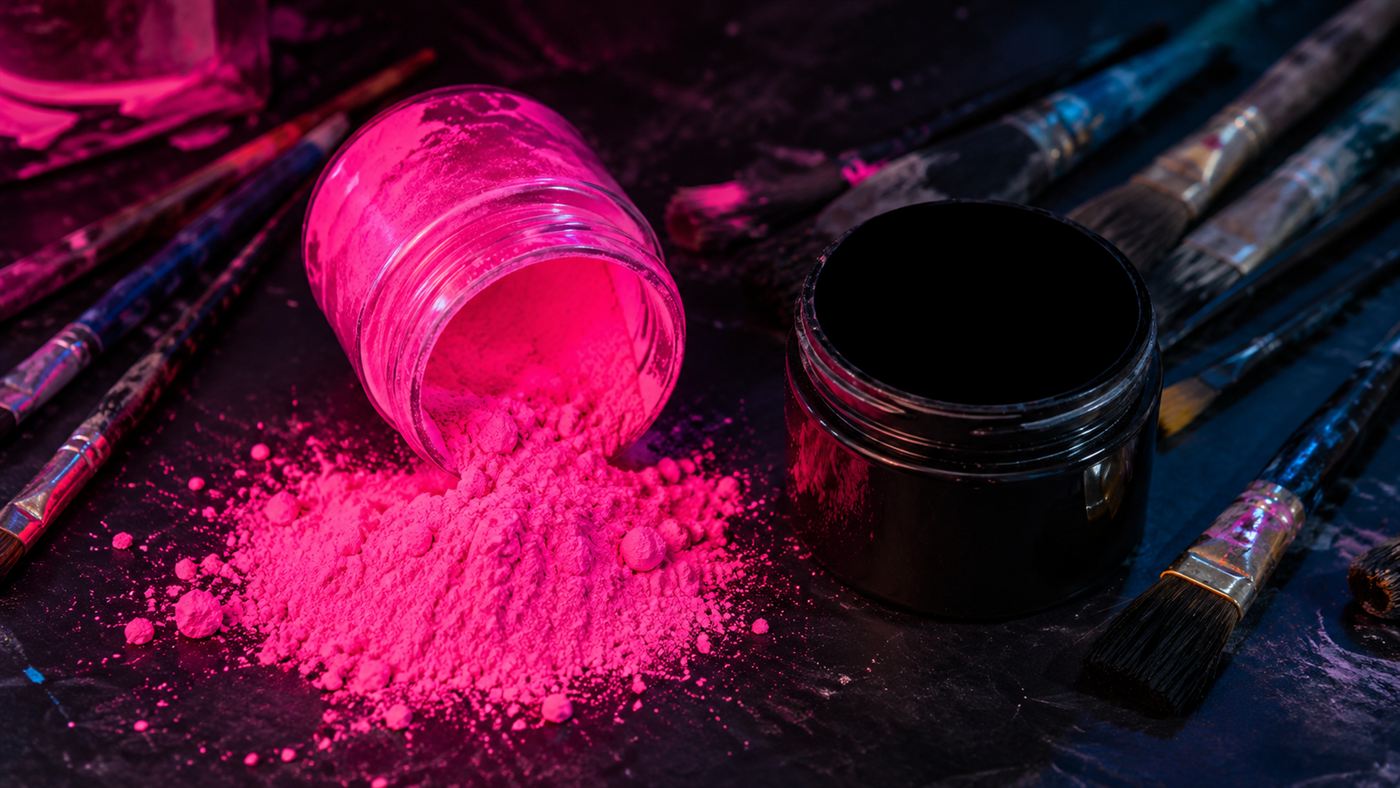
Semple did not stop at pink. He turned his community of artists into a small lab and kept pushing, releasing cheap super-black acrylics anyone could buy, climbing from Black 2.0 to Black 3.0 and beyond. As Artnet has covered across the saga, a tube of his black sells for around twenty pounds and gives ordinary painters much of that same flattening, depth-erasing effect that Vantablack made famous, no exclusive licence required.
The honest catch
It would be neat to say the people's black beat the laboratory's, but the truth is messier. Semple's paints are brilliant and democratic, yet they still reflect noticeably more light than the real thing. Vantablack remains a different order of dark, and it was never sold by the tube anyway because applying the original version meant growing nanotubes at high temperature, a process no painter could run at a kitchen table.
There is a final twist that punctures everyone's pride. Vantablack is no longer even the blackest material we have made. In 2019 engineers at MIT, almost by accident, grew a carbon-nanotube coating that absorbed about 99.995% of light, roughly ten times blacker still, and showed it off by swallowing a diamond worth millions until it looked like a hole in the air. The race to own the dark, it turns out, was never going to have a finish line. The story rhymes with other inventions whose makers learned that a breakthrough rarely belongs to one person, from the chemist who turned a cloudy liquid into bulletproof Kevlar to the slow drama of the experiment that has been waiting 90 years for a single drop to fall.
A coating built to hide jets and sharpen telescopes ended up at the centre of an art feud about whether anyone can own a colour. Should a material this striking belong to one artist, or to everyone who wants to paint with the dark? Tell us what you think in the comments.
Related reading: the Antikythera mechanism, an ancient Greek computer that was 1,000 years ahead of its time.