For a few months each year a Colombian river erupts into five colours, and a war kept the world from seeing it for decades
Most rivers are some shade of brown, grey or blue. Caño Cristales in Colombia turns scarlet, gold and green all at once, a living rainbow that flows over the rocks for only a few months each year.
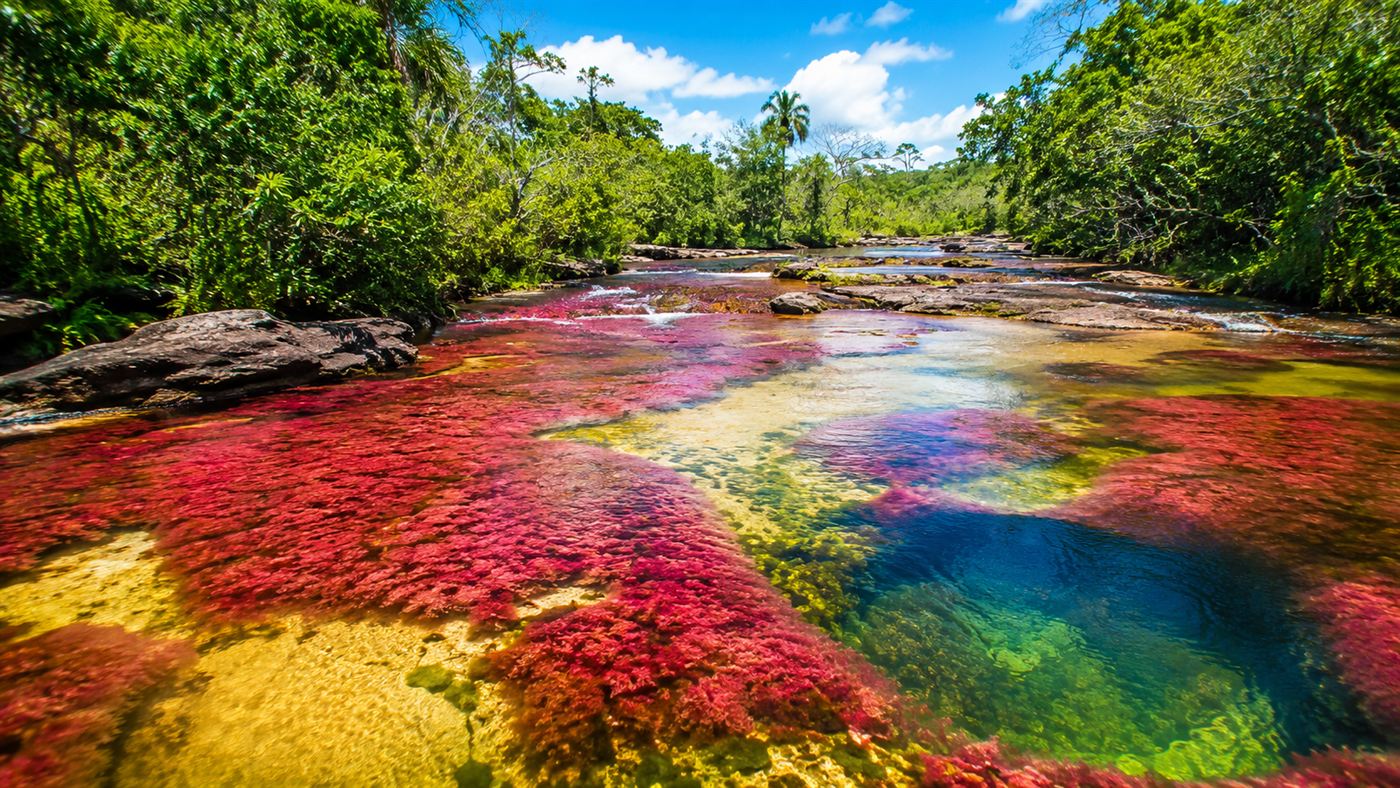
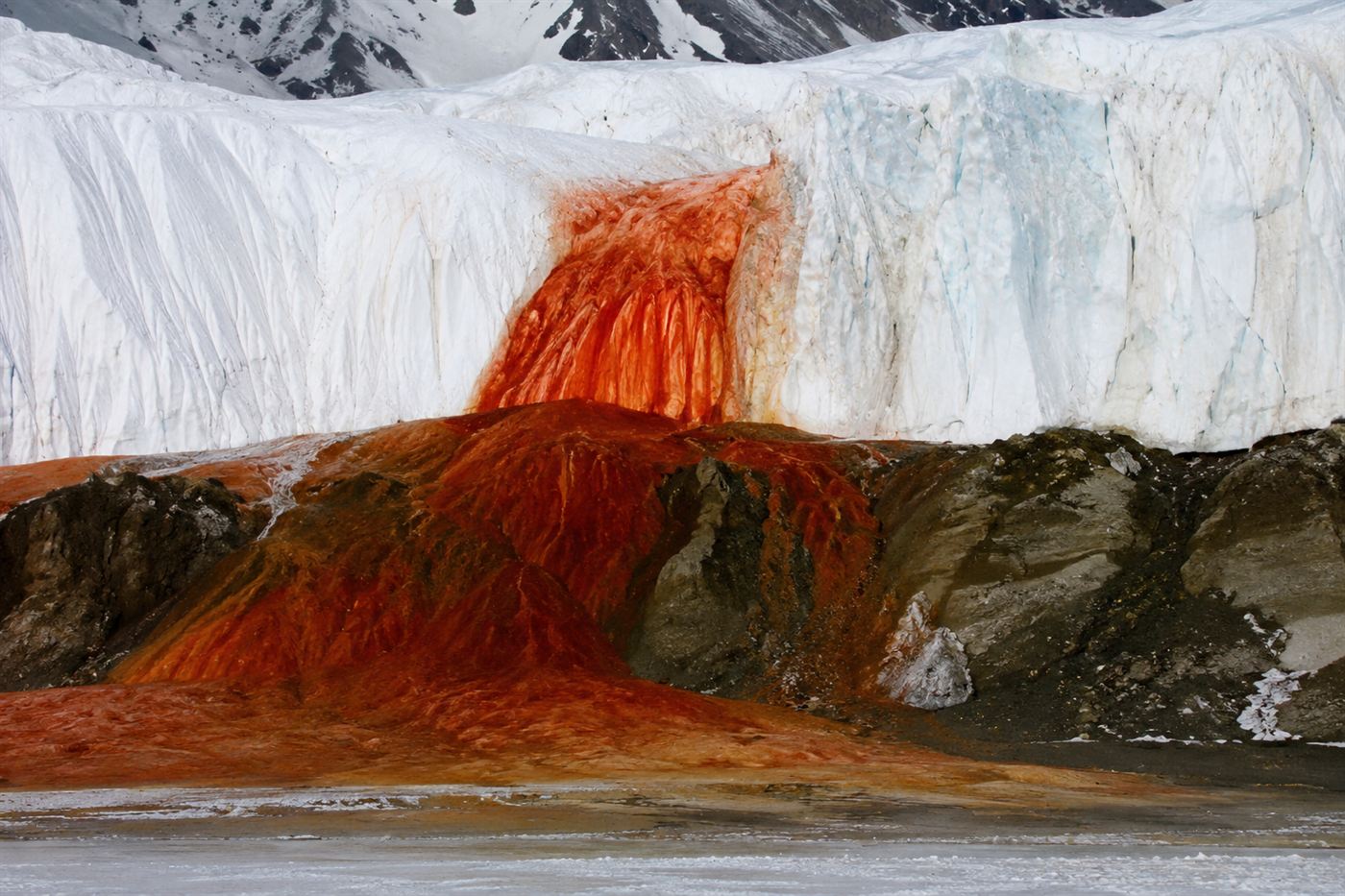
For part of the year the bed of Caño Cristales glows a vivid red. Illustration: Watts & Wild.
People call it the river of five colours, the liquid rainbow, even the most beautiful river in the world.
For a few weeks between the wet and dry seasons, Caño Cristales lives up to every one of those names.
Why is Caño Cristales so colourful? Caño Cristales turns bright red because its bed is carpeted with an aquatic plant called Macarenia clavigera, which blushes deep scarlet under the right mix of sunlight and water depth. Alongside that red, green plants, yellow sand, blue water and dark rock complete its famous five colours.
The Caño Cristales river that turns to rainbow
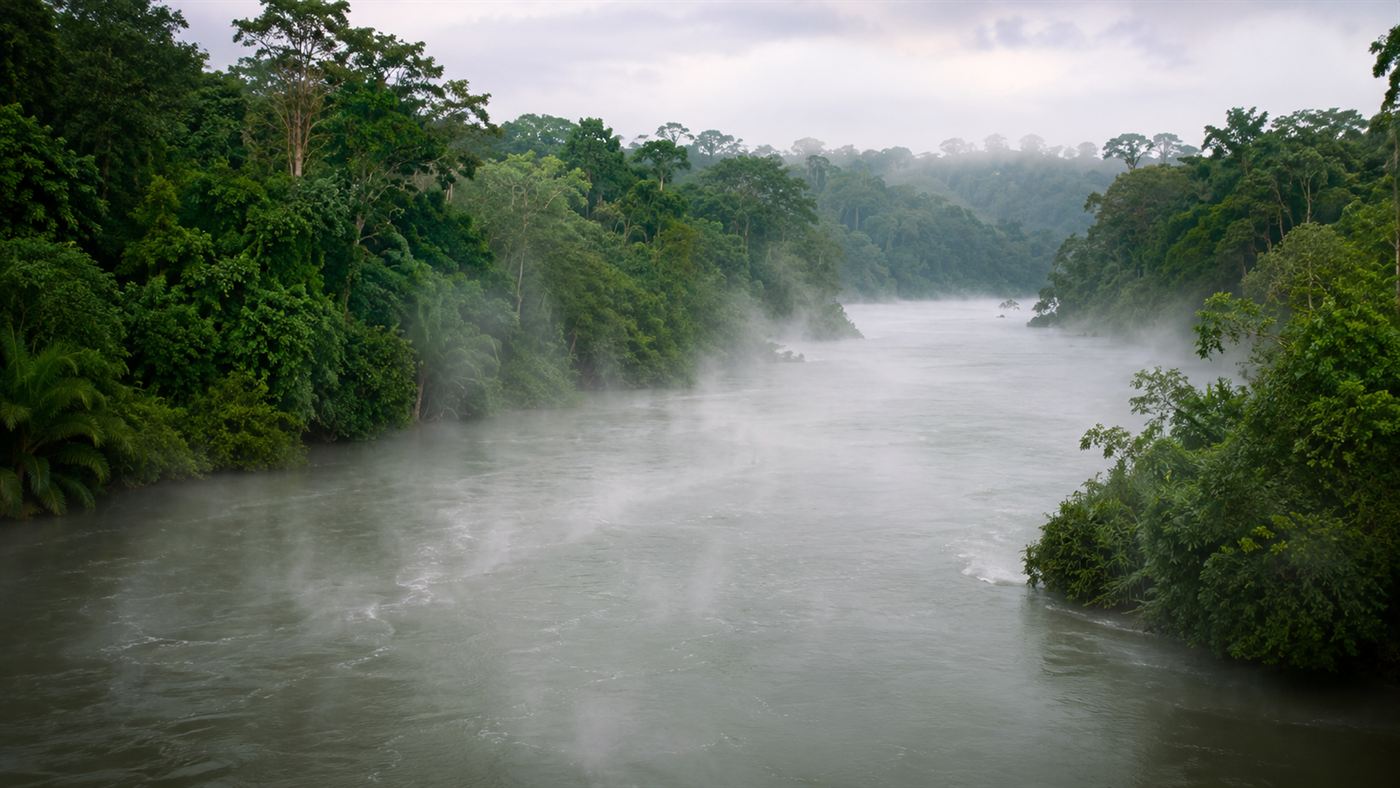
Caño Cristales runs through the remote Serranía de la Macarena in central Colombia.
For most of the year it looks like an ordinary clear mountain stream tumbling over rock.
Then, in the narrow window when the water is neither too high nor too low, the riverbed bursts into colour.
Vivid reds and pinks spread across the stones, set off by splashes of yellow, green, blue and black.
The effect is so intense that the water itself seems to have been dyed by hand.
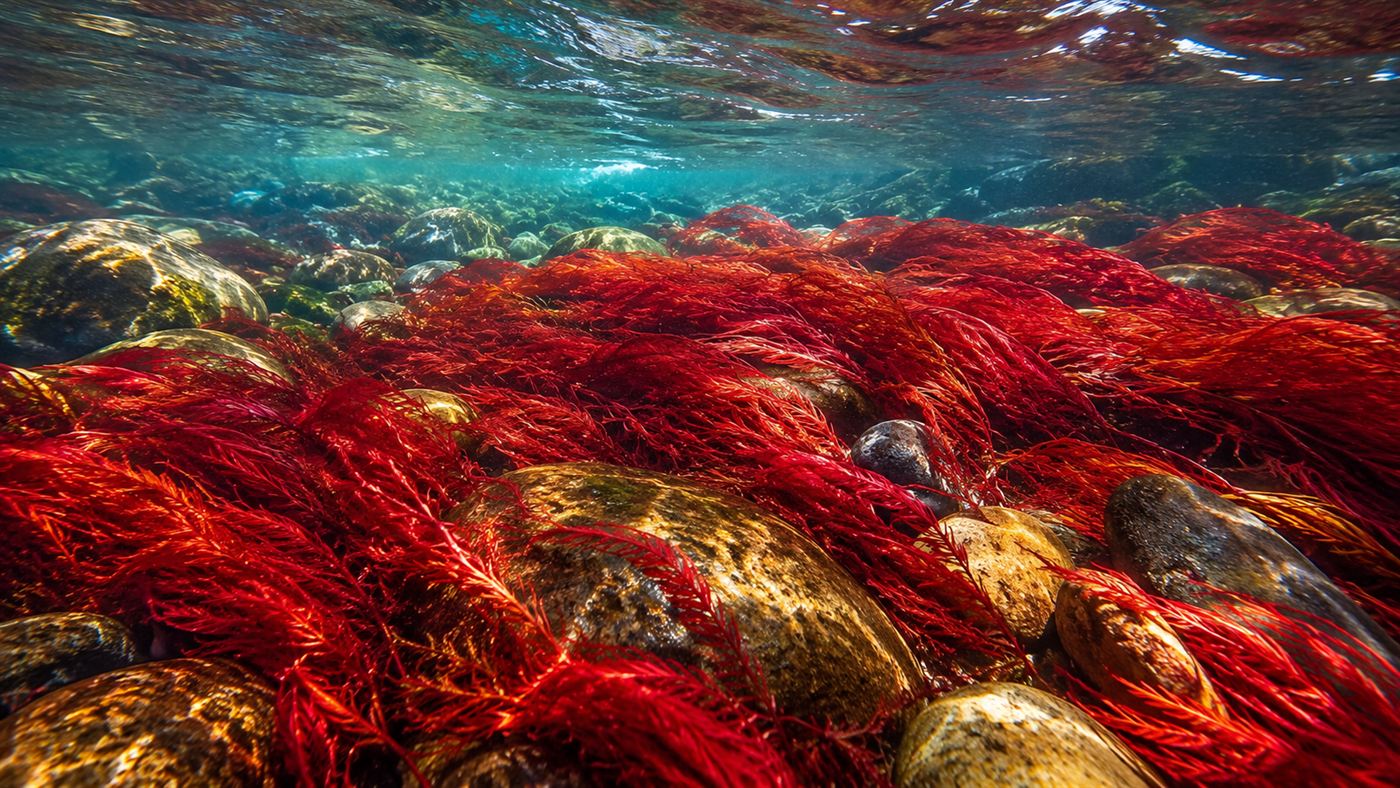
A plant, not a mineral
The surprise is that the famous red has nothing to do with coloured rocks or minerals.
It comes from Macarenia clavigera, a rare aquatic plant in the riverweed family that clings to the rocks.
When the sunlight and water level are just right, the plant floods with red pigment and blazes like fire underwater.
The other colours fill in around it, green from other water plants, yellow from sand, blue from the clear water and black from the bare rock.
Together they turn a simple river into a natural artwork that changes by the week.
A billion-year-old meeting place
The setting is as remarkable as the colour.
The Serranía de la Macarena is an ancient block of rock, part of the Guiana Shield, thought to be well over a billion years old.
It rises where three of South America's great natural worlds meet, the Andes mountains, the Amazon rainforest and the vast Llanos grasslands.
That crossroads makes the region extraordinarily rich in plants and animals found almost nowhere else.
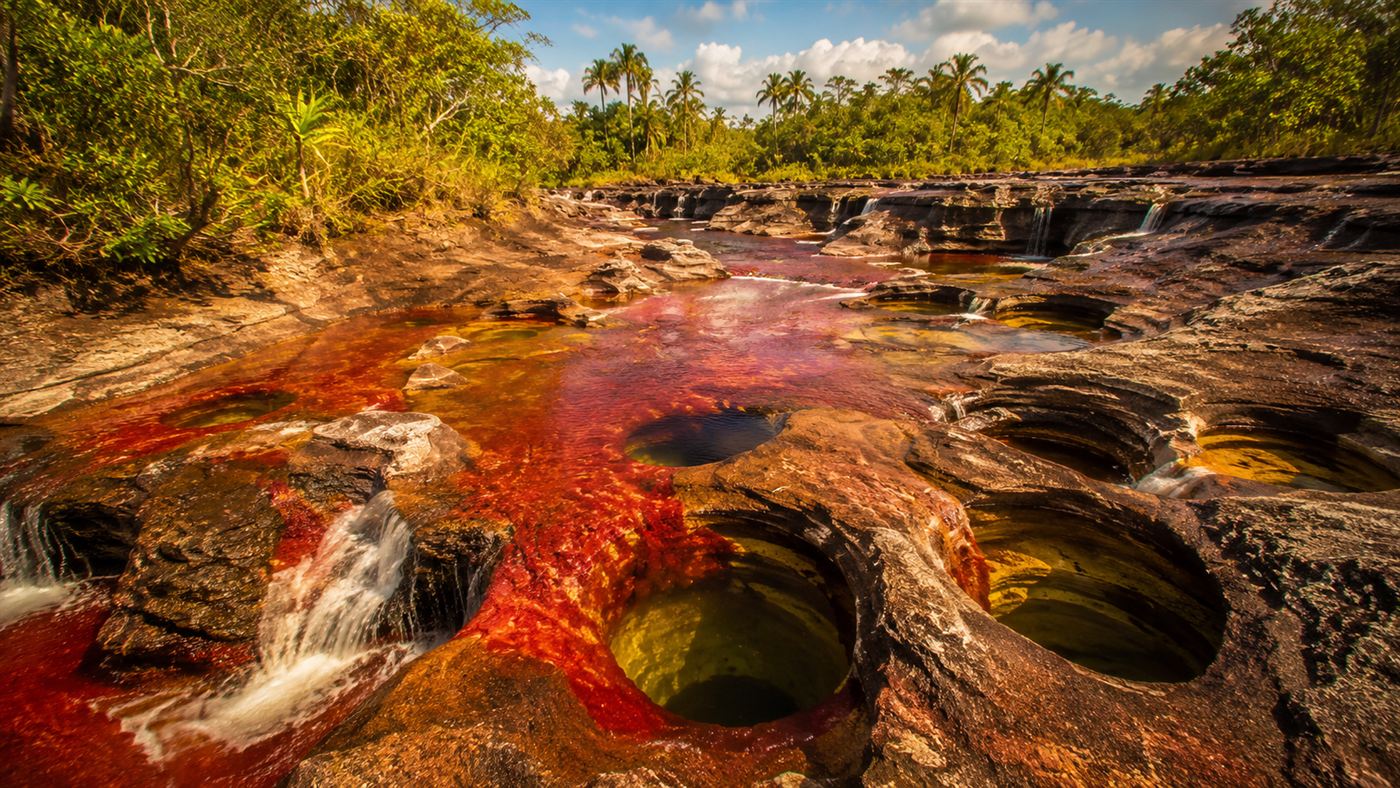
Caño Cristales is the jewel at its heart, shaped by smooth potholes and small waterfalls worn into the old stone.
The war that hid it
For much of recent history, almost no outsider could visit this wonder at all.
The region was a stronghold of the FARC guerrillas during Colombia's long internal conflict, and the area was dangerous and effectively off-limits.
For decades the river ran through its colours each year with almost nobody there to see it.
Only after Colombia's peace process calmed the region did tourism reopen, with regular visitors returning in the years around 2016.
A natural marvel that had been hidden by war was suddenly given back to the world.
The honest catch
The liquid rainbow is real, but it comes with conditions.
Caño Cristales is only colourful for part of the year, and outside that window it looks like any other river.
The plant that creates the spectacle is delicate, so visitors must come with guides, wear no sunscreen or insect repellent that could poison the water, and never touch the riverbed.
Getting there means flying to a small town and travelling on by boat and on foot, so it will never be a casual day trip.
And the label of most beautiful river in the world is, of course, a piece of well-earned tourist board pride as much as fact.
Caño Cristales is a reminder that some of the planet's most dazzling sights are also among its most fragile and hard to reach.
It belongs with the other natural wonders of the Americas we love, from the river in the Amazon that runs hot enough to boil to the corner of Venezuela where lightning almost never stops.
If a river can hide a rainbow that the world could not safely visit for a generation, what other wonders do you think conflict and distance are still keeping from us, and would you make the trek to see this one? Tell us in the comments.