A blob of tar in a funnel has been dripping for nearly a century, and the man who guarded it for 52 years never once saw a drop fall
In a glass case at the University of Queensland sits the world's most patient science demonstration. The pitch drop experiment has been running since 1927, and catching a single drop as it falls turned out to be far harder than anyone imagined.
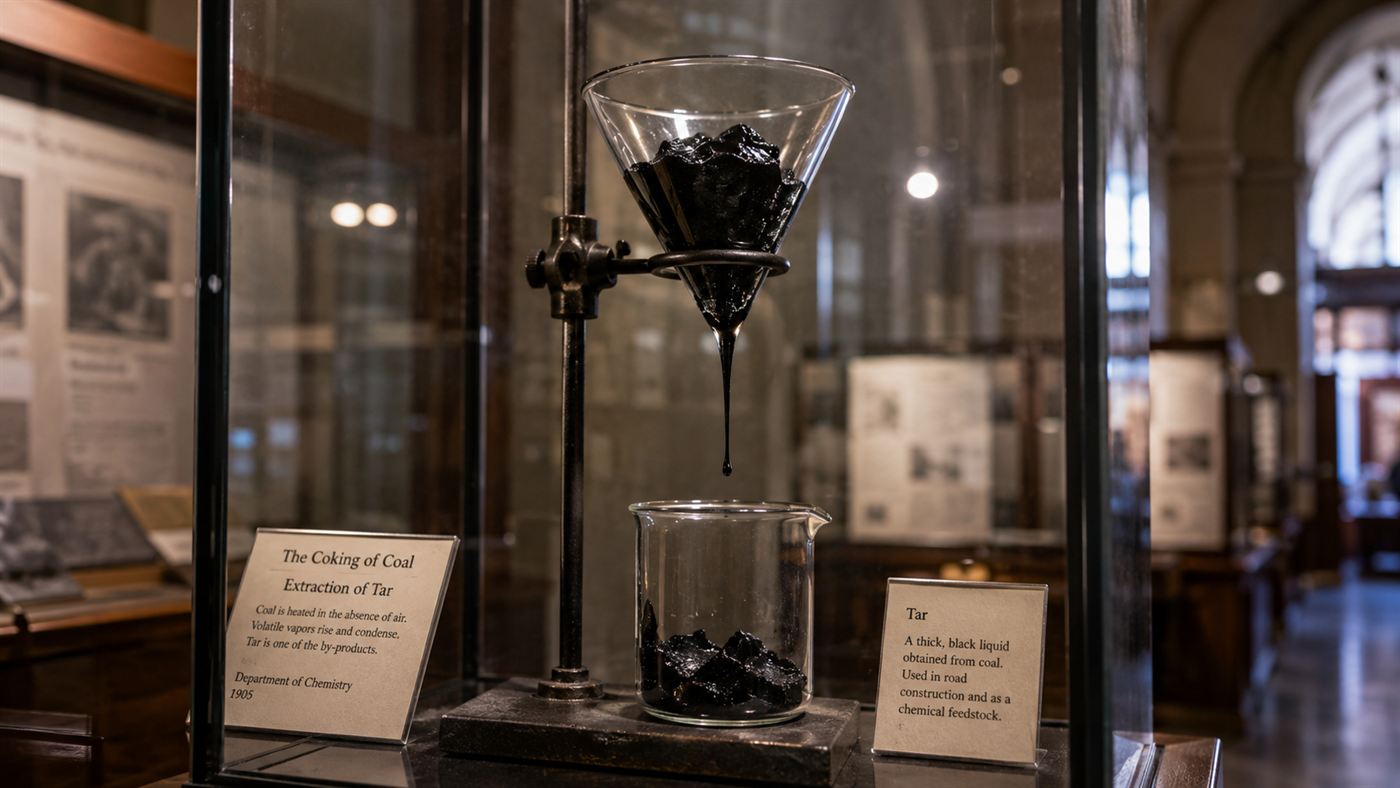
A funnel of black pitch, slowly forming the next drop above the beaker below. Illustration: Watts & Wild.
Some experiments end with a bang. This one has been ending, one slow drip at a time, for almost a hundred years.
Tucked inside a display cabinet in a physics building in Brisbane, Australia, is a funnel holding a lump of black pitch that looks as solid and dead as a hockey puck.
What is the pitch drop experiment? The pitch drop experiment is a demonstration started in 1927 at the University of Queensland to prove that pitch, a tar-like substance that seems solid, is actually a fluid that flows incredibly slowly. Sealed in a funnel, the pitch forms a single drop roughly once a decade, making it the longest-running laboratory experiment in the world.
A solid that is secretly a liquid
Pitch is a thick, dark residue left over from tar or crude oil, the same family of stuff once used to waterproof wooden ships.
At room temperature it feels rock hard, and if you hit a block of it with a hammer it will shatter into sharp pieces like glass.
Yet pitch is not really a solid at all, and that is the whole point the experiment was built to make.
In 1927 the physicist Thomas Parnell, the first professor of physics at the university, heated a sample of pitch and poured it into a sealed glass funnel.
He let it settle for three years, and then in 1930 he snipped the bottom of the funnel open and let nature take over.
Pitch turns out to be something like 230 billion times more viscous than water, so it oozes through the funnel at a pace almost too slow to believe.

Nine drops in ninety years
Since the funnel was opened, the pitch has released only about nine drops in total.
The first fell in December 1938, and the ones that followed came roughly every eight to thirteen years, in 1947, 1954, 1962, 1970, 1979, 1988, 2000 and again in 2014.
Each drop swells on the end of the funnel for years, stretching thinner and thinner, until its own weight finally tears it free.
That glacial rhythm is exactly why the pitch drop experiment holds a Guinness World Record as the longest continuously running laboratory experiment on the planet.
The pace has actually slowed over the decades, because air conditioning was later added to the room and the cooler, steadier temperature makes the stiff pitch flow even more reluctantly.
The man who waited 52 years
For most of its life the experiment had one devoted guardian, the physicist John Mainstone.
Mainstone took charge of the funnel in 1961 and looked after it for 52 years, and in all that time he never once saw a drop actually fall.
It was not for lack of trying, because the timing was simply, cruelly unlucky.
In 1988 Mainstone was there on the right day, stepped away for only a few minutes to get a drink, and came back to find the drop had already dropped while his back was turned.
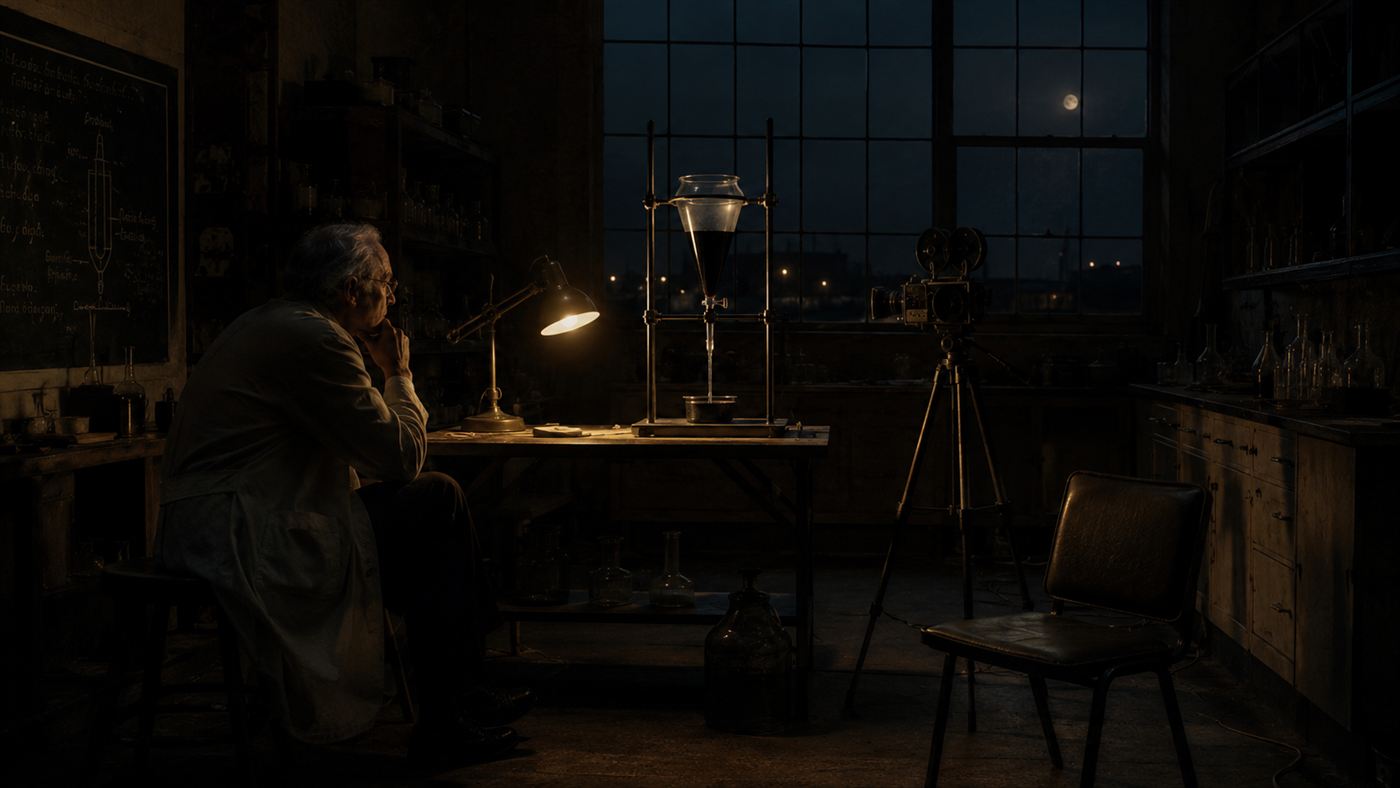
The story repeated in 2000, when a webcam was finally trained on the funnel to catch the moment, and the camera glitched at the exact instant the drop let go, recording nothing.
For his decades of devotion and bad luck, Mainstone shared the 2005 Ig Nobel Prize in Physics, the award for research that makes you laugh and then think, alongside the long-dead Parnell.
Caught on camera at last
Mainstone died in August 2013 after a stroke, still never having witnessed the event he had guarded for half a century.
Then, in April 2014, under the next custodian, the ninth drop finally fell in front of a working camera, and for the first time the Queensland funnel was filmed letting go.
There was a bittersweet twist even then, because the falling drop merged with the old drop sitting in the beaker below before a clean image could be captured.
The keeper who had waited longest had missed it by a matter of months.
Why the pitch drop experiment matters
On the surface the pitch drop experiment proves something simple, that a material can look completely solid and still be a liquid creeping along on a timescale longer than a human career.
That idea matters in the real world, because the same slow flow shows up in glaciers, in the slumping of old glass and in the rock of the Earth's mantle.
There is also something quietly moving about a piece of science designed to outlive the people running it, a baton passed from one custodian to the next.
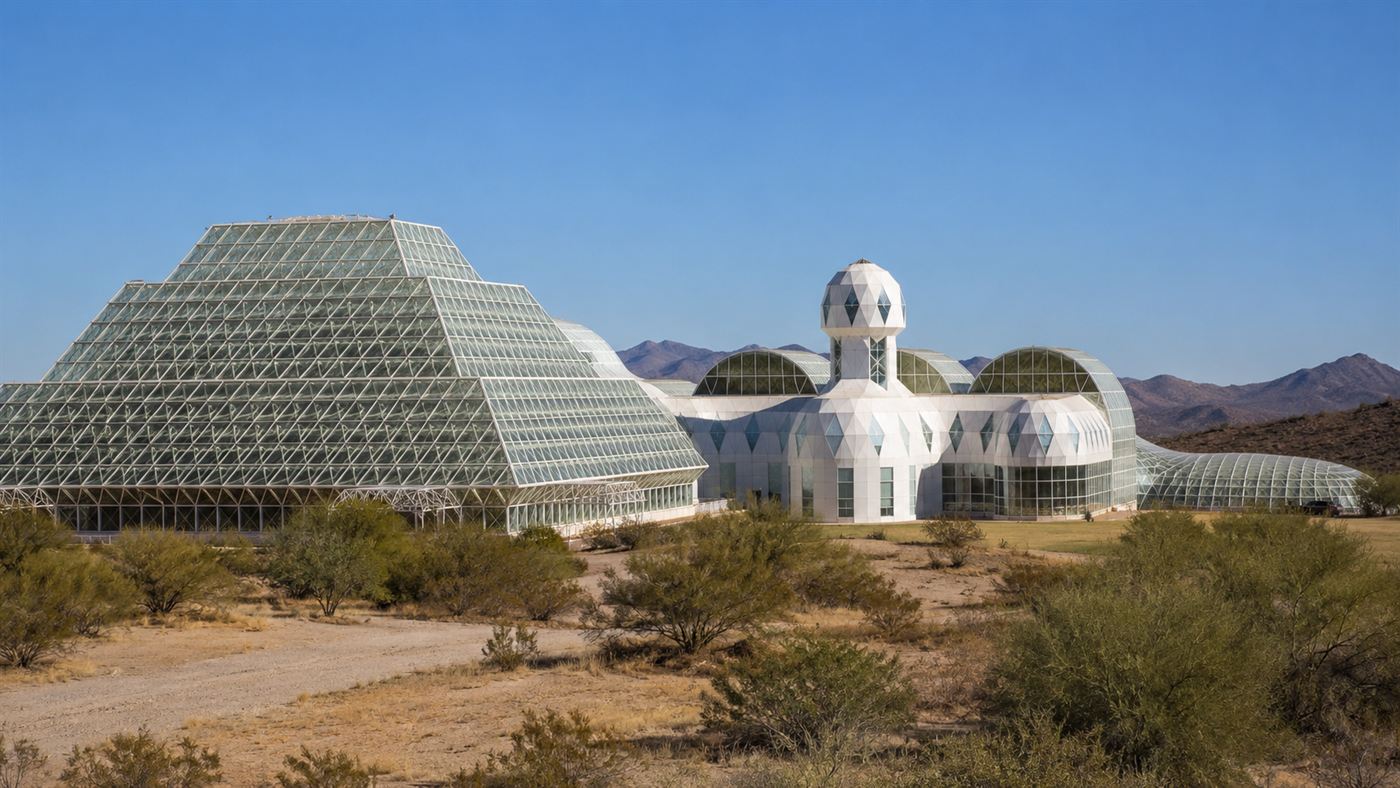
It is patience turned into an instrument, in the same spirit as the long-haul projects we have covered like the sealed world of Biosphere 2 and the deepest hole humans ever drilled.
The honest catch
For all its fame, the pitch drop experiment has almost no practical payoff, and it was never really meant to.
It does not feed new technology or answer a burning question, it mostly delights people and teaches one vivid lesson about how matter behaves.
There is a deeper irony too, because the Queensland funnel was not even the first to be filmed mid-drip.
A lesser-known twin experiment at Trinity College Dublin, set up in 1944, captured a pitch drop on camera in July 2013, beating the more famous Australian funnel by about nine months.
And the show is far from over, since the original funnel still holds enough pitch to keep dripping for roughly another century.
Even knowing all that, it is hard not to be charmed by a funnel of tar that has quietly outlasted careers, cameras and its own most faithful watcher.
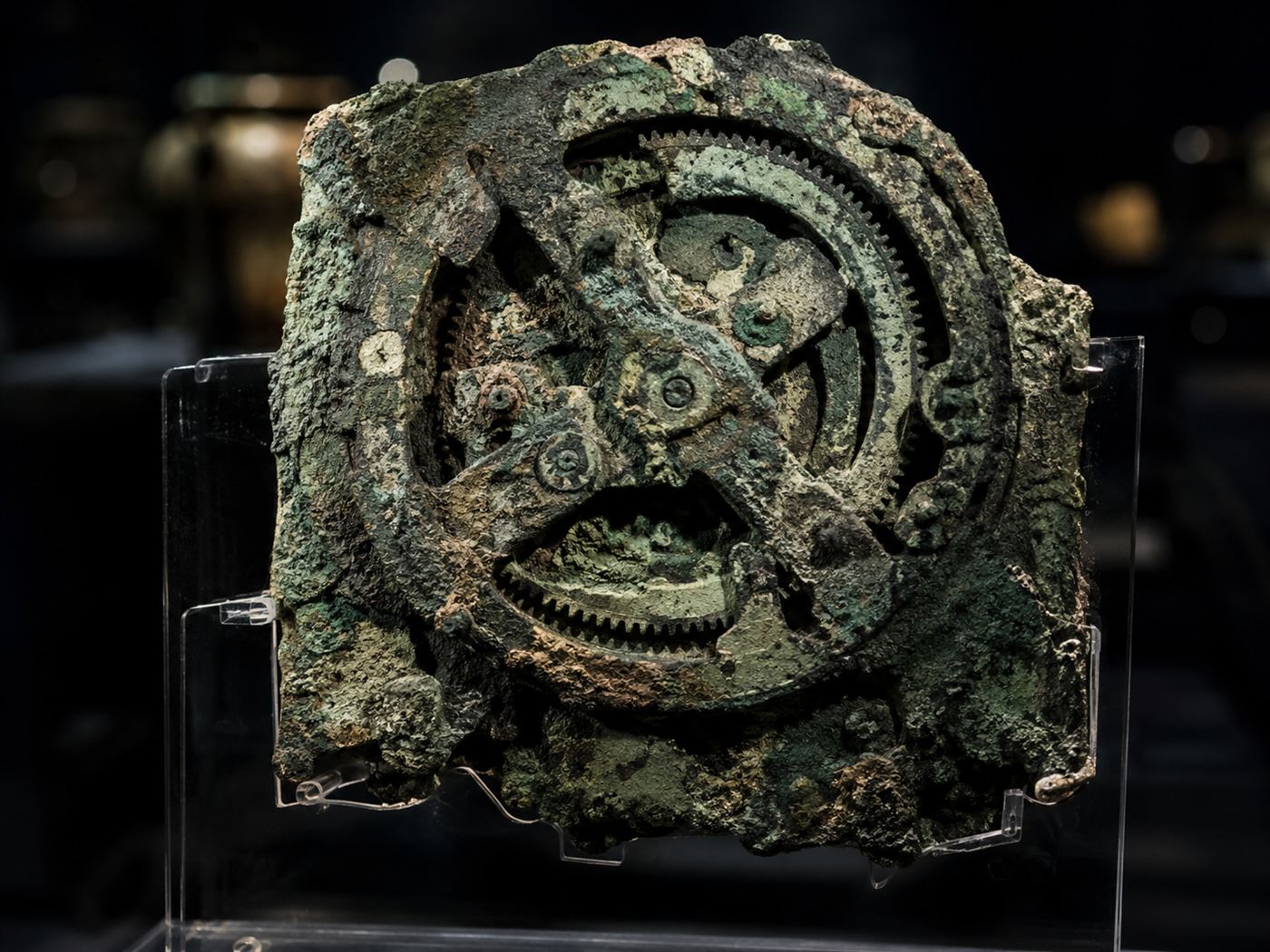
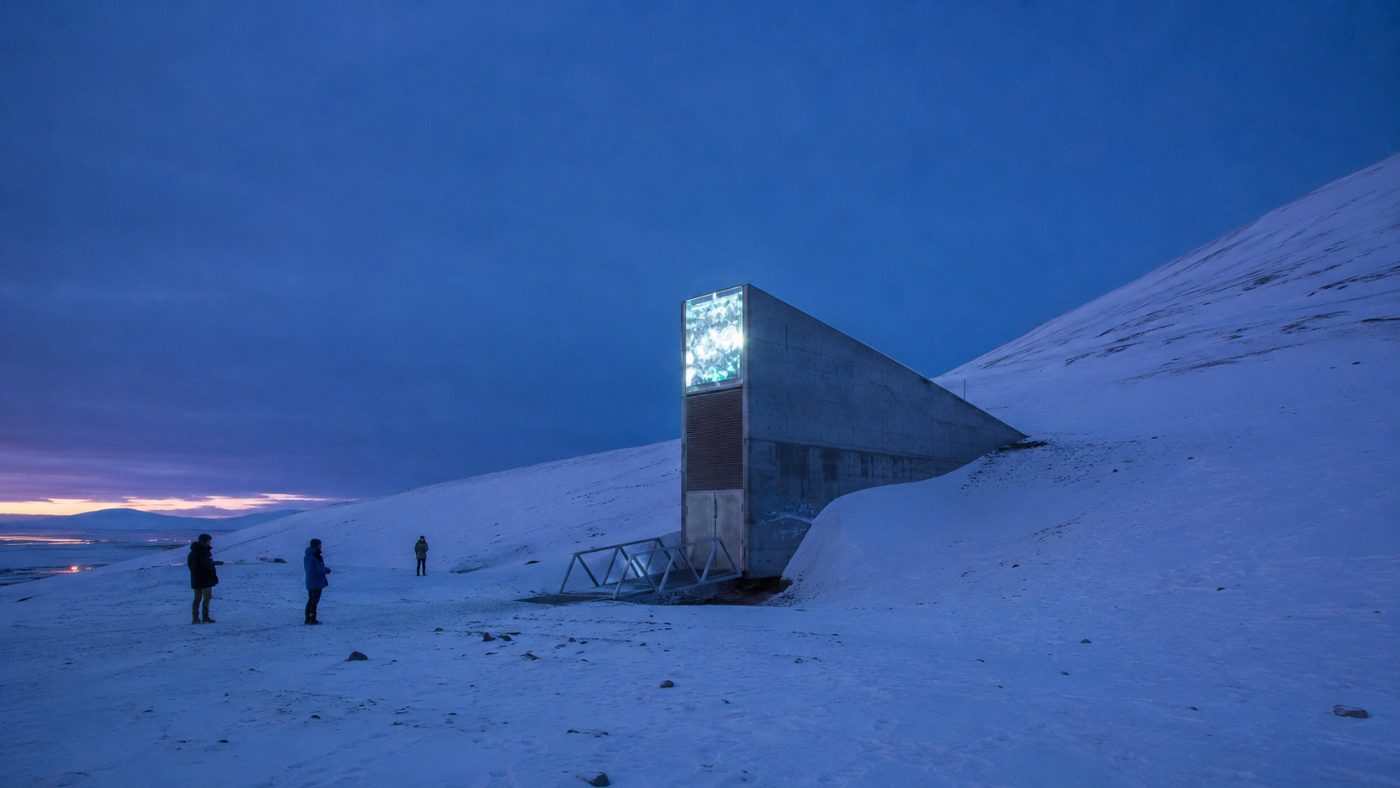
It sits comfortably beside the other slow wonders and curiosities we love, from the ancient Greek computer pulled from a shipwreck to the vault built to guard seeds for a thousand years.
If a single drop of pitch takes more than a decade to fall, what does that say about the kinds of patience science sometimes demands, and would you have the nerve to sit and watch the funnel yourself? Tell us in the comments.